Douglas Murray

Douglas Murray

Douglas Murray is associate editor of The Spectator and author of The War on the West: How to Prevail in the Age of Unreason, among other books.

Notre Dame’s loss is too much to bear | 15 April 2019

From our UK edition

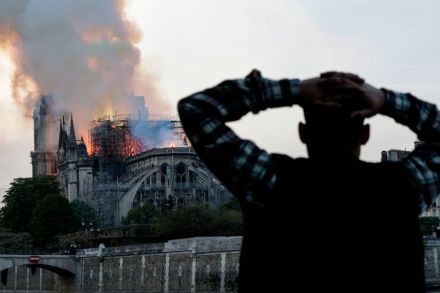
Civilisation only ever hangs by a thread. Today one of those threads seems to have frayed, perhaps snapped. It is impossible to watch the footage coming out of Paris, all that can be done is to groan and turn away. It is not possible to watch the spire of Notre Dame collapse. It is not possible to watch the great cathedral consumed by fire. Evelyn Waugh once said that in the event of a fire in his house, if he was able only to save his children or his library, he would save his library because books were irreplaceable. Only at a moment such as this is it possible to concede the slightest truth in that remark. Almost anything could be borne rather than the loss of this building. There will be recriminations, of course.

Roger Scruton’s sacking exposes the Tories’ cowardice

From our UK edition

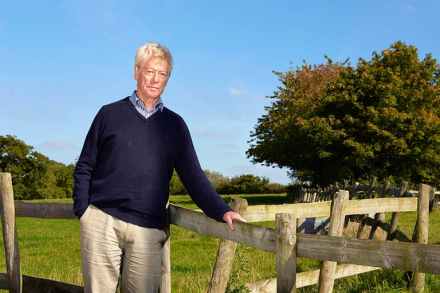
So the New Statesman decided to interview Sir Roger Scruton. Perhaps there are those who think that Scruton should not have agreed to be interviewed by the New Statesman, the left-wing magazine being unlikely to conduct a fair interview. But Scruton was the magazine’s wine columnist for many years, and under the editorship of Jason Cowley the magazine has been a slightly fairer and less battily leftwards publication than it was of old. But today the magazine’s deputy editor, George Eaton, took to social media to announce the results of what he is parading as a 'gotcha' interview. The interview – which Eaton conducted himself – was, he promised, positively crammed full with ‘a series of outrageous remarks’.

Capital punishment

From our UK edition

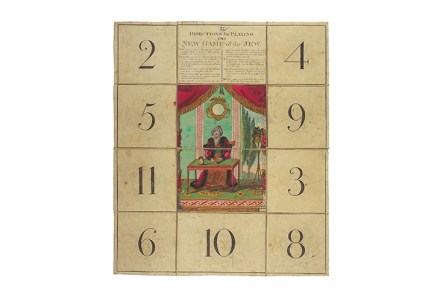
Is now a good time to talk about Jews and money? The Jewish Museum in London thinks so, and perhaps it is right. Motifs of Jewish financial chicanery that have never really gone away are back. The internet age has allowed memes about Rothschilds, rootless financiers and other thinly veiled claims of Jewish duplicity to thrive as they haven’t for several generations. A film at the start of this new exhibition at the museum in Camden gives some context, with clips of recent anti-Jewish statements from the likes of Louis Farrakhan and other conspiracy theorists. It also includes Donald Trump talking about ‘elites’ draining power from America, which strikes me as an unfair overclaim about what the contents of this poisonous cauldron really are.

Salvini’s common touch

From our UK edition

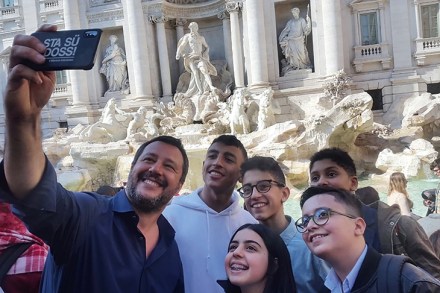
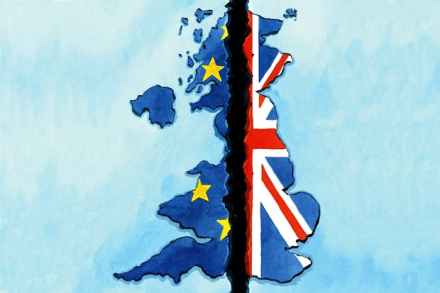
While Britain continues to try to struggle its way out of the EU, perhaps it is wise to consider what is happening inside the bloc itself, not just in Paris where the fumes from burning cars fill the apartments and approval ratings for Emmanuel Macron continue to slide as he engages in a national listening exercise (which actually consists of him delivering Chávez-length lectures to the French public). But over the border in Italy, where the tone of the era is being set. Being both interior minister and deputy prime minister is a tremendous position for Matteo Salvini to be in.

Donald Trump is right about Israel and the Golan Heights

From our UK edition

Earlier this week President Trump made one of the most reasonable decisions of his Presidency. His administration formally recognised Israeli sovereignty over the Golan Heights. Inevitably the move has been welcomed in Israel, condemned in Europe and generally shrugged over in the Middle East. Of course various people have come up with their own explanations for why Trump made this decision. In the New York Times Thomas Friedman claims that Trump has done it only because he wishes ‘to get more campaign donations from far-right Jewish mega-donor Sheldon Adelson.’ I don’t know how Friedman knows this, nor how he has achieved such mega-access to the President’s head. My own guess is that Friedman just made it up.

Diary – 21 March 2019

From our UK edition

It isn’t easy getting around the Gulf these days. The blockade on Qatar means no direct flights from most of its neighbours, so I spend hours of layover looking at the great mountain ranges of Muscat from the antiseptic tedium of my transfer terminal.     My main reason for coming to the region is to speak in Doha for the newly revived ‘Doha Debates’. After my speech, a more than usually aggressive interviewer demands to know why Britain and other European countries have not taken in more Syrian migrants. The Emir’s sister and others are in the audience and I cannot pass up the opportunity to poke my hosts in the eye. I ask how many Syrians have been made citizens by Qatar.

Who should we blame for the Christchurch atrocity?

From our UK edition

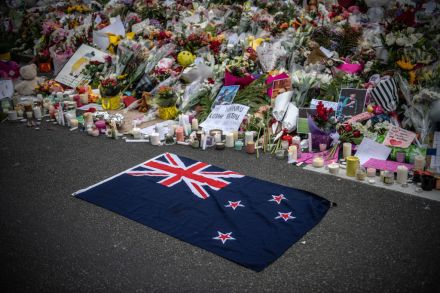
A frequent complaint heard from Muslim communities in recent years has been irritation and anger over any suggestion that Muslims – as a whole – need to apologise for attacks carried out in the name of their religion. I have sympathy for this irritation, tying as it does innocent people to the actions of guilty ones. But since the attack in New Zealand was carried out by a non-Muslim who was targeting Muslims, whether or not it needs to be said still it should be said – indeed must be said – that non-Muslims abhor, are disgusted, outraged and sickened by somebody going into a place of worship and gunning down innocent people. We condemn it in the most fulsome and unreserved terms.

Who should we blame for the Christchurch atrocity? | 18 March 2019

From our UK edition

A frequent complaint heard from Muslim communities in recent years has been irritation and anger over any suggestion that Muslims – as a whole – need to apologise for attacks carried out in the name of their religion. I have sympathy for this irritation, tying as it does innocent people to the actions of guilty ones. But since the attack in New Zealand was carried out by a non-Muslim who was targeting Muslims, whether or not it needs to be said still it should be said – indeed must be said – that non-Muslims abhor, are disgusted, outraged and sickened by somebody going into a place of worship and gunning down innocent people. We condemn it in the most fulsome and unreserved terms.

The false equivalence between ‘Islamophobia’ and anti-Semitism

From our UK edition

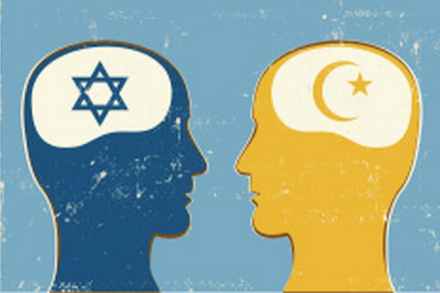
I have been travelling in the Middle East for the last few weeks and slightly regret returning to the maelstrom of ancient animosities and unbridgeable sectarianism that is modern Britain. But in my absence I see that one of the worst tropes of our time has been stalking unhindered across the land. That is, of course, the latest push to make an equivalence between anti-Semitism and the crock term ‘Islamophobia’. It is not just in the UK that this play has been made. In America over recent days people have been able to follow the progress of the new Muslim congresswoman Ilhan Omar, with her supporters deciding to deflect attention from her expressions of anti-Semitism by claiming ‘Islamophobia’.

Bloody liar

From our UK edition

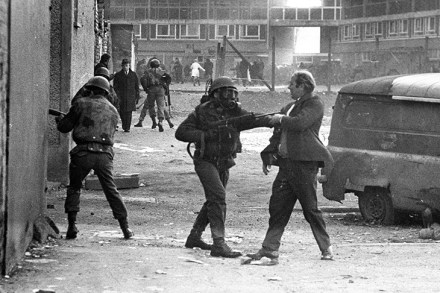
It is more than 15 years since the Bloody Sunday soldiers last appeared in public. For months I sat in the room with them to watch their evidence at Lord Saville’s inquiry. And while Lionel Shriver is right that the sight of terrorists benefiting from an immunity denied to our soldiers is grotesque, there are competing qualms. Not only because British soldiers should be held to a higher standard than terrorists. But because, having watched all of the Bloody Sunday shooters testify, I can say with certainty that they include not only unapologetic killers, but unrelenting liars. As one soldier after another appeared before Lord Saville, it became clear that the soldiers of 1 Para were intent on spurning this last effort to get to the truth of what happened that day.

The false equivalence between ‘Islamophobia’ and anti-Semitism | 8 March 2019

From our UK edition

I have been travelling in the Middle East for the last few weeks and slightly regret returning to the maelstrom of ancient animosities and unbridgeable sectarianism that is modern Britain. But in my absence I see that one of the worst tropes of our time has been stalking unhindered across the land. That is, of course, the latest push to make an equivalence between anti-Semitism and the crock term ‘Islamophobia’. It is not just in the UK that this play has been made. In America over recent days people have been able to follow the progress of the new Muslim congresswoman Ilhan Omar, with her supporters deciding to deflect attention from her expressions of anti-Semitism by claiming ‘Islamophobia’.

The UK’s Hezbollah ban is a victory for common sense

From our UK edition

Britain is going to proscribe the terrorist group Hezbollah in its entirety. This is a victory, not least for common sense. For just over a decade the UK government has stuck to a very strange lie on this matter. In 2008 they banned the military wing of Hezbollah. This idea – only ever believed in by a few officials in the British Foreign Office – survived on an extraordinary presumption: which was that the Lebanese terrorist group had two totally separate arms. On the one hand was the military wing of Hezbollah, which has spent decades raising the levels of violence in Lebanon and bringing destruction to various neighbouring countries, including Israel and Syria, as well as further afield.

Britain is not to blame for Shamima Begum’s radicalisation

From our UK edition

Of all the points made on the case of Shamima Begum, the most relevant has been utterly absent. That is, who might actually be responsible for this appalling young woman being who she is and where she is. In recent days the government’s own extremism commissioner, Sara Khan, has made an uncommon set of interventions. In each of these she has insisted that Begum must return to the UK and that not doing so will ‘play into the hands of the extremists’. Some of us are becoming a little jaded about the number of things said to risk ‘playing into the hands of extremists’. Over the last two decades one might easily have come to the conclusion that the only thing that doesn’t ‘play into the hands of the extremists’ is allowing the extremists to win.

The true cost of fake hate crimes

From our UK edition

Some years ago I was introduced to one notion of how to tackle dishonest and insincere accusations of racism. It was not just that there should be a social cost to making a dishonest claim, but that the cost should equal that borne by somebody who is accurately and correctly identified as a racist. Without such a disincentive there is no reason (other than decency and honesty, which may sometimes be in short supply) for people not to level such accusations insincerely in order to beat away any and all critics. Since Monday night I have been wondering, amid much else, whether some similar aspiration could be encouraged regarding hate crimes. In recent days and weeks there has been much comment on the case of Jussie Smollett.

The true cost of fake hate crimes | 20 February 2019

From our UK edition

Some years ago I was introduced to one notion of how to tackle dishonest and insincere accusations of racism. It was not just that there should be a social cost to making a dishonest claim, but that the cost should equal that borne by somebody who is accurately and correctly identified as a racist. Without such a disincentive there is no reason (other than decency and honesty, which may sometimes be in short supply) for people not to level such accusations insincerely in order to beat away any and all critics. Since Monday night I have been wondering, amid much else, whether some similar aspiration could be encouraged regarding hate crimes. In recent days and weeks there has been much comment on the case of Jussie Smollett.

In the 30 years since the fatwa, there’s been little discussion about The Satanic Verses itself 

From our UK edition

Today is the 30th anniversary of Ayatollah Khomeini’s issue of a fatwa against Salman Rushdie for writing the novel The Satanic Verses. In the run-up to this anniversary there has as usual been much discussion of the controversy, but very little about the novel itself. This is consistent with the pattern of the last three decades. Of the two Satanic Verses that exist – the controversy and the novel – people were always familiar with the former and deeply unclear about the latter. To this day very few people seem interested in what is between the covers of the book that stirred the Ayatollah’s ire.

The truth about Turning Point

From our UK edition

Earlier this week I made the usual mistake of looking at Twitter and saw that ‘Turning Point’ was trending. This is unusual in Britain. Turning Point is a very successful organisation set up in the US to counter the dominance of left-wing views on campus. It turned out to be trending because of the launch of Turning Point UK this week. In essence the response to the launch of Turning Point demonstrated the need to launch Turning Point in the UK. After all, what we are talking about here is a student-oriented organisation which wants to extol the virtues of free markets over socialism and individual liberty over identity politics. There is nothing in the group’s statements so far that should cause a flutter even among the precious mobs on social media.

This week’s FGM prosecution raises deep questions which cannot go unaddressed

From our UK edition

The first successful prosecution in the UK for the crime of female genital mutilation (FGM) has been widely covered. Not least because the laws that made this barbaric practice a crime have been on the books since 1985 without a single successful prosecution until this week. So the fact that a 37-year old mother from east London was convicted of the crime at the Old Bailey this week is significant. But there is something about this case that still needs to be noted. Campaigners against FGM are rightly saying that they hope that this prosecution will lead to more people coming forward to report the crime.

The darkest dawn

From our UK edition

The centenaries of the Great War came to a close in November with commemorations of the 1918 Armistice. But one final British centenary associated with that conflict has just passed. Few people on the mainland will be aware of it, though it has certainly been marked in the Outer Hebrides. It is the commemoration of the worst peacetime naval disaster since the sinking of the Titanic. And one of the most terrible, poignant and final tragedies to have come from the Great War. On the evening of 31 December 1918, a vessel was boarding passengers at the Kyle of Lochalsh. His Majesty’s Yacht Iolaire had been requisitioned by the Admiralty to transport some of the hundreds of Royal Naval Reservists heading back to the Isle of Lewis and Harris after four years of service.

Cathy Newman’s catastrophic interview with Jordan Peterson

From our UK edition

We’re closing 2018 by republishing our ten most-read articles of the year. Here’s No. 1: Douglas Murray on Cathy Newman’s interview with Jordan Peterson: In the magazine this week I have written a piece about the Canadian Professor Jordan Peterson. He has been in the UK over the last week to talk about his new book 12 Rules for Life: An Antidote to Chaos. Among many other things – much more of which I go into in the piece – his visit showed up the UK’s broadcast media in a very bad light. On Saturday morning, Peterson made an appearance on Radio 4’s Today programme. They gave him a hurried four minutes at the end of the show.