Dot Wordsworth

That annoying ‘likely’ is more old-fashioned than American

From our UK edition

What, asks Christian Major of Bromley, Kent, do I think of ‘this new, I assume American, fad for using the word likely as an adverb’, as in the great Taki’s remark that Alan Turing ‘likely won the war’ (Spectator, Letters, 31 January)? Well, I would most likely not use it in exactly that way, although you’ll have noticed that I have just done so slightly differently. The adverbial usage to which the Kentish Mr Major refers is now more likely to be heard on the lips of Americans and Scots, but it is hardly a fad, since it dates from at least as far back as the 14th century. In the 18th century, English speakers of English were quite happy to say ‘You’re likely in the right.

Ha! vs Hahaha: the surprisingly subtle world of Twitter style

From our UK edition

I don’t know if you tweet — No! Don’t turn over, I’m not going to get all techie. I do not tweet, but my husband does, voluminously. I won’t betray his rather strange handle and avatar. Those are technical terms, but they are not the main point I want to make now. The handle is the username, such as @DotWordsworth. That example is not me, but one of the four Twitter accounts apparently written by Dorothy Wordsworth. The one using my name declares in her online profile ‘My bowels very bad.’ Have I ever written that here? No. The avatar is the little picture of the user that appears at the top of each account and with every tweet. Everyone knows an avatar derives from Hindu mythology.

What Benedict Cumberbatch didn’t understand about ‘coloured’Photo: Getty

From our UK edition

Benedict Cumberbatch apologised at length: ‘devastated’, ‘shaming’, ‘offended’, ‘inappropriate’. What had he done? Been caught in a compromising situation or stolen from a shop? No he had used the word coloured with reference to black people. It is the strongest current form of taboo, worse than defecating in public, though I admit that this would have quite an effect on an American chat show. It was in America that poor Mr Cumberbatch, the flawless actor, delivered the criminal word. It was so unfair. He had been arguing that black people get a raw deal in acting.

Existential threat: the birth of a cliché

From our UK edition

In the endless game of word association that governs vocabulary, the current favourite as a partner of existential is threat. They make an odd couple. Max Hastings managed to get them into the Daily Mail the other day, writing that ‘although Islamic fanatics can cause us pain and grief, they pose no existential threat as did Hitler’s Germany’. A letter to the Times said that the Charlie terrorists’ ‘wicked ideology is an existential threat to Islam itself’. In those examples, the threat is to our existence or to the existence of Islam. But in this phrase from an article by Irwin Stelzer in the Sunday Times, ‘sincere believers in the existential threat of global warming’, whose existence is threatened?

The changing meaning of ‘prolific’, from Orwell to the Premier League

From our UK edition

I read somewhere recently of a Soho artist who was a ‘prolific drinker’. The meaning is clear, but hasn’t the word been taken for a walk too far from the neatly hedged semantic field where it was bred? Prolific is hardly ever used in the literal sense of ‘producing many offspring’. I had thought it was most often employed metaphorically of authors, but then my husband surprised me by saying something both true and relevant: that prolific is most often paired with goalscorer. He’s right. It is used dozens of times a week in the sports pages. ‘Adam Rooney,’ the Times notes, ‘is undoubtedly the most prolific of Aberdeen’s strikers.

What parenting meant in 1914

From our UK edition

‘Not still War and Peace!’ exclaimed my husband on 1 January during the all-day Tolstoy splurge on Radio 4. In reality he was glad to complain, as if it made him superior to the broadcasters. I quietly tuned the radio in the kitchen to long-wave and was able, while peeling the potatoes, to listen, through the atmospherics, to Home Front, the drama serial on Radio 4, set in Folkestone during the first world war. It is not Downton Abbey. One does not listen to spot the anachronisms. But any historical drama is bound to include language impossible to have used at the time. The episode was written by Katie Hims and directed by Jessica Dromgoole but I don’t know if either introduced the word parenting into the script.

How ‘data’ became like ‘butter’

From our UK edition

Someone on Radio 4 said she had heard about the sexism of Grand Theft Auto on ‘Women’s Hour’. It is called Woman’s Hour, though the other is possible, on the model of Children’s Hour. But I was struck in 2014 by a slide in certainty about singulars and plurals. The three shakiest plurals are data, criteria and bacteria. Data has become not so much a singular noun as an uncountable one, like butter. So speakers can say ‘all the data collected is reliable’. Datum and criterion are almost extinct. A daily paper used a bacteria on its front page to mean a kind of bacterium. This shakiness is made worse by a change in the way that nouns are used attributively, qualifying other nouns.

The curious language of Christmas carols

From our UK edition

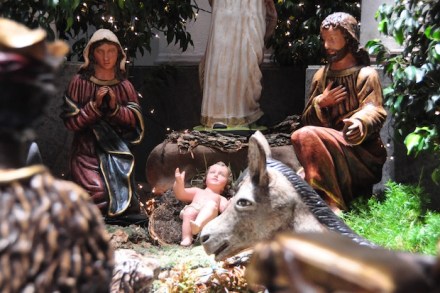
I could never understand as a little girl why we sang: ‘Away in a manger, no crib for a bed.’ I knew what a manger was, and I knew that people set up cribs at home and in churches with the Child Jesus in the manger and the animals, shepherds and all the trimmings. It turns out that I was right to be puzzled, for crib has the primary meaning of ‘a manger’, not ‘a baby’s cradle’. It’s a good old English word. Richard Rolle wrote in the 14th century of Jesus ‘born and laid in a crib between an ox and an ass’. The ox and the ass do not come from the Gospels, but from the prophetic words of Isaiah (1:3): ‘The ox knoweth his owner, and the ass his master’s crib,’ as it’s translated in the Authorised Version.

Control

From our UK edition

In his speech on immigration last week, David Cameron said a couple of funny things. I’m not talking about the politics. Heaven forbid. I mean the language. Why did he call the City of London ‘the financial epicentre of the world’? Epicentre means ‘the point over the centre’, and in seismology it is the place on the Earth’s surface above the subterranean seat of an earthquake. So, unless he believes in an army of immigrant Morlocks slaving away beneath the City, I’d imagine Mr Cameron just meant centre. Epicentre sounds classier. Then he spoke of worries about ‘the scale of people coming into the country’. I doubt that he thinks them too tall or too short or badly proportioned.

Why ‘respect’ is the last thing we should want from politicians

From our UK edition

‘Respect!’ cried my husband, drop-kicking a cushion with a picture of the Queen Mother holding a pint of beer on it (a present from Veronica) across the drawing-room. I might as well be married to Russell Brand and be done with it. His little satire was set off by Ed Miliband’s remarks about Emily Thornberry’s notorious Cross of St George tweet. ‘What is going through my mind is respect,’ the Labour leader said. ‘Respect is the basic rule of politics and I’m afraid her tweet conveyed a sense of disrespect.’ This seems to me deranged. If Mr Miliband knew about life ‘down in the street’ he’d realise that ‘respect’ is the gangland correlative of honour.

Does Joey Essex know what ‘reem’ actually means?

From our UK edition

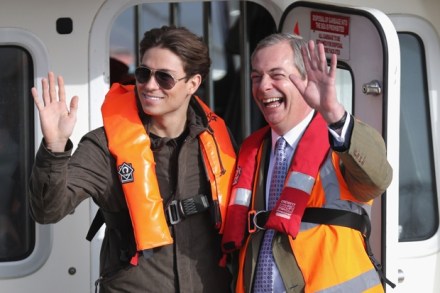
Joey Essex is a celebrity who appeared in the ‘scripted reality’ programme The Only Way is Essex, named not after him but the well-known county. He is 24, born in Southwark, and his main attractions are good looks, cheerfulness and stupidity. He claims never to have learnt to tell the time or to blow his nose. Now he has published a book called Being Reem. Reem is one of the slang words he has popularised. On a chat show he seemed not to remember what they all meant, but that might have been part of the act. Indeed I wonder if he is not having a laugh on us with the title of his book. To Joey Essex, reem means ‘brilliant, good, cool, fashionable’. Could reem really derive from ream?

Why must every ‘accident’ be an ‘incident’?

From our UK edition

I had thought that the saying ‘Accidents will happen in the best regulated families’ was a vulgar reference to children born unexpectedly. The Oxford English Dictionary records accident being used in just that way in the middle of the 19th century. On its own, ‘accidents will happen’ dates from at least as far back as 1705, and the Lady’s Magazine for 1791 gave this humorous version: ‘Mistakes will happen in the best regulated families; I have taken my opera fan to church.’ Ever since, it has been in common use, with Mr Micawber (1850) taking it up as ‘Accidents will occur in the best regulated families.’ You’d think it might have originated in a play or poem, but no such origin has been traced.

Should ‘suicide’ mean pig-killing?

From our UK edition

There was a marvellous man in Shakespeare’s day known as John Smyth the Sebaptist. ‘In an act so deeply shocking as to be denied by Baptist historians for two and a half centuries,’ Stephen Wright, the expert on separatist clergy wrote, ‘he rebaptised first himself and then his followers, and set out his new views in The Character of the Beast (1610).’ His former confederate Richard Bernard fired a counterblast in that year showing (to his own satisfaction) that ‘the Church of England is Apostolicall, the Separation Schismaticall’. Reading a word like sebaptist we take the prefix se- to indicate a reflexive act, a self-baptism, as we would if reading French or Spanish. But that is not how ancient Romans used se-.

Why you might not want corridors in your historical novel

From our UK edition

I read C.J. Sansom’s novel Dissolution on the train recently with pleasure. For an historical novel narrated in the 1530s, what was the author to do about language? He eschewed godwottery (which Fowler, in a dated term, called Wardour Street, after the old furniture once sold there). But I did gulp at page 273: ‘I got up, waving my arms and stamping my feet to restore the circulation.’ The what? The word circulatioun is first recorded from 1535 in the sense ‘movement in a circle’. It wasn’t till 1630 that James Primrose published a commentary, De Motu Cordis et Circulatione Sanguinis, on the theories of William Harvey.

How Ebola got its name

From our UK edition

It should perhaps be called Yambuku fever, since that was the village in Zaire (as it was then, now the Democratic Republic of the Congo) where it was identified in 1976 by Peter Piot, a scientist from the Institute of Tropical Medicine in Antwerp. He is now director of the London School of Hygiene & Tropical Medicine, and went back to Yambuku earlier this year, meeting a survivor of the 1976 outbreak. Professor Piot decided to name it after the river Ebola, 60 miles from Yambuku, because he realised the stigma that would attach to the disease. In that, Yambuku is luckier than the German town of Marburg in Hesse, where seven people died of a haemorrhagic fever identified there in 1967, or Lassa in Borno state, Nigeria, where another haemorrhagic fever was described in 1969.

What’s good for the goose is bad for the proverb

From our UK edition

‘Goosey, goosey gander,’ my husband shouted at the television, like someone from Gogglebox. It’s not so much that he thinks the television real as that he thinks himself an unreal part of the television. The cause of his outburst was something that had caught my attention, too. Someone had said: ‘What’s good for the goose is good for the gander.’ We both thought this a mere garbling of the proverb: ‘What’s sauce for the goose is sauce for the gander.’ It is not the benefit of either the goose or the gander that is under consideration but the delectation of their flesh. Certainly, the oldest books of proverbs mention sauce. Chief among these is John Ray’s collection from 1670. What a labour it must have been to compile.

The fascinating history of dullness

From our UK edition

At least I’ve got my husband’s Christmas present sorted out: the Dull Men of Great Britain calendar. It is no doubt intended ironically, as travelling the country photographing old pillar-boxes, for example, does not strike me as being in the least bit dull. I had thought that dull, in reference to people, was a metaphor from dull in the sense of ‘unshiny’. ‘Dieu de batailles!’ as the Constable of France in Henry V exclaims of the English, ‘where have they this mettle?/ Is not their climate foggy, raw and dull?’ But I was quite wrong, as so often. It started off (in the form dol) meaning ‘foolish’. In English almost as old as you could care to have it, the author of The Seafarer declares: Dol bith se the him his dryhten ne ondrædeth; cymeth him se death unthinged.

How did Mark Reckless get his surname?

From our UK edition

When I first heard ‘Wonderwall’ being played in a public house, in 1995 I suppose, I thought it was some unreleased Beatles record that had been just been discovered. The song appeared on an album, (What’s the Story) Morning Glory?, which has on the cover a picture showing two men about to pass in a very empty Berwick Street in Soho. It must have been daybreak. In the middle distance a magenta doorway indicates the location of a shop called Reckless Records. It’s a good name for a second-hand record shop. Is Reckless such a good name for an MP? I was surprised by how many people made a little joke about Mark Reckless’s name after he defected to Ukip at the weekend. Do they think he is descended (all paternity being regular) from someone who was reckless and thus earned the name?

Dot Wordsworth on language: Why do we call it ‘Islamic State’?

From our UK edition

I’m puzzled by the dropping of the one part of the name of the Islamic State that seems certain. That it is Islamic, many dispute. That it is a state is just as unclear. But calling it the does not bestow honour upon it, any more than referring to the Third Reich meant agreement with its behaviour. But there’s all the difference between the Queen and Queen. The Islamic State is grammatically like the Irish Free State, the Orange Free State or the Bluegrass State (Kentucky). And yet the BBC commonly speaks of ‘Islamic State’ without the definite article, like Sinn Fein or Sheffield Wednesday. In June I wrote here about the jihadist group’s good fortune in landing the English acronym Isis — easy to pronounce and remember.

The rhetorical power of ‘never’, from Ian Paisley to King Lear

From our UK edition

He won’t be remembered as Lord Bannside, but Ian Paisley will be remembered for shouting: ‘Never, never, never, never.’ The fourth never was hardly a shout, by his standards, but merged into the roar of the crowd. Never is a useful word for rhetoric. In our mind’s ear we remember how Churchill stressed the word and paused as he said: ‘Never in the field of human conflict.’ That auditory memory is something of an illusion, for Churchill made his great speech about the ‘Few’ in the Commons, in 1940, and proceedings were not recorded in sound. What we have heard is the version he delivered again for a recording in 1951. If Paisley managed four nevers, Lear outdid him in that moving line: ‘O, thou wilt come no more.