Dot Wordsworth

Chattering classes

From our UK edition

When the much missed Frank Johnson (1943–2006), once editor of The Spectator, wrote in 1980 that ‘the peculiar need for something to be frightened about only seems to affect those of us who are part of the chattering classes’, I think that ‘those of us’ meant himself, and me and you, dear reader. It is true that, as the Oxford English Dictionary remarks, the phrase was ‘freq. derogatory’ of ‘a social group freely given to the articulate, self-assured expression of (esp. liberal) opinions about society, culture, and current events’.

Quotations

From our UK edition

I couldn’t help laughing when I found that an Australian senator, Cory Bernardi, had deleted all his tweets from Twitter, apart from a single sad survivor: ‘Parliament finishing up for the year.’ Mr Bernardi had earlier in 2015 tweeted a striking quotation: ‘To know who rules over you, simply find out who you are not allowed to criticise.’ He attributed it to Voltaire. In fact it is a remark by someone called Kevin Alfred Strom, a neo-Nazi white separatist from Alaska. Quotations in speech often bore. I always thought it odd that John Tregorran in The Archers came out with literary quotations in conversation. No wonder Carol poisoned him. But letters to the press often have a quotation chucked in.

From safe spaces to NSFW: why ‘safe’ is the word of 2015

From our UK edition

‘Makes me feel sick,’ said my husband, referring not to the third mince pie of the morning (in Advent, supposedly a penitential time of preparation), nor to accepting a glass of champagne after having earlier accepted a glass of whisky at another house. No, what made him feel sick was the seasonal greeting: ‘God bless, and be safe.’ For once, I agreed with him. It was bad enough to be exhorted to drive safely or even stay safe during periods when terrorists had eased off a bit (after peak IRA, but before 2001). But now, with a fashion for shooting civilians in unexpected places, to be told to be safe makes no more sense than to be told to be rich. Yet safe is the word of 2015.

Why ‘safe’ is Dot Wordsworth’s word of the year

From our UK edition

‘Makes me feel sick,’ said my husband, referring not to the third mince pie of the morning (in Advent, supposedly a penitential time of preparation), nor to accepting a glass of champagne after having earlier accepted a glass of whisky at another house. No, what made him feel sick was the seasonal greeting: ‘God bless, and be safe.’ For once, I agreed with him. It was bad enough to be exhorted to drive safely or even stay safe during periods when terrorists had eased off a bit (after peak IRA, but before 2001). But now, with a fashion for shooting civilians in unexpected places, to be told to be safe makes no more sense than to be told to be rich. Yet safe is the word of 2015.

Mind your language . . . on commit

From our UK edition

My husband struck out with his stick at an advertisement in the street that said: ‘Commit to winter.’ He doesn’t need a stick to walk with, but he likes threatening to cudgel Christmas shoppers out of his way in this joyful season. I agree with his disapproval of commit used intransitively, not committing oneself or committing anything else. Yet stranger things have happened to the word in the past 600 years. It used to have a rival form commise, also meaning ‘entrust, perpetrate or commission’, which ran out of steam in the 17th century. We do still have commis chefs, but that was re-introduced in the 20th century from French, as indicated by its silent s.

The rise of the man bun, the Mancan and man boobs

From our UK edition

‘Ha, ha, ha,’ said my husband, as though he had learnt to laugh by reading Twitter. ‘Now they’ve got falsies.’ He was waving an article about clip-on man buns. A man bun is that top-knot that some young men began to sport, in proof that there is nothing too absurd for fashion. Now, it seems, false ones are on sale. The colours specified are black, brown and blond, which hardly promises a convincing match. This development reminds me of the chignon, a hump of hair worn over a pad, fashionable at a century’s interval in the 1770s and 1870s. Trollope quickly took against it.

‘Clean eating’ is a great word of the year… for 1906

From our UK edition

The word of the year, according to Collins, the dictionary people, is binge-watch. It means to watch DVDs consecutively or, more voguishly expressed, a box-set back-to-back. But I was taken by the runner-up, clean eating. This is a trend. There is a magazine called Clean Eating and the definition is not simple. ‘The soul of clean eating is consuming food in its most natural state,’ it says, if that helps. You should avoid artificial sweeteners, monosodium glutamate, trans fats, some common food dyes and sulphur dioxide (which I admit makes dried apricots taste horrible). There’s plenty more. We have been here before.

Is ‘female’ still an insult?

From our UK edition

‘More deadly than the male,’ said my husband archly. He was knowingly quoting Kipling, though I don’t know why he should, since Kipling was not fashionable when he was young. His cue was a remark he overheard from an academic former colleague puzzled by the frequency of female in student essays, where woman might have been expected. This usage is said to be ‘now commonly avoided by good writers, except with contemptuous implication’, said the Oxford English Dictionary in 1895, when it got round to considering words beginning with F.

How we ended up ‘cisgender’

From our UK edition

‘That’s not how you spell “system”,’ said my husband triumphantly, pointing with his whisky glass at a placard inveighing against the ‘Cistem’, held up by a transgender protester on television. ‘No, darling,’ I said, not even assuming a patient tone. ‘It’s a play on words.’ Among people who like using the word gender outside its grammatical homeland, cis- as a prefix is tacked on, to make cisgender: ‘someone whose sense of personal identity corresponds to the sex and gender assigned to him or her at birth’, as the Oxford English Dictionary puts it carefully. Note that it is not held to be a question of being the same sex as you were born, but the sex and gender assigned to you.

Fulsome

From our UK edition

It’s funny that two much misused words end in —some: fulsome and noisome. Noisome is the less often used at all, and then usually as though it meant noisy. There is a word noisesome that does mean noisy, coined 80 years ago, but noisome has meant ‘unpleasant’ or ‘offensive’, especially ‘smelly’, for 400 years or more. Of the words ending some that were in use before the Conquest, only three remain: winsome, lovesome and longsome (meaning ‘slow’ or ‘tedious’) and I’m not sure that the last really is still used. The case is different with fulsome, which has been around since the 14th century. It is hardly ever used correctly. In which case, you may ask, has its meaning now changed?

Whipsmart: a new cliché that’s beginning to smart

From our UK edition

A friend of my husband’s asked me to explain why the usually impeccable critic Francine Stock had recently used the term whipsmart. That I cannot tell, but I do know that he has identified a cliché in the casting. Everyone is suddenly using it. Joaquin Phoenix gave a ‘whipsmart performance as a genius philosophy professor’. Of the heroine of the film Juno another critic wrote that ‘at 16, the whipsmart schoolgirl finds herself pregnant after one encounter with her best friend’. Someone who seems unclear about the meaning of verbose wrote about the ‘whipsmart, verbose political drama’ of The Hand That Rocks the Cradle. And what should be ‘chock-full of whipsmart dialogue’ but Scooby-Doo! Mystery Incorporated, would you believe?

Can politicians say ‘crusade’ again? David Cameron thinks so

From our UK edition

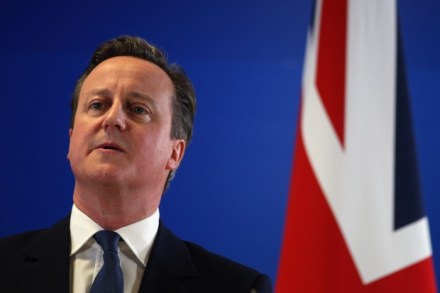
One thing grabbed my attention from David Cameron’s speech, long ago in the middle of last week. ‘We need a national crusade to get homes built.’ I’m as interested in housing as the next mother with a practically homeless grown-up daughter, but it was the word crusade that astonished me. I did not think a politician could use it now. Just after the atrocities of 11 September 2001, George Bush said: ‘This crusade, this war on terrorism, is going to take a while.’ Some listeners feared this was confirmation of a ‘clash of civilisations’. But, from the Muslim side, some objections were ill-founded historically. English-speaking warriors who set off in the 11th and 12th centuries to free the Holy Places did not call themselves crusaders.

The weird truth about the word ‘normal’

From our UK edition

‘Is Nicky Morgan too “normal” to be the next prime minister?’ asked someone in the Daily Telegraph. That would make her abnormally normal, I suppose, at least for a PM. ‘Who and what dictates what is normal?’ asked Justine Greening, the International Development Secretary, earlier this year, but, like jesting Pilate, did not stay for an answer. She posed the question because she does not like communities where ‘women normally stay at home, they normally get married very early, they normally wouldn’t vote, they normally don’t run a business’. They have been warned. Yet most people would prefer not to have an abnormal heartbeat, no matter how far out of the ordinary their opinions were.

Critique

From our UK edition

I lost my husband on the way from Malabar. He is easily lost. We had been talking about the verb critique, which we neither much care for. But, in gathering ammunition, I’d come across this charming sentence from a book of voyages translated in 1598 by William Phillip. He referred to a ‘fruite which the Malabares and Portingales call Carambolas’. Carambola, the fruit, might have given the Portuguese and Spanish the word carambola meaning ‘a cannon’ in billiards, cannon coming from carom, a reduction of the French version of the word, carambole. But there is a little place near Seville called El Carambolo.

Fuckebythenavele

From our UK edition

A great discovery has been made by Dr Paul Booth, a fellow of Keele University. It is a 14th-century example of fuck. We might think the word Anglo-Saxon, but it’s hard to find written examples before the 16th century. Chaucer never uses it. The earliest citation in the Oxford English Dictionary is in a poem from 1500 in the surprising form gxddbov. That is a cipher which, by shifting each letter back a place in the alphabet, reveals fuccant, a dog-Latin third person plural of the verb. Dr Booth was an honorary fellow of the University of Liverpool until he called the institution ‘bastards’ for its architectural shortcomings. This was held to be against its ‘Social Media Compliance Policy’. So much for academic freedom.

Twitter speak

From our UK edition

‘Tweeting’s like text messaging, isn’t it?’ said my husband confidently, though not, as usual, from any knowledge of the matter. I find the register of language in tweets interesting. The tweeter in his own right must assume an easy tone, quite different from that of the niggling troll. As far as style goes, I was impressed by Jamie Reed, the Labour MP who made public his resignation from the shadow cabinet when Jeremy Corbyn had hardly finished his acceptance speech. Mr Reed is fond of tweeting, and quite good at it. The little picture (tweeters it call an avatar) with his account shows Larry Sanders, the fictional chatshow host. Having resigned, Mr Reed later tweeted: ‘Forgot to put the bones in my shirt collars and now my train has broken down.

Credible

From our UK edition

In a wonderfully dry manual of theology on my husband’s bookshelves, written in Latin and printed in Naples in the 1830s, there is a discussion of whether ‘rustics and idiots’ are supported in their belief by ‘motives of credibility’, such as miracles. The same question has been asked about belief in Jeremy Corbyn, except that the city stands in for the country, and the idiots are often useful ones. ‘I am the only candidate who can offer a bold but credible vision,’ Andy Burnham has said. ‘I’ll have the confidence to reject Tory myths and the credibility to demolish them,’ countered Yvette Cooper. John Curtice, the political scientist, noticed that Labour MPs think Mr Corbyn’s ‘economic policy is not credible’.

Migrant

From our UK edition

Al Jazeera, the Qatari broadcaster, is going to use refugee instead of migrant in its English output. ‘The umbrella term migrant is no longer fit for purpose when it comes to describing the horror unfolding in the Mediterranean,’ one of its editors explained. ‘It has evolved from its dictionary definitions into a tool that dehumanises and distances, a blunt pejorative.’ Doubts about terminology are not new. ‘Please don’t speak of those arriving in Australia from Britain as immigrants,’ wrote the Sydney Daily Mail in 1922. ‘Call them rather migrants, because to go from Britain to Australia is only to pass from one part of Great Britain to another.’ Perhaps.

Names | 27 August 2015

From our UK edition

We reached peak Charlie in 2012, when 5,571 baby boys were given the name. There were only 4,642 last year. Perhaps the Paris massacre early this year will leave more infants than ever lisping ‘Je suis Charlie’ when they learn to talk. Names go in waves. In the Office for National Statistics list of last year’s names in England and Wales, diminutives are noticeably popular. Charlie, not Charles, is at No. 5 for boys, with Harry, not Henry, at No. 3 and Jack, not John, at No. 2. The tendency is less pronounced among girls, with the tenth most popular name being Sophie, though Lily (ninth) and Poppy (fifth) sound like diminutives.

Asexual

From our UK edition

There was a time when my husband, who often addresses the television, would habitually react to Edward Heath’s appearance on the screen with the greeting ‘Hello, sailor.’ Last week, though, the man who was Sir Edward’s principal private secretary during his time as prime minister, Robert Armstrong, now Lord Armstrong, commented on the posthumous accusations against him. ‘You usually detect some sense of sexuality when you are friends or work closely with them,’ he said of political colleagues. ‘I think he was completely asexual.’ Asexual is an anomalous word, combining a Greek prefix, signifying negation or privation, with an adjective derived from Latin.