Dot Wordsworth

What does Peter Quennell have to do with fish?

From our UK edition

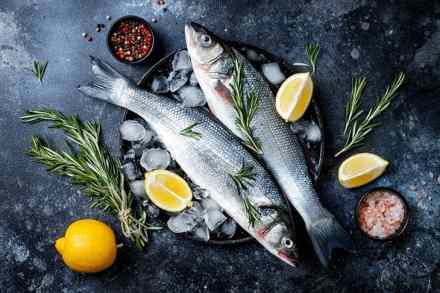
When Peter Quennell was sent down from Oxford for consorting with a woman called Cara (by Evelyn Waugh’s account), he joined Sacheverell Sitwell on honeymoon in Amalfi. I don’t know what Mrs Sitwell thought of it. I learnt this odd fact because I was seeing what connection his name had with quenelles, the fashionable dish like rissoles or gefilte fish traditionally made with pike in Nantua in France. Their quenelles are big — no fiddling around with spoons — and covered in crayfish sauce. They may be better eaten on location than tried at home. Anyway, there is no connection. The surname Quennell comes from the Old English cwen, meaning ‘woman’, and hild, ‘battle’.

How Shakespeare became ‘problematic’

From our UK edition

‘This crossword is problematic!’ exclaimed my husband, tossing aside the folded newspaper marked with a ring where his whisky glass had rested. He was being facetious, a common register of speech with him when vacancy does not take over. Problematic has acquired new life as a label for something disapproved of and therefore ripe for banning or cancelling. Thus The Tiger Who Came to Tea is ‘problematic’ to an influential pressure group called Zero Tolerance because of its ‘old-fashioned’ portrayal of women and families. Shakespeare too had problematic views on whiteness, according to people at the Globe.

The language of the victimhood war

From our UK edition

Language is used in a weird way in the victimhood war, where those who see themselves without agency bravely speak their truth to power. Their truth cannot be negated merely by examining the evidence, for it derives from lived experience. The powerful are axiomatically guilty, and must be called out for their behaviour or behaviours, as the new usage puts it. They must then own or take ownership of the issue. The Duke and Duchess of Sussex found themselves victims without agency in the racist world of the royal family. During their interview with Oprah Winfrey, they spoke of conversations between the Duke and a member of the family about their unborn son Archie and what colour his skin might be.

The language of lounging around

At the Austrian embassy in Naples, a German diplomatist asked the great beauty Madame de Ventadour if she had been in the Strada Nuova that morning. ‘What else have we to do with our mornings, we women?’ replied Madame de Ventadour. ‘Our life is a lounge from the cradle to the grave.’ How true. The observation comes in Bulwer Lytton’s novel Ernest Maltravers (1837). I was put in mind of lounging by video conferencing, which allows conferees to attend to their visible top half while wearing lounge pants below. I wasn’t too sure what lounge pants were. I don’t wear them and my husband certainly doesn’t.

lounge

Aleatory, fate and a rolling of the dice

From our UK edition

‘What do they mean, “Guess”?’ asked my husband, staring suspiciously at a page of the Daily Mail that had been used as wrapping for a secondhand book he had bought through the post. He finds old newspapers more interesting than the morning’s fresh issue. ‘Guess the definition: Aleatory (c.1690),’ it said. ‘A) A concealed repository. B) Interrogatory, always asking questions or inquiring. C) Relating to luck (especially bad luck).’ The answer was C, though I don’t know why it said ‘bad luck’. The word, deployed a little annoyingly in arty talk, comes from the Latin alea, meaning ‘dice’, or ‘die’ (the singular). Dice is a funny word too.

The dramatic evolution of ‘actor’

From our UK edition

‘That chap in Line of Duty. That’s what I’d call a bad actor,’ said my husband with vague certainty. He was responding to a remark on the wireless about Iran being a bad actor. Language, as usual, is in a state of transition. Actor is now employed to mean some person, or moral entity, acting in a good or bad way. But if you ask anyone what an actor is, the answer would be a person taking part in a drama, on stage or the equivalent. This goes to show the difference between the main meaning of a word now and the meaning of words from which it originates. Actor in the Oxford English Dictionary, which takes an historical approach, is listed with the first (obsolete) meaning of ‘a person involved in a legal action’.

The dirty truth about ‘wash-up’

From our UK edition

‘They asked me if I wanted to wash up before we even went in to dinner,’ my husband recalled with mock horror of a visit to America some years ago. He doesn’t get out much. It is true that Americans use wash up differently from us, to mean washing your hands (and perhaps face while you’re at it) rather than the plates after a meal. Of course washing your hands might be a euphemism for that other euphemism of going to the lavatory. Now there is an outbreak of wash-up in management lingo. We must learn to live with it. Annoyingly, management-speak turns perfectly good phrases into weapons of time-wasting theory. Anyway, after some team project, a meeting is arranged to see what went well, what went badly and what could have gone better.

Double dutch: the many meanings of ‘Holland’

From our UK edition

The title of the keenly awaited volume of memoirs by John Martin Robinson sounds like a crossword clue: Holland Blind Twilight. Would that be a Dutch kind of unseeing twilight or a drinking-session blind at twilight when Hollands gin is consumed? Of course not! It’s plain enough. Blinds are often made of Holland, a linen fabric. When unbleached it’s brown Holland. Holland came from Dutch Holland in the 15th century. Holland is also one of the Parts of Lincolnshire, the other two being Lindsey and Kesteven. The Parts of Lindsey are divided into Ridings (West, North and South, unlike Yorkshire). A riding is a third, from trithing a Norse affair, or in Old English thriding. One can see how the geographical designations (West, North) collided and lopped off the initial th-.

What’s the difference between ‘gifting’ and ‘giving’?

Boris Johnson, Britain’s Daily Telegraph newspaper suggests, is understood to have a personal interest in rewilding, ‘recently gifting his father beavers to release on his own Exmoor estate’. I started at the word gifting like a horse shying at a plastic bag caught in the hedge. Why didn’t I like it? My first thought was that there was a perfectly good word, giving. My second was that gifting is an obtrusive case of verbing a noun. Thirdly, it belongs to a kind of speech adopted by copywriters for luxury cruises and retirement homes. In 1996, Robert Burchfield in The New Fowler’s Modern English Usage said that gift as a verb was ‘best avoided’, as it had fallen out of favor with speakers of standard English.

gifting

The poetry behind ‘leather and prunella’

From our UK edition

‘Oh, yes,’ said my husband, enthusiastically, ‘a loathsome disease. The tongue goes black and dry.’ He was referring to an historical grouping of symptoms given the name prunella. If you are thinking it is therefore an unkind name to give a girl, that is because the name also applies to a pretty wild flower related to mint, commonly known as self-heal. Some say it was so called because it cured the disease, but the plant name is older than the disease name. There is a third meaning of prunella, in the phrase leather and prunella. This phrase used to be deployable to any middle-class readership. George Eliot and Anthony Trollope both used it, in the sense ‘a matter of indifference’.

The ding-dong over being ‘pinged’

From our UK edition

‘Ping, ping, ping went the bell,’ sang my husband, making his eyes wide and jigging in his best imitation of Judy Garland, ‘Zing, zing, zing went my heart strings.’ The effect was horrific. And ‘The Trolley Song’ doesn’t go ‘Ping, ping, ping’ but ‘Ding, ding, ding’. Everything else has been pinging, though. ‘Missing a holiday because you’ve been pinged can be a big disappointment,’ remarked the Daily Mirror, solicitously. The pinging in question is that of the NHS Test and Trace phone app. Incidentally, the government has made a breakthrough in moral philosophy during this pandemic, distinguishing between should and must.

Do the England team play football, footer, footie – or soccer?

From our UK edition

I have never been a soccer mom, described in the Washington Post as ‘the overburdened, middle-income working mother who ferries her kids from soccer practice to scouts to school’. That was in 1996, during the American election campaign when Bill Clinton wished to appeal to this stereotype. I admit there have been days devoted to Veronica and gymkhanas, but that is a different matter. I don’t understand why British writers should mind when the Americans call association football soccer. It used not to be foreign usage in this country. As Steve Hendricks, an American from Boulder, Colorado, points out in a well-researched paper on the origins of soccer, Jimmy Hill called a book Striking for Soccer (1961) and Matt Busby called another Soccer at the Top (1973).

Does it matter if Priti Patel drops her Gs?

From our UK edition

In 1923 in Whose Body? we were introduced to Lord Peter Wimsey on his way to an auction where he hoped to buy a Caxton folio from 1489 of The Four Sons of Aymon. But he had forgotten his catalogue, so said to the cab driver: ‘D’you mind puttin’ back to where we came from?’ Lord Peter drops his g’s, as people say, in the manner of the huntin’, shootin’ and fishin’ aristocracy. I’m not sure who first put that triad of gerunds together and would be grateful for early citations. But that archaic mannerism is unwelcome to some viewers from the lips of Beth Rigby of Sky News. ‘I know some of you simply hate my g-dropping accent,’ she remarked on Facebook.

Critical thinking: the difference between ‘critique’ and ‘criticise’

From our UK edition

Six years ago I wrote here about critique, as a noun or verb, and things have gone from bad to worse, as expected. I didn’t like it then, and even my husband was repelled. I had thought that people were trying to avoid the negative connotation of criticise. But both words are now used in precisely the same way. Sportswriters often reveal the real way in which words are used. The other day Mary Waltz wrote: ‘This is not a critique. But the Finland goal was a save Schmeichel makes in his sleep.’ She probably meant the same as ‘This is not a criticism’ — i.e. not a negative criticism. In America, congresswoman Ilhan Omar said recently: ‘The United States and Israel are imperfect and, like all democracies, at times deserving of critique.

The hijacking of the Scots language

A teenager in North Carolina has been revealed as the creator of a fifth or even a half of the 60,000 entries in the Scots Wikipedia. This online resource is like Wikipedia in English, except that it is in the Scottish tongue — not Gaelic, but the Lowland Scots dialect of English, a Germanic language. Robert Burns was familiar with it, but unfortunately the energetic Wikipedia compiler was not. Even his American English seems shaky. He has been at it since the age of 12. ‘The Roman Catholic Kirk is the lairgest Christian denomination in aw the warld,’ begins one entry. ‘Ane oot o ilka sax humans belangs this kirk. It is lead bi the Pape an it haes ower ae billion follaers.’ Some now ask how this could have gone on for years without anybody much noticing.

scots

Critical issue: The complex language of gender

From our UK edition

Seeing my husband in his armchair snoozing, as his unacknowledged habit is, head back, mouth open, stertorous and blotchy, it is sometimes hard to believe in the patriarchy. Along with the doctrine that we women are oppressed, a wave of terminology washes over us from the radio. Its originators believe that by gaining our acquiescence in using it, they have won a battle in the culture war. They might be right. Last week the High Court ruled that ‘gender critical’ beliefs should not lead to a woman losing her job, having her goldfish confiscated and generally becoming an hissing and a reproach among all the nations.

The difference between ‘sliver’ and ‘slither’ is a piece of cake

From our UK edition

When people say a slither of cake, do they not remember that snakes slither? ‘Slither slide; sliver small piece,’ says the Guardian style guide. ‘Writers often get this wrong.’ True. The Guardian’s sport pages recently wondered what could give ‘Man United the faintest slither of hope’. All the papers do it. I got Veronica to make one of those word-searches of a newspaper database and, of the eight occurrences of slither in British nationals in a month, only four were of the serpentine kind. Half were the erroneous spelling of sliver. To complicate matters, there is a popular way of speaking at the moment that makes no distinction between th and v.

Are we overusing ‘overhaul’?

From our UK edition

Last week, John Lewis and Marks & Spencer were overhauling their stores. Football clubs were madly overhauling teams and we women were overhauling wardrobes, if you can believe what you read in the papers. There was a clear danger of over overhauling. What do we mean by it? Overhauling implies change. But that sense has only dominated in the past 150 years. Before that, the usual meaning was to inspect or audit, in a naval context. ‘To-day I over-haul’d the Powder, and told the Lieutenant that I had twenty-three half Barrels in Store,’ wrote the Royal Navy gunner John Bulkeley in 1740. His ship, the Wager, was wrecked in remote Chile, with 140 of her people surviving. By the time another 40 had died, the men had lost confidence in the captain, David Cheap.

How the Great British Bake Off inspired Great British Railways

From our UK edition

‘Why didn’t they call it Very British Railways?’ asked my husband. Unwittingly (as in most of his remarks), he had put his finger on something odd about the new name for the nationalised rail structure, Great British Railways. It follows the model of Great British Bake Off. In 2013, the Oxford English Dictionary noticed the tendency in a quotation from a magazine published in 2006: ‘The Great British queuer is a bit of a myth.’ In that construction a reference to Great Britain is ‘used punningly, as though great rather than Great British were the modifier’. In the 19th century, the same joke was deployed in the phrase Great British Public. It had the ironic implication that the public was not so great.

‘Level’ has a bumpy history

From our UK edition

‘I must level with you, level with the British public, many more families are going to lose loved ones.’ That is what Boris Johnson said on 20 March last year. On 14 May this year, he said: ‘I have to level with you that this new variant could pose serious disruption.’ In between, the Prime Minister often spoke of levelling up. He even got the Queen at it, in her ‘Most gracious speech’, as it is formally called: ‘My government will level up opportunities across all parts of the United Kingdom.’ Mr Johnson explained how that is done: ‘These new laws are the rocket fuel that we need to level up this country.