Dot Wordsworth

The ground rules, from coffee to marriage

From our UK edition

There’s a rude gesture in Pickwick that I don’t quite understand. Mr Jackson, a young lawyer’s clerk in conversation with Mr Pickwick, ‘applying his left thumb to the tip of his nose, worked a visionary coffee-mill with his right hand, thereby performing a very graceful piece of pantomime (then much in vogue, but now, unhappily, almost obsolete) which was familiarly denominated “taking a grinder”’. When I asked my husband he said, ‘Something sexual’, which I think unlikely. I’d contemplated grinding while trying to find out whether coffee grounds are so called because they are ground-up coffee or because they are like earthy ground fallen to the bottom of the cup.

What exactly is the ‘festive season’?

From our UK edition

‘Here you are, darling,’ I said to my husband. ‘These lines might have been written for you: “Drinke, quaffe, be blith; oh how this festive joy / Stirs up my fury to revenge and death.”’ ‘Very Christmassy,’ he agreed. The lines came from a series of five plays by Shakespeare’s contemporary Thomas Heywood, in which he canters through classical mythology. Here Althea is commenting on her plan to kill her own son Meleager at a feast by consigning to the fire the piece of firewood that magically preserves his life. He feels as though the fires of Etna were in his bosom and dies. It was not of course a family Christmas, which was yet to be invented.

We are in a perfect storm of perfect storms

From our UK edition

When my husband’s whisky glass fell off the little table next to his chair on to next door’s cat, which was on an unauthorised visit, provoking it to make a speedy exit, en route scratching the postman, who had for a change that afternoon rung the bell to deliver a parcel instead of putting a little card through the door saying we were out, it was, my husband averred, a perfect storm. He really meant he had fallen asleep and let his copy of The Spectator fall. We are in a perfect storm of perfect storms. ‘A perfect storm has arisen due to a combination of factors relating to Brexit and the pandemic,’ wrote someone in the Times about the petrol shortage. I fear the tempest will blow more perfectly yet.

The problem with ‘bame’

From our UK edition

In its coverage of the shuffled cabinet, the BBC added a note: ‘BAME (Black, Asian and Minority Ethnic) is a term widely used in the UK to describe people of non-white descent, as defined by the Institute of Race Relations.’ The Institute of Race Relations was founded in 1958, but in 1972, by its own account, it became ‘an anti-racist thinktank’ and began to focus on ‘direct analyses of institutionalised racism in Britain’. Earlier this year, its director Liz Fekete complained about the government indicating it would abolish, as recommended by the Sewell report from the Commission on Race and Ethnic Disparities, the concept of BAME in data collection.

The link between spick and span, spanking and spoon

I ‘hoovered’ on Saturday (as we say in Britain for vacuuming) while my husband was out ‘exercising’. I don’t know whether he attracts dust, like a piece of amber, or produces it, as if by spontaneous combustion in slow motion. Anyway, when he settled in his chair again, he ran his finger rather annoyingly over the table next to him and said encouragingly: ‘Spick and span.’ It’s a curious expression, since neither part seems to have any meaning on its own. The table wasn’t spick. Nor was it span. The earliest known use of the phrase is by Thomas North in 1571, in his translation of Plutarch’s life of Aemilius Paullus, called Macedonicus not because he came from there but because he beat the Macedonians in battle.

spick

Why do ministers – and bakers – love a rollout?

From our UK edition

I was rolling out some pastry that had been cooling its pudgy heels in the fridge when voices on the wireless began discussing whether Priti Patel would roll out ‘controversial new tactics to turn migrants back mid-Channel’. I felt that our rolling roles belonged to different realms. For pastry, I have a rolling pin. How does one go about rolling out tactics? I had thought that such things might be rolled out as though they were barrels. That depressing song from the beginning of the war (as we still call it) urges us to ‘roll out the barrel. We’ll have a barrel of fun.’ If not a barrel, then perhaps a carpet is the figurative thing. We have been rolling out red carpets for 200 years, though not necessarily in those exact terms.

What does Peter Quennell have to do with fish?

From our UK edition

When Peter Quennell was sent down from Oxford for consorting with a woman called Cara (by Evelyn Waugh’s account), he joined Sacheverell Sitwell on honeymoon in Amalfi. I don’t know what Mrs Sitwell thought of it. I learnt this odd fact because I was seeing what connection his name had with quenelles, the fashionable dish like rissoles or gefilte fish traditionally made with pike in Nantua in France. Their quenelles are big — no fiddling around with spoons — and covered in crayfish sauce. They may be better eaten on location than tried at home. Anyway, there is no connection. The surname Quennell comes from the Old English cwen, meaning ‘woman’, and hild, ‘battle’.

How Shakespeare became ‘problematic’

From our UK edition

‘This crossword is problematic!’ exclaimed my husband, tossing aside the folded newspaper marked with a ring where his whisky glass had rested. He was being facetious, a common register of speech with him when vacancy does not take over. Problematic has acquired new life as a label for something disapproved of and therefore ripe for banning or cancelling. Thus The Tiger Who Came to Tea is ‘problematic’ to an influential pressure group called Zero Tolerance because of its ‘old-fashioned’ portrayal of women and families. Shakespeare too had problematic views on whiteness, according to people at the Globe.

The language of the victimhood war

From our UK edition

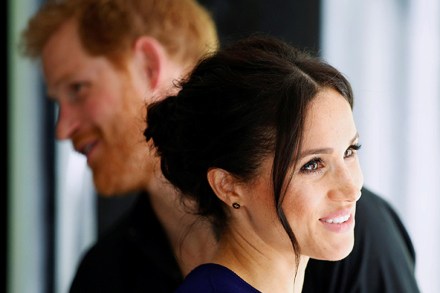
Language is used in a weird way in the victimhood war, where those who see themselves without agency bravely speak their truth to power. Their truth cannot be negated merely by examining the evidence, for it derives from lived experience. The powerful are axiomatically guilty, and must be called out for their behaviour or behaviours, as the new usage puts it. They must then own or take ownership of the issue. The Duke and Duchess of Sussex found themselves victims without agency in the racist world of the royal family. During their interview with Oprah Winfrey, they spoke of conversations between the Duke and a member of the family about their unborn son Archie and what colour his skin might be.

The language of lounging around

At the Austrian embassy in Naples, a German diplomatist asked the great beauty Madame de Ventadour if she had been in the Strada Nuova that morning. ‘What else have we to do with our mornings, we women?’ replied Madame de Ventadour. ‘Our life is a lounge from the cradle to the grave.’ How true. The observation comes in Bulwer Lytton’s novel Ernest Maltravers (1837). I was put in mind of lounging by video conferencing, which allows conferees to attend to their visible top half while wearing lounge pants below. I wasn’t too sure what lounge pants were. I don’t wear them and my husband certainly doesn’t.

lounge

Aleatory, fate and a rolling of the dice

From our UK edition

‘What do they mean, “Guess”?’ asked my husband, staring suspiciously at a page of the Daily Mail that had been used as wrapping for a secondhand book he had bought through the post. He finds old newspapers more interesting than the morning’s fresh issue. ‘Guess the definition: Aleatory (c.1690),’ it said. ‘A) A concealed repository. B) Interrogatory, always asking questions or inquiring. C) Relating to luck (especially bad luck).’ The answer was C, though I don’t know why it said ‘bad luck’. The word, deployed a little annoyingly in arty talk, comes from the Latin alea, meaning ‘dice’, or ‘die’ (the singular). Dice is a funny word too.

The dramatic evolution of ‘actor’

From our UK edition

‘That chap in Line of Duty. That’s what I’d call a bad actor,’ said my husband with vague certainty. He was responding to a remark on the wireless about Iran being a bad actor. Language, as usual, is in a state of transition. Actor is now employed to mean some person, or moral entity, acting in a good or bad way. But if you ask anyone what an actor is, the answer would be a person taking part in a drama, on stage or the equivalent. This goes to show the difference between the main meaning of a word now and the meaning of words from which it originates. Actor in the Oxford English Dictionary, which takes an historical approach, is listed with the first (obsolete) meaning of ‘a person involved in a legal action’.

The dirty truth about ‘wash-up’

From our UK edition

‘They asked me if I wanted to wash up before we even went in to dinner,’ my husband recalled with mock horror of a visit to America some years ago. He doesn’t get out much. It is true that Americans use wash up differently from us, to mean washing your hands (and perhaps face while you’re at it) rather than the plates after a meal. Of course washing your hands might be a euphemism for that other euphemism of going to the lavatory. Now there is an outbreak of wash-up in management lingo. We must learn to live with it. Annoyingly, management-speak turns perfectly good phrases into weapons of time-wasting theory. Anyway, after some team project, a meeting is arranged to see what went well, what went badly and what could have gone better.

Double dutch: the many meanings of ‘Holland’

From our UK edition

The title of the keenly awaited volume of memoirs by John Martin Robinson sounds like a crossword clue: Holland Blind Twilight. Would that be a Dutch kind of unseeing twilight or a drinking-session blind at twilight when Hollands gin is consumed? Of course not! It’s plain enough. Blinds are often made of Holland, a linen fabric. When unbleached it’s brown Holland. Holland came from Dutch Holland in the 15th century. Holland is also one of the Parts of Lincolnshire, the other two being Lindsey and Kesteven. The Parts of Lindsey are divided into Ridings (West, North and South, unlike Yorkshire). A riding is a third, from trithing a Norse affair, or in Old English thriding. One can see how the geographical designations (West, North) collided and lopped off the initial th-.

What’s the difference between ‘gifting’ and ‘giving’?

Boris Johnson, Britain’s Daily Telegraph newspaper suggests, is understood to have a personal interest in rewilding, ‘recently gifting his father beavers to release on his own Exmoor estate’. I started at the word gifting like a horse shying at a plastic bag caught in the hedge. Why didn’t I like it? My first thought was that there was a perfectly good word, giving. My second was that gifting is an obtrusive case of verbing a noun. Thirdly, it belongs to a kind of speech adopted by copywriters for luxury cruises and retirement homes. In 1996, Robert Burchfield in The New Fowler’s Modern English Usage said that gift as a verb was ‘best avoided’, as it had fallen out of favor with speakers of standard English.

gifting

The poetry behind ‘leather and prunella’

From our UK edition

‘Oh, yes,’ said my husband, enthusiastically, ‘a loathsome disease. The tongue goes black and dry.’ He was referring to an historical grouping of symptoms given the name prunella. If you are thinking it is therefore an unkind name to give a girl, that is because the name also applies to a pretty wild flower related to mint, commonly known as self-heal. Some say it was so called because it cured the disease, but the plant name is older than the disease name. There is a third meaning of prunella, in the phrase leather and prunella. This phrase used to be deployable to any middle-class readership. George Eliot and Anthony Trollope both used it, in the sense ‘a matter of indifference’.

The ding-dong over being ‘pinged’

From our UK edition

‘Ping, ping, ping went the bell,’ sang my husband, making his eyes wide and jigging in his best imitation of Judy Garland, ‘Zing, zing, zing went my heart strings.’ The effect was horrific. And ‘The Trolley Song’ doesn’t go ‘Ping, ping, ping’ but ‘Ding, ding, ding’. Everything else has been pinging, though. ‘Missing a holiday because you’ve been pinged can be a big disappointment,’ remarked the Daily Mirror, solicitously. The pinging in question is that of the NHS Test and Trace phone app. Incidentally, the government has made a breakthrough in moral philosophy during this pandemic, distinguishing between should and must.

Do the England team play football, footer, footie – or soccer?

From our UK edition

I have never been a soccer mom, described in the Washington Post as ‘the overburdened, middle-income working mother who ferries her kids from soccer practice to scouts to school’. That was in 1996, during the American election campaign when Bill Clinton wished to appeal to this stereotype. I admit there have been days devoted to Veronica and gymkhanas, but that is a different matter. I don’t understand why British writers should mind when the Americans call association football soccer. It used not to be foreign usage in this country. As Steve Hendricks, an American from Boulder, Colorado, points out in a well-researched paper on the origins of soccer, Jimmy Hill called a book Striking for Soccer (1961) and Matt Busby called another Soccer at the Top (1973).

Does it matter if Priti Patel drops her Gs?

From our UK edition

In 1923 in Whose Body? we were introduced to Lord Peter Wimsey on his way to an auction where he hoped to buy a Caxton folio from 1489 of The Four Sons of Aymon. But he had forgotten his catalogue, so said to the cab driver: ‘D’you mind puttin’ back to where we came from?’ Lord Peter drops his g’s, as people say, in the manner of the huntin’, shootin’ and fishin’ aristocracy. I’m not sure who first put that triad of gerunds together and would be grateful for early citations. But that archaic mannerism is unwelcome to some viewers from the lips of Beth Rigby of Sky News. ‘I know some of you simply hate my g-dropping accent,’ she remarked on Facebook.

Critical thinking: the difference between ‘critique’ and ‘criticise’

From our UK edition

Six years ago I wrote here about critique, as a noun or verb, and things have gone from bad to worse, as expected. I didn’t like it then, and even my husband was repelled. I had thought that people were trying to avoid the negative connotation of criticise. But both words are now used in precisely the same way. Sportswriters often reveal the real way in which words are used. The other day Mary Waltz wrote: ‘This is not a critique. But the Finland goal was a save Schmeichel makes in his sleep.’ She probably meant the same as ‘This is not a criticism’ — i.e. not a negative criticism. In America, congresswoman Ilhan Omar said recently: ‘The United States and Israel are imperfect and, like all democracies, at times deserving of critique.