Dot Wordsworth

Critical issue: The complex language of gender

From our UK edition

Seeing my husband in his armchair snoozing, as his unacknowledged habit is, head back, mouth open, stertorous and blotchy, it is sometimes hard to believe in the patriarchy. Along with the doctrine that we women are oppressed, a wave of terminology washes over us from the radio. Its originators believe that by gaining our acquiescence in using it, they have won a battle in the culture war. They might be right. Last week the High Court ruled that ‘gender critical’ beliefs should not lead to a woman losing her job, having her goldfish confiscated and generally becoming an hissing and a reproach among all the nations.

The difference between ‘sliver’ and ‘slither’ is a piece of cake

From our UK edition

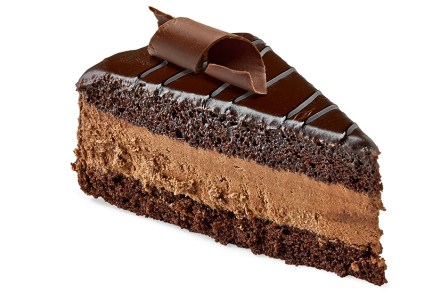
When people say a slither of cake, do they not remember that snakes slither? ‘Slither slide; sliver small piece,’ says the Guardian style guide. ‘Writers often get this wrong.’ True. The Guardian’s sport pages recently wondered what could give ‘Man United the faintest slither of hope’. All the papers do it. I got Veronica to make one of those word-searches of a newspaper database and, of the eight occurrences of slither in British nationals in a month, only four were of the serpentine kind. Half were the erroneous spelling of sliver. To complicate matters, there is a popular way of speaking at the moment that makes no distinction between th and v.

Are we overusing ‘overhaul’?

From our UK edition

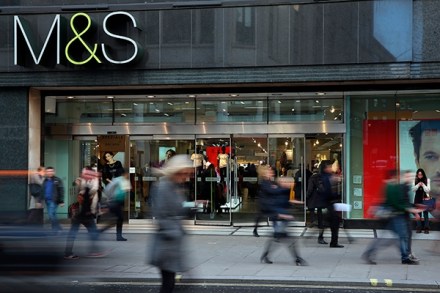
Last week, John Lewis and Marks & Spencer were overhauling their stores. Football clubs were madly overhauling teams and we women were overhauling wardrobes, if you can believe what you read in the papers. There was a clear danger of over overhauling. What do we mean by it? Overhauling implies change. But that sense has only dominated in the past 150 years. Before that, the usual meaning was to inspect or audit, in a naval context. ‘To-day I over-haul’d the Powder, and told the Lieutenant that I had twenty-three half Barrels in Store,’ wrote the Royal Navy gunner John Bulkeley in 1740. His ship, the Wager, was wrecked in remote Chile, with 140 of her people surviving. By the time another 40 had died, the men had lost confidence in the captain, David Cheap.

How the Great British Bake Off inspired Great British Railways

From our UK edition

‘Why didn’t they call it Very British Railways?’ asked my husband. Unwittingly (as in most of his remarks), he had put his finger on something odd about the new name for the nationalised rail structure, Great British Railways. It follows the model of Great British Bake Off. In 2013, the Oxford English Dictionary noticed the tendency in a quotation from a magazine published in 2006: ‘The Great British queuer is a bit of a myth.’ In that construction a reference to Great Britain is ‘used punningly, as though great rather than Great British were the modifier’. In the 19th century, the same joke was deployed in the phrase Great British Public. It had the ironic implication that the public was not so great.

‘Level’ has a bumpy history

From our UK edition

‘I must level with you, level with the British public, many more families are going to lose loved ones.’ That is what Boris Johnson said on 20 March last year. On 14 May this year, he said: ‘I have to level with you that this new variant could pose serious disruption.’ In between, the Prime Minister often spoke of levelling up. He even got the Queen at it, in her ‘Most gracious speech’, as it is formally called: ‘My government will level up opportunities across all parts of the United Kingdom.’ Mr Johnson explained how that is done: ‘These new laws are the rocket fuel that we need to level up this country.

Shakespeare didn’t need to know the difference between ‘its’ and ‘it’s’

From our UK edition

An item on the BBC news site didn’t mean what it said: ‘The latest move is part of a wider crackdown by China to reign in the country’s fast-growing tech platforms.’ China may wish long to reign over us, but in this case it wanted to rein in activity. It wasn’t that the author didn’t know the difference between a horse’s rein and a monarch’s reign. But the moribund metaphor of reining in allowed a homophone to sneak in. If there was a spell-checker on the author’s computer, it would have let it through. I find that a very common spelling mistake is lead in place of led, as in ‘Boris led the party from victory to victory’.

The shifting language of shame

From our UK edition

As his tweed jacket flapped open to one side of his stomach, my husband stood up unsteadily and arched his arm, jabbing his finger towards me and chanting: ‘Shame on you! Shame on you!’ It didn’t work, because I’ve been living with him so long that, as Berowne says in Love’s Labour’s Lost, ‘We are shame-proof’. His little performance was in response to some news item about Tell the Truth, a spin-off of Extinction Rebellion. Its members don’t actually want journalists to tell the truth, but to do as they say. Their first ‘demand’ is that the climate crisis ‘must be front-page news every single day’. They also demand we change our language.

The dirty truth about ‘sleaze’

From our UK edition

‘Sleaze, sleaze, sleaze!’ exclaimed Sir Keir Starmer in Prime Minister’s Questions last week, hoping that a triple serving might stick. He meant to suggest financial corruption, though his language came from the hospitable semantic field that also corrals sexual meanings. The sexually dirty also overlaps constantly with the literally dirty. In 2013 Ukip’s Godfrey Bloom remarked that women who didn’t clean behind the fridge were ‘sluts’. This annoyed women who didn’t clean anywhere (but paid foreigners minimal rates to do it) and women who said that his was a sexual accusation.

What’s so great about ‘super’?

From our UK edition

‘Wizard,’ said William. ‘Super,’ said Ginger, in William and the Moon Rocket (1954). More recently we have had Alex Salmond, the leader of the new Alba party (a grand coalition embracing albinos, Albanians, albatrosses and Albigensians) declaring that it can achieve in Scotland ‘a supermajority for independence’. Is a supermajority even a thing? (This form of question, with thing, has been asked by the Americans since about the year 2000, according to the OED.) The Guardian has found evidence that the term supermajority is puzzling voters. How big is it? Does it have a legal effect? Again, it is America that came up with supermajority. In Congress, a two-thirds majority is needed to override a presidential veto.

How ‘ACAB’ links David Bowie and BLM

From our UK edition

A favourite piece of graffiti to spray on the Cenotaph or the plinth of Churchill’s nearby statue is ACAB. It stands for ‘All coppers are bastards’, though Americans substitute the word cops for coppers. In graffiti form it is sometimes rendered 1312, from the place of the letters in the alphabet. As a slogan, ACAB was taken up by Black Lives Matter. In an Independent comment piece, Victoria Gagliardo-Silver declared that ‘ACAB means every single police officer is complicit in a system that actively devalues the lives of people of colour’. It has come a long way from an uncontroversial statement among the criminal classes of my youth in the 1960s about their natural enemies. The phrase was always associated with song.

The uncomfortable truth about ‘shonky’

From our UK edition

A reader sent in a television preview from the Daily Star for Tarantino’s Inglourious Basterds in which ‘Brad Pitt leads a squad of Jewish-American soldiers on a Nazi killing spree’. The film, it added, is ‘not as funny as ’Allo ’Allo! but Pitt raises laughs out of his shonky language skills’. The reader was shocked by what she thought a crude piece of anti-Semitic vocabulary. I am old enough to be aware of shonky as an offensive term referring to Jews, but I don’t think that was meant here. Indeed it is frequently used in the papers to mean ‘wobbly’ (as if it were wonky) or ‘ropy’.

Where did Alex Salmond’s ‘Alba’ party get its name from?

From our UK edition

‘What, old monkey-face!’ said my husband with unnecessary lack of gallantry. He was referring to the 18th Duchess of Alba, who held 40 titles of nobility and died in 2014. She was a bit out of his league, but it is true that her bone structure came to give her face a simian air. As usual my husband had got it all wrong. Alex Salmond did not name his new party after the Spanish dukedom of Alba that gave the world the Dutch-clobbering 3rd Duke in the 16th century. That duke’s followers were called Albistas, which might come in handy as a label for the Salmond group. The new party’s name is that of Scotland in Irish and Gaelic. The BBC has had a Gaelic television channel called Alba since 2008.

Is it exotic to vibrate?

From our UK edition

‘Think yourself lucky,’ said my husband when I told him about poor John Stuart Mill’s mother, who had nine children by a man strongly in favour of birth control and who brought up his children ‘in the absence of love and in the presence of fear’. Parenthetically, I have only just discovered that the Mill family name had been Milne, changed to sound less Scottish. Gladstone’s name in his youth was Gladstones. Arthur Wellesley, later Duke of Wellington, only changed his name from Wesley at the age of 29. Why are so many great men pseudonymous?

‘Sacred space’ has become a crowded marketplace

From our UK edition

‘This is the book that horses wish every equestrian would read,’ says the blurb for Sacred Spaces: Communion with the horse through science and spirit by Dr Susan Fay. It might sound like putting the cart before the horse to have equines deciding our reading list, but everyone wants a bit of space at the moment. ‘Thank you for giving us the space,’ said the Duchess of Sussex to Oprah Winfrey at the end of their ample airtime. This is not Star Trek’s ‘space, the final frontier’, nor yet the spatium verae paenitentiae, the time for repentance, that the Christian asks before death. Yet space is the prime thing now seen as sacred.

The concrete truth about ‘Formica’

From our UK edition

If I ever again accompany my husband to a medical conference in Spain, and want to tell my hosts that I am embarrassed (as he often makes me), I should not say embarazada, for that word means ‘pregnant’, which at my age would be unusual. Such false friends can add to the gaiety of foreign travel. Among false friends, I must confess to assuming, all my adult life, that Formica, the kitchen laminate, had something to do with the ant, formica in Latin. It came as a shock last week to discover that the inventors in 1913 simply meant Formica as a substitute ‘for mica’. Mica was an electrical insulator — the original purpose of Formica. In my defence, it is true that Formica, fabric coated with resin, did use bakelite as a resin.

The word ‘like’ is in crisis

From our UK edition

‘Blame Kingsley Amis,’ said my husband, with the carelessness of one defying a man out of earshot. The blame, such as it was, lay in the title of the novel Take a Girl Like You (1960). The ambiguity in the title, he maintained, was between like meaning ‘such as’ and like meaning ‘resembling’. There is something in what he says. Like has been in crisis for a generation on several fronts. The most hated is probably like as an oral filler, along with you know or sort of. A second annoying usage is stranger: like introducing a made-up quotation serving as an adjective. An example would be to replace ‘He was angry’ with the construction: ‘He was, like: “Just leave me alone”.

‘Espouse’ has become divorced from its meaning

From our UK edition

What do people think espouse means? It looks fairly plain, since spouses are to have and to hold, or indeed embrace. That applies to opinions, metaphorically. But King’s College, London, mounted a survey in 2019 and found that 26 per cent of students agreed or strongly agreed with the statement: ‘If someone is using hate speech or making racially charged comments, physical violence can be justified to prevent the person from espousing their hateful views.’ I read that in a letter to the Daily Telegraph from Professor Jonathan Grant. He said that 20 per cent of the general population agreed. But here espousing is used as though it meant ‘expounding’ or ‘preaching’.

From bread to Kate Bingham: the evolution of ‘nimble’

From our UK edition

‘I’ll stick to being Brazilian,’ said my husband. It was a family joke. Every time a politician on the radio says resilient, the first to shout out Brazilian wins. I haven’t yet discovered what the prize is, though we have been playing the game since 2014, when I wrote about resilience here. My husband may be resilient, even robust (another political watchword), but the newest favourite is nimble, and I don’t think he’s up to that. Ursula von der Leyen called Britain ‘a nimble speedboat’ in its vaccine provision. Actually, though she did say speedboat, I think nimble was supplied by the Sun.

The rudeness of calling Jane Austen by her surname

From our UK edition

I agree with Charles Moore (The Spectator, 6 February) that it is a shame the Times is dropping its use of titles of courtesy — Mrs, Mr, Lord — at the second mention of anyone in a report. Now it’s Charles Moore first mention, and Moore after that. Even when I see Jane Austen referred to as ‘Austen’ I feel it a little rude. It makes her sound like a convict, or at best the cook below stairs in some historical drama. ‘Austen, there will be 14 to dinner and please ensure the duck is thoroughly done.’ This is partly a question of sex. I wouldn’t like to be called Wordsworth, noble name though it be, without the Mrs. My husband, even if stripped of Dr, is old enough to remember surnames used alone as a mark of friendship between men.

The dark roots of ‘grim’

From our UK edition

‘Thus I refute Bishop Berkeley,’ said my husband, multitasking by kicking the stone and slightly misquoting Samuel Johnson at the same time. It was his (my husband’s) notion of a little joke. Dr Johnson had demonstrated with his own kick the falsehood of thinking that all things are merely ideal, not material. The stone my husband kicked was a milestone outside the Royal Geographical Society in Kensington Gore. It said ‘To Hounslow 9 miles’ and ‘To London (Hyde Park Corner) 1 mile’. Helpfully, a manicule pointed out which way was which. I’m still unsure where Bishop Berkeley comes into this, but milestones have been everywhere recently, all of them grim.