Deborah Ross

Deborah Ross is the chief film critic of The Spectator

Divine Diana

I don’t care much for fashion — ask anyone; I’ve even lately surrendered to the fleece — and don’t care for fashion magazines at all. They have nothing to say to my life. They’ve never even featured ‘top ten fleeces of the season’, as far as I know. But this isn’t to say I don’t enjoy the odd mischievous trip behind the scenes. I loved The Devil Wears Prada, starring my friend Meryl, with whom I have dined. I loved The September Issue, the fly-on-the-wall about American Vogue and Anna Wintour, although the only thing I can now remember is being fixated with Ms Wintour’s bob which, one day, will surely join under the chin, as if she’d grown her own snood.


Star quality

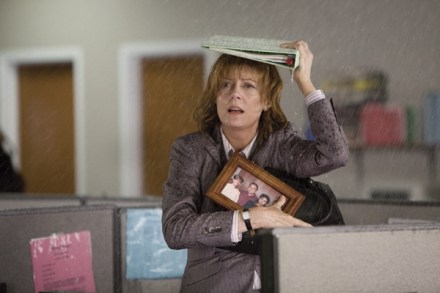
Hope Springs is a comedy drama about a long-term marriage that has effectively stalled, and is one of those films that is only as good as its stars. Luckily, in this instance, the stars are Meryl Streep and Tommy Lee Jones. Meryl, we know about. I once had dinner with Meryl, and have talked of little else since, until I realised it got on everybody’s nerves, but have gaily continued nonetheless. She is the greatest film actress of her generation, our generation, any generation. She could play my left shoe, if she put her mind to it. She may even be playing my left shoe right now. How would I know? But Mr Lee Jones? (I don’t feel matey enough to call him by his first name.) He has a face like an old-style leather football that’s been left out in the rain, year after year.

This world really is a stage

Joe Wright’s adaptation of Anna Karenina is so bold and audacious its bold audacity becomes the story, rather than the actual story itself. This is both a strength — it is always visually dazzling, inventive and surprising — and a weakness, as it is so goddamn distracting. The entire action, more or less, is set in an old decaying theatre beneath a proscenium arch with its own backstage, balconies and rat runs, and an origami-ish ability to fold in on itself, or fold out on itself to become ballroom or bedroom, and even horse-race track. According to Wright, this makes sense as high society in Tsarist Russia was all about performance, and fakery — their whole world was truly a stage — but it is also mise en scène gone totally mental.

No laughing matter | 25 August 2012

It’s a brave soul who buys a cinema ticket at this time of year, when all the studios try to bury their rubbish, and it’s a brave soul who buys a ticket to The Watch. This is a comedy starring Ben Stiller, Vince Vaughn, Jonah Hill and Richard Ayoade as four suburban men who take on an alien invasion in their neighbourhood. Actually, there are some good things about this film, which I will list here: * It does end, eventually. * ...nope, that’s it. And the bad things: * I did not laugh the once. I do not believe I even smiled, mildly. * This wants to be (I think) Invasion of the Body Snatchers via Ghostbusters and Attack the Block but succeeds in being nothing but its own dreadful, pitiful, tedious self.

Scattergun speed-dating

OK, let’s get this over with quickly so we can all hurry back to watching the Olympics. I’m obsessed by the Olympics (Go, Mo, go!; Yes, Jess, yes!) and all our gold medals. It’s like we can’t stop being showered with them. In fact, I went to the corner shop just now and came back with four, after a standing ovation! So is 360 worth tearing yourself away from, say,  the synchronised swimming — or ‘designer drowning’, as it is known in our house — for or not? It certainly has magnificent credentials. It is directed by Fernando Meirelles, who also directed The Constant Gardener and City of God, one of my favourite films of all time, for what it’s worth, which may not be much.

Druggy bear

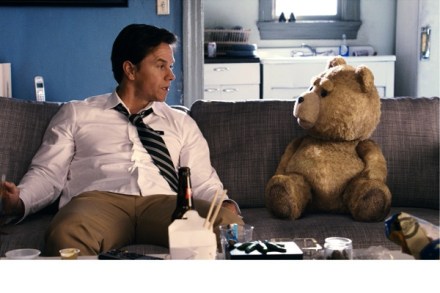
The greatest compliment I can pay Seth MacFarlane’s Ted is that although this is essentially one of those slacker, stoner comedies, and such comedies aren’t really my thing — too old, too tired, only once had a joint and it made me feel sick then my knees went  all funny — this did make me laugh quite a bit. It’s about a teddy bear that comes alive to fulfil the dream and friendship needs of a lonely little boy. Years later, the two are still living together, in a state of extended adolescence, although it is Ted who is the bad influence. Ted has a potty-mouth. Ted has a dirty mind. Ted smokes weed. Ted likes a drink. Ted is fond of hookers, even though he has no penis.

Where is he now

In the late 1960s, a Mexican-American singer-songwriter is signed to a record label after two Motown producers see him performing in a seedy Detroit dive called The Sewer. He delivers two albums, which receive rave reviews (he is compared to Bob Dylan; some say he is better than Bob Dylan), but nobody buys them, so he drops from sight, and would have stayed dropped from sight, but for one remarkable twist: unbeknownst to him, particularly as he never saw any royalties, he had become a massive hit in apartheid-era South Africa, outselling both Elvis and the Rolling Stones. The artist is Sixto Rodriguez and this film, his story, is the best, most touching, most humbling documentary I’ve ever seen about a musician I’ve never heard of.

Old and bold

Two films this week, one about oldies who play table tennis at an international level and another that is a love story funded by an Oxfordshire village, whose inhabitants feature as bit-part characters and extras. And I’ll be upfront about it: one is rather good whereas, although I’d have liked to like the other, and said it was sweet and charming, it wasn’t, so I can’t. Either way, at least there isn’t a reboot of a rebooted comic book movie that ‘redefines the genre’ — until everyone realises it does not — in sight. You get what I’m saying? Good. Let’s move on. Ping Pong is a documentary about the over-80s table tennis world championships. Who knew? I didn’t.

Male order

For those of you who scan speedily to the bottom of reviews to see if a film is worth seeing — don’t worry; I always do it myself — I thought I would do you a favour and put the last paragraph first, as follows: Is Steven Soderbergh’s Magic Mike worth seeing? Yes. But also ‘no’. But mainly ‘yes’. So it’s a ‘yes’ with some ‘no’ caveats. I can now see this isn’t so helpful. Best scan, I’m afraid. Still, at least you know I’m on your side.

Tangled web

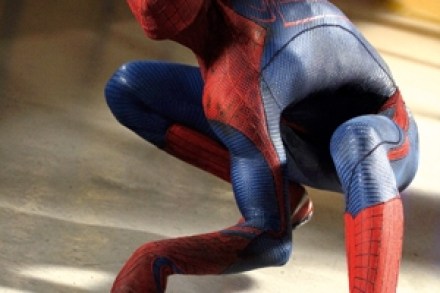
The Amazing Spider-Man isn’t so amazing, actually, and is a reboot of a remake, or a remake of a reboot, or a remake rebooted, and remade, rebootingly. It’s hard to keep up with these franchises when they swish back and forth all the time, determined to squeeze every last penny out of cinemagoers who should have more sense, yet don’t seem to mind sitting though the same film over and over. This has an excellent cast: Andrew Garfield, Sally Field, Martin Sheen, Emma Stone. It is 3D. The CGI is state-of-the art. And, fair play, it does try to inject meaningful emotion.

Two’s company

So, another week, and another Judd Apatow comedy — The Five-Year Engagement — rolls into town, and blah-de-blah-de-blah and yet more blah-de-blah-de-blah although the difference this time, which I feel honour-bound to mention, is that I totally loved it. I laughed. I cried (twice; properly). It is funny, even though no one falls on top of an expensive wedding cake or brings down a giant display of china in a department store. It has emotional heft, with no frantic, last-minute drives to the airport, just a male and female lead who not only share actual, proper, bona fide chemistry — hallelujah! Praise be!— but are also allowed to go head-to-head as equals. I like romcoms, or at least the falling-in-love possibilities offered by them.

Dangerous liaisons

A Royal Affair is a beautifully mounted historical drama which goes right where so many films of this type go wrong: it doesn’t get distracted by carriages and candlelight and pretty frocks and balls and sumptuous feasts, but keeps its eye firmly and surely on character and story and, my, what a fascinating story it is. Set in late-18th-century Denmark, it is the account of a love triangle between a German doctor, the Queen of Denmark and her imbecilic husband, the King, which sounds preposterous, but is actually based on a true event that not only led to scandal but also ultimately transformed the country.

Whisky galore

Ken Loach’s The Angels’ Share, which has just won the Jury Prize at Cannes, is part social realism, part comedy caper, and so good-natured, warm and affectionate it’s rather a joy, even though it doesn’t exactly add up; even though its climax is implausible, its tonal shifts are sometimes jarring, and it feels so familiar. It’s quite Bill Forsythian (with particular reference to his first ever feature, That Sinking Feeling, since you didn’t ask, but should have) via Whisky Galore! and The Full Monty.

Birth pains

As a general rule, what to expect when you are expecting is a baby, which is always kind of miraculous, but the way everyone carries on in this film you’d think nobody had ever had one before. This is odd, particularly as the latest research has proven that having babies predates the iPod, internet and digital photography, and may even predate the Breville sandwich toaster, although this is not yet known for certain. Still, this all-star ensemble mash-up treats pregnancy as if it were the very latest news, and although it’s meant to be a comedy, did I laugh? I might never have stopped but for one small thing, which I feel obliged to mention: I never started. I sat there stony-faced like a stone, with a face.

Tough at the top

The first thing you should know is that I love, adore and worship Sacha Baron Cohen and have this fantasy whereby we get married and set up home in Notting Hill as a power couple and when the phone rings and it’s Richard Branson I will say, ‘I’m so sorry, Dick, but we can’t come to Necker Island next week as we’ve promised to go away with Charles and Nigella. We know, boring, but we can’t cancel them again.’ Baron Cohen is, I believe, the greatest comic film-maker working today, and although The Dictator is not up there with Borat, or even his Ali G television persona, as it’s so much broader and more familiar, I would not allow this to come between us. ‘Sacha,’ I would say to him at the breakfast table, ‘pass the toast.

Flaws with a clause

Jeff, Who Lives at Home is a film about Jeff, who lives at home, and that’s enough subordinate clauses for one day. (Don’t be greedy; you know how fattening they are.) It’s a comedy from the Duplass brothers, Mark and Jay, who have previously made small films that have been well received (The Puffy Chair, Cyrus), and this is their first big film although it’s a small big film, coming in at 83 minutes, which, in its small way, is quite big enough. It’s a whimsical comedy and, as far as whimsical comedies go, it is quite whimsical, and sometimes comedic, which is fair enough, but ultimately it is slight and repetitive and nothing sticks in the mind.

The gentle touch

OK, no funny business this week. Just a straightforward review. No interrogative techniques. No verse. No sky-writing. I don’t have the time. Or the energy. I have a life. It’s quite a crappy one, full of ennui — who are these people who say there aren’t enough hours in the day? There are far too many! — but if I don’t attend to it, who will? (If you leave ennui to its own devices, it will take over your gutters, and then fur up your pipes, and, if it doesn’t get into the brickwork, you’re lucky.

What a marvel!

As last week I believe I provided the world’s first entirely interrogative film review, I thought that this week I would up the stakes and embroider this review on antimacassars, in mirror writing — this has also never been done before, as far as I know — but time, alas, proved my great enemy, so I’m afraid I have simply written it in verse instead. I hope you will forgive me. Avengers Assemble, my lovelies, is ‘the superhero event of the year’, And if this gets you all excited, you probably have nothing to fear. But if big action so big it’s humongous just isn’t really your thing, You may find, as I did, it drags, with its surfeit of CGI bling.

No flies on me

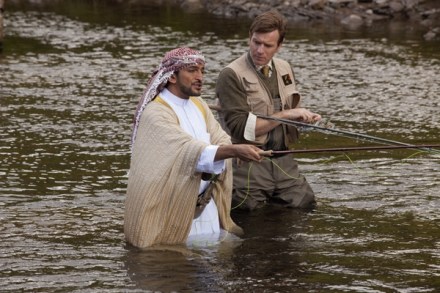
Ladies and gentleman, boys and girls, anyone who happens to be passing, I have decided to quiz myself about this week’s film, for no other reason than the idea occurred to me, and I fancied it, so here goes: Salmon Fishing in the Yemen, any good? No. That it? OK, if this film teaches us anything, it teaches us how to take a perfectly fine book — Paul Torday’s novel of the same name — and transform it into a mushy, corny, ghastly mess of the most trying kind. How would you describe the viewing experience? Like swimming upstream yourself, but through treacle, and with someone heavy strapped to your back. How heavy? Someone like Eric Pickles, say. I wouldn’t like Eric Pickles strapped to my back, I don’t think.

Routine carnage

If you go down to The Cabin in the Woods today you can be sure of very little in the surprise department and an insufferably dreary time of it. It’s a comic horror film and although I do not like horror, comic or otherwise, it’s the only major release this week, so I felt compelled. Also, the website www.rottentomatoes.com, which aggregates film reviews, had given it a 95 per cent approval rating based on critics calling it both ‘hilarious’ and ‘frightening’ and ‘a game-changer’ even though it is none of those things. Still, at least it does go to prove what I have said all along: I am the only one you can ever trust, and the only one you should trust.