Deborah Ross

Deborah Ross is the chief film critic of The Spectator

Deborah Ross: 12 Years a Slave harrowed me to within an inch of my life

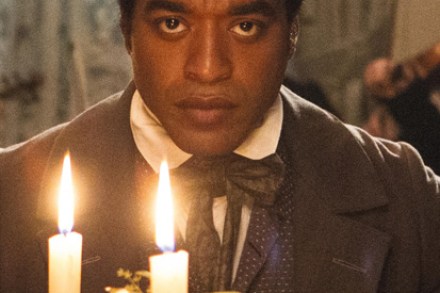
Steve McQueen’s 12 Years a Slave goes directly to the heart of American slavery without any shilly-shallying — unlike The Butler, say, or even Django Unchained — and is what I call a ‘Brace Yourself’ film, as you must brace yourself for horror after horror, injustice after injustice, shackles, muzzles, whippings, rapes, hangings. You will be harrowed to within an inch of your life, as perhaps is only right, given the subject matter, but you will not wish to flee your seat. You will recoil. You will flinch. You will say to yourself, ‘Oh no, not again.’ But the story will seize you with such a visceral power you will be rooted to the spot. I know I was and I’m not easy to root. Mind everywhere, usually.

‘Mandela: Long Walk to Freedom’ is a very, very long walk indeed

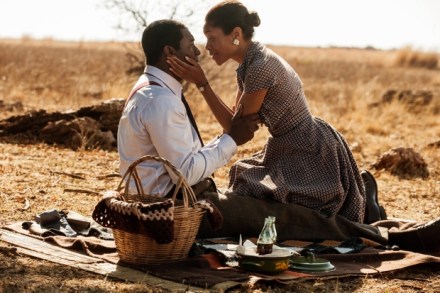
The biopic Mandela: The Long Walk to Freedom is a timely tribute, and an earnest and respectful and well-meaning one, but it does seem like a very, very long walk indeed. It’s a slog, a plod, a trudge uphill, and of all the things you may have wished to say to Nelson Mandela, given the opportunity, what you will find yourself saying here is: ‘Put your bloody skates on, man. We have homes to go to, and other fish to fry!’ This is not, I’m assuming, what you thought you’d ever most wish to say to Mandela, given the opportunity, but the fact is: you will never have wanted anyone to put their skates on quite so much in your entire life.

What it’s like to spend 90 minutes in the women’s loo of a thumping nightclub

Powder Room is a small British film all about women and starring only women — boo-hoo, men; my heart bleeds for you all — yet it is almost entirely set in a nightclub, so whether you enjoy this film may depend on how willing you are to spend 90 minutes in such a club along with all that thumping music and the flashing lights and the scrabbling to get to the bar. As a rule, this is how I’d feel about such a prospect: I’d rather shoot myself in the head. However, I accept this doesn’t hold true for everyone and, from what I’ve learned over the years, I suspect it doesn’t hold true for most Spectator readers, who are out clubbing until all hours most nights of the week.

Deborah Ross: If you don’t enjoy Saving Mr Banks, there’s something wrong with you

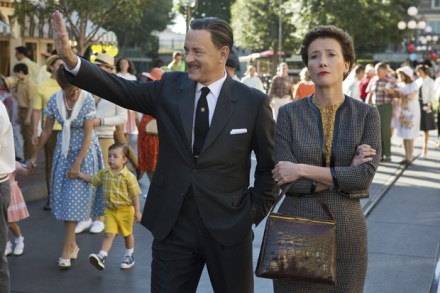
Saving Mr Banks tells ‘the untold true story’ of the making of the Disney classic Mary Poppins via the stand-offs between Walt and the book’s author, P.L. Travers, and it is not a taxing film. You always know where it’s going and, with its rather melodramatic flashbacks, there is no ambiguity as to where it is coming from, but neither matters as much as they should as there is just so much joy to be had otherwise. It stars both Tom Hanks and Emma Thompson (you spoil us, ambassador!

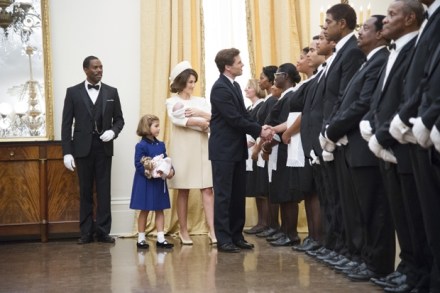
The Butler, about a black domestic in the White House, is too painfully obvious

The Butler tells the story of an African–American butler at the White House who served eight American presidents over three decades and it plays as a ‘greatest hits’ of the civil rights movement, along with whatever else they decided to throw in, like Vietnam, apartheid, and Lyndon B. Johnson on the can. (Actually, Lyndon B. Johnson on the can was rather the highlight.) It is heavy-handed, predictable, bland and so contrived in its sentimentality I sniggered at what should have been the moments of emotional impact. However, all was not lost, as I did have a nice little doze, which, as it was a morning screening, set me up quite nicely for the rest of the day. So there was that, but only that, alas.

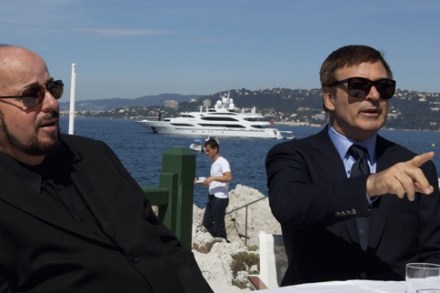
Ryan Gosling couldn’t play Taki better than Taki

Seduced and Abandoned is both a satire on film-making and a love letter to film-making and a joy. A documentary made by the director and writer James Toback, in cahoots with his friend the actor Alec Baldwin, it follows the two as they work their way round the Cannes Film Festival, trying to raise financial backing for a film inspired by Last Tango in Paris. They schmooze. They lunch. They cajole. They beg. And in the process meet, among others, Martin Scorsese, Francis Ford Coppola, Bernardo Bertolucci and Ryan Gosling as well as the billionaire shipping heir and journalist Taki, who writes the High life column in this magazine, and whom they try to tap up for $20 million. Taki plays himself, but you know what? He’s so great, he may have a future in it.

The joy of cemeteries

The idea of writing Finding the Plot: 100 Graves to Visit Before You Die first came to Ann Treneman when she was chatting with Tony Wright, formerly Labour MP for Cannock Chase. They started talking about Birmingham and she happened to remark: ‘Did you know the man who invented Cluedo came from Bromsgrove?’ His name, rather marvellously, was Anthony E. Pratt, and she’d previously written about him for the Independent. Pratt had allowed the patent to lapse before the board game took off, and had died in obscurity (although with Alzheimer’s, in an old people’s home, rather than with lead piping, in the library).

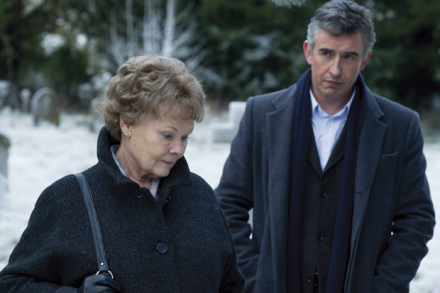
Philomena is Dame Judi’s film

Philomena is based on the true story of an Irish woman searching for the son stolen from her by the Catholic Church 50 years earlier, and although, as a cinematic experience, it could so easily have felt as if you were being repeatedly slapped round the head by a copy of Woman’s Own, it is, thankfully, quite a few notches up from that. Indeed, as directed by Stephen Frears, it is quiet, restrained, unfussy, and has, at its heart, an injustice so grave it will make your blood boil. You will also cry. Seven minutes in, and I was already crying. Not proud, but it is a fact. Dame Judi Dench stars as Philomena, which is, of course, beyond wonderful, as any film starring Dame Judi Dench will be highly watchable, whatever.

Deborah Ross: The Selfish Giant is not fresh, but it’s superbly performed

The Selfish Giant is a British social-realism film in the tradition of all such films from Kes onwards, so it never feels particularly fresh, but it does feel real and true, is superbly performed, and it does pack quite an emotional punch. I had to gather myself afterwards, and I’m still gathering myself, and may be gathering myself for some time to come. So it’s good at what it does, even though what it does has been done before. At least I think that’s what I’m trying to say. I’m never really that sure. This is the second feature from Clio Barnard, whose first, The Arbor, was a portrait  of the Bradford playwright Andrea Dunbar, inventively told by fusing lip-synching with  first-hand testimonies.

Tom Hanks is the greatest actor alive

The main thing you should know about Captain Phillips is that it really puts you through the wringer. It’s based on the true 2009 story of the hijacking of a US container ship by Somali pirates, and the Navy Seal rescue mission that ensued — pirates, a word of advice: if you are going to kidnap Tom Hanks, America is simply not going to let you get away with it — and my heart was in my mouth throughout. It is nail-bitingly exciting, even if you know the outcome, and I think I can safely say it’s a better film than the one I thought I was going to see. Or, to put it another way, when I initially saw ‘Captain Phillips’ was about to open my first thought was: ‘Gosh. I wonder who is playing Princess Anne.

Four good reasons not to watch The Fifth Estate

Just how interesting you find The Fifth Estate may entirely depend on how interested you are in the whistle-blowing site WikiLeaks and its founder Julian Assange, in the first instance. This does not do what Senna did, for example, or what The Social Network did, and grip you in the places you didn’t know you could be gripped with a subject matter you’d no idea could be gripping. It’s not like that and I’ll tell you for why, in bullet points, because I’m just in a bullet-y mood today, and if you don’t use your bullet points — we are all allocated a certain amount at birth — they will start to atrophy and rot.

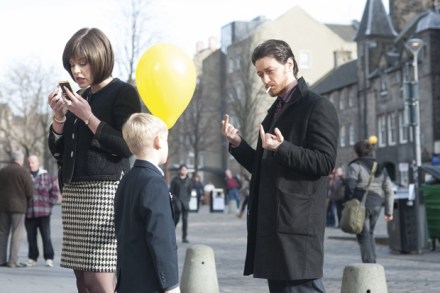
I watched Filth from behind my hands. It’s ghastly and unpleasant, but what I saw of it was brilliant

People are generally saying Filth fully fulfils the promise of its title and is not for the faint of heart or queasy of stomach or lily of liver and, alas, I am all three, in spades. (My liver is, in fact, so lily-ish it may be a wonder of medical science.) Rape. Anal Sex. Violence. Drink. Drugs. Masturbation. Vomiting down yourself. There’s a part of me that would like to say that’s the average Saturday night in our house, but the truth is we generally watch The X Factor and record Strictly. So I endured this film, from behind my hands, rather than enjoyed it, but in the enduring, was there some reward, as can sometimes happen? We can work that out as we go along. No advantage in rushing such things.

Woody Allen’s new film will so knock your socks off, you will never retrieve them again

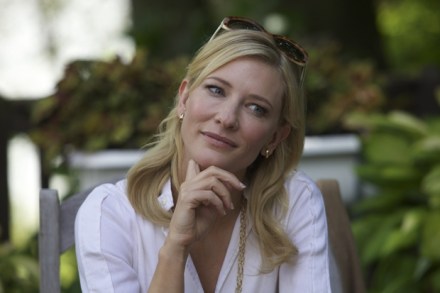
Blue Jasmine is the latest film from Woody Allen who, at various stages of his career, has been declared on-form, off-form, sliding-from-form, returning-to-form and, for all I know, as I don’t follow these matters closely, wearing form like a carnival hat with tinkling bells, but there is no need to bother with any of that. All you need know is Blue Jasmine is brilliant. It’s brilliantly written, directed and observed; it’s brilliantly watchable, if not mesmerising; and brilliantly performed, particularly by Cate Blanchett, who will knock your socks off, and may knock them off so explosively there is every chance you will never retrieve them again. (They might be knocked off all the way to kingdom come, for example.

About Time review: If Richard Curtis is brilliant at anything, it’s Upper Middle Class Lifestyle Porn

The easiest thing would be to sneer at Richard Curtis’s new film About Time, and so I will a little, or maybe significantly. It’s hard to know at this point, as I’m up here, at the beginning, and the end is down there, at the bottom, and who knows what will happen in between. It’s as much a mystery to me as to you. However, pre-sneering, in whatever amount, I should make clear that if you have enjoyed Curtis’s previous films— Four Weddings, Love, Actually, Notting Hill, but not The Boat That Rocked, which we’ll pretend never happened, as that’s best all round — you will enjoy this. It’s more of the same, pretty much, as our bumbling hero searches for love, bumblingly.

Racking up the tension

Berberian Sound Studio is a film about a man who can’t get his expenses repaid and hurts a lot of vegetables — don’t worry, the RSPCV is on to it — although I suspect there may be rather more to it than this. I suspect there are hidden meanings. I suspect there are references to those nasty Italian giallo films of the Sixties and Seventies. I suspect it is, at least in part, a love letter to old, analogue sound technology. This is, in short, one of those arthouse tarts, always winking and hitching its skirt to those in the know. Yes, annoying for those not in the know — stop winking! Stop hitching your skirt! Have you no pride? — but I wouldn’t write it off all the same. It’s brilliantly creepy, whatever.

A painful but brilliant film: Deborah Ross on Maisie’s betrayal

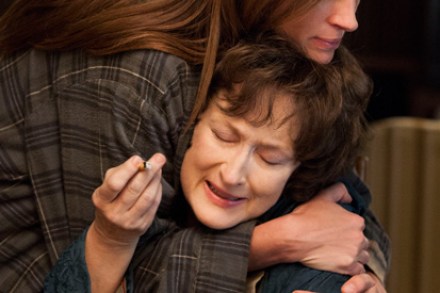
What Maisie Knew is an adaptation of the Henry James 1897 novel, updated to Manhattan in the now, and is described in the bumf I received as ‘heart-warming’, which is utterly strange, as it’s a child-caught-in-the-middle drama, and just so painful. It’s compelling. It’s exquisitely done. It’s brilliantly acted. (According to the most recent figures,  the chances of Julianne Moore turning in a duff performance are 0.00 per cent.) But it’s not a comfortable watch, which should not put you off, of course. There must be discomfort at the cinema just as there is discomfort in life, as Socrates might have said, if he had lived to experience film.

Kuma would shine at any time of the year

Mid-August is a hopeless time for films; so hopeless, useless and bleak, if I don’t use three words when one would have done, I am just never going to fill up this space. The assumption is people don’t wish to visit the cinema on summer evenings, or they are on holiday (I wish!), so the studios put out all their rubbish. This week sees the opening of Bachelorette (a Bridesmaids rip-off), Planes (a Disney film, originally intended for DVD only) and The Lone Ranger, which is said to be so lousy, terrible and awful the producer is going to be hung from a lamppost on Sunset Boulevard, as a warning to all other Hollywood producers.

It’s possible that Deborah Ross left her critical faculties outside the screening room

The thing is, I love the character of Alan Partridge so much it may well be that, when it came to this film, I left my critical faculties outside the screening room, possibly somewhere along Wardour Street. If you see them, might you return them? I would hate them to fall into the wrong hands, or be sold to the highest bidder. Anthony Lane of the New Yorker, for example, has always been after my critical faculties and the late film critic Roger Ebert was once quoted as saying he’d pay anything for them; anything. Luckily, he was American, and they would never be allowed to leave the country, but you see what I’m saying? Why it’s important I get them back?

Sandra Bullock must be blindfolded when she picks her movies

Sandra Bullock is a highly watchable actress and she seems like she’d be fun to hang out with — I have no idea why I think that; I just do — but, Jesus, how does she choose her movies? With a blindfold and pin? Sure, she won an Oscar for The Blind Side, during which she dragged around that poor black boy as if he were a tired old circus bear, and there was Speed and After You Were Sleeping, but The Proposal? Premonition? Speed 2? Two Weeks Notice? I suppose you think I’m going to add: ‘And now this?’ which I am, although not unreservedly. It’s not all bad. It’s possibly only half bad. Perhaps when she was poised with pin, the blindfold shifted? And she saw out of one eye, at least?

At last, a film about proper women who aren’t just drippily searching for love

Frances Ha will make many spit ‘Frances...Bah!’ but I won’t be among them. Yes, it is rather kooky, and highly self-conscious, with its New Wave references and its Woody Allen influences (it’s a serious, black-and-white, Manhattan comedy), but it’s also sweet, endearing, touching, and features proper women you can actually believe in, and who aren’t just drippily searching for love, which is something of a novelty. Plus, it comes in at under 90 minutes, which is totally great. I was over the moon about that. You know, when I am appointed Professor of Film Studies somewhere, as is still only a matter of time, the first thing I will tell my students, once we’ve dealt with the New Waveyness of the New Wave — Goddard: he was a one!