Deborah Ross

Deborah Ross is the chief film critic of The Spectator

Static electricity

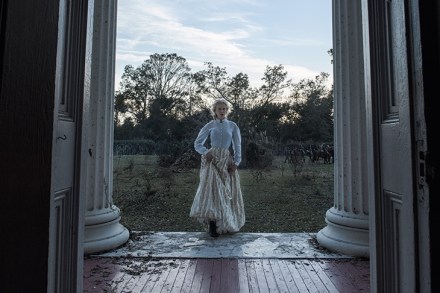
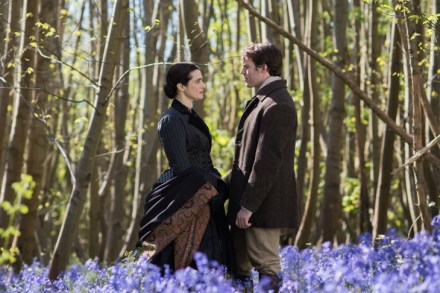
My Cousin Rachel is an adaptation of Daphne du Maurier’s mystery-romance and, even though it stars the forever wonderful Rachel Weisz, it’s more sedate than suspenseful, more tasteful than dangerous. This should be a creepy, gripping tale of paranoia, deception, lust, and suspicions that are founded, unfounded, founded, then unfounded again. (There is a great deal of founding and unfounding on the suspicion front.) But the high-end, glossy period trappings — the frocks; the stately mansions; the teal drawing rooms; the horses galloping along scenic cliff paths; that wisteria — don’t play into a dark, gothic atmosphere. It is highly watchable, I have to say, but it won’t have you biting your nails to the quick, as it should.

When will I ever learn?

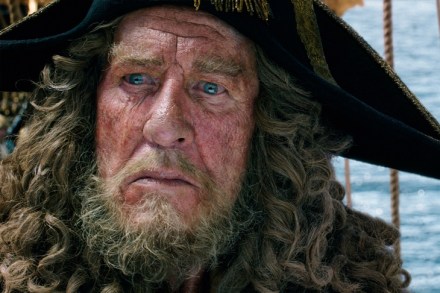
Oh, Pirates of the Caribbean, I have given you every chance down the years. Every chance. I am always hopeful. This may be the one that has a proper story I can follow, I have told myself. This may be the one in which Johnny Depp even bothers to act, I have told myself. This may be the one that doesn’t make me wish I’d stayed home where I could be doing something more interesting and fulfilling, like sorting laundry or cleaning out the fridge. When will I ever learn? When? Pirates, you’re on film five now, and I don’t understand. Well, I do and I don’t. You’re one of those blockbuster franchises that certain audiences will wish to see regardless, as perplexing as that is. But does this mean you don’t even have to try to make it any good?

No laughing matter | 18 May 2017

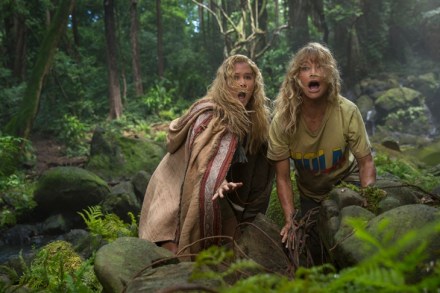
We love Amy Schumer. Fact. And we love Goldie Hawn. Fact. But can we love Snatched? Not so much, if at all. Perhaps the addition of ‘if at all’ is unnecessary, and rather mean. But it’s done now. There are a couple of decent jokes, it’s true, but they are 1) all in the trailer and 2) happen within the first ten minutes, after which there is every chance you will 1) lose the will to live and 2) wish you’d opted for Guy Ritchie’s King Arthur. But, as we are so often warned, do be careful what you wish for. From what I’ve heard, King Arthur may not only make you lose the will to live but may also make you regret ever having lived. (Too much again? Done now.

Girl power | 27 April 2017

Lady Macbeth, which has nothing to do with boring old Shakespeare beyond indicating a certain archetype (huge sighs of relief all round), is a British period drama about a young woman who, trapped in a cold, loveless marriage, finds sexual passion elsewhere, and runs with it. And runs with it. And runs with it. And if you think you’ve seen this all before — Madame Bovary, Anna Karenina, Lady Chatterley, etc. — think again, my friend. In fact, if Madame Bovary were here with us right now, along with Anna and Lady Chatterley and all the other women in literature who’ve been punished for veering off message, my best guess is they’d be fist-pumping the air while crying: ‘You go, girl, you go!’ (Or similar.

All dressed up, nowhere to go

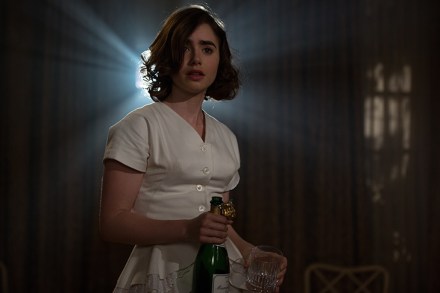
Rules Don’t Apply is Warren Beatty’s first film appearance in 15 years and his first as writer, director, producer and star since Bulworth, 19 years ago. Plenty of time, then, to figure out what he wanted to say, and how he wanted to say it, but Rules is entirely baffling. Is it a tale of Old Hollywood? Is it a biopic of Howard Hughes? Is it a love story? Unfortunately, it can never decide, so tries to be all of the above and therefore succeeds at none. After an onscreen warning from the late Hughes himself — ‘Never check an interesting fact’ — the prologue opens in 1964, but then jumps back to 1958 as a small-town, virginal, Baptist beauty queen is flown into Hollywood as a contract actress for Hughes’s RKO studio.

Seeking closure | 12 April 2017

The Sense of an Ending is an adaptation of Julian Barnes’s 2011 Man Booker prize-winning novel starring Jim Broadbent (we love Jim Broadbent), Harriet Walter (we love Harriet Walter) and Charlotte Rampling (we love, love, love Charlotte Rampling). With such a cast, you’d be minded to think it can’t fail, and it doesn’t in this respect. The performances are transfixing throughout. But it does not satisfy emotionally, as the ending of The Sense of an Ending makes no sense. It’s a (Non)Sense of an Ending. Same with the book, which, on completing, I think I threw across the room with a: what? Is that it?

Poetry in motion | 6 April 2017

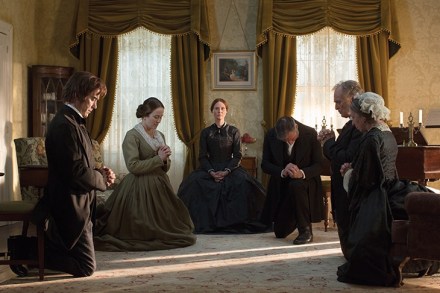
Films can be poetry — or like poetry; or poetic, at least — but can poetry ever be film? That is our question for today, and I’ll attempt to answer it, although there is absolutely no saying that I’ll be able to do so. Always touch and go, that. A Quiet Passion is Terence Davies’s biopic of the 19th-century American poet Emily Dickinson, author of ‘Hope is the thing with feathers/ That perches in the soul’ and ‘Because I Could Not Stop for Death’ (look it up; do) and, all in all, 1,800 (incredibly wonderful) poems, of which only 10 were published in her lifetime. Who was this woman? She’s fixed in our minds as a recluse who would only talk from behind her bedroom door, but was she always?

Major to minor

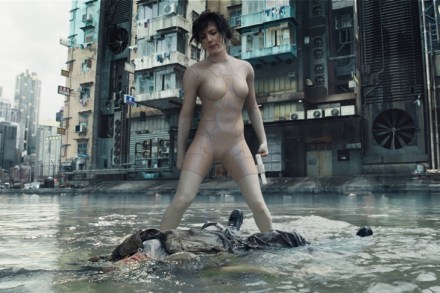
Ghost in the Shell is the Hollywood live-action remake of the 1995 Japanese anime of the same name and it’s set at a time in the future when, it would appear, the world is populated by blandly one-dimensional characters. Evil is perpetrated by our old friend, Corporate Evil Man — yes, still — and everyone communicates via dialogue so stilted and ham-fisted it makes you die inside a little. That said, at the media screening I attended we were all given a free bag of high-end crisps, so it wasn’t two hours totally wasted. (I do really like crisps, high-end or otherwise.) The film stars Scarlett Johansson, who looked liked being an interesting actress for a while but these days? Not so much.

Hide and seek | 23 March 2017

Two films for you this week, one of which is surprisingly good and one of which does not surprise in the least. Shall we be unsurprised first? OK, Another Mother’s Son, set during the second world war on Nazi-occupied Jersey, is based on the true story of Louisa Gould, who took in an escaped Russian PoW for the course of the war. Louisa Gold, what a mensch — she would later be named a ‘Hero of the Holocaust’. But it’s the kind of story that has been told countless times (I blame Anne Frank), and here it’s told in such a perfunctory, plodding way that it brings nothing new to the party. It’s simply as if an episode of Bergerac had developed ideas above its station — or a fancy for jackboots.

Victim mentality

Elle has been described as ‘a rape revenge comedy’, which seems unlikely, and also as ‘post-feminist’, which is likely as, in my experience, that simply means anything goes so long as you acknowledge that feminism has happened. The film stars Isabelle Huppert, who was Oscar-nominated for her performance, and who has repeatedly said that her character, Michèle, is not ‘a victim’ although, as you have to watch Michèle being raped or near-raped several times, I don’t know how we can be so sure about that. Perhaps I’m just not sufficiently in touch with my ‘post-feminist’ side to fully comprehend.

Moonlight richly deserved to trump La La Land. Here’s why

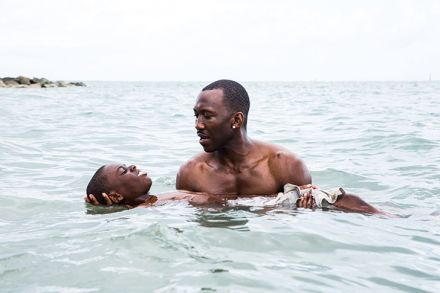
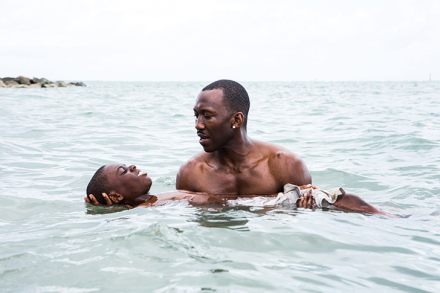
Moonlight is, in fact, a traditional story about identity, and finding out who you are, but it has rarely been better told, or more achingly, or while navigating a subject that hasn’t come up much at the cinema, if at all. (Being black and gay.) True enough, everyone expected La La Land to win best picture at the Oscars, but it’s Moonlight that deserved the award - and every award going (aside from the one that’s been put aside for Annette Bening). I liked La La Land well enough at the time, but someone please make it go away now. The film is written and directed by Barry Jenkins, as based on Tarell Alvin McCraney’s semi-autobiographical but never performed play In Moonlight Black Boys Look Blue.

Pump up the volume | 23 February 2017

Xavier Dolan’s It’s Only the End of the World is one of those angst-ridden dramas focusing on what is commonly referred to as a ‘dysfunctional family’ as if there might be any other kind and it isn’t just a question of degree. This family certainly doesn’t hold back. This family has everyone shouting at everyone else for 95 minutes, blurting out brutal truths that might equally be brutal untruths (hard to tell). It has not been rapturously received. It was jeered at Cannes (even though it won the Grand Prix) and has been described by various critics as ‘insufferable’ and ‘intolerable’, which can only make you think that they haven’t seen an Avengers film for a while.

Three ages of man

Moonlight is, in fact, a traditional story about identity, and finding out who you are, but it has rarely been better told, or more achingly, or while navigating a subject that hasn’t come up much at the cinema, if at all. (Being black and gay.) True enough, it was La La Land that swept the boards at the Baftas, and La La Land will probably sweep the boards at the Oscars, but it’s Moonlight that deserves every award going (aside from the one that’s been put aside for Annette Bening). I liked La La Land well enough at the time, but someone please make it go away now. The film is written and directed by Barry Jenkins, as based on Tarell Alvin McCraney’s semi-autobiographical but never performed play In Moonlight Black Boys Look Blue.

Mother superior

Unlike with buses, you wait ages and ages for one fabulous film as framed by the older female perspective to come along and then there’s absolutely no saying when the next one will be, or if there will ever be another. (Indeed, a recent study of 2,000 films found that women in the 42–65 age bracket are given less and less to say while dialogue for men of the same age actually increases.) So don’t let this pass, and don’t do so having dismissed it as ‘a feminist film’ because it’s emotionally smart about everybody. It just takes in that portion of the human race usually left out, is all.

Metal fatigue

‘All that glisters is not gold,’ wrote Shakespeare (The Merchant of Venice), and you have to hand it to the guy, as he’s nailed it on the head. This Gold certainly glisters. You look at the poster and think: ‘Oh, yes. Glistery.’ It’s directed by Stephen Gaghan, who wrote and directed the terrific Syriana. It stars Matthew McConaughey. It’s based on a true mining scandal that is as outrageous as it is fascinating. But this Gold is not gold.

Sloppy seconds

Danny Boyle introduced T2 Trainspotting at the screening I attended and said that, throughout filming, he’d seen the cast looking at him and what these looks were saying was: ‘It had better not be shite, Danny.’ This may sum up all our thinking, pretty much. It had better not be shite, Danny. Danny, do what you have to do but, we beg you, don’t make it shite. Once more, with extra feeling: don’t, don’t, don’t make it shite, Danny. And? I take no pleasure in saying it (seriously, hand on heart) but this sequel is, in fact, quite shite.* I won’t bore on about the original film, even though some of us are still recovering from it — oh God, Dawn, the dead baby — and may never recover from it, and this may be part of the problem.

Acting with a capital ‘A’

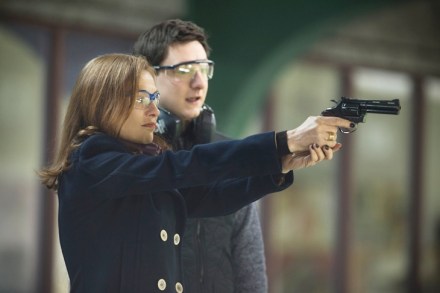
Let’s be clear: Jackie is a better performance than it is a film, although I suspect the performance will carry the day, even if that performance is Acting with a capital ‘A’. Was I riveted by Natalie Portman as Jackie Kennedy? I was. She has the look. She has the posture. She has the breathy, Marilyn Monroe-ish voice. But was I aware it was Natalie Portman, Acting? Always. And there isn’t much else here. Jackie never adds up to a whole, or anything near; we don’t penetrate ‘the myth’, and there is no real drama. So it’s disappointing albeit with a small ‘d’ because there are worse disappointments in life, and also the clothes are rather good.

Caveats be damned

You will have registered the buzz surrounding La La Land and clocked its seven Golden Globe wins and 11 Bafta nominations. However, I know you won’t believe it’s wonderful unless you hear it directly from me, so here you are: it’s wonderful. Mostly. It’s wonderful, with a few caveats. I feel bad about the caveats but if you have caveats and repress them, it can make you quite ill in later years. Best to get them out there. But just so we’re clear: La La Land with caveats is still more wonderful than almost anything else. It is written and directed by Damien Chazelle (Whiplash), who grew up loving old-style romantic musicals, even if that was only ten minutes ago (he is 31, goddammit).

Long suffering

Silence is Martin Scorsese’s film about Jesuit priests in 17th-century Japan whose faith is sorely tested, just as your patience will be sorely tested too. There are moments of grandeur. The landscape is lush, and often mistily beautiful. The torture porn is spectacularly inventive. But its commercial compromises may drive you to distraction (the casting, the language choices), it is punishingly repetitive and, at nearly three hours, sooooooo, sooooooo long. My own patience was sorely tested to the point that I might have taken a little bit of a nap. If I did I never sensed I missed anything of note, but then it is that kind of film. This is based on the 1966 novel by Shusaku Endo who was, unusually, a Japanese Catholic, known as ‘the Japanese Graham Greene’.

All bark and no bite

A Monster Calls is a fantasy drama about a young boy whose life is crap, basically. His mother is sick. His father has scarpered. He is being bullied at school. He may also have an itch he can’t get at, for all we know. (Always hateful, that.) But he finds an ally when the ancient yew tree he can see from his window morphs into the giant tree monster who’ll take him on a journey of ‘courage, faith and truth’. This has its visually wondrous moments, and the lead (Lewis MacDougall) is a true find, but there’s too much bark, too little bite. This is no Pan’s Labyrinth, for example. Wish that it were, but it is not. Based on the bestselling book by Patrick Ness, and directed by J. A.