Deborah Ross

Deborah Ross is the chief film critic of The Spectator

A window on a fascinatingly weird place: Some Kind of Heaven reviewed

Some Kind of Heaven is a documentary set in The Villages, Florida, which is often described as a ‘Disneyland for retirees’ — it, too, has its own faux-historical town centre — and is the fastest-growing metropolitan area in America. (Current pop: 130,000.) The vibe is, I would say, cruise ship, but with golf. Hell, in other words, unless, that is, I’m going to be left to rot in a nursing home, in which case: I can learn golf! This is a film by Lance Oppenheim, who lived in The Villages for several months. It is a fascinatingly weird place and the film is worth seeing if only to get a sense of that. It is self-contained, with its own (uniform) houses plus banks and cinemas and restaurants and churches, and there are more than 3,000 clubs you can join.


This film deserves all the awards and praise: Nomadland reviewed

Nomadland won multiple Oscars including Best Picture, Best Director and Best Actress, and if there’d been an award for Best Film In Which The Woman In Her Sixties Isn’t The Least Developed Character In The Screenplay, Hallelujah, About Time, it would have scooped that too. Not much competition, regrettably, but you have to admire the film just for that, plus there is much to admire generally. It is based on the non-fiction book Nomadland: Surviving America in the Twenty-First Century by the journalist Jessica Bruder, who spent months living with older Americans who, out of economic necessity, eke out a living while travelling from place to place for seasonal employment.

It will do your head in: Black Bear review

Black Bear is one of those indie dramas that is meta on so many levels you can either sit with it afterwards or, if you’re weak like me, you’ll immediately turn to the internet for an explanation and may even find yourself buried deep in one of those Reddit threads that will make you wish you’d had the strength to just do the sitting. This is a compelling film in its way, and it’s well performed, with a surprising reset midway through, and you don’t have to fully understand a film to enjoy it. But if I’m honest? I do feel a little bit cheated when an interpretation or ending isn’t fully nailed down. My limitation, I’m sure.

Ian Williams, Fiona Mountford and Deborah Ross

23 min listen

On this episode, author and journalist Ian Williams starts by looks at how China is using tech to expand its reach. (00:45) Then, Fiona Mountford reflects on how to deal with grief. (12:00) Finally, Deborah Ross reviews the Oscar-nominated Promising Young Woman, 'a wonderfully clever, darkly funny, stomach-knotting' revenge-thriller.

Clever, funny and stomach-knotting: Promising Young Woman reviewed

Promising Young Woman is a rape-revenge-thriller that has already proved divisive but is a wonderfully clever, darkly funny, stomach-knotting — my stomach may never unknot — exploration of what #notallmen seem to get: it isn’t OK to have sex with a woman who has had a few too many and isn’t in a position to give consent. Unless, of course, she is also out late at night and wearing a short skirt in which case: asking for it. We all know that. This is written and directed by the extraordinary polymath that is Emerald Fennell, who was head writer for the second series of Killing Eve, has collaborated with Andrew Lloyd Webber on his forthcoming Cinderella, and is a novelist and actress.

Riveting and heartbreaking: Sound of Metal reviewed

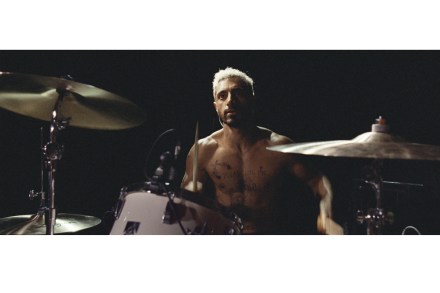
The multi-Oscar-nominated Sound of Metal stars Riz Ahmed as a heavy-metal drummer whose life is in freefall after losing his hearing. Ahmed learned to play drums for the part. And he learned American Sign Language. And he learned to perform with white noise in his ears. However, he did not have to learn how to be riveting because, if you’ve followed his career, you’ll know he’s been that since day one, and he is magnificently, powerfully, heartbreakingly riveting here. If he doesn’t win the Oscar I’ll be furious. That counts for nothing, I know. But it had to be said. It is directed by Darius Marder, who co-wrote the screenplay with his brother, Abraham Marder. At the outset Ruben (Ahmed) plays in a band with his girlfriend, Lou (Olivia Cooke).

A work of extraordinary delicacy, poignancy and tenderness: Minari reviewed

In the summer of 2018, when film-maker Lee Isaac Chung was on the brink of giving up filmmaking and had accepted a teaching job, he found himself writing a list of what he remembered growing up as a Korean-American in rural America in the 1980s. These ‘little visual memories’ included, for example, the lunch pails his parents would take to their jobs at the chicken factory, or the minari — a herb used in Korean cookery and medicine — his father planted on their farm. This list became the film Minari, which lately won a Golden Globe and has been nominated for six Oscars. It is a work of extraordinary delicacy, poignancy and tenderness. Whatever else, teaching’s loss is entirely our gain. Alan S. Kim is as cute as a button.

The fossil-hunting is more interesting than the sex: Ammonite reviewed

Ammonite is writer-director Francis Lee’s second film after God’s Own Country, one of the best films of 2017, and possibly the best film about a closeted gay Yorkshire sheep farmer falling for a migrant worker ever. This is another unlikely romance, but set in the 19th century between the real-life palaeontologist Mary Anning (Kate Winslet) and real-life Charlotte Murchison (Saoirse Ronan), whose wealthy husband had an interest in geology. Mary and Charlotte were friends yet there is no historical evidence they had an affair. This is all poetic licence but told so poetically you will substantially buy it, albeit with a few reservations. Plus it’s Winslet and Ronan and while I’m not usually a sucker for BOGOF offers, you’d surely be crazy to turn this one down.

Spellbinding: Preparations to be Together for an Unknown Period of Time reviewed

The premise for the unsnappily titled Preparations to be Together for an Unknown Period of Time is this: a Hungarian neurosurgeon meets a fellow Hungarian neurosurgeon at a medical conference, falls in love, and gives up her shiny life and career in America to be with him in Budapest. They had agreed to meet on one of the city’s bridges. He doesn’t show. She tracks him to the hospital where he works. He says he’s never met her before. And now we are on board. Now we have to know: is he gaslighting her? Is she crazy? How is this going to play out? This is one of those films that has you in the palm of its hand right from the off.

The best film of the year: Judas and the Black Messiah reviewed

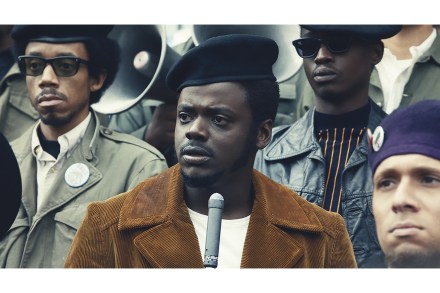
Judas and the Black Messiah is a biopic about Black Panther leader Fred Hampton, but it’s not your regular biopic because it’s told as crime thriller, through the eyes of a snitch, who may be found out at any minute. This film says what it has to say — about race, injustice, police brutality — but excitingly, thrillingly and non-formulaically. It’s the best film of the year so far, which may not be saying much, given how few films have been released, but you get the sentiment. (The Bond film No Time to Die has been postponed so many times I fear none of us will see it in our lifetimes.) Directed by Shaka King, and written by King, Will Berson, Kenny Lucas and Keith Lucas, the film is based quite accurately, as far as I can fathom, on true events.

It’ll please small kids, but they’re never to be trusted: Raya and the Last Dragon reviewed

Raya and the Last Dragon has everything you might want nowadays from a major Disney film — feisty kick-ass heroine, non-white representation, a narrative that isn’t hung up on romance — but no one involved appears to have asked themselves: do we have an interesting story? Do we have any fresh ideas? Is it fun? This may please very small kiddies who don’t know any better, and there are plenty of them about, but Raya’s not a classic in the making. It’s gorgeously depicted, needless to say, but disappointingly unanimated in all other ways. While this film may please small kiddies, remember: they are not to be trusted.

Contains nothing you couldn’t get from Wikipedia or YouTube: Netflix’s Pelé reviewed

Pelé is a two-hour documentary about the great Brazilian footballer — the greatest footballer ever, some would say — who played in four World Cups (a record) and was one of the first global sporting superstars. But while there is plenty of footage showing his astonishing talent, if you’re interested in what made him tick, or what his life was like off the pitch, or how adulation might ultimately mess with your head, then move on, nothing to see here. Or, to put it another way, if, like me, you’re the sort of person who goes straight to ‘Personal life’ whenever you look someone up on Wikipedia, it’s as if that section has been excised. However, if you are not that sort of person, you may come away more satisfied and less bored.

Horrible – but in a very fun way: I Care a Lot reviewed

I Care a Lot is a deliciously dark comic thriller that You’ll Enjoy a Lot. It’s heartless. It’s vicious. It’s savage. It’ll make you dread old age even more than you already do, if that’s possible. It’s horrible in so many ways — cruel? Did I mention it’s also cruel? — yet it is also smart, stylish and such a fun watch. Written and directed by J. Blakeson (The Disappearance of Alice Creed), the film stars Rosamund Pike as Marla Grayson, who runs a business ripping off old people. Or, to put it more formally, she is a court-appointed legal guardian for elderly wards — or ‘marks’, as she calls them — whose assets she then seizes perfectly legally.

Predictable, repetitive and exploitative: Run Hide Fight reviewed

In this line of business you receive many emails from PRs ‘reaching out’ about their particular film, which I really must see, as it wowed a festival in Bulgaria. But the other day, a PR reached out to boast excitedly about a film because it had been savaged, which was a first. ‘The film has absolutely enraged Hollywood critics,’ this person wrote, with obvious pride, before quoting the following from reviews: ‘insanely poor taste’, ‘wildly misjudged’, ‘tone deaf’, ‘gross’. What’s more, this person continued, while critics hate it — it has a critics’ score of 25 per cent at Rotten Tomatoes, the review- aggregator site — audiences are loving it (93 per cent).

The Icelandic version was better – and had better knits: Rams reviewed

Rams is an average film with a better film trying to get out, and you may already have seen that better film. It’s the Icelandic one, of the same name, released in 2015, on which this Australian version is based. That was played as a spare, stark, bitterly dark comedy set amid ice and blizzards and featuring men with unkempt beards, whereas this is sunnier and more kempt and therefore significantly blander. You may even, at various points, feel as though you’ve been trapped in an overlong episode of All Creatures Great and Small (nothing against All Creatures Great and Small, but two hours of it?).

Remarkably moving: The Dig reviewed

Just before the outbreak of the second world war a discovery was made in a riverside field at Sutton Hoo in Suffolk. It was an immense buried boat, dating from the 7th century, and it yielded gilded treasure after gilded treasure, thereby wholly changing our understanding of the Dark Ages. ‘They weren’t dark… by Jupiter!’ as one archaeologist puts it here. It is a fascinating story that could have been told as a full-on thriller. But instead the film employs a delicious, graceful restraint, paying as much attention to deeply buried feeling as to what’s buried deeply in the earth. It’s remarkably moving. By Jupiter, I even cried by the end.

So good I watched it twice: Netflix’s The White Tiger reviewed

The White Tiger is adapted from the Booker-prize winning novel (2008) by Aravind Adiga. It is directed by Ramin Bahrani (Man Push Cart, 99 Homes) who also wrote the screenplay. It stars Adarsh Gourav, otherwise a songwriter and singer. It’s a rags-to-riches story set in India but it’s not at all a typical rags-to-riches story set in India. Those are some of the things you probably should know, but there is only one thing I want you to know: it is wonderful and, even though the subject matter is often chilling, and there’s simmering rage, and murder, it’s still two hours of boisterous, dazzling, swaggering fun. I watched it once and thought: I could easily watch that again. So I did. Unheard of. And one last thing I want you to know: Bahrani may be a genius.

The acting is very Scooby-Doo: Blithe Spirit reviewed

The comedy Blithe Spirit was written by Noël Coward in 1941. It is, essentially, about a séance going wrong and a deceased first wife coming back to haunt her husband and his second wife, causing mayhem. Better if she’d been left to rest in peace, and, after seeing this film adaption, you may well wish the play had been left to rest in peace too. Don’t dig it up! Leave well alone! I would even add that if Dame Judi Dench can’t save an adaptation — and I was previously of the mind that Judi Dench could save anything — then you know you are in real, real trouble. The play was famously filmed by David Lean in 1945, starring Rex Harrison as novelist Charles Condomine and Margaret Rutherford as Madame Arcati.

Riveting: Dear Comrades! reviewed

Andrei Konchalovsky’s Dear Comrades! is based on a true event and set in 1962 in the Russian city of Novocherkassk where the local factory, the Novocherkassk Electric Locomotive Plant, went on strike. This doesn’t sound especially sexy, I know, but it is superbly acted and so rivetingly told my concentration did not waver for an instant which, given how hard it has been to concentrate lately, is high recommendation indeed. (It wouldn’t be fair to list the films I couldn’t concentrate on, as the problem is likely mine, but… Mank!) Konchalovsky certainly has a wild CV. He has worked with Tarkovsky. He made the wonderfully hypnotic The Postman’s White Nights, about a remote Russian village whose only contact with the outside world is their postman.