
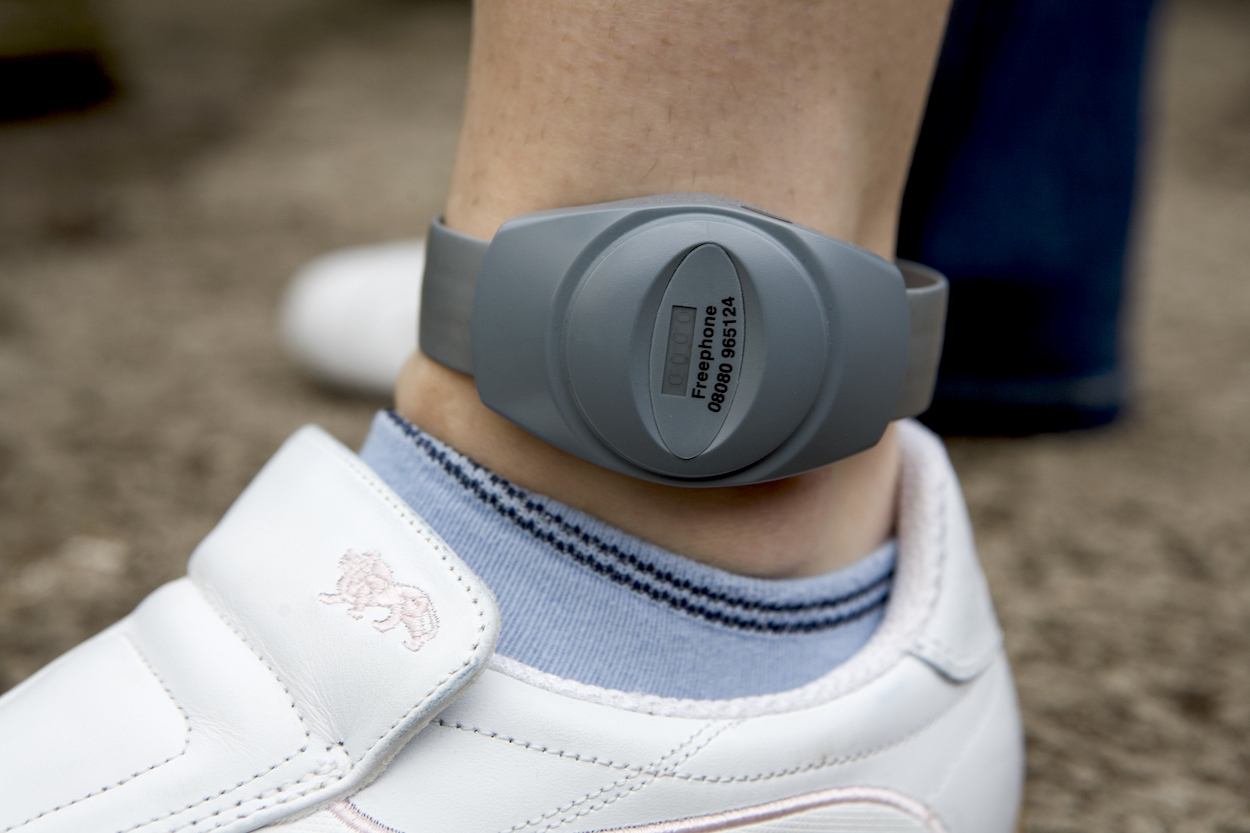
Electronic Monitoring – ‘EM’ or ‘tagging’ – is at the heart of the government’s plans for the justice system. Tags are used to enforce curfews, prevent drug and alcohol abuse, and even ensure that people stay away from certain areas. In 2021, there were 13,400 tagged people. From September, as part of the new sentencing regime, the Ministry of Justice is introducing a presumption to tag all prison leavers, meaning that from 2027 the government expects an additional 22,000 people will be tagged every year. And as the new Sentencing Acts takes effect, people will be serving shorter sentences and spending more time supervised by probation, meaning that the number on tags is going to rise and rise.

The tagging system has been the subject of much concern ever since a Spectator scoop two years ago, in which we revealed that many people who should have been tagged, hadn’t been. At the time, I know ministers were furious with Serco, the outsourced tagging provider. The implications for public safety were obvious and severe. Often very dangerous criminals who were supposed to be having their risk managed by tags were wandering around entirely unmonitored. The government made it clear how committed they were to improving the situation.
Now, two years later, the National Audit Office has published a detailed report into the state of the tagging system. Although tagging backlogs appear to be better than they were in 2024, much of the report makes terrifying reading.
The NAO reports that the prison and probation service (HMPPS) ‘does not have an accurate understanding of the number of individuals that should be monitored and are not’ (‘unmonitored’), but the auditor says that as of March this year HMPPS were reviewing around 8,900 cases of people who are recorded as having been ordered to wear a tag, but not wearing one. The Ministry of Justice estimates that around 5,450 people are unmonitored.
I understand that people can be unmonitored for a number of reasons. They might be back in jail, they might have refused to be tagged, they might have gone missing, they might be awaiting a tag being fitted, or they might have breached the conditions of their tag and be awaiting enforcement. Unfortunately, according to the NAO, the number of breaches which result in enforcement action is also unknown. It seems there’s a total failure of communication between the police, probation service and Serco, meaning that the different organisations databases do not ‘talk’ to one another.
Even worse, it seems that breaches of tag conditions are not taken seriously. The NAO notes that ‘where outcomes are recorded nearly half result in no further action’, and when they visited probation sites they found that ‘both serious and minor breaches were treated in the same way regardless of severity’. This is not a system in which consequences actually exist for breaking the rules. The NAO suggests this may be because ‘police and probation officers often lack relevant information or capacity to respond to breaches quickly, and governance is fragmented’. Another shocking detail is that over a fifth of orders from courts and prisons for tagging are sent to Serco with errors or missing information, requiring Serco to query them, delaying the process.
The auditor’s conclusion is brutal, but clear. Tagging is ‘a central component of the government’s plans to manage pressures on prisons. Since 2021, HMPPS has successfully and rapidly expanded EM to new groups. However, overall EM is not working as intended, creating public protection risks’.
The Labour government is trying to put the best spin on things
The Labour government is trying to put the best spin on things. It states that it ‘inherited a failing tagging system with record backlogs. As this report shows we have worked hard to fix this, with install rates up by nearly 50 per cent since 2024’. It added that ‘public protection is our priority, which is why we’re investing £100 million in electronic monitoring, tagging offenders before release for the first time and strengthening victim protections via new alert systems – all of which will help cut the number of unmonitored offenders’.
As I wrote in 2024: ‘Labour might say that it didn’t create this mess, and that may well be true. But grappling with the broken justice system is now their job. If serious further offences are committed by someone who should have been tagged, then the public are unlikely to blame the Tories.’ The reality is that two years after entering government, the tagging system is not functioning properly, and as a result there are serious risks to the public. Given this, the planned massive expansion may well result in significant public protection failures. And this time, Labour will have no one else to blame. It’s their Sentencing Act, their tagging system, and their responsibility.






Comments