David Platzer

My Name is Orson Welles was illuminating

From our US edition

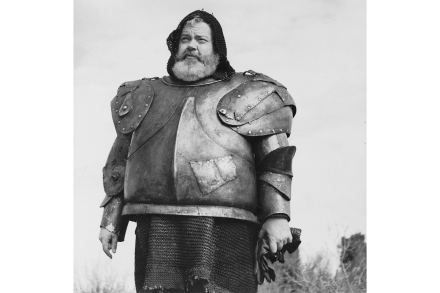
Orson Welles (1915-85) considered the notion of posterity vulgar, but he knew that he’d be loved once he was dead. That death came suddenly, just over 40 years ago, on October 10, 1985. There was a poignancy to the way death took him – sitting at his typewriter after appearing on Merv Griffin’s talk show. By then, the co-writer, director and star of the greatest film ever made, Citizen Kane (1941), hadn’t finished a film since 1973’s ignored but now quietly loved F for Fake. At the end of his life, he may have been better known as the guy in Paul Masson wine commercials than as a cinematic genius. To commemorate the 40th anniversary of his passing, Paris’s Cinémathèque Française last fall arranged the illuminating exhibition My Name is Orson Welles.
orson welles

The Angel of the Odd: an exhibition that ends with a satisfying shiver

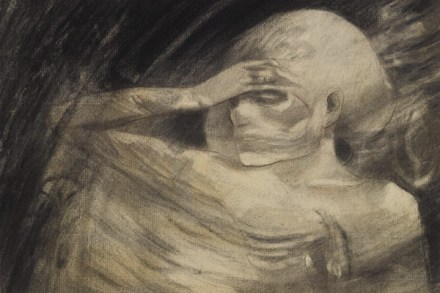
To some extent, all Romanticism has its origins in darkness, coming in the wake of the 1755 Lisbon earthquake that introduced fear into the age of reason. ‘Reason’s Sleep Produces Monsters’ proclaims the opening drawing in Goya’s series ‘Los Caprichos’ (1797–99), which features in this entertaining exhibition. After all the cruelties that man had inflicted on man at the 18th century’s twilight, it was only natural to turn to ghosts and witches for light relief. The exhibition’s title comes from an Edgar Allan Poe story but Goya’s phrase would be equally appropriate. The exhibition starts not with Goya but with F.W.

Fra Angelico and the Masters of Light

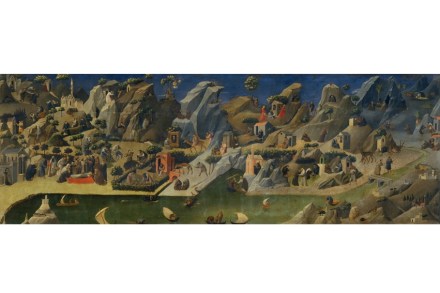
Fra Angelico (1395–1455), Il Beato (‘the Blessed One’) to his contemporaries as well as to John Paul II, who beatified him in 1982, is probably best known today for his frescoes in Florence’s San Marco, the Dominican convent where he lived as a monk. Perhaps fearing that some art-lovers will question the wisdom of mounting a Fra Angelico exhibition without the San Marco frescoes, the show’s curators have included a video of them. They need not have worried. Even without the frescoes, the 25 Fra Angelicos at the Musée Jacquemart-André, together with a well-chosen assortment of pictures by the friar’s colleagues working in the same religious vein, are more than enough to make this a rich exhibition.