David Patrikarakos

David Patrikarakos

David Patrikarakos is the author of 'War in 140 Characters: How Social Media Is Reshaping Conflict in the Twenty-First Century' and 'Nuclear Iran: The Birth of an Atomic State'

The depressing durability of dictatorships

From our UK edition

Many years ago, in Tehran, I spent a few hours in a bookshop run by an Armenian whose adult life had coincided almost exactly with the existence of the Islamic Republic. As I browsed, he fell into conversation with a German-language student who had come in looking for what appeared to be an obscure Persian grammar. The student was hopeful for change in Iran. A young population with growing social media use, together with state-wide oppression and economic mismanagement, would, he argued, see the end of the mullahs soon enough. The bookshop manager listened politely for a long time and then, clearly deciding his potential customer could be trusted, replied that none of that mattered.
Edward Luttwak, the uncontained strategist

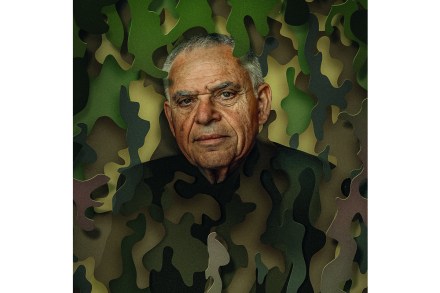
“Christ, Edward! No!” Edward Luttwak has just lunged at me with a knife in the study of the house he shares with his wife in a suburb of obdurate anonymity near Washington, DC. He is giving an unsolicited demonstration of how to most effectively stab someone. “Let your hand go limp, then feint a punch with your non-knife hand,” he says with gusto, his left fist fluttering around my face, “then stab into the diaphragm upwards. The air will go out of them like a balloon and they’ll drop to the floor. They may live another twenty years, but they’ll certainly be out of action for the next twenty minutes.” The demonstration has come after a brief typology of knives for my benefit — also unsolicited.

Luttwak

Putin’s mistake was to discard the velvet glove

From our UK edition

To study international politics since the turn of the century has been, in large part, to study the changing nature of autocracy – and the West’s relationship to it. We kicked things off by trying to realise the Trotskyite dream of ushering in global democracy through the barrel of a gun. We wanted to bring an end to the world’s tyrants – or the ones of relevance to us at any rate. We got Iraq. But if we failed to end tyrants, we played our part in helping to mould them. As Sergei Guriev and Daniel Treisman observe in their intelligent, important book Spin Dictators, throughout this time something far more interesting and dangerous was happening.

The romance and rebellion of an Iranian picnic

From our UK edition

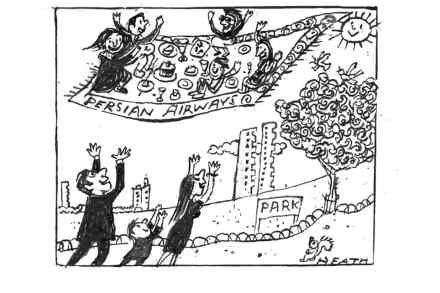
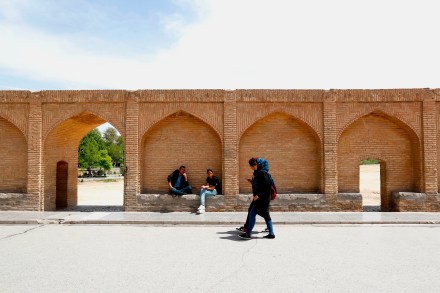
Iranians adore a picnic. During the country’s most ancient festival, Nowruz, the Persian new year, they brandish baskets of food as they swarm into parks and gardens to celebrate Sizdah-bedar, the 13th and final day of the Nowruz celebrations and the coming of spring. In Britain, it’s only just getting warm enough to enjoy a khoresht stew or doogh, a yoghurt drink that tastes a little like Indian lassi. But venture out to Hyde Park and you’ll see groups of young and old Iranians sitting in the pale springtime sun. The Persian picnic is generally a family affair. Pretty much every Iranian has fond memories of Nowruz meals; eating fragrant rice and meats with kindly aunts.

Iran and Russia are probing Biden’s weaknesses

From our UK edition

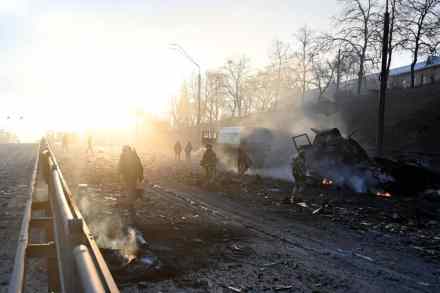
The world seems to have got a lot more dangerous since Joe Biden took office last January. It wasn’t long after his inauguration that Russian President Vladimir Putin started massing troops on Ukraine’s border. The Kremlin believes that its American opponent is old and weak, and began testing him as soon as he took office. Now war has come to the European continent once again. Last night it was the turn of the Iranians to test Washington. According to the Kurdistan Regional Government (KRG) at around 1:30 a.m., 12 missiles struck near a new US consulate under construction in Erbil, the capital of Iraqi Kurdistan.

Ukrainians are living through a hell on earth

From our UK edition

‘Live long enough and you watch everyone go mad,’ the man said to me gloomily. It was around 2009, and I was listening to a former senior civil servant tell me what he had learned from a life spent in diplomacy. I'm not sure even he envisioned seeing proper madness in a world leader until Putin’s televised hour-long pantomime earlier this week. Putin over those 60 minutes was a man marinating in rage and possessed of a worldview built on paranoia and ego. The performance culminated in him recognising the ‘republics’ of Donetsk and Luhansk in eastern Ukraine. The moment he did this he smashed the Minsk peace process designed – theoretically at least – to bring about resolution to the Russia-Ukraine crisis.

Return to Iraq

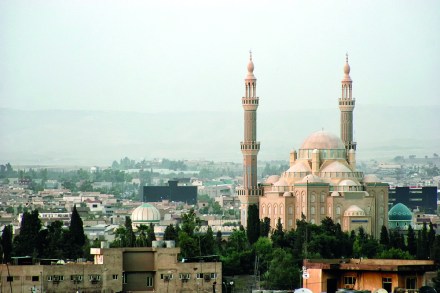
The land around Erbil, the capital city of the Kurdistan region of northern Iraq, is mostly beige, flat and seemingly endless. The mountain has seen a lot of action. The terror group ISIS remains dug in around it and the Kurdish peshmerga, with whom I recently spent time, continue to battle against them. Iraq. Two syllables, almost two decades of conflict. When people think of Iraq they think of several things: the disastrous 2003 war, oil (like all Arab countries in the popular imagination), ISIS and, if they’re a bit older, the mustachioed features of Saddam Hussein that stood, in the early years of this century, for the type of dictator painted as the West’s greatest threat. I think of all those things, too. But they’re leavened by something else: family.

iraq

What Bernard-Henri Lévy sees for the West

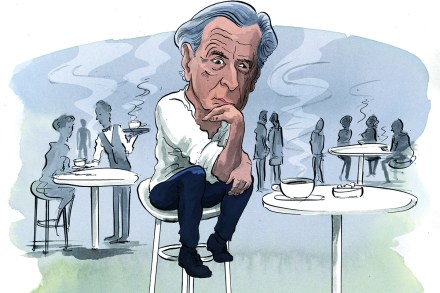
I meet Bernard-Henri Lévy at his apartment in central Paris on a chilly autumn afternoon. Considerations of security prohibit me from revealing its location. A French Jew who is a public and vocal enemy of both Islamism and some of the world’s worst regimes, Lévy is both perhaps the most important public intellectual in Europe, and a man with enemies. I have come to ask him about the future of the West — if, that is, he feels there will be one. Lévy, internationally known by his initials BHL, is a philosopher who has been at the heart of French — and international — society for half a century. But he remains an idiosyncratic figure.

lévy

Is Russia preparing to invade Ukraine?

From our UK edition

I can still hear the battlefields of eastern Ukraine. Just a mile or so from us, thousands of Russian troops were dug in; shells landed nearby. It was so cold my phone kept switching off. Seven years later, Ukraine is heading into another sub-zero winter. And the Russian troops have returned. Moscow has now massed more than 90,000 troops on Ukraine’s eastern border. Washington is briefing that intelligence suggests an invasion. Moscow says this is ‘alarmist’ and — as usual — accuses Nato of inflaming things. How did we get here? In truth the conflict never ended, it just froze. But it’s also true that the relationship between Kiev and Moscow has tanked this year.

How can we stop rogue states misusing drones?

From our UK edition

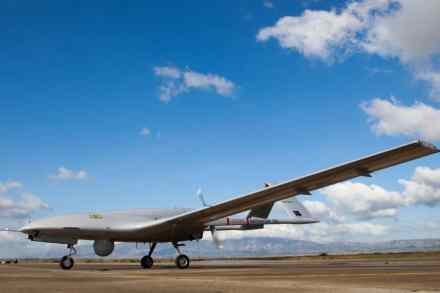
The announcement last week that US officials believe Iran was behind the October drone strike on the al-Tanf US base in southeastern Syria did not garner the headlines it should have done. But it was nevertheless yet another reminder that drone technology is altering geopolitics – whether we like it or not. As Seth Frantzman points out in his recent Drone Wars: Pioneers, Killing Machines, Artificial Intelligence, and the Battle for the Future – the most comprehensive and important book on drone warfare ever written – drones are already transforming modern conflict.

Iran is an immediate winner of the Taliban takeover

From our UK edition

A staple of observing politics is watching rhetoric curdle into reality. Operation Enduring Freedom, thought up and slapped together in the wake of 9/11, was supposed to put down the ‘global terror threat’ and bring freedom to the subjugated peoples of Afghanistan and the Middle East. It ended last week with images of despairing Afghans tumbling to their deaths from the undercarriages of fleeing US planes. The rights and wrongs of leaving are sundering US foreign policy elites, but leaving the United States is most certainly doing. So what next? When the United States high-tails it out of the region you can be sure that everyone around is watching — no more so than in neighbouring Iran. Iran has a peculiar relationship with the Taliban.

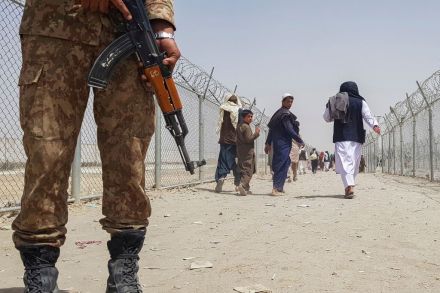
Pakistan is the true winner from the Afghan debacle

From our UK edition

'Everyone is getting out – and fast', the man tells me over a crackling line. He is tired, clearly subdued. A UN staff member, he was in Afghanistan until very recently and is still trying to process what happened. 'We knew this was going to happen,' he continues, 'but everyone was caught by surprise at the speed of the Taliban advance.' UN staff are now being evacuated to Almaty in Kazakhstan, from where they will make their way to their respective countries. But what about the local Afghans that worked with them? 'Our Afghan colleagues were given letters of support for country visas in the region: Iran, Pakistan, and India.

My roots burnt with Greece

From our UK edition

On 11 March this year my father passed away from prostate cancer after several weeks in a hospital in central Athens. As we sat around his bed, I remember thinking that I was watching 3,000 years of Greek history slowly perish before my eyes. My father was an only child, and I am British. His line of Greeks is at an end. Now fires have ravaged Greece and the olive trees that stood in my ancestral village for centuries have burnt to the ground. This year has seen the almost literal burning away of my roots: because if I am British, I am also a Greek — of sorts. This much is inescapable. My name is Patrikarakos, Pa-tri-ka-ra-kos, which falls — like a slab of Cycladic marble — between me and those I meet. So luminously foreign, so palpably un-English.

Iran is running out of water

From our UK edition

It’s far from an exact science, but if you want to get a sense of where the world is heading in terms of resource scarcity then you could do worse than considering the cost of a litre of oil versus a litre of water. These days a litre oil of crude is worth around 45 US cents (33p); a litre of bottled water in the UK will generally set you back around 65p. Oil has dropped around 100 per cent since its high in 2008 while water’s value has held firm, and even risen across the Middle East and Asia. This is probably unsurprising. Right-thinking opinion now considers oil an anathema while water is drying up almost everywhere — and nowhere more so than Iran.

The tragedy of Lebanon — from safe haven to bankruptcy

From our UK edition

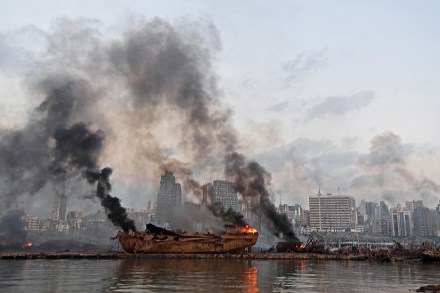
Mountains are humanity’s most comforting topographical feature. Wherever you find them you will also find those who have flocked to them for refuge. The Kurds, the world’s largest stateless people, span the most mountainous areas of their host states, while ‘Lebanon’ referred originally to the mountains in the eastern Mediterranean that for centuries served as a haven for all the region’s minorities. First came the Christian Maronites, fleeing the persecution of the Orthodox Byzantine Empire in the 7th century; then in the 10th and 11th centuries the Shiite Muslims, persecuted by the Sunni powers; followed by the Druze, persecuted by the Shiites.

Tehran is repeating the Shah’s mistakes

From our UK edition

The Iranian province of Khuzestan is oil-rich but water-poor. At the best of times, the southwestern region is a problem for Tehran. On the border with Iraq, it’s home to an Arab minority that has long been targeted. The province has separatist inclinations, which led to a failed uprising in 1979 and sees the occasional attack continue to this day. Unsurprisingly, it is not favoured by central government. It’s impoverished and lacks many basic services; quality of life is poor. Khuzestan is now in its sixth straight day of protests after water shortages in its major cities.

The dark past of Iran’s new presidential favourite

From our UK edition

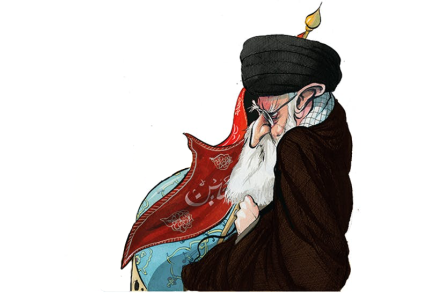
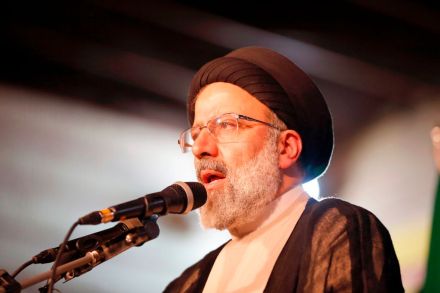
'Each vote counts...come and vote and choose your president. This is important for the future of your country.' These were the words of Iran’s Supreme Leader Ayatollah Ali Khamenei this morning as he urged people to make their voices heard in today’s presidential election. Each vote doesn’t count, of course. The regime makes sure of that. Iran ‘manages’ its elections. This year, 600 people registered as candidates, now only seven remain. The unelected Guardian Council, which consists of 12 ‘jurists’ (clerics), is responsible for ensuring all candidates are compatible with 'Islamic values'.

The war Israel is losing against Hamas

From our UK edition

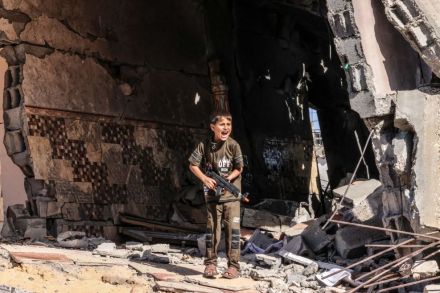
The Gaza conflict is bloody, brutal, and genuinely heartbreaking, but it is also perfunctory. This is a fight in which the military battle is predetermined: Hamas cannot win, and Israel cannot lose. What happens in between is almost balletic in its endless predictability. Hamas fires rockets, Israel fires back; Hamas targets Israeli cities; Israel bombs buildings in which Hamas hides and stores weapons. So what’s the point? Well, apart from Hamas needing to show strength – and Israel needing to, in the words of its security experts, 'mow the grass' by periodically degrading Hamas’ military capabilities – there is a wider battle raging. This fight isn't about missiles or rockets but about narratives; to fight you need a reason.

Israel’s shadow war with Iran explodes into ‘nuclear terrorism’

From our UK edition

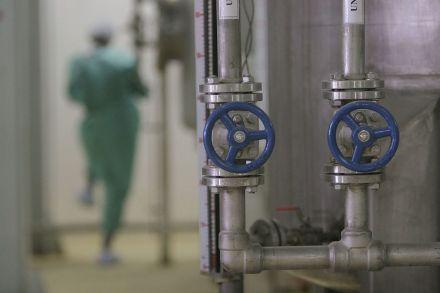
If time flows at an even pace, then history does not. Joe Biden may still be new in the job, but he finds himself at the centre of a war between Israel and Iran in everything but name. After a comparative lull, events are not so much accelerating as whirling around the president, drawing him inexorably in. Last night, Iranian officials reported that the Natanz uranium enrichment plant – a lynchpin of its nuclear programme – had been the victim of what they described as 'nuclear terrorism'. According to US officials quoted in the New York Times, an explosion destroyed the independent power system that supplied the centrifuges for enriching uranium.

Greece and Britain’s long history of fighting autocracy

From our UK edition

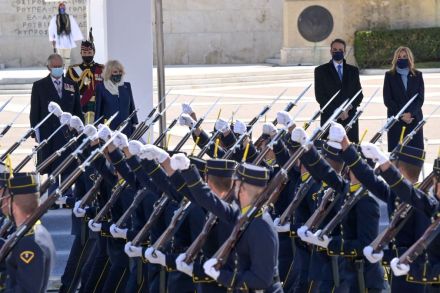
As I write, it is mid-morning in Athens and fighter jets are roaring overhead. My windows rattle, the sky splinters, and out they burst, strafing the blue with lines of white. It is a celebratory deployment. Today, Greece marks 200 years since the start of the war of independence from Ottoman rule. In Syntagma (Constitution) Square, home to the Hellenic Parliament, assorted military and political bigwigs gather to celebrate. Medals gleam. The lack of crowds gives the scene an incongruous, surreal quality. Over here, the end of lockdown remains a long way off. On TV this morning, I watched Prince Charles, who is in Athens for the occasion, stumble through a few words of Greek. Last night, he gave a speech (in English) to much acclaim.