David Patrikarakos

David Patrikarakos

David Patrikarakos is the author of 'War in 140 Characters: How Social Media Is Reshaping Conflict in the Twenty-First Century' and 'Nuclear Iran: The Birth of an Atomic State'

Iran’s second wave could come crashing down on the regime

From our UK edition

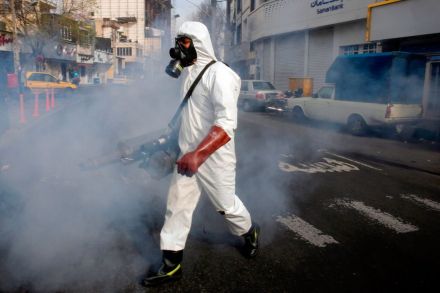
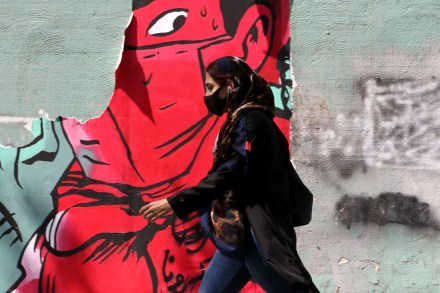
If Iran has performed one role in the time of coronavirus it’s been as a harbinger of things to come. Early in the year, when we in the West were still blasé about the corona-thingy that would be 'nothing more than the seasonal flu', the regime was already having to deny reports that Iranians were being taken to hospital in their droves. The many flights arriving daily in Tehran from China were beginning to take their toll: as far back as 28 January three, employees of the Chinese embassy were hospitalised with Covid-19 symptoms. People began to fall sick across the country. It was a state of affairs we would all come to know soon enough. Iran then reluctantly locked down. It didn’t want to. The country is in severe economic crisis.
The mullahs’ coronavirus gamble has backfired

From our UK edition

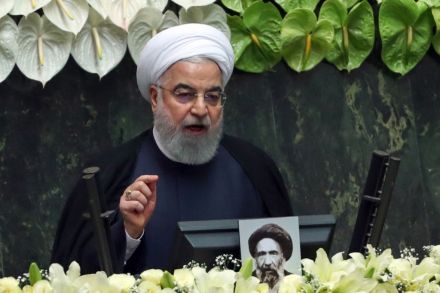
When you’re desperate you do stupid things, and when you do stupid things, you often make what was once merely a desperate situation dire. It’s a lesson I thought Iran’s ruling clerical elite had internalised. Seemingly not. The Islamic Republic is a revolutionary state; it came about after Iranians overthrew the Shah, Mohammed Reza Pahlavi, in 1979. The Shah fell because when he faced unrest he panicked; he sent the army into the streets to kill people. And the more he killed the angrier they became until eventually he had to flee. Once, the Mullahs avoided this sort of stupidity.

Extremists are going to thrive in the post-lockdown world

From our UK edition

Throughout the lockdown I’ve been nagged by a persistent thought. As I sit indoors and read the news; as I alternate between cooking and takeaways; as I venture outside into the socially-distanced streets; and as I listen to commentators catastrophise about lockdown Britain, it is there. The thought is simple: what if all this – the confinement and the fear and the confusion and the ever-rising death count – what if all this is the good part? True, we are stuck indoors, but the scaffolding of our world looks much the same, even if we are not allowed to move about in it. What happens when the time comes to restart? When the shops finally reopen how many will still exist?

Coronavirus has exposed Iran’s rotten republic

From our UK edition

If coronavirus has taught us anything it’s that if you really want to understand something of a state’s essential character, look at how it battles a pandemic. This crisis has divided humanity up variously, but most markedly along national, if not occasionally stereotypical, lines.  Germany reacted with organisation and efficiency; it has made, on balance, a good fist of it. The UK wavered; it twisted and turned and did stuff on the hoof. Things could be a lot better, but they could also be a lot worse. Some countries have defied expectation. Greece, for example, locked down quickly and comprehensively: it kept mass death at bay.

Kim Jong-un: dead or alive?

From our UK edition

Yet again the news from Pyongyang is both disconcerting and vague. Yet again North Korean leader Kim Jong-un is rumoured to be seriously ill or dead. Kim went missing from public view on 11 April and has not yet reappeared. It was an abrupt disappearance after several public engagements and ample news coverage at the beginning of the month. Experts remain puzzled. On 14 April, just a few days after his disappearance, North Korea tested various missile platforms – something only Kim would have the authority to do. But as Harry Kazianis, Senior Director of Korean Studies at the Center for the National Interest, observes, he missed the birthday celebrations for his grandfather Kim Il-sung, the founder of North Korea, the following day.

Could the Covid crash spark another Arab Spring?

From our UK edition

They said we were going to uncouple from the Middle East. Barack Obama, they said, was going to pivot to Asia. Donald Trump was, finally, going to get the United States the hell out of there. Intellectually, politically and, most importantly of all, militarily, we were going to put this most vexatious of regions behind us. It was, they assured us, a new day. They were wrong. Obama was drawn back in by his desire to strike a nuclear deal with Iran. Trump talked a good isolationist game but then droned Qasem Soleimani in Baghdad. Now we are in the midst of a coronavirus-induced oil crash. Now the Middle East squats in our living rooms once more. Now, it seems, the bad times are here again. On Monday the price of oil hit $0.

The global politics of a pandemic

From our UK edition

The Great Game of the 21st century is upon us and as ever it’s a scramble for resources. This time, though, the thirst is not for land or diamonds or gold. Personal protective equipment has become the oil of the contemporary moment: desperately needed by a world that is strafed by coronavirus. Britain has its own urgent PPE supply problems. But what about the broader international struggle? The answer to this question offers the clearest glimpse of how our post-pandemic global politics is likely to look.   At the top of this scramble stands China. Ahead of the curve (for obvious reasons), it imported about 2.5 billion healthcare items between 24 January and 29 February, thereby denying vital equipment to other countries.

Keir Starmer is the conservative we need in this time of crisis

From our UK edition

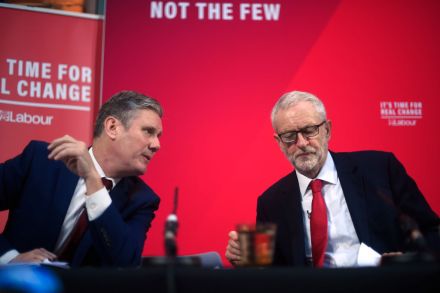
These are discombobulating times. A deadly pandemic; the United States at sea, China belligerent and the EU at war with itself. British politics was in flux before the virus hit. Now it is vertiginous. The Tory party, long seen as the guardian of the status quo, has been forced to change tack as it deals with the fallout. Keir Starmer, recently elected as Labour leader, will play a vital role in this realignment – but not one we would once have envisaged. Starmer’s election as Labour leader in the midst of coronavirus is a good thing. He is the anti-Corbyn for a Labour party looking for calm and stability after almost five turbulent years. He is the definition of the establishment technocrat in an age of populists.

A simple way for Keir Starmer to help Labour reject Corbynism

From our UK edition

It’s over then. After almost five years, Jeremy Corbyn’s tenure as Labour leader has come to a close. Corbyn ended as he led: with the petulance and ill grace that has characterised his political career. As Corbyn slopes to the backbenches to resume a life of fruitless campaigning, Keir Starmer steps up to replace him. He faces a mammoth task: rebuilding Labour as a credible electoral force. This is necessary for both party and country. All of us, wherever we stand on the political spectrum, need a functioning opposition. But make no mistake: if Starmer is to make Labour palatable once more, both politically and indeed morally, he will need to reject his predecessor’s foreign policy – and quickly.

Jews have always been blamed for plagues – coronavirus is no different

From our UK edition

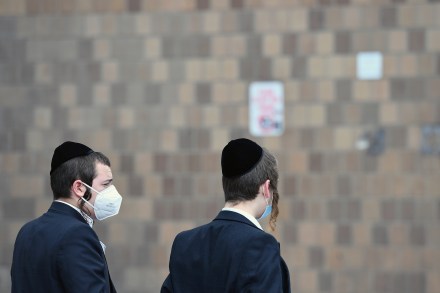
History has not usually been kind to the Jews. But even by its low and morbid standards, the 14th century was a time of chaos. From 1348 to 1351 between 30 and 60 per cent of Europe’s population died from the Black Death, a plague that strafed continents. Hundreds of Jewish communities perished too, their inhabitants slaughtered out of hatred and fear. It was a time of mass death and horror, too; and of scapegoating. Bad times for Jews then. And because once a year, we cleaned out our grain supplies for Passover, Jews flushed out the rats that carried the plague and lowered our death count. So they burned and killed and wiped out the settlements and villages and towns. The contagion, you see, it just had to be contained. Now the plague is here again.

Beware China’s masked diplomacy

From our UK edition

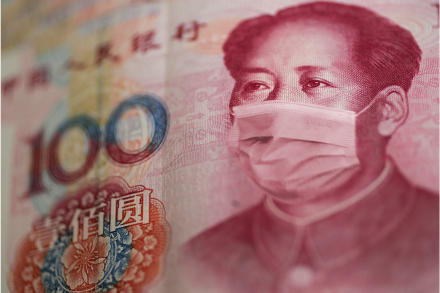
'How do you deal toughly with your banker?' This was the not quite rhetorical question that Hillary Clinton asked Australia’s then-prime minister Kevin Rudd at a lunch back in 2010. In the prophylactic language of the diplomat she was then, Clinton was asking how the world should deal with an ever more aggressive China, and she was prescient. Ten years on, Beijing is ascendant. It holds over a trillion dollars of US debt (banker indeed); as of writing, one of its major companies is set to control Britain’s 5G network; and it has spent years hoovering up Africa’s resources with little care for the (admittedly scant) international condemnation it receives or the human rights it violates so egregiously along the way.

Iran’s coronavirus tragedy is depressingly predictable

From our UK edition

In the name of God. These words define the Islamic Republic of Iran. They stretch across its official paperwork and correspondence; they drive its constitution; they drop from the lips of its Ayatollahs leading Friday prayers; and they imprison its people. In Iran, the Velayat-e Faqih, the ‘rule of the jurists,’ holds that those best equipped to interpret God’s laws are those best equipped to rule. Authority descends in a straight line: from God to Mullah to Man (and then woman). Iran’s laws render its citizens little more than children clutched in the paternal embrace of a near all-powerful clerical and military class.

Corona confusion is being ruthlessly weaponised

From our UK edition

Few words have as great a hold on the contemporary imagination as ‘disinformation.’ Few words are as ubiquitous in contemporary discourse or as pervasive in political mud-slinging. Donald Trump castigates the 'fake news' media for perceived bias against him; Hillary Clinton blames foreign influence operations for her election loss. Disinformation, propaganda, lies: whatever you wish to call it, it’s the bogeyman of our age, a convenient repository for all our sins. There is a reason for this. The author Shoshana Zuboff has correctly observed that information technology brought with it a revolution that reordered capitalism. Human experience – as found in data, which is how we now harness information – became the 'raw material' for wealth creation.

Dirty money and political manipulation: Independence Square, by A.D. Miller, reviewed

From our UK edition

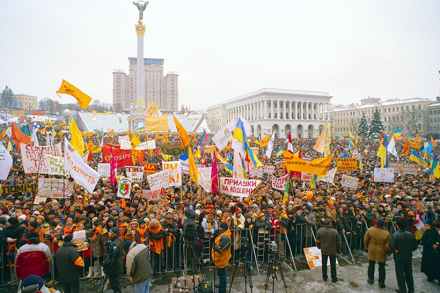
A.D. Miller’s gripping new book is set largely during Ukraine’s 2004 Orange Revolution, which Miller covered as a journalist. Ten years later, I reported on the aftermath of the country’s 2014 Euromaidan Revolution. Independence Square details the first event and prefigures the second. It is several things: a thriller, a political novel and a statement on our times. It tells the story of Simon, a disgraced British diplomat who, one day on the Tube, sees the cause (so he believes) of his downfall. She is a woman called Olesya whom he met years earlier during the Orange Revolution. From this beginning the novel unfurls, switching between 2004 and the present day. Back in 2004 the protestors are angry and the government is getting desperate. Violence looms.

The downing of a civilian jet only adds to Tehran’s desperation

From our UK edition

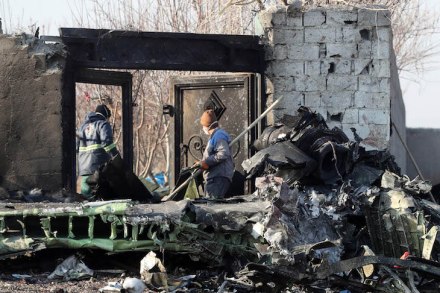
Drama and tragedy continue to envelop Iran. Just hours after the regime struck two US bases in Iraq on Wednesday, Ukraine International Airlines flight PS752 crashed after taking off from Tehran en route to Kyiv. All 176 passengers and crew members on board were killed. Iran almost immediately claimed that the plane had suffered a technical malfunction but this was greeted with scepticism. The aircraft was a Boeing 737-800 - one of the international airline industry's most widely used and reliable models. Dozens of Canadians were on board and on Thursday Canadian Prime Minister Justin Trudeau said evidence indicated that an Iranian missile had brought down the aircraft by accident.

Could Iran’s retaliation against the United States lead to war?

From our UK edition

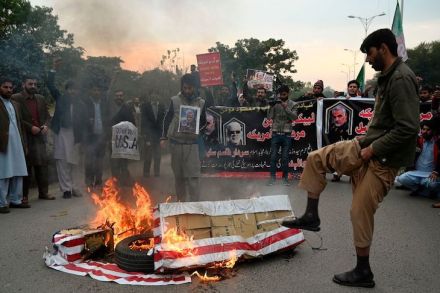
So it happened. Iran has just struck back against the United States for its killing of Quds force chief Qassem Soleimani on 3 January. The Iranians had vowed to retaliate from almost the moment that their most potent – and famous – commander was killed. Iran’s leader Ali Khamenei had vowed a “severe revenge.” Now it has come. And while it may not so far be “severe “exactly, it was undoubtedly swift and it was bold. Details are still pouring in about the strike but it is clear that Iran has struck two bases housing US and coalition forces in Iraq with more than a dozen missiles.

Iran’s generals are weeping for Qasem Soleimani. But soon they will prepare to fight

From our UK edition

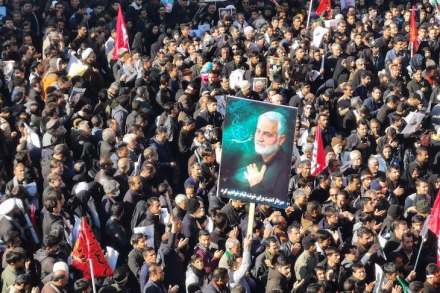
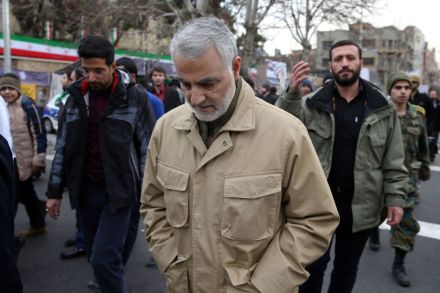
It has been 24 hours since America droned Qasem Soleimani near Baghdad airport. Now both Iran and the United States are getting ready to deal with a new reality in the Middle East that has (quite literally) exploded into being. There is a mutual recognition that when Soleimani died, the old rules of the game died alongside him. What is instructive about his assassination is not that it happened, but that it took so long. After all, this was a man whose carefully posed portrait spread across Twitter every time he visited yet another of Iran’s many wars in the region. If I knew when Haji Qasem was in Syria, then the Americans surely did too.

How Iran will strike back after the killing of Qasem Soleimani

From our UK edition

In the early hours of the morning, Iraqi State television reported that the leader of Iran’s Qud’s Force, Qasem Soleimani had – along with six other people including Iraqi militia leader Abu Mahdi al-Muhandis – been killed in a US strike near Baghdad airport. Make no mistake: this is the most significant military assassination in the 21st century Middle East. More significant even than the killing of Osama bin Laden in 2011. Bin Laden was the more famous man but was, by the time of his death, a lone figure stuck impotently in a compound in Pakistan. As the orchestrator of 9/11, his death was necessary closure for Washington, but it was a largely symbolic act. Soleimani, too, was a symbol: of Iran’s power across the Middle East.

Why Russia – and Putin’s – weakness should terrify us

From our UK edition

A Russian ship has just rammed a Ukrainian vessel, opened fire on it and captured its sailors. Ukraine has called it an act of war, and legally it may be right. But more than this the act reveals the nature of the true Russia. At this year’s Helsinki summit, some were aghast at how subservient Donald Trump appeared to be toward Vladimir Putin. His behaviour was seen as treasonous and supposedly pointed to the power Russia now wields. For the alt-right, Putin is seen as a model – a “strongman” who is making his country great again. Meanwhile, the Democrats see an all-powerful Russia behind everything. And there is a similar narrative about Russian meddling in the 2016 Brexit referendum. All of this could not be further from the truth.

Beautifully out of sync

From our UK edition

‘Myshkin’ wants ‘a tiding ending’ to his life and has settled down to write his will. An ageing Indian horticulturalist, his childhood nickname (after Dostoevsky’s protagonist in The Idiot) remains. It is the first sign that this is a novel about people out of sync with their times and their surroundings. Abandoned by his mother as a child, Myshkin has received a letter ‘pulsing with the energy every unopened letter in the world has’. It involves his mother but he cannot bear to open it. Instead he narrates her life, and his own, one of tending trees with commendable diligence, and waiting for her return. As with Roy’s previous work, the prose is intensely visual.