David Patrikarakos

David Patrikarakos

David Patrikarakos is the author of 'War in 140 Characters: How Social Media Is Reshaping Conflict in the Twenty-First Century' and 'Nuclear Iran: The Birth of an Atomic State'

Walls went up after the Berlin Wall came down

From our UK edition

In her 2017 travelogue Border: A Journey to the Edge of Europe, the writer and poet Kapka Kassabova meets Emel, a loquacious Turkish civil servant who tells her that ‘the only good thing about a border is that you can cross it’. These words speak to an inherent contradiction. Borders stand as overt manifestations of

Iran’s missile diplomacy

From our UK edition

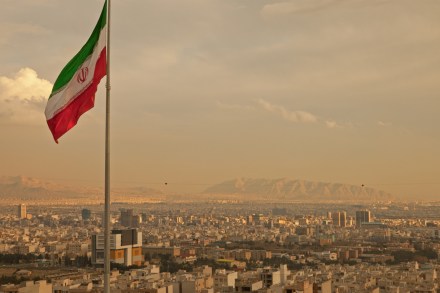
It’s a time for delivering messages in the Middle East, where messages rarely come without their near constant attendant: violence. On Monday night a volley of rockets struck a base hosting US troops in Erbil, the capital of Iraqi Kurdistan. International media reported that one rocket landed in the base and another on residential areas

The toxic side-effect of the Trump Twitter ban

From our UK edition

Almost two weeks on from the storming of the US Capitol it’s becoming plainer that the most substantive changes to our political and public spheres are brewing not in Congress but on the internet. First, let’s be clear: Twitter had to act against Trump. By deleting his account, it shut down a large part of

Corbyn’s legacy is here to stay

From our UK edition

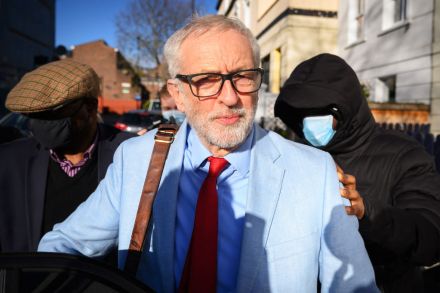
It’s been just over a year since the British people finally squashed a hard-left push for power under the dismal but unyieldingly dangerous leadership of Jeremy Corbyn. On 12 December 2019 we dodged a collective bullet. But Corbynism lasted almost half a decade; it reshaped the national conversation. As we enter 2021 it’s worth considering

John le Carré’s London of exiles is alive and well

From our UK edition

‘I’m an Englishman born and bred, almost.’ So says Karim Amir, protagonist of Hanif Kureishi’s The Buddha of Suburbia. If Karim, and by proxy Kureishi, is a funny sort of Englishman – ‘born and bred’ but not quite – then so was John le Carré, albeit in a slightly different way. Le Carré, or to

Why Egypt’s brutal regime is cracking down on critics

From our UK edition

History is accelerating in the Middle East once more. Nuclear scientists are dying in Iran; and again, in Egypt, the regime is cracking down on anyone who dares to criticise it. Kareem Ennarah, the director of the criminal justice and policing unit at human rights organisation, the Egyptian Initiative for Personal Rights (EIPR), was arrested

Why Mohsen Fakhrizadeh was killed now

From our UK edition

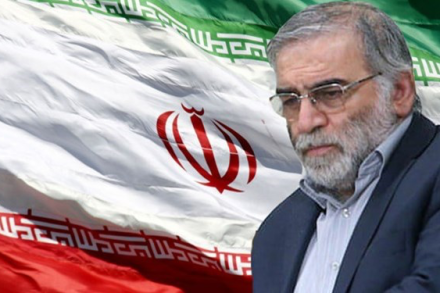
Yesterday afternoon someone assassinated yet another scientist working on Iran’s nuclear programme. Mohsen Fakhrizadeh headed up the ministry of defence’s research and innovation organisation, and he was ambushed and killed in his car just east of Tehran, by gunmen who opened fire on him and his bodyguards. I’ve been writing about Iranian nuclear scientists getting

Anti-Semitism and the two sides of Britain

From our UK edition

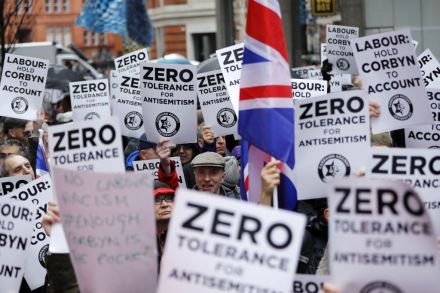
How, then, does Britain treat its Jews? It’s a question that I, and many others in the community, once believed had been settled to the point of irrelevance. But when Jeremy Corbyn became Labour leader in 2015, we realised that maybe the story wasn’t quite so simple. Things are clearer now. Last week the Equalities and

Can dynastic restoration revive Lebanese fortunes?

From our UK edition

Once more Lebanon is in crisis, and once more its leaders turn to what they most understand to solve things: ties of blood. Families are a big deal in that part of the world. And as Lebanon has stumbled into financial and political ruin over the past year, it is to family, or more correctly

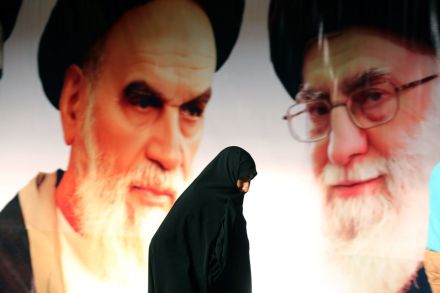
Iran is now a country in decay

From our UK edition

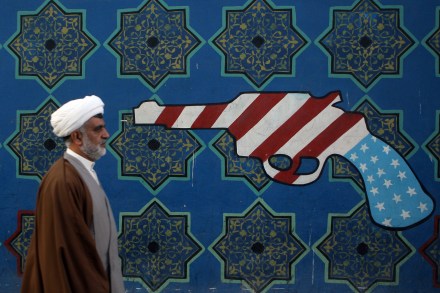
If 2020 is generally accepted to be a global annus horribilis, then it is perhaps fitting that the Islamic Republic of Iran’s ability to do mischief has seemingly just received a hefty boost. On Sunday morning, the UN lifted its 13-year long arms embargo on the Iranian armed forces. Iran is now (technically at least)

Je Suis Charlie and the legacy of jihadism

From our UK edition

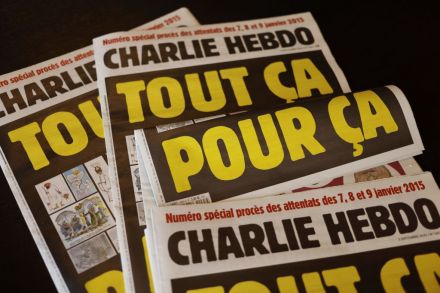
‘You have insulted the prophet – we are al-Qaida Yemen.’ These words, terrifying yet clichéd, were spat at a female cartoonist just moments before the massacre of 12 people in and around the offices of the magazine Charlie Hebdo in Paris on 7 January 2015. Their crime? Drawing. The trial of those accused of abetting

Did Erdogan order his generals to sink a Greek warship?

From our UK edition

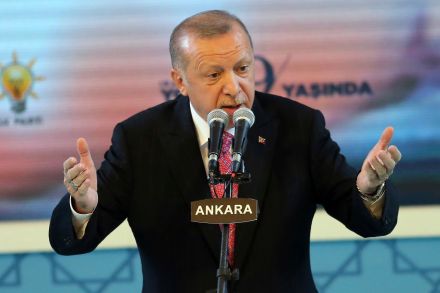
Could war finally be coming to the eastern Mediterranean? It’s not as excitable a question as it might first appear. In an article titled, ‘Erdogan’s calculated war,‘ the German newspaper Die Welt quoted sources from the Turkish military saying that president Recep Tayyip Erdogan had recently ordered his generals to sink a Greek warship, without inflicting

An assassination verdict divides Lebanon

From our UK edition

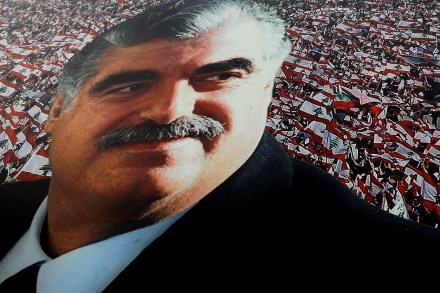
Almost a decade ago, I went to Lebanon to investigate who had killed its Prime Minister Rafic Hariri. It was a momentous event in the Middle East, and it changed this tiny, beautiful state forever. Hariri was killed on Valentine’s Day 2005 alongside 21 others after a bomb exploded as his motorcade drove through central

Will health trump freedom in our post-coronavirus world?

From our UK edition

Bernard Henri Levy’s latest book, The Virus in the Age of Madness, contains a striking quote from Rudolf Virchow, the 19th century father of pathological anatomy: ‘An epidemic is a social phenomenon that has some medical aspects’. He was right. Catastrophes are society’s great illuminators. From Pompeii to coronavirus, the governing axiom is clear: if you

The Israel-UAE peace deal was made in Iran

From our UK edition

The last time I was in Israel people were preparing for the worst. ‘This crazy bastard is going to annex the West Bank and then we’re all screwed,’ my Israeli friend bemoaned to me. It turns out he was wrong. The United Arab Emirates and Israel have just agreed to normalise relations. In return, Israel

Lebanon’s existential crisis

From our UK edition

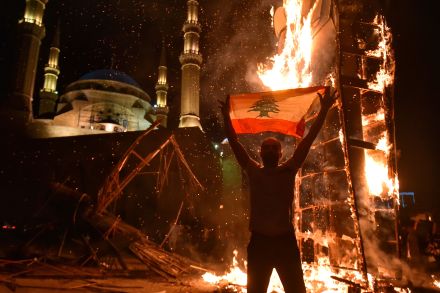
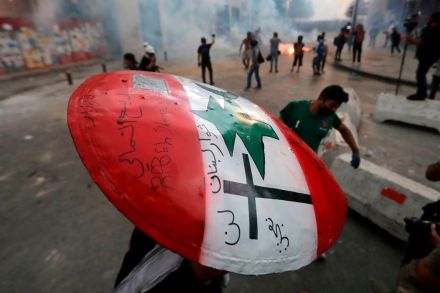
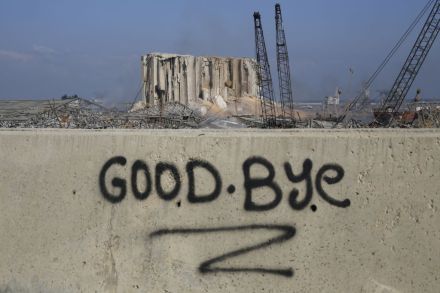
It had to happen. On Monday evening, just under a week after 2,750 tonnes of ammonium nitrate stored in a warehouse at Beirut’s port exploded and killed over 160 people, the entire Lebanese government resigned. This was not a surprise. The blast resulted from negligence of the grossest kind. Three cabinet ministers and seven members

Erdogan, Hagia Sophia and the rebirth of an Islamic Turkey

From our UK edition

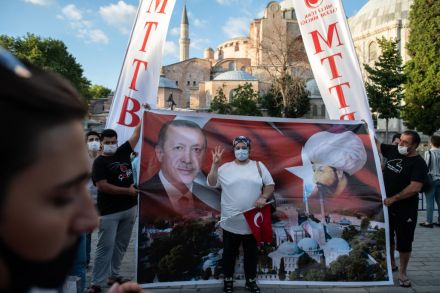
Here in Greece the temperature is rising. As July rolls on, the heat thickens: people become irritable in 40 degrees. Now they have even more reason for anger. Last Friday, Turkish president Recep Tayyip Erdogan declared that Istanbul’s Hagia Sophia would open for Muslim prayers as a mosque. He made the announcement after a Turkish