David J. Garrow

David J. Garrow is a Pulitzer Prize-winning historian. His books include Bearing the Cross: Martin Luther King, Jr. and the Southern Christian Leadership Conference and Rising Star: The Making of Barack Obama.

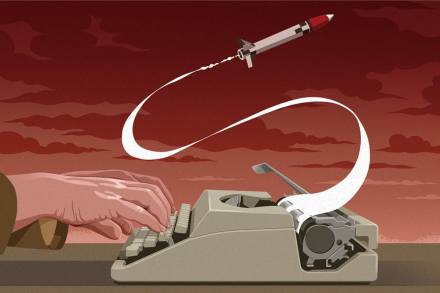
A profound account of the October 7 pogrom

From our US edition

I first learned about anti-Semitism at the age of eight, when my father explained to me that his closest business friend could not live near us because he was Jewish. This was 1961, hardly three miles from Mount Vernon, Virginia, in a new-build neighborhood that was racially segregated, as was my elementary school. Black children descended from George Washington’s slaves lived in a nearby rural ghetto called Gum Springs and were not welcome east of Fort Hunt Road. Somehow that memory – like John F. Kennedy’s assassination two years later and the view of his funeral procession from my father’s office window – is one of my earliest and starkest recollections.
Murray

Why Europe needs to take the Putin threat more seriously

From our US edition

Russia’s war on Ukraine presages a dire future for all of Europe unless Vladimir Putin’s military is decisively defeated. That is the powerful and persuasive argument advanced in Keir Giles’s new book. To appreciate fully the importance of his contentions, you must acknowledge not only Giles’s own status as a supremely well-connected senior fellow at the famed Chatham House think tank in London but even more so the all-star cast of international military luminaries who have publicly endorsed his analysis: the now-retired US generals John Allen and Ben Hodges, UK general David Richards, Australian general Mick Ryan, plus former Estonian president Toomas Hendrik Ilves. Giles’s assertions thus should be taken with the utmost seriousness.

Giles

A superbly written and insightful account of the contemporary American military

From our US edition

Four-star Marine General Kenneth “Frank” McKenzie headed US Central Command — CENTCOM, covering the Middle East — from spring 2019 until spring 2022. It was an eventful, and stressful, three years: taking out long-time Islamic State head Abu Bakr al-Baghdadi in 2019, then notorious Iranian Quds Force commander Qasem Soleimani in early 2020 and overseeing the disastrous final withdrawal from Afghanistan in 2021. Prior to CENTCOM, McKenzie had spent four years in two top-level Joint Chiefs staff posts, and before that he served multiple tours of duty on the ground in Afghanistan. As a younger officer he had been in the Pentagon on September 11, 2001, when American Airlines Flight 77 hit; he was commissioned in the Marine Corps right out of the Citadel in 1979.

McKenzie

Who’s really behind the Biden administration’s foreign policy?

From our US edition

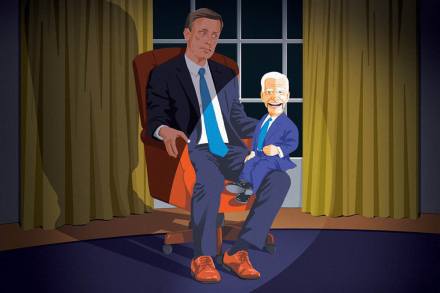
If you’re one of the many people worried that US foreign policy is in the hands of a visibly declining eighty-one year-old president, Alexander Ward’s account of the Biden administration’s first two years in office may — or may not — make you feel better, for he leaves readers with little doubt as to who is actually the executive branch’s most influential decision-maker: forty-seven year-old national security advisor Jake Sullivan. Ward might deny any such authorial intent, but time and again he shows his hand, as when he invokes “Sullivan’s first two years at the helm alongside Biden.

biden ward

Christopher Rufo’s new book is impressively erudite

From our US edition

When a new book by an author often characterized as a conservative polemicist earns a rave review in the staid Economist, independent thinkers take notice. Christopher Rufo’s articles on recent US radicalism for the Manhattan Institute’s City Journal have long attracted wide attention, and now America’s Cultural Revolution has been praised as “meticulous” and “cerebral” as well as “persuasive and well-written.” All true, for Rufo’s book is impressively erudite, reflecting a breadth and depth of familiarity with influential leftist writings that will shame any number of “woke” academics.

rufo

Visiting a forgotten chapter in American history

From our US edition

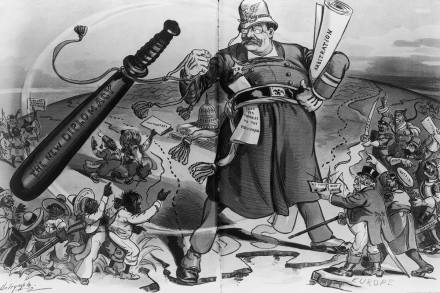
Nowadays few Americans could identify what the Monroe Doctrine signifies. Named for the fifth US president, the point of the 1823 policy had been succinctly stated fifteen years earlier by the third, Thomas Jefferson: “The object... must be to exclude all European influence from this hemisphere.” Sean Mirski terms the Doctrine “revolutionary” in his impressively erudite We May Dominate the World, an astonishingly comprehensive and stylishly written account of US foreign policy in the Western Hemisphere during the years 1860 to 1945. Calling the period a “missing chapter” in American history, he rightly asserts that “the story of the United States’s rise to regional hegemony has not received anywhere near the attention it deserves.

mirski

Who was the real Martin Luther King, Jr.?

From our US edition

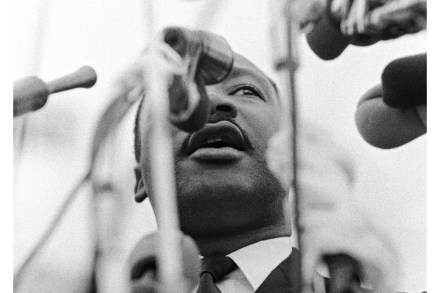
Jonathan Eig’s new King: A Life (KAL) is the first comprehensive biography of the black civil rights hero to appear in more than thirty years, and it will succeed my own Bearing the Cross (BTC), published in 1986, as the standard account. One normally does not review a book one’s blurbed — I’ve called it “a great leap forward in our biographical understanding” — nor where one’s actively aided the author’s research and read his manuscript multiple times. But comparisons between KAL and BTC will be legion, so highlighting the three most significant ways in which the two biographies differ will be a service both to the thousands of readers whom Eig’s volume should attract and to students of King’s life more generally.

king

Hoover damned

From our US edition

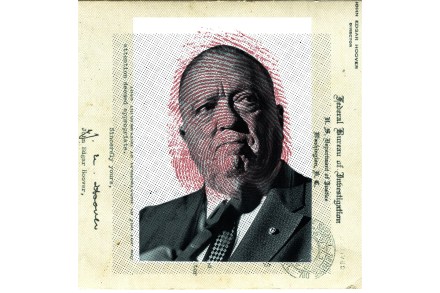
When J. Edgar Hoover died in May 1972 at seventy-seven, he had been director of the Federal Bureau of Investigation for forty-eight years, ever since progressive attorney general Harlan Fiske Stone had promoted the then-obscure twenty-nine-year-old Justice Department bureaucrat in 1924. With fewer than 400 agents, limited responsibilities, and a reputation badly tarnished under a corrupt previous attorney general, what was then called the Bureau of Investigation offered modest prospects. Still, the new boss set out to clean house, institute stringent hiring standards and impose a culture of science-based crime-fighting on his federal agents. One new hire in 1928 was Clyde A.

hoover

The rise of gay Washington

From our US edition

Anyone under fifty may be unaware of how largely invisible gay Americans were until at least the 1980s. James Kirchick’s incredibly rich and impressively thorough Secret City does not mention Bowers v. Hardwick, the notorious 1986 Supreme Court ruling that upheld the criminalization of gay sexuality, but only post-Bowers did the push for gay equality, and eventually same-sex marriage, rapidly become what he rightly calls “the most successful social movement in American history.” In 1992, a Gallup poll indicated that 43 percent of Americans said they knew a gay person — double the figure from just seven years earlier — and across all of America it was that growing knowledge of the presence of gay people that allowed such a dramatic political transformation to take place.

gay

How black was the Obama presidency?

From our US edition

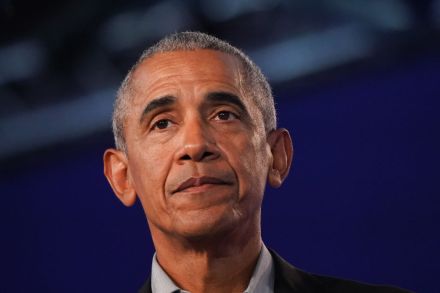
Barack Obama exited the presidency far blacker than he entered it. That’s a central theme of historian Claude A. Clegg III’s splendid and wide-ranging “interpretive history” of how Obama’s White House years “were witnessed, experienced, and interpreted by African-Americans.” That framing reflects a book that is self-consciously aimed at black readers, but it also illuminates an important truth about Obama, one that this reviewer realized after spending more than eight hours talking with him during three “off-the-record” visits to the Oval Office during the last nine months of his presidency. Clegg is too good a historian to be an uncritical fanboy like the many journalists who forfeited their professionalism during the Obama years.

obama

Kamala Obama

From our US edition

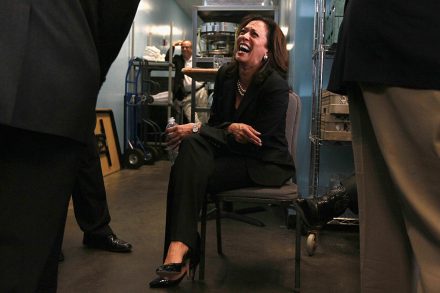
Kamala Harris is no radical. Indeed, no matter how vaguely inclusive the label ‘progressive’ may be, Harris’s long record as a California prosecutor makes it difficult to shoehorn her professional career under that rubric. The real Kamala Harris is a liberal careerist with no deep convictions whose ability to woo wealthy supporters allowed her to win a seat in the Senate.Harris’s story bears extensive similarities to that of Barack Obama. Born biracial to two academically-gifted parents, a contentious divorce found young Kamala being raised by her mother in a linguistically foreign country — French-speaking Montreal, rather than Indonesia. And, like Obama, Harris’s younger sister is named Maya.

kamala obama

Obama’s disappearing legacy

From our US edition

The presidency of Barack Obama was heralded as a transformative event in American racial history. So why did it seem to do so little to advance racial equality or alter long-standing patterns of African American subjugation? We hear that, if he wins in November, Joe Biden, the former vice president, will restore the essence of the Obama-Biden administration and put America back on a path to racial justice. But over eight years, what did Obama achieve? Long before Obama ran for president, a wide range of black voices questioned whether he was ‘black enough’ to represent African Americans. At Harvard Law, Obama’s election as the first black president of the prestigious Harvard Law Review drew national news coverage.

obama