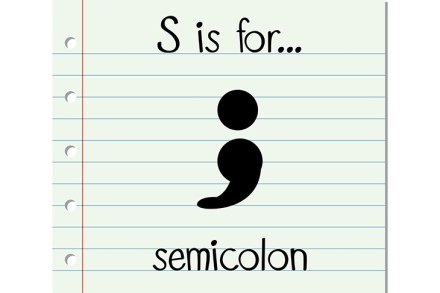
Dot your commas
Now, how shall I start this review? I loved this book. I really did. (Too abrupt.) I loved this book, I really did. (Too rushed.) I loved this book: I really did. (Too planned.) I loved this book — I really did. (Too afterthoughty.) I loved this book... I really did. (Too uncertain.) I loved this book; I really did. Ah, that’s more like it. The semicolon gives me the best of both worlds. It helps me pause, and have a think, and yet pushes me forward to what I want to say next. It separates and unites simultaneously. It does a job that no other punctuation mark does. And the way to see this is to develop a sense of the contrast. What happens if we punctuate a sentence differently?