David Blackburn

Straw man?

From our UK edition

The Chilcot Inquiry has at last disclosed something novel: Lord Goldsmith believed at one time that a second UN resolution would be a pre-requisite for legitimate military action. Goldsmith may well have been right, but not on the grounds he stated. A letter from Jack Straw reveals that Goldsmith misunderstood the wording of 1441. For a man who presented himself last week as a cipher amid titanic events, it’s an extraordinary letter, and its tone, phrasing and even the punctuation are crushingly condescending. The Attorney General had argued that ‘he did not find much difference between’ the French proposal and 1441’s final wording. Straw replied: ‘With respect, there is all the difference in the world...
Of course the Conservatives are Unionists, but why keep it a secret?

From our UK edition

Over at Three Line Whip, Ben Brogan takes me to task for criticising the Owen Paterson’s attendance at the Marquess of Salisbury’s shindig. ‘But it seems a stretch to lambast Mr Cameron for doing his job as a unionist politician, which should be to find political ways to ensure Sinn Fein doesn’t end up the winner as the result of the failure of Unionism in Northern Ireland to get its electoral act together.’ The Conservatives are a Unionist party so there is no objection to their attending, especially as the Unionist cause is so disorganised. My objection was to its secrecy. Iris Robinson will tell you that there is no such thing as secrecy in Northern Irish politics.

The demographics of power-sharing

From our UK edition

The union of irreconcilables was unlikely to last: power-sharing in Northern Ireland is on the verge of collapse. Where once Blair and Ahern would descend on Stormont as a couple of charismatics, today Gordon Brown and Brian Cowan face an enormous and unenviable task. They deserve support: both governments have been courageous in their approach to Northern Ireland, and the Tories were right to offer unconditional support. In which case, why did the umbrella of unionists, including the Tories’ Northern Ireland spokesman Owen Paterson, convene at the Marquis of Salisbury’s house in secret? A mixture of the furtive and the preposterous, one expected reports of Richard Hannay emerging from behind a curtain and fixing his Colt on Peter Robinson.

Redwood is right – prison sentencing may need reform out of fiscal necessity

From our UK edition

John Redwood is one of the most original thinkers on the right; and tasked with finding solutions to cut expenditure, he has concluded that too many petty thieves and fraudsters are imprisoned. Redwood argues: ‘The first is all those people who commit crimes by taking money or property that does not belong to them, ranging from the common thief to the fraudster. Surely it would be much better to prove to them that crime does not pay. They should be made to pay the costs of the police and judicial system in handling and prosecuting their case. They should make full restitution to any third party affected by their actions, including an element of compensation.

What Tory split?

From our UK edition

He never deviates and he never hesitates; if he stopped repeating himself Brown could be the star of Just a Minute. He was at it again today: “We must reduce our deficits steadily according to a plan, but we must do nothing this year that will put our recovery at risk.” The cuts-investment dividing line has been nuanced into a question of timing. Brown cited Ken Clarke among the “major world leaders” who lend his policies authority. Brown has overreached himself.

Out of recession and into debt

From our UK edition

The deficit is in the Tories' crosshairs this morning. George Osborne pens an article in the Times, castigating Brown's obsession with continuity: ‘We need a new British economic model that learns from the mistakes of the past. First, that new economic model requires government to live within its means. We entered the recession, after years of growth, with one of the highest deficits in the developed world and we leave the recession with our credit rating under threat. That will have potentially disastrous consequences for international confidence. If Britain starts to pay the sort of risk premiums that Greece is paying, the interest bill on a £150,000 mortgage would go up by more than £200 a month.

When it comes to localism, absolute clarity of aim is essential

From our UK edition

How deep is David Cameron’s commitment top empowering local government? His response to the New Local Government Network’s latest report will be an indication. The report argues that elected mayors should raise or cut business rates and council tax, and spend the proceeds on local services. Mayoral coffers will hardly match the riches of the Spanish Main, the Times reports: ‘The authors have calculated that a 4p levy on business rates could raise £30 million for Birmingham, £10 million for Newcastle, £26 million for Leeds and £11 million for Milton Keynes.

Dirty tricks are off and running

From our UK edition

The Tories are bracing themselves for an election campaign of smears and dirty tricks. Today the sniping begins. Attack dog Liam Byrne has criticised Cameron’s ‘Broken Britain’ speech in the following terms: “I think when people read what Mr Cameron is saying today they will see that it is quite an unpleasant speech…Mr Cameron is seizing upon one appalling crime and almost tarring the people of Doncaster and the people of Britain.” Cameron is not tarring anyone; he is clear that Doncaster was one of a number of extreme incidents (Baby P being another) that exist alongside a groundswell of anti-social behaviour. The terms ‘Broken Britain’ and ‘moral recession’ are sensational but Cameron has a point.

Obama is playing politics<br />

From our UK edition

FDR was plainly confident when he indicted the "practices of unscrupulous money lenders" during his 1933 inauguration address; Obama’s speech yesterday was scented with desperation. He exchanged eloquence for provocation. “If these folks want a fight a fight, it’s a fight I’m ready to have.” Bankers do not want a fight with a President seeking cheap political capital; they want to turn profits and do business. Obama’s proposals frustrate that aim - by carving up corporations and neutering investment banking on the grounds of excess risk. As Iain Martin notes, Obama has departed from the G20’s emerging narrative, and though the details are imprecise there is no doubt of the direction Obama is headed. It is the wrong one.

Has Brown got anything to hide?

From our UK edition

Proof positive that Brown listens, sometimes at any rate. The Prime Minister will give evidence to the Chilcot Inquiry before the election. Chilcot has been resolute in his wish to keep politics out of the probe, which suggests that No.10 may have put in a call following the mounting clamour for Brown to appear. Brown is something of master in expressing defiance with a single line: “I have nothing to hide,” he averred on Wednesday. Might this sudden decision prove to be, as Sir Humphrey might have said, courageous? As Daniel Korski noted two weeks back: 'Brown’s role in the Iraq War, not that of Blair, that is the most obscure part of Britain’s modern history. As chancellor, Brown was the second most powerful man in government. He held the purse strings.

Poor communication is damaging the Afghan mission

From our UK edition

He may be a chateau-bottled shyster, but there is no better communicator of policy than Alastair Campbell. He has penned an article in the FT arguing that the lesson that should have been learned from the Iraq war was how to communicate strategic ideas and objectives. The lack of clarity that came to define Iraq now afflicts Afghanistan: ‘It was hard to discern that approach in the run-up to the Afghan surge being announced, or after it. The surge should have been followed by co-ordinated communications across the alliance. That job is not being done with the vigour and consistency that it should, and the systems of co-ordination have weakened since Iraq.

Ultimately, Brown is responsible for these anti-terror cuts

From our UK edition

Seriousness comes naturally to Gordon Brown and yesterday he gave a speech detailing how Britain is defending itself by striking at the heart of the ‘crucible of terror’. What Brown has in seriousness of delivery, he lacks in realism. Britain has not fought for such a sustained period since the high-water mark of empire; but the ambitions of two prime ministers, and to be fair the severity of the threat that Britain faces, have outstripped resources; Britain is now completely over-extended. Hours after Brown’s speech, Baroness Kinnock divulged that anti-terror measures run by the Foreign Office have been cut – anti-narcotics campaigns in Afghanistan and de-radicalisation programmes in Pakistan.

Drink isn’t the curse of the working classes, but its easy availability is

From our UK edition

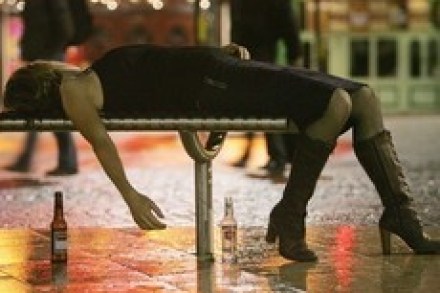
It must be stated from the outset - most drinkers are responsible and drink only on special occasions, with other people or by themselves. However, binge drinkers, or that caste of drinker whose evening is neatly rounded-off with a stomach pump, are a minority, albeit a growing one. Relaxed licensing laws and the government’s refusal to strong-arm the drinks industry have led to roving bands of Sally Bercows traversing town centres, and who end the night by falling out of their dresses and into a taxi, or onto a pavement.

Geoff Hoon, silent assassin

From our UK edition

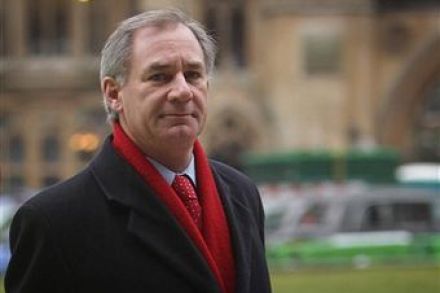
And so it came to pass that nothing came to pass. Geoff Hoon gave evidence to the Chilcot Inquiry on the same day as a convention of anaesthetists visited the QE Conference Centre. Perhaps their presence contributed to the somnolent proceedings. Beneath the apparent narcolepsy, Hoon made two important points. First, he was convinced that the intelligence contained in the two dossiers established the threat of WMD “beyond doubt”, which will assist Blair when he gives evidence, especially after Alastair Campbell’s recent ‘clarification’.

The not so steady creep of inflation

From our UK edition

As Mark Bathgate and Fraser warned, the economic crisis now has an added dimension: inflation. The government’s preferred marker, the Consumer Prices Index (CPI) rose to 2.9 percent in December from 1.9 percent in November, which as Andrew Neil notes is the biggest monthly rise in the annual index since records began. And the Retail Prices Index (RPI), used to calculate welfare payments and wage re-negotiations, rose to 2.4 percent from 0.3 percent. The underlying RPI rate rose to 3.8 percent from 2.7 percent.  We are now seeing the long-term effects of Quantitative Easing and the use of debt to finance further government borrowing.

Labour’s IT bungles cost taxpayers £26bn

From our UK edition

This morning’s Independent contains an almost incredible splash that £26bn has been wasted on IT projects over the last decade. It's a litany of binary bungles - the incompetence: staggering; the forecasting: inept; and the planning (or lack of it): simply shocking. Contending with such absurdity whilst staring down the barrel of a £175bn deficit, you don’t know whether to laugh or cry. Let me take you on a whistle stop tour of dud investments made on our behalf. The major culprits are the NHS’ national IT programme (over budget and late at £12.7bn and used by only 160 health organisations out of £9,000), the MoD’s defence information infrastructure (over budget and late at £7.

Me? Sleight of hand?

From our UK edition

Two weeks ago, Barry Sheerman opened a second front against Brown's premiership by attacking Ed Balls’ appointment of Kathleen Tattersall to Ofqual without a pre-hearing before the Schools select committee. Brown had introduced a requirement that recommended appointments to offices that reported to Parliament be scrutinised by legislators prior to confirmation of their appointment. Sheerman, with characteristic venom, referred to a “sleight of hand”. This afternoon, Balls defended himself and his permanent secretary, arguing that the committee did not object to the appointment when it was made in July 2008, and any rate the pre-hearing was not operational then. I don’t know whose memory is accurate.

The vicious circle that undoes Clegg’s brilliant policy

From our UK edition

As James argues, Nick Clegg’s income tax threshold is a brilliant policy. It should benefit lower to middle income earners and the working poor. That’s the theory to which Daniel Finkelstein objetcs. ‘The vast bulk of the money goes to those earning more than £10,000. It is a very expensive tax cut, very poorly targeted on the working poor. Second, there is an interlocking relationship between income tax and working families’ tax credit. Many of the working poor would find the money they gained from the tax cut clawed back because their increased income attracted less tax credit.

At last, a “brazenly elitist” approach to teacher recruitment

From our UK edition

The next target for the Tories’ policy blitz is teacher recruitment. Cameron will pledge a “brazenly elitist” system with considerable incentives to lure top graduates from law firms and banks and into state school classrooms. What will this entail? Well, holders of degrees of less than a 2:2 will not receive funding for teacher training. Maths and science graduates with firsts or 2:1s from the 25 top universities will have their student loans paid off if they go into teaching; repayment will be staggered to encourage teachers to remain in the profession. The Tories will scrap graduate teaching programmes and replace them with on the job training, modelled on the hugely successful Teach First scheme.

The burka is a symbol of division, but it should not be banned

From our UK edition

On the face of it, Nigel Farage is right: “There is nothing extreme or radical or ridiculous” about banning the burka. It is a manifestation of many British Muslims’ indifference to society; it is an expression of wilful separation and a symbol of a nation riven with cultural division. In the sphere of private behaviour becoming political, the burka engenders intolerance – reactionary Islam’s intolerance of liberal democracy and vice versa. In this atmosphere, writers and politicians of all hues have drawn the same conclusion and there is capital to be extracted (perhaps cynically) by taking the seemingly sensible decision to ban the burka. To do so would be misguided as well as intolerant.