David Blackburn

Mending Britain’s broken politics

From our UK edition

If it turns out that a transparently self-serving referendum on AV isn’t an instant fix to Britain’s political problems, what are politicians to do? As Pete noted, the stalk your MP i-Phone app is a step in the right direction. Another welcome measure is Winkball’s unique video hustings. Over 3,000 parliamentary candidates of all hues are given a few minutes to summarise their broad manifesto and detail which local issues are important to them. Viewers can leave comments and lodge questions so some sort of dialogue is maintained. Although this initiative possesses an air of the gimmick every little helps, and understanding what you’re voting for at a constituency level is often lost during a seismic general election.
The hunt for Hoon’s successor

From our UK edition

Not the most arresting headline I grant you, but bear with me. Geoff Hoon’s political corpse is still warm (well, lukewarm as it’s Hoon), but the search for his successor is underway. The indefatigable Paul Waugh has the runners and riders: John Knight (the leader of Ashfield District Council), James Connell (Hoon’s former SpAd) and Michael Dugher (another former Hoon SpAd who is now Brown’s Chief Political Spokesman). Mischievously, Waugh asks: ‘Will Labour insist on all-women shortlist? And if not, why not?’ Why not indeed? Perhaps Joanne Cash could complete her volte face and stand for Labour. What strikes me most about Waugh’s list is that all of the candidates are ‘career politicians’.

The Tories’ meddling is undermining the Unionist cause in Northern Ireland

From our UK edition

The Times reports that Owen Paterson, the Tories’ Northern Ireland spokesman, will review the process by which the Northern Ireland First Minister is appointed – by creating a Northern Irish executive and official opposition. The prospect of what Paterson describes as a “voluntary coalition”, presumably between the Unionist parties, has the potential to keep Sinn Fein permanently in opposition. Such a coalition jeopardises Cameron’s neutrality if he becomes Prime Minister, a point that Sinn Fein will exploit. The Conservatives seek to move Ulster’s politics away from sectarianism and into the mainstream, concentrating on public services. That is a welcome aim but their means are ill-conceived, stemming from a misunderstanding of Northern Irish politics.

Lance Price: Brown became PM when his skills were declining

From our UK edition

Gordon Brown is a creature of habit. Every morning at 7:30 he holds a telephone conference with his cabal of Shakespearean fools, who review the papers for him. I imagine a scene of domesticity, of coffee and muffins, an adoring wife and child milling about offering tactile affection – a hand on the shoulder, a kiss on the head. But then again Brown is a latter day John Knox and this morning he must have sat in pale fury as an aide summarised the extract from Lance Price’s latest book, published in the Independent. Price, Andrew Rawnsley and Peter Watt share the same lexicon. ‘Unforgivable’, ‘not a nice place for people to work’, ‘psychologically flawed?

The White House is bluffing

From our UK edition

The Atlantic reports that the White House is considering altering intelligence sharing agreements with Britain in the light of the Binyam Mohamed case. White House spokesman Ben LaBolt briefed: "The United States government made its strongly held views known throughout this process. We appreciate that the UK Government stood by the principle of protecting foreign government intelligence in its court filings. We're deeply disappointed with the court's judgment today, because we shared this information in confidence and with certain expectations." I detect a bluff. Britain and the US share information on an hourly basis, providing an essential understanding in the combined operation against al Qaeda.

The Tories’ dirty tactics are dispiriting but effective

From our UK edition

This death tax levy is gutter politics at its most visceral and it’s thrilling drama. Brown's and Cameron's loathing for each other is pure soap opera, and they’re having a right old slanging match. I agree with Pete, it is dispiriting to see the Tories stoop to misrepresenting policies, the show-stopper in Brown’s repertoire. Together with Cameron’s personal attacks, the Tories have surrendered the high ground, but as Iain Martin notes is anyone really surprised? The Tories have been expecting, righty, Labour to fight a grubby election campaign and have decided to fight Brown’s mob with fire. Personal attacks appeal largely to those whose minds are settled, so I see little electoral advantage in delivering them.

Kraft’s betrayal is Mandelson’s failure

From our UK edition

I don’t usually agree with the sage of Twickenham but he is right that Mandelson’s promise on Cadbury “melted away”. Kraft is a notoriously feckless corporation, loathed the world over. Reneging on promises is its modus operandi and the remaining 4,000 Cadbury workers are understandably concerned that the closure of Somerdale is just the trailer. Of course, government should not manage private enterprise in circumstances other than the extraordinary, but neither should it be submissive when jobs are at stake. Mandelson’s reputation as a demagogic strategist is deserved, when it comes to smooth tongued fixers he is unsurpassed. But that is his tragedy: his achievements are contained within partisan precincts.

Some Tories are yet to repay their expenses

From our UK edition

Bad news for David Cameron in the Standard this afternoon – several Tories have not made expenses repayments that were agreed seven months ago. After yesterday’s success, the last thing Cameron needed was a question over the effectiveness of his Scrutiny Panel, established to go “beyond the letter of the rules”, which he deemed too lenient to placate public anger. Bill Cash is the major culprit exposed by the Standard. He agreed to repay £15,000 for an unacceptable rent/mortgage arrangement, but Commons records disclose that he has only repaid the £429 he claimed on an antique desk. Although the non-compliance of Tory MPs is a problem for Cameron, this isn’t merely a story of rapacious Tory MPs.

Plenty to encourage the Tories in the Populus poll

From our UK edition

Well, the Populus poll isn't all good news for the Tories. As James pointed out last night, they have shed another point and Labour have regained some ground. But, as both Peter Riddell and Mike Smithson note, the Tories can still secure an outright majority on the basis of these figures. The numbers which lead the Times's frontpage coverage are more encouraging for Cameron & Co. They show that the public are attuned to the Tories' broad narrative. 73 percent think society is broken; 82 percent think that now is the time for change; and 64 percent believe Britain is heading in the wrong direction. After 13 years in power, Labour cannot credibly represent change; it has to defend its record, which on the evidence of these findings is not something it will manage easily.

If this is a suspension, what is an expulsion?

From our UK edition

Sky’s Jon Craig’s asks one of those questions you wished you had posed: wasn’t Elliot Morley suspended already? Yes, he was, on the 14 May 2009 and with immediate effect. However, showing a fine disregard for the manner in which repeat offenders are usually treated, Labour suspended Morley again for good measure. Seeking a clarification about the initial suspension, Craig was told that Morley had been denied the ‘privileges of the PLP’. What might they be? Subsidised beer and sandwiches perchance? The rumour is that Morley was either re-instated on the quiet or had escaped in the first instance, lending more weight to the sense that Labour’s response to the expenses scandal has been hopelessly ill-conceived.

Success for Cameron

From our UK edition

Finally, Brown has withdrawn the whip from Chaytor, Morley and Devine. This is a significant victory for Cameron in the latest battle over expenses. Once again, the Tories are streaks ahead on this issue. As Henry Macrory notes, it took Cameron 86 minutes to reach the obvious conclusion that Lord Hanningfield should be suspended; Brown agonised for 4305 minutes. Truly, this is the man who can be trusted to ‘take the tough decisions’ on the economy when needed – my guess is that most of us all will die at a Keatsian age in Dickensian penury. One point that occurs to me is that it's been clear for some time that Chaytor et al were personae non grata. Why therefore has Chaytor been used as a government plant at PMQs twice this year?

Brown’s personality defines the character of his government

From our UK edition

David Cameron will re-launch his election campaign with a personal attack on Gordon Brown. Cameron will embark on the straightforward task of proving that the Road Block is not a moderniser – the Prime Minister’s sudden avowed passion for PR is merely a marriage of electoral convenience. Cameron has led the expenses reform debate and will use Brown’s dithering over the latest furore to condemn him as a ‘shameless defender of the old elite’. According to Francis Elliot, Cameron will say: “There is no chance Gordon Brown will do what is right and put the public interest before his own political interests. He cannot reform the institution because he is the institution: he made it.

Clegg must resist Brown’s sweet nothings

From our UK edition

Gordon Brown is usually at his most patronising when confronting Nick Clegg. Last week, however, hectoring gave way to affection. Brown was almost tender. Of course, this sudden change has an obvious explanation. Brown and Clegg are brothers in arms: devotees of electoral reform, or so the Road Block would have us believe. Robert McIlveen laid counter-arguments against Brown’s opportunism and Boris Johnson repeats them in his Telegraph column today, concluding: ‘There is one final and overwhelming reason why Britain should not and will not adopt PR – that it always tends to erode the sovereign right of the people to kick the b––––––s out.

Brown wants to discuss nothing besides the middle class

From our UK edition

Aspiration is Gordon’s middle name. The Observer has an extensive interview with Brown and though the classification has changed class remains his obsession: Brown wants to fight the election on the middle classes. He spoke of little else. Education and family policy will be defined by Sure Start, child tax credits and the school leaving age; the NHS will offer yet more choice and unaffordable luxuries, such as one to one care. It may seem peculiar for a man who is synonymous with stealth taxes, and whose time in government will be remembered for the polarisation of society, to frame his arguments in such terms; but his reason is clear: Brown doesn’t want to debate the economy.

Beyond doubt

From our UK edition

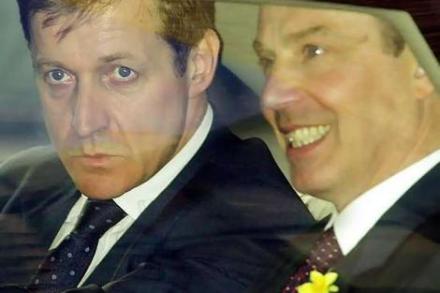
For a moment, Andrew Marr had Alastair Campbell by the short and curlies. Marr attacked (that verb is not an exaggeration) Campbell over his clarification to the Chilcot Inquiry, the phrase ‘beyond doubt’ and the possibility that Blair knowingly misled parliament over the strength of WMD intelligence.   Marr was at his incisive and dramatic best. It was the first time I’ve seen Campbell under pressure and he wobbled, his lower lip did so markedly. Perhaps I do him a disservice, but I didn’t buy Campbell’s blubbing act; it was just theatre. His defence of Blair and himself rested on the tried and tested refrain that Tony’s a pretty straight kind of guy, and what he described as the “careful and meticulous” case that both prepared.

Parris versus Nelson

From our UK edition

Here’s a question: to be a good angel or a bad angel? We know what Fraser thinks; Matthew Parris differs. Writing in the Times today, he asserts that he would give David Cameron the same advice he offered Margaret Thatcher in 1979: agree a gloriously unspecific manifesto. The details of hard-edged manifestos are ambushed well before polling day; discretion is the better part of valour. In the immediate circumstances of the Tory wobble both arguments are commendable. The Tories have unwound when trying to supply detail to flesh out their broadly radical ideas. Recognising marriage in the tax system has been their foremost blunder.

Another very good Friday

From our UK edition

Yesterday, Gordon Brown was less Macavity, more the Cheshire cat. Now both he and Blair have helped to bring a modicum of peace to Northern Ireland, and Brown was a ubiquitous, beaming presence on the TV throughout the day - jaunty not jowly. Naturally, Brown’s confidence fell victim to the absurdity that lurks behind him like some familiar. Sky Sports News asked him if he thought John Terry should retain the England captaincy. Brown pondered the question - the arguments for and against and the possibility of his bringing peace to Cobham - before conceding that the decision was entirely Capello’s. It was priceless. To suggest that this latest Hillsborough accord is a final panacea is to tempt fortune.

Brown meets his Waterloo

From our UK edition

Lord Guthrie had it right with his well-directed expletive: Gordon Brown just doesn’t get defence. His record, both as Chancellor and PM, leave him vulnerable to criticism on the subject; but today, Brown has been confronted by a khaki-clad nightmare. After suffering his first reverse at PMQs for months, beaten decisively by a beautifully executed Tory plan, former permanent secretary at the MoD, Sir Kevin Tebbit, informed the Chilcot Inquiry that Brown ‘guillotined’ the defence budget with annual reductions of £1bn. Geoff Hoon’s testimony disclosed the full effects of Brown’s single act of stringency. The timing could not be better for the Tories, who have been intent on self-destruction of late.

PMQs Live blog

From our UK edition

Stay tuned for coverage from 12:00. After a torrid month of self-inflicted wounds, this is a battle Cameron has to win. 12:01: And we're off. Brown remembers the two soldiers killed in Afghanistan recently. 12:02: Question about £50,000 for the Prime Minister's office. Brown says it's the first he's heard of it. 12:03: It's Jacqui Smith with a plant about whose crime figures are less dodgy... I can't yawn because she's rather shrill. 12:04: Cameron opens with the revelations about Brown underfunding the Iraq war. Good start. Brown merely garbles on about year on year. Cameron then lists the testimony against Brown's defence. Brown can only respond with a joke about the Tories's spending mistakes and highlights Tory cuts on Defence at the 2005 election.