David Blackburn

Endangering impartiality

From our UK edition

Labour’s rapid rebuttal service will respond to the Tories’ policy blitz by questioning George Osborne’s spending pledges, of which more later. No objection can be raised against this action except that the government enlisted the Treasury to deliver very detailed costings under the Freedom of Information Act. The Times reports that the Tories are understandably livid: impartiality has been compromised. A spokesman said: “We are concerned at any collusion and abuse of the FOI system which has involved ministers requesting costings of what are complete misrepresentations of Conservative policies, which were subsequently released.
Why profiling is essential

From our UK edition

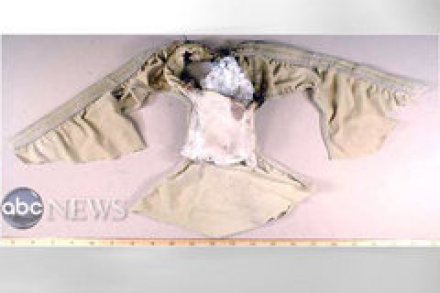
It is a truth, yet to be universally acknowledged, that the overwhelming majority of global terrorism is committed by radical Muslims. However, the Guardian reports that Whitehall has reached that conclusion and passenger profiling is “in the mix” of the latest airport security review. Thank God, sense prevails at last. The previous airport review, conducted in the aftermath of the liquid bomb plot, decided against profiling. What followed was a fatuous politically correct concoction. Even pilots’ toothpaste was examined; one pilot commented: “If I want to kill everyone (on board) I don’t faff around with plastic explosives, I point the nose at the ground”. Such determined absurdity should be behind us.

By marginalising Mandelson, Labour has put itself in a half-Nelson

From our UK edition

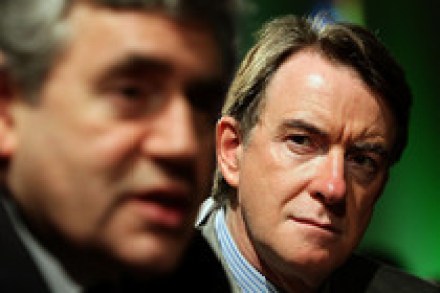
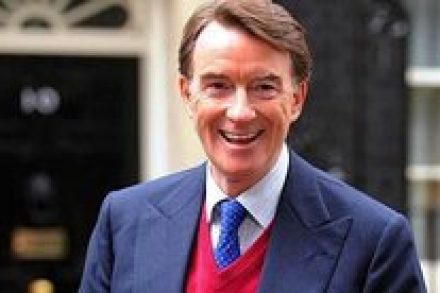
The Dark Lord’s grip is weakening. Lord Mandelson’s waning status dominated headlines in the prelude to Christmas, and today the Telegraph reports that Harriet Harman, and not Mandelson, will lead Labour’s election battle. Mandelson’s marginalisation is understandable. He has been the government’s fire-fighter, deployed to defend the indefensible and bamboozle voters with a fantasia of figures and the demeanour of the Widow Twankee. As the narrative of recession cedes to that of recovery and the election nears, Labour requires a different style of communicator. Labour considers Harman to be that person, and hope that she will connect with women and middle England.

Ministers should always be ultimately accountable

From our UK edition

Bob Ainsworth’s response to the Nimrod inquiry features one extraordinary omission: ministers do not appear to be directly accountable in the event of another tragedy. The reforms establish the MAA, the military aviation authority, which is independent from the MoD, but will not have responsibility for releasing aircraft to service – assistant chiefs of staff have that responsibility - however there the buck apparently stops. Here is the relevant section in Hansard:   ‘The single service chiefs of staff must retain responsibility for determining that our aircraft can be safely released into service. The MAA will provide full assurance, but it will not carry out this release-to-service role directly.

For all his faults, Gradgrind was right

From our UK edition

The next time your four year old nephew smears chocolate over your trousers you are to congratulate him. According to government guidance, soon to be issued to nurseries by Dawn Primarolo, the glibly smirking illiterate would have been writing.  Yesterday’s Independent reported that in response to evidence that the gender gap between children under the age of five has widened in writing, problem-solving and personal development, the government believe that boys should work harder.  This seemingly impossible task will be eased by ‘making learning fun’: boys will be allowed to graffiti any given surface with chocolate and coloured sand.   What a way to begin the new decade: by creating a mass of juvenile Banksies.

The many faces of Ed Balls

From our UK edition

In the spirit of goodwill, Ed Balls has called-off the class war. As ever with Balls that is but half the story. Class war has not so much ceased as been re-branded. A Brown aide, quoted in the Independent, says that Labour's strategy is concerned with "economic class, not social class". So there we are; the impoverished squirearchy can sleep sound tonight: the Labour party is only interested if you're nouveau riche - how gloriously snobby.  Whilst Balls' spite for those born nibbling a silver spoon has allegedly lessened, his leadership machinations continue apace.

Call yourself a PR man?

From our UK edition

The latest Comres poll for the Independent indicates, as if we needed telling, that the Tories are yet to seal the deal. It’s far from panic stations – the lead remains at 9 points – but there are two figures that prove where the Tories are going wrong. The majority of respondents feel that a Conservative government would exclusively represent the interests of the rich, and the contention that the Tories represent an appealing alternative to Labour was rejected. If Cameron is merely a PR man I hope he’s cheap. Aside from Alex Salmond I can’t envisage anything worse than five more years of Gordon, and this suggests to me that Cameron is struggling to communicate with voters. Nowhere is this more palpable than the preposterous class war.

The politics of self-defence

From our UK edition

The spin machines are gearing up as we amble towards an election, and strategists’ latest hobby-horse is self-defence. Following the sentencing of Munir Hussain, Alan Johnson admitted feeling “uncomfortable” about Judge Reddihough’s decision. Never one to miss the bus, Chris Grayling went further and faster, suggesting that householders should be immune from prosecution unless they had responded in a “grossly disproportionate” fashion.   It’s rather unfair, but deliciously cutting, of cartoonists to portray Grayling as a plump second hand car salesman posing as James Bond, but Grayling deserves criticism because “grossly disproportionate” is as ill-defined as the “reasonable force” that current legislation describes.

Is the EU not glamorous enough for Lord Mandelson?

From our UK edition

James Macintyre is well connected among Mandelson’s associates and he discloses that Gordon Brown agreed to back Mandelson if he chose to board the Eurotrain once more. Macintyre describes the revelation as a ‘demonstration of the supportive dynamic between what were at one time bitter enemies’, that’s true, though Brown would scarcely brand his right hand man an overrated liability. What’s more intriguing is why Mandelson chose not to apply for the job of EU foreign minister, which he considered for a time. Baroness Ashton can only expect to exercise ‘quiet diplomacy’ at best, which is unlikely to appeal to a man of Mandelson’s tastes.

It’s the economy, isn’t it?

From our UK edition

The Tories' 17 point  lead in this morning's Observer Ipsos-Mori poll has got tongues wagging. The headline figure is that confidence in the economy, and by extension the government's management of it, has collapsed since the PBR. Just 32 percent of voters believe the economy will improve in 2010, compared to 46% last month. The politics of debt and the public finances appear to have swung decisively in favour of the Conservatives, and the leadership must press that advantage all the way to the ballot box. But the economy represents only part of the explanation. Anthony Wells' digest of the poll is a must read, and he notes that the 'lack of political weighting' has 'produced such extreme switches in support'.

Labour calls cease-fire on binge drinking

From our UK edition

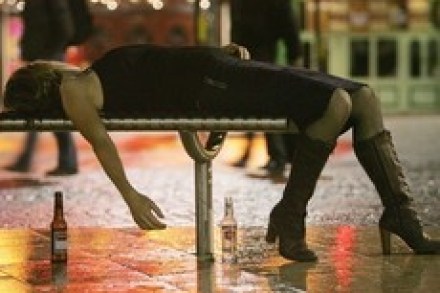
The government has sued for peace. The Observer reports that in the face of lobbying from the drinks industry, the government has dropped its mandatory code on the sale of alcohol, which Gordon Brown first brewed-up during the local election campaign. Labour excuses the u-turn on the grounds that vulnerable pubs and drinks retail industry must remain viable during this fragile economic situation. On the face of it, that is sensible; delve deeper and that excuse does not hold. Of course, there’s no sense in endangering businesses by punishing all drinks deals and ‘happy hour’ promotions. However, aspects of the code would have outlawed promotions such as ‘all you can drink for a tenner’ or ‘have a quart of vodka poured directly down your throat’.

The relevance of politics

From our UK edition

This morning's papers share a unifying theme: the failure of political leadership to secure a deal at Copenhagen. Now, I applaud politicians for not succombing to enormous pressure and making a series of pledges that would risk grinding the world's poor ever deeper into the dirt. For those who take a different view, it is not that politicians have failed, but that high politics is an irrelevance, a vanity. I know Coffee Housers loathe her opinions, but Polly Toynbee is at her polemical best today. She writes: 'Politics is being weighed in the balance and found wanting. The writing is on the wall. The leadership required within and between each nation is heavier lifting that the weak machinery of governmental power can manage.

The High Court’s decision on BA concerned law, not politics

From our UK edition

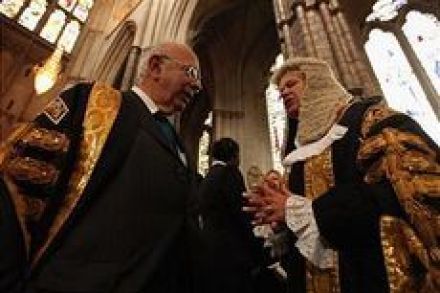
The Guardian’s Seumas Milne condemns the BA strike judgement as ‘blatantly political’. He writes: ‘Mrs Justice Cox has made a transparently political decision to skew the balance of power still further in favour of BA's recklessly incompetent management.’ That, as Mrs Thatcher would say, is poppycock. Mrs Justice Cox’s decision was informed by law, not ideology. Unite had balloted ineligible members, which is illegal. That the result of the ballot would not have changed is immaterial, Unite broke the law. In this instance, the legal decision will enable a sensible business plan time to develop. After years of procrastination and painting tail wings, the BA board is realistic about the challenge of survival, their employees are not.

Prepare for Eurocracy

From our UK edition

Baroness Ashton outlines her objectives in today’s Times. She makes a number of sensible points on Afghanistan, European aid efforts and energy security; but, despite this week’s revelations and ironically in view of the Peter Brookes cartoon above the article, Iranian nuclear proliferation receives a cursory sentence. This undermines the EU’s committment to enforcing sanctions on an obviously antagonistic and mad regime, and suggests that the notion of the EU taking pre-emptive military action with its allies is fanciful. The implication is that defence and security are secondary issues, or simply too divisive for member states to reach accord. What, therefore, is the point of an EU foreign ministry?

A parting shot

From our UK edition

I need a new radio for Christmas. Whilst listening to Dr. Sir Liam Donaldson tell the Today programme that parents should not offer their fifteen year old offspring alcohol, my pocket-radio had an altercation with a wall. The soon to be retiring chief medical officer said: “The more they get a taste for it, the more likely they are to be heavy drinking adults or binge drinkers later in childhood.” This latest soothsaying counts among Sir Liam’s other alcohol-related triumphs; he also gave us the inscrutable phenomenon of “passive drinking” - I don’t know about you but this guy makes me drink actively.

Paying for a climate change deal

From our UK edition

Oh dear Lord. Flushed with recent success, Gordon Brown plans to take the class war global. The Independent reports that Brown and Sarkozy have backed an Ethiopian plan to assist poor nations adapt to a carbon neutral global economy by raising £100bn per annum through a tax on financial transactions. For Mr Brown, a Tobin tax is the answer to everything, regardless of the fact that it would impale Britain’s prosperity. How to pay for a climate change deal is a somewhat superfluous question, as at the moment such a contigency is remote.

The world’s favourite airline

From our UK edition

Unlike Ben Brogan and Iain Martin, I don’t have a vested interest: British Airways weren’t going to be flying me anywhere this Christmas. Having spent days roasting on the aprons of the world, I’ve ceased to entertain the notion that BA is capable of flying me anywhere. I suspect the million or so who face the prospect of the grimmest ever escape to the sun will develop a similar antipathy. Cooked up by Len McCluskey, who cut his teeth with that doyen militancy, Derek Hatton, this strike has tragedy written all over it. As Billy Hayes and the posties proved, the unions rarely realise their unshakeable terms and conditions these days; it’s compromise or, in the language of Scargill, a fight to death.

Short story competition

From our UK edition

The results of the Spectator-Barclays Wealth short story competition have been published over at the Spectator Book Club’s discussion boards. We received more than 500 entries of the highest quality, and trying to pick the winners from a shortlist of 10 inspired bitter debate at 22 Old Queen Street. The four runners-up have been printed in full at Spectator.co.uk, but the winning entry, Black Box by Jonathan Wynne Evans, is printed in the Spectator Christmas double issue. Here’s a taster of his suspense filled story: Drifting curtains of fenland rain obscured everything from 20 yards so that, pedalling round the perimeter, the only indications of intense activity were waves of clatter from each dispersal as ground crews completed the arming of the Lancasters.

So what if Zac Goldsmith’s loaded

From our UK edition

Hold your breath, the ‘Zac’s filthy rich’ furore is coming to a front page near you. In addition to scurrilous insinuation about his tax status and the fact that he has spent Walpolean sums on campaigning in Richmond, Paul Waugh breaks the news that the Electoral Commission intends to investigate an allegedly impermissible donation Zac made to the Conservatives. An impermissible donation is of course illegal, but Goldsmith is innocent until the local Tory association’s case that his was an honest mistake made during the interim between moving out of Kensington and Chelsea and registering in Richmond is disproved. Other criticism is simply bunk.

The Labour leadership question hasn’t been answered

From our UK edition

Rabble-rouser and bruiser-in-chief Charles Clarke has taken a hatchet to the government’s highly political Pre-Budget Report. Writing on his blog, Clarke argues: ‘He (Brown) felt that the main purpose of this pre-election Pre-Budget Report was to recycle his old political dividing lines.   This weakness can only come from fear of discussion of our past failures and fear that it is too dangerous to set out our future plans.   The real danger for Labour is that this weakness will pave the way to political defeat in 2010.’ The Labour leadership crisis has retreated from the limelight recently, but the spectre of internecine war after a whipping at the polls has not.