David Blackburn

City middlemen don’t like Osborne precisely because he is competent

From our UK edition

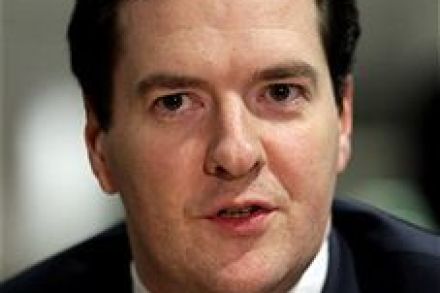
The City’s elopement with New Labour has ended violently. A poll of leading financiers, conducted by City AM, reveals that 73 percent think that a Tory majority would be best for the economy; a mere 10 percent support Labour. But the City has little enthusiasm for George Osborne: 23 percent believe he has the mettle to be Chancellor, 13 percent behind Ken Clarke. So where is it going wrong for Osborne? James Kirkup observes that the Tories recent collapse in the polls coincided with Osborne and Cameron obscuring their economic message. But the City’s antipathy to Osborne is long established. Disquiet reigned even when Osborne and the Tories were storming the polls.
Clegg’s conditions

From our UK edition

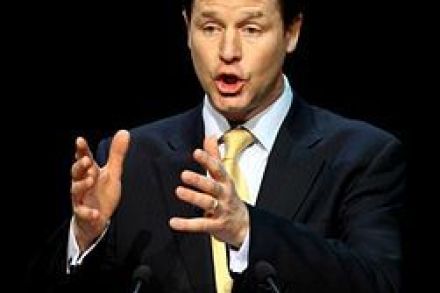
Nick Clegg is the rage of the papers this morning. His interview with the Spectator is trailed across the media and the Independent has an interview where Clegg once again lists the four demands that would be his initial negotiating tests for backing a minority government. They are: - Raising the income tax threshold to £10,000 through taxes on the rich. - An education spending boost for the poorest in society through the 'pupil premiums'. - A switch to a Green economy, less dependent on financial services.  - Political reforms at Westminster, including electoral reform. What to make of that quartet? There is much that is sensible, much that is not, and still more that is unworkable.

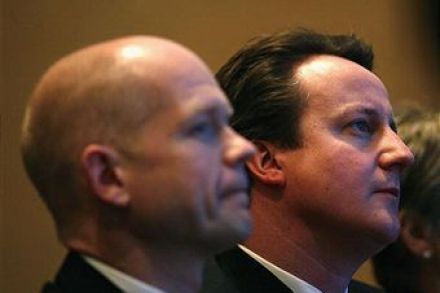
Hague and Cameron are vindicated for leaving the EPP

From our UK edition

Daniel Hannan breaks the, sadly, not very surprising news that MEPs have voted overwhelmingly in favour of an EU Tobin tax. The margin: 536 to 80. Only the European Conservatives and Reformist group and a handful of radicals opposed the motion. The EPP, which describes itself as ‘centrist’, voted uniformly in favour. Cameron was right to withdraw from a grouping whose interests are at odds not only with British Conservatives but with Britain itself: a tax on all financial transactions would castrate the City. What does this division mean for Britain? On the face of it not a lot: anyone of the member governments could veto it. However, many European governments, including our own, seem alarmingly pro the measures.

PMQs live blog<br />

From our UK edition

Stay tuned for live coverage from 12:00 Memory for Michael Foot and the four servicemen who have been killed in the last week. 12:03: And we're off. Tory backbencher Richard Benyon wants assurances that soldiers serving overseas receive a postal vote. Brown gives him such. 12:05: Here's Cameron. He starts with the examination into the deaths of soldiers in Afghanistan which suggests that inadquately strong motorised equipment was responsible for their deaths. Prepare for Brown's Chilcot evidence, contradicted by Lord Guthrie among others, to come under sustained attack. Brown is at his most vulnerable on defence. That said, Brown apologises for the defence minister who suggested that the deaths had nothing to do with the Snatch Land Rover, which I think is a first.

The Tories’ problems have more to do with branding

From our UK edition

Two weeks ago, David Cameron delivered a brilliant speech. It keyed into exactly what Michael Wolff means by the phrase, 'Cameron is a politician who quells, smooths, conflates, reassures.' It offered hope and optimism, a future free of the current morass. In that case, why are the Tories still faltering? Cameron rode on the wake of Brown’s incompetence for eighteen months. It was never an exclusively positive endorsement, something of which Cameron was aware. Mandelson, Campbell et al have brought Labour back into the race with a series of well aimed jibes that the Tories haven’t changed. Paralysed by sudden self-doubt in the face of Labour’s resurgence, the battle has thus far been about them, not the government’s record. They cannot go on like this.

The prospect of another EU treaty is a huge problem for reformer Brown

From our UK edition

It seems there must be discussion about a potential European Monetary Fund, and an organisation to manage Europe’s economies that circumvents Maastricht, to avert future fiscal crises. So much for Lisbon, the treaty to end all treaties. Quite why no one, especially the treaty's opponents, acknowledged the possibility of a member state's financial collapse whilst Lisbon was being ratified during the recession is a mystery. However, all that is past. The question for the future is will there be a referendum this time round? Adrian Michaels, rightly, point out that the Tories’ eurowars are likely to be renewed at the most inopportune time for Cameron. But Cameron will offer a referendum; his European policy dictates that he must. A further treaty is a problem for Brown.

Yet more good money after bad

From our UK edition

So, the government is tying the taxpayer to £11bn of new IT contracts before the election, making the Tories’ planned immediate IT cuts very expensive. Is this latest example of a scorched earth policy? Or Labour ‘getting on with the job’? With the polls narrowing, I can’t see Labour setting a fiscal booby-trap that they could well have to de-fuse. But there’s the rub. Brown scorches the turf beneath his feet as he governs: he cannot stop spending money. An £11bn bender is irresponsible in this climate, plus Labour has a baleful record on IT contracts. It has bungled a staggering £26bn on flawed IT systems, many of which were introduced without pilot schemes.

Cameron speech – Live Blog

From our UK edition

Stay tuned for coverage from 14:00  The word is that Cameron will not provide details of any new policies; the speech will be hearfelt and probably spoken without notes. He will stress that the nation faces a critical choice: salvation or ruin. Cameron is at his best with his back to the wall, but he needs to produce something to eclipse the 'we will fight, Britain will win' speech. It is, he professes, his 'patriotic duty' to beat Gordon Brown.  14:06: He's late.... 14:07: James has just reminded BBC News  that the Conservatives are doing well in the marginals and that Cameron will speak without notes, a bold move to get Cameron plastered across TV news this evening. 14:20 Here he is, walking into the Killers.

Change we must believe in

From our UK edition

Both James and Tim Montgomerie felt that William Hague must be more prominent during this campaign and Cameron has reached the same conclusion. Hague opened the spring confernece with a stark, bleak message: "And I say it is that most crucial election because I believe the choice for Britain is as stark as this: it is change or ruin." He then detailed the easiest illustration of Brown's appalling economic stweardship: a 13 year statistical progress of regression for which Brown, and Brown alone, is responsible. 'When Gordon Brown took over, this, our great country, was the 4th largest economy in the world. Now it is falling behind and forecast within 5 years to be the 11th, behind not just growing giants like China, but behind our neighbours France and Italy.

A tyrant surrounded by cowards no longer

From our UK edition

Well, the Chancellor’s not for budging. Alistair Darling stands by not “some of” but “all of” his “forces of hell” comments. Martin Bright wrote the politics column in this week’s mag, arguing that opponents are intimidated by the political mobsters surrounding Brown, and who Brown encourages a la Henry II. Martin names Charlie Whelan and Damian McBride as the goons, and Ed Balls is rumoured to be the consigliere.   Peter Watt claimed that Douglas Alexander admitted that most senior Cabinet ministers loathed Brown and his vicarious emotional terrorism, a sense reinforced by Darling’s comments. If that’s the case, why has Brown not been removed? Cowardice is an unpleasant but apt word.

Is Brown about to call the election?

From our UK edition

Guido’s got the inside track that the Beeb have been told not to take the weekend off, and the Tory lead has been cut to five points in the Telegraph’s Ipsos Mori poll. A five point lead is hung parliament territory and Labour could win the most seats - further evidence, as if any were needed, that the force is with Labour. There are a couple of other reasons he may go now. Peter Hain has written an article for the Guardian, wooing Lib Dem voters (more on that later) – could that article be a prelude to the big announcement? Fourth quarter growth figures have been revised upwards, to a staggering 0.3 percent, which is encouraging but still low enough for Labour to run on a ‘Not The Time For Cuts' ticket.

Cutter Brown

From our UK edition

Gordon Brown’s interview with the Economist is completely brazen. With a fine disregard for facts, and subsumed amid specious waffle, Brown declares that he’s been consistent on cuts. ‘I believe if you look at my interviews there’s absolute consistency in what I’m saying. We were saying right through the early stages of the crisis that it was important for there to be fiscal stimulus. And so the clear message was about fiscal stimulus. We said that at a certain point we would have to come in and announce our public spending plans for future years, but this was not the right time to do it. And it still isn’t the right time to have a full public spending round, because of the uncertainties.

Byrne’s cuts deception

From our UK edition

Liam Byrne has caught the Brown bug - not for raging in his underpants you understand, but for fiscal conceits. Tony Wright, the Public Administration Select Committee Chairman, called Liam Byrne (and the opposition as well) to task for misleading the public on the dire effects of cuts. Wright may be proved right: frontline services could well be decimated by the cessation of funding. But he missed Byrne’s deception. The indispensible Andrew Sparrow reports: ‘Byrne said that between 1985-86 and 1988-89 public spending as a share of GDP dropped by 8.6%. Between 2011-12 and 2014-15 it is forecast to drop by 5.9%.

God stand up for bankers

From our UK edition

He’ll have to because nobody else will. As Robert Peston says ‘Poor RBS, poor Britain’ – today’s figures are catastrophic. Peston’s been digging and the news gets worse: ‘But perhaps the most chilling numbers are these: we as taxpayers put in £25.5bn of new equity into this bank last autumn, the second instalment of the £45.5bn we have invested in total; but over the past year, the equity of this bank has increased by less than £16bn to £80bn. So almost £10bn of the £25.5bn we've only just put into RBS has already been wiped out by losses. Which, I think, is probably the best measure of the degree to which RBS is still haemorrhaging.

How British: a tea party

From our UK edition

Don’t you think that ‘The Ship Money Movement’ is a more appropriate name for a British anti-tax forum? You know, given the connotations of ‘Tea Party’ in these climes? Titles are instructive, and, as James wrote yesterday, the British right has a growing fascination with its American counterpart. Perhaps I’m over doing it, but it seems a testament to the State’s dominance in post-war Britain that the country’s libertarian tradition, extending back through Burke, Bolingbroke, Locke, Milton and to Hampden himself, is no longer the right’s primary inspiration. Putting my slightly absurd ruminations aside, the coming of the Tea Party Movement to Britain is significant.

Many BNP voters’ concerns are legitimate and should be recognised as such

From our UK edition

Frank Field was characteristically forthright on the Today programme this morning. “I don’t believe, given the strains (on the economy), we will be able to maintain an open door policy without serious unrest on the streets,” he said, and this brings me to a Sunny Hundal article on the media’s approach to the BNP. Hundal is extremely eloquent but his premises are ill-conceived. He aligns the BNP exclusively with racism and immigration, because it follows that a racist is illegitimate and can be consigned to irrelevance. He writes: ‘If you want to vote BNP and think people of different cultures and races are scary, why not just say so? Every modern interview with a BNP voter is prefaced with: "I vote BNP, not because I'm racist but ...

Ashcroft has unleashed hell in the marginals

From our UK edition

Alistair Darling’s sudden and poetic ejaculation is sure evidence that the government is a rabble of warring tribes. Against such opponents, the Tories should win, and win big. Daniel Finkelstein is adamant that they still could. He states the obvious: polls are general and do not account for specifics in key marginals. In-built boundary bias created the assumption that Cameron needs an 11 percent swing to win a majority of one. Finkelstein rubbishes that thesis; parties that win by 11 points win landslides: ‘In 1997 Mr Blair’s Labour built a new coalition, winning support across social classes. They therefore won in suburbs and prosperous towns that had always voted Tory in the past. Labour swept in with a huge victory.

David Miliband would set the people free

From our UK edition

What is it about the Blairite passion for abstract nouns? I ask, not out of facetiousness, but because I want to know what they mean by loose terms such as ‘empowerment’. David Miliband joins James Purnell among the progressive left’s thinkers who are reimagining the relationship between state and citizen, and he gave a concept heavy, substance light speech to Demos this afternoon. I’ve read it a couple of times and can’t get my head round it. Peering through the glass darkly, the central concept is attractive: Miliband wants to give more power to the people. Some valid policies season his argument. For instance, the 1 week cancer pledge would be a victory for the consumer over the bureaucrat, if only it could be afforded.

Brown the victim

From our UK edition

As Pete points out, the longer the bullying story runs the more chance there is that the public sympathise with Brown, as they did over the Jacqui Janes story. Now Ed Balls is playing the sympathy card for his mentor, saying that Brown has been deeply hurt by these false allegations. Whatever next? Damian McBride breaks his retreat in a seminary and says: “Brown’s the loveliest man I’ve met, never hurt a fly guv, honest.” The preposterous and the distasteful hang above this latest twist, but Downing Street’s spin operation remains terrifyingly focussed.

Not a day to be a Pratt

From our UK edition

The unfortunately named Christine Pratt, her husband and the National Bullying Helpline have been completely demolished by one of the most well co-ordinated spin operations I can recall. The charity’s accounts bear no examination. Two Patrons, Cary Cooper and Mary O’Connor, have resigned – disgusted that Pratt broke the charity’s commitment to confidentiality, as indeed was Ann Widdecombe. The Charities Commission have been called in. She’s flip-flopped on her original claims at least twice: initially suggesting that Gordon Brown was a bully, then insisting he wasn’t and then recalling that he possibly might have been. Plainly, her memory of who calls her and what they say is as leaky as a philandering footballer’s.