David Blackburn

Bolton’s nobody’s backyard

From our UK edition

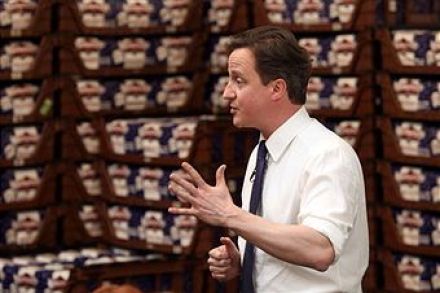
Fresh from a turbulent plane journey, David Cameron is stalking around Bolton. As Pete notes, Warburtons is Bolton's family owned bakery and its endorsement may prove significant in a region of marginals. The party that wins Bolton North East wins the election – that has been the case in every election since 1950 except in 1979. Ruth Kelly’s old haunt, Bolton West, is no Labour stronghold either: her replacement, Julie Hilling, is defending a nominal majority of 2,064. These two seats come 115 and 114 respectively on the Tories’ target list. To the north lies Rossendale and Darwen, where boundary changes have benefitted the Tories for once; it is 77th on the list.
Clegg blows a golden opportunity

From our UK edition

Nick Clegg won't get many opportunities to sell himself to voters and he has just been demolished on the Today programme. All things to all men, Clegg was all over the place. He couldn't give an exact answer when questioned about the size of the deficit, and the Lib Dems' shifting position on the depth of cuts was exposed once again, recalling his autumn wobble on 'savage cuts'. He also refused to rule out a VAT rise. Similarly, he could not expand on his plans for parliamentary reform beyond labels such as 'radicalism', 'renewal' and 'the old politics'. Caught between defending himself from the Tories and attacking Labour, Clegg panicked. The Lib Dems oppose Trident, surely?

A burnt out case

From our UK edition

Freeing Manchester United from the Glazers is not what I envisaged when Ed Miliband promised ‘a radical manifesto’. But the Guardian reports that a fourth Labour government will legislate so that football fans can buy their beloved clubs. Clearly Brown's granite is plastic to the touch. I’ll reserve judgement until the manifestos are published, but, as Alex notes, the feeling is that New Labour's zeal is exhausted. Budget initiatives on stamp duty and the retirement age originated in Tory press releases and the Queen’s Speech regurgitated policies dating back to the 2007-08 sitting. I suspect the manifesto will offer the same gristle. We should be thankful for small mercies because so few bills have made it onto the statute book.

Grayling’s gay gaffe

From our UK edition

The Tories have weathered Chris Grayling’s gay gaffe. The story could only gain momentum if the papers had gone to town on it. They have not. The Times gives it a couple of paragraphs at the bottom of an inner page and even the Independent and the Guardian relegate it to the interior. The news agenda has gone into election over-drive, but I doubt this story would have had legs anyway, even before his denial. Grayling is no homophobe and whilst he voted for the Equality bill he is right that it should be applied with a soft-touch where the boundary between public and private space is blurred. The State should not dictate how you use your property unless you contravene criminal law by doing so.

Tory wars are history

From our UK edition

In lighter moments, Gordon Brown is alleged to imagine that he is John Major and David Cameron is Neil Kinnock. Now, I think the Tories will win outright, but would Cameron resign if Brown’s daydreams became reality? ‘No,’ Cameron tells the Mail on Sunday. Despite the bravado, Cameron must fear a challenge hot on the heels of failure – emasculated backbenchers have threatened as much in private recently. By reputation, Tories romance in intrigue and excel at regicide; yet few credible usurpers exist. William Hague’s low campaign profile denotes spent ambition as much as it does proximity to Lord Ashcroft.  Liam Fox is admirable but has never commanded sufficient support anywhere beyond his immediate coterie.

A battle with the EU may be closer than you think

From our UK edition

Euroscepticism is David Cameron and Gene Hunt's sole shared attribute. But, bequeathed a poisoned chalice at home, the EU is not a future Tory government's immediate priority. Set-piece battles over rebates, defence procurement and the CAP can be avoided for a time, but skirmishes will be a regular occurrence. And some of these will be bloodbaths. The first test comes in June, when EU finance ministers will consider hedge fund and private-equity firm regulation. There is no more contentious a topic. Recent European regulatory initiatives have impeded British financial services to the extent that even Brown and Miliband have taken note.

Revolt fermenting in Surrey East

From our UK edition

Michael Crick reports that the Sunday Mirror will splash the news that 100 members of the Surrey East Tory association have signed a petition to urge David Cameron to de-select Sam Gyimah. The original selection process was controversial – members complained that the shortlist excluded straight white men. That dissent has never subsided. On Tuesday, Crick reported that dissent was turning to revolt. Private Eye’s allegations about Gyimah’s failing business interests, which were apparently suppressed during hustings, were the tipping point.   In reality, the infamous A-list has struck again.

The High Court saves Labour’s bacon, for the moment

From our UK edition

Commuters won’t be alone in celebrating tonight. The High Court’s award of an injunction against the RMT’s planned Strike Action will have champagne corks popping in Downing Street. The Union movement’s sudden renaissance is both embarrassing and dangerous for the government. First, it has shifted the election spotlight back onto Labour. Before the BA strike, the Tories were driftwood – powerless to determine the direction in which they were headed. Unite’s political and social prominence exacerbated tensions within the Labour party, with divisions between New and quintessentially Old Labour becoming more stark. As Ed Howcker wrote last night, the next line in the prelude to internecine war is being written in Stoke.

A morning of to-and-fro

From our UK edition

Who’s in the ascendant this morning? As Pete noted earlier, David Cameron’s barnstorming morning stalled on the Today programme when pressed to cost his National Insurance tax cut. The government went to it press conference scenting blood – understandably vague Tory tax pledges can be easily represented as indicative of general incoherence. Mandelson was in political warlord mode, flanked by Liam Byrne and Alistair Darling, his unlikely musclemen. But they blew it. First, Byrne and Mandelson asserted, with absolute certainty, that the Tories will raise VAT. Opaque pledges cannot be successfully criticised by baseless soothsayings.

Whitehall’s hung parliament contingency plans vindicate Tory alarm over the economy

From our UK edition

There it is. The Tories' premier weapon emblazoned across the front pages of the Guardian and the Telegraph: Brown could stay on as PM in a hung parliament, even if the Tories win more seats. To be fair to Brown, the headlines are misleading. It is his duty to remain in office until it is clear that David Cameron or another politician commands the confidence of the House, which may take weeks in current circumstances. Mandarins are drawing up radical contingency plans to ensure that some modicum of economic stability is maintained during that period. These measures include temporarily proroguing parliament for 18 days after the election (rather than the usual 6) and allowing the Chancellor to remain in office for that period even if he has lost his seat.

Is David Davis talking off-message?

From our UK edition

James Macintyre asked yesterday, in response to a speech Davis made at the Bristol Chambers of Commerce. The question should enter John Rentoul’s entertaining list of questions to which the answer is No. Macintyre takes Davis’ comments out of context: ‘First, he [Davis] praises the post-war Labour Prime Minister Clement Atlee, who is credited with creating the NHS and the Welfare State, and effectively compares him to Margaret Thatcher: “Attlee created the modern Welfare State at a time when the country was bankrupt after the war. Mrs Thatcher transformed the country after 1979 when it was at its lowest ebb.”’ What Davis actually said was: “When times are tough, that is when we as a nation do the most extraordinary things.

How long will it take Gordon Brown to act on this?

From our UK edition

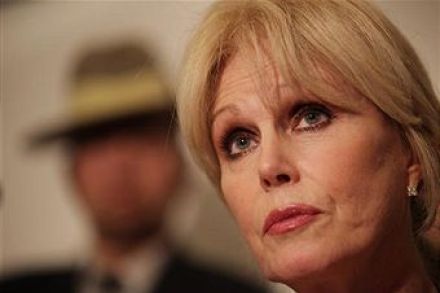
Defence minister Kevan Jones was extremely foolish to re-open the Gurkhas’ residency issue at the electoral cycle’s eleventh hour. Accusing Joanna Lumley of maintaining a “deathly silence” over the campaign was a temptation too many for fate.   She’s silent no longer. She convened a press conference and immediately gained the moral, and strategic, high-ground, saying: “(There is) a sense of regret that it has come to this, almost clearing our name in public. “We want to call on the prime minister to confirm that the policy is one that he still completely supports, to affirm from the prime minister that the MoD is still behind what it said it was behind.

The most corrupt parliament ever?

From our UK edition

It makes you proud to be British. Where resourcefulness and self-worth are concerned, our political class is unmatched. Former Sports minister and ambassador for the 2018 World Cup bid, Richard Caborn, has been stung by the Sunday Times soliciting influence for £2,500 a day ‘plus expenses, obviously’. Obviously Richard, we would expect nothing less from a man of your eminence. So to for former Defence Minister, Adam Ingram, who takes lobbying so seriously he charges VAT. I wonder how Colonel Gadaffi reacted to the 17.5 percent extra charge when Ingram facilitated the construction of a new Libyan defence academy? Hypocrisy is more ubiquitous at Westminster than Pugin.

The Tories are paying the price for Osborne’s mercurial political instincts

From our UK edition

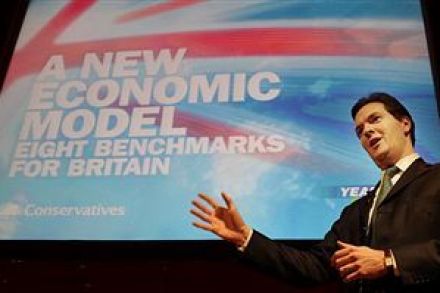
I’m at a loss. How can a government that will raise the national debt to £1.4 trillion be trusted to run the economy? The Daily Politics/Com Res poll shows that Labour is more trusted on the economy than the Tories; it indicts George Osborne’s political performance. As Fraser noted, Osborne blew an unprecedented opportunity on yesterday's Today programme. The danger inherent in a £1.4 trillion national debt is not a difficult argument to make. Tax hikes, inflation and soaring interest rates will be the progeny of Brown’s continued borrowing binge. Yet Osborne confined his attack to valid but esoteric points about credit ratings and a list of acronyms. Ken Clarke would not have made such an elementary political mistake.

A week to forget for Andrew Adonis

From our UK edition

The weekend cannot come quick enough for Andrew Adonis. What an awful week. The BA strike wrecked travel; the absurd Stephen Byers dragged him into the lobbying scandal; the RMT voted in favour of Bob Crow’s surreal steam-era fantasy; and today comes the coup de grace: the High Court decides that the third Heathrow runway is ‘untenable’. Transport is beginning to make Northern Ireland look like a soft brief, but Adonis hides his perturbation. He responded to this morning’s news by saying: "I welcome this court ruling. Heathrow is Britain's principal hub airport. It is vital not only to the national economy but also enables millions of citizens to keep in touch with their friends and family and to take a well-deserved holiday.

Vested interests at the MoD

From our UK edition

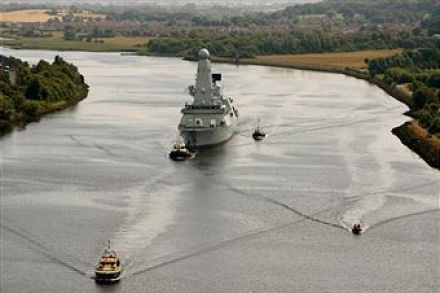
Yesterday, Alistair Darling pledged £4 billion for the MoD, earmarked for Afghanistan. He did not specify what the cash would buy, presumably because the Defence Spending Review will take place after the election. But a day is a long time in politics and the forthcoming spending review no longer seems to be so decisive: BAE and the MoD have signed a £127million four-year contract to design the proposed Type 26 frigate. This is welcome in principle: the Type 22 and 23 frigates need to be replaced eventually and British companies and their employees will prosper. But this contract should have fallen under the spending review – defence procurement remains unreformed and the nation can ill-afford a £127million design contract.

Proscribing legalised drugs

From our UK edition

‘My wife says these drugs turned me into a zombie, but the truth is I wouldn’t know, as I have hardly any memory of the past 40 odd years.’ The Mail printed Keith Andrew’s testimony, a 74-year-old retired electrician who has guzzled prescribed benzodiazepines for nearly half a century. Andrew is one an estimated 1.5 million British people who have been addicted to valium and other tranquilisers. Whether addiction is voluntary or not is irrelevant. Anti-anxiety treatment remains a laxly regulated area of medicine: more than 8 million prescriptions are made each year and there are an estimated 100,000 illicit addicts currently using. In a fascinating piece in the Telegraph, Andrew M Brown outlines the side-effects of long-term ‘Benzos’.

A philanthropic future

From our UK edition

There is barely a cigarette paper between Ben Bradshaw’s and Jeremy Hunt’s approaches to arts funding: it will almost certainly be cut. The Tories intend to plug the shortfall with National Lottery cash and Ben Bradshaw will fight to preserve his ‘miniscule’ budget but can give no guarantees. The arts are integral to Britain. Their importance extends beyond the cultural sphere. The Treasury receives £5 for every £1 that it invests in the arts. And it isn’t only a competitive tax regime that attracts business to these shores; Deutsche Bank relocated to London specifically because it’s an almost unrivalled cultural and artistic hub.

Four politicians singing the same tune…

From our UK edition

Cabbies have a reputation for telling tall tales, but Stephen Byers could be in a league of his own. Lords Adonis and Mandelson have stated, categorically, that Byers is lying: he did not alter government policy. If so, why on earth did he liken himself to (though I would use a more lurid epithet) a 'cab for hire'? This affair is being obscured by thickening smoke. Each new answer poses further questions. Mandelson’s outright denial contrasts with yesterday’s amnesia. The Sunday Times quoted Mandelson as having “no recollection” of a conversation which Byers alleges took place. There is subtle difference between denying something happened and being unable to recall it. But that’s not the half of it.

Entente nouvelle?

From our UK edition

Could Britain and France share defence assets? Julian Glover’s column in the Guardian concludes: ‘As for the new carriers, they are, unlike much defence equipment, adaptable and manoeuvrable. They could sail to the rescue in Haiti or feed the hungry in Mogadishu as easily as obliterate Tehran. We should build and deploy the first, and persuade the French (whose own grandiose carrier doesn't work) to complete and equip the second: a shared fleet for two European nations that have yet to reconcile themselves to their more modest place in the world.’ Politicians on both sides of the Channel speak eagerly of deeper entente. But there is not always a way where there’s a will. A shared outlook is insufficient; France and Britain would have to share assets.