David Blackburn

The waltz never got going

From our UK edition

I was expecting drama when the Labour leadership circus called at Newsnight yesterday. Alas, the show whimpered and wheezed to a halt. A contest to determine the party’s future continues to gaze into the past. Assessing failure is essential to renewal, but the candidates are yet to offer anything substantively new.   Ed Balls and David Miliband shared one telling exchange. Balls has presented himself as the traditional candidate, and he would have you believe he speaks the language of Mrs Duffy. Gordon Brown’s hideous solecism in Rochdale revealed that he and his government were out of touch on issues such as housing and immigration. David Miliband is the centrist candidate and he dissociates himself from Balls and Duffy-speak.


Darling pulls a fast one

From our UK edition

Alistair Darling has just forced George Osborne to the dispatch box to explain the regulatory measures that he will announce at Mansion House later today. Osborne confirms that some powers will return to the Bank of England and that an independent commission, under Sir John Vickers, will take into account competing views on capital, leverage and liquidity requirements. Retail and investment banking will be split under the new arrangements. This is effectively the end of the tri-partite system. Alistair Darling defends the tri-partite system in its entirety, arguing that no one will understand from 'this dog's breakfast' who now regulates the banks - talk about undermining confidence, which the opposition was condemning less than half an hour ago.

PMQs Live blog | 16 June 2010

From our UK edition

Stay tuned for coverage from 12:00 12:03: Cameron pays tribute to the 3 soldiers killed in Afghanistan this week. 12:04: Tory backbencher Phillip Davies opens proceedings by calling for prisoners to be denied access to Sky TV. Cameron's response is true blue: too many prisoners, too many of them in Britain illegally and not enough money. 12:05: Harman rises, talking on unemployment, which has risen this morning. It's effectively cuts now versus cuts later. Cameron regrets the situation (to much noise from the opposition) and pledges that back to work initiatives will be enacted in next week's budget. 12:08: Harman re-iterates her point. Cameron responds by saying that Labour hasn't given any concrete spending plans of her.

The Labour leadership contest waltzes onto Newsnight

From our UK edition

With ill-repressed horror, James Macintyre reports that the remnants of New Labour fear that Diane Abbott might win the Labour leadership, courtesy of the preferential vote. Mildly amusing I suppose. If Ed Balls would be a catastrophe of Footian proportions as leader what would Abbott be? There are no historical parallels.   I can’t see this latter day Rosa Luxemburg enticing Labour members. But if she does, then David Miliband, that auteur of absurdity, is to blame. Abbott’s weapon is communication. Unlike her four opponents, she doesn’t sound like an under-manager at Furniture Village. She is accessible, particularly on television – and the hopefuls will be up before Paxman tonight.

How Hughes will play the coalition

From our UK edition

Simon Hughes is an experienced campaigner, whose reputation is deservedly blemished by a handful of duplicities – Peter Tatchell, denying a referendum on the Lisbon Treaty and the like. Hughes has just appeared on the Daily Politics and, very subtly, split the Lib Dems from the Tories. It was very simple: the Tories are responsible for all that’s bad and the Liberal Democrats are benevolent. First, Hughes dissociated the Liberals from tax rises: "I hope that the chancellor's hearing the voices that says VAT is not the right tax to change in the budget next week." Those voices are, of course, his ‘colleagues in the Treasury’ – an enlightened check on George Osborne’s excess.

Sacking the nanny

From our UK edition

Theresa May has halted the national database of adults who come into contact with children. The innocent and law abiding majority can now volunteer without having to complete an extensive anti-pervert course – a heavy-handed and expensive bureaucratic requirement, typical of New Labour’s ‘nannying’ days. May acknowledges that acquiring the ‘Not A Known Pervert Badge’ discouraged vital volunteer work, which could effect social dislocation. May pledges to remodel the scheme, which is presumably why the Independent Safeguarding Scheme remains in place. Writing for ConHome, Alex Deane calls for the abolition of this scheme.

A day that re-opens old wounds

From our UK edition

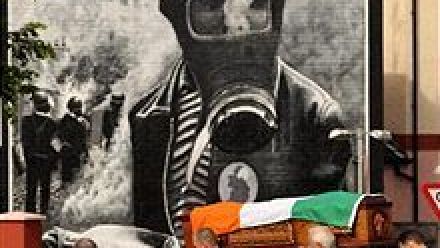
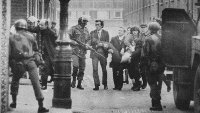
Building on a peace process of compromises, Tony Blair called the Bloody Sunday inquiry to placate nationalists in Northern Ireland. But I wonder if he ever intended its findings to be published? The Saville Report was only ever going to re-open old wounds. With the greatest respect to Lord Saville, who is a distinguished lawyer, this report cannot dispense justice. Establishing the facts is impossible 30 years after the tragedy, and the punishment can only be collective. Yet the political dictates of peace mean that the British army must be blackened. The soldiers who beat both sets of paramilitaries to the negotiating table will be branded as criminals. Whatever their impulse, British officers took a disastrous decision to disobey orders and open fire.

Seeing it through

From our UK edition

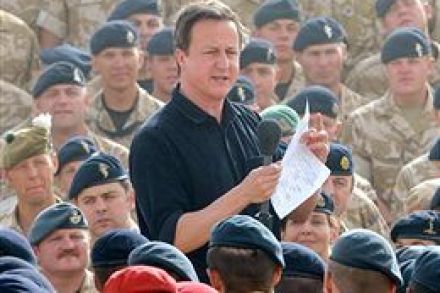
David Cameron’s address to the House contained no surprises. NATO and its allies are 6 months into a strategy to stabilise Afghanistan. All sides of the House were agreed that Britain should fulfil its commitments, but remain in Afghanistan not a day longer than necessary. That date is unknown. Like Blair and Brown before him, Cameron aspires to ‘improve Afghan security’. ‘Stability’ surely means the expulsion of al Qaeda from Afghanistan. How likely is that without the complete co-operation of the Taliban? (At what cost would that be secured?) And, as Julian Lewis MP pointed out, is al Qaeda more dangerous in Afghanistan than it is The Yemen, Somalia or Pakistan? The grand strategy remains indistinct and an outright victory impossible.

Defence matters

From our UK edition

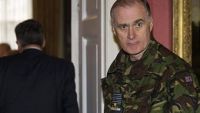
Sir Jock Stirrup’s early departure was one of the worst kept secrets in Westminster. But the ‘resignation’ could have been better handled. The coalition has created a lame duck in Stirrup. And, rightly, Con Coughlin asks why Stirrup is overseeing the strategic defence review if he was sufficiently inept as CDS? It makes no sense, as removing Stirrup and Sir Bill Jeffrey (the MoD’s permanent secretary) is clearly about preparing the way for spending cuts and a new model of UK military intervention. Liam Fox gave a speech this morning promising a ‘clean break with the Cold War mindset’. He emphasised the importance of maintaining counter-insurgency spending and training; presumably, that will come at the expense of conventional warfare.

The debate opens as Darling is vindicated and condemned

From our UK edition

As Fraser observed at the weekend, Alistair Darling has a point: it is not as bad as was feared. The new Office for Budget Responsibility agrees, reducing estimated public borrowing to £155bn 2010/11. Still, it’s hardly a picnic is it? And I wonder what response Darling will get if he presses Cameron and Osborne for an apology. His growth forecasts have been downgraded to 2.6 percent and the structural deficit is greater than he admitted to – Paul Mason reckons it’s about £5bn more than was forecast. Osborne’s hands are tied by these figures; his calculations will be based on them. There is, of course, the possibility that the OBR's predictions are no more accurate than the Treasury’s soothsayings.

Waiting on the OBR

From our UK edition

The Office for Budget Responsibility is expected to downgrade the previous government’s growth forecasts. Alistair Darling’s rosy prediction that the economy would grow by 3-3.5 percent in 2011 will be replaced by a conservative estimate of 2-2.5 percent, in line with other independent forecasters. Also, according to the Guardian, the OBR will ‘trim’ the Treasury’s breezy estimates of growth until 2014-15.   There is no guarantee that the OBR’s forecast will be flawless – and the Treasury Select Committee's scrutiny will have to be exhaustive. But George Osborne is bound to the OBR’s figures, rather than the Treasury being bound to a political agenda. Balance and responsibility will be restored to Budget decisions.

Unfortunate misattribution

From our UK edition

The Sunday Mirror contains a warning about the ‘mad axeman George Osborne’. It is terrifying read – a grim vision of future economic misery, a Dickensian catalogue of poverty, worklessness and social breakdown. The Mirror has attributed the piece to Danny Blanchflower, the legendary centre half and captain of Tottenham Hotspur’s 1961 double winning team who died in 1993. As I write, Professor David Blanchflower is tearing down the wing for Hamilton Academicals.

Tories on the rise in latest poll

From our UK edition

Sweet news for David Cameron in today’s Sunday Times YouGov poll, which you can read here: the Tories have broken the 40 percent barrier for the first time since the first leaders’ debate. As the senior partners, the coalition was always going to suit the Conservatives more than the Liberal Democrats. Sure enough, the Liberal Democrats have fallen away by 3 points on last month’s figures to 18 percent – their worst performance since the first TV debate and the beginning of Cleggmania. Those who voted yellow against blue won’t be doing so again.

Should Cameron mention McKinnon?

From our UK edition

Lord Tebbit poses the question on his latest blog, pointing out that Nick Clegg campaigned against Gary McKinnon’s extradition, and urged the government ‘to do the right thing’.   Well, now he can and it would be a popular decision in the current circumstances. The US-UK extradition treaty should be unacceptable to any government that considers itself sovereign, but this is no time for bluster and confrontation. Barack Obama has leapt about with shrill adolescent abandon; it would be hypocritical for Cameron to return fire in kind. Despite what Obama protests, BP is not solely liable (Halliburton and TransOcean have a case to answer).

Darling: it’s not as bad as all that

From our UK edition

Alistair Darling is about to retire to the backbenches, though he stresses (and hopes) that it's a brief stint in obscurity. ‘I get bored,’ he tells the Guardian in an interview today. Darling is remarkable. He emerged from 13 years in cabinet and a hellish tenure as Chancellor with his reputation enhanced. There were rumours of a leadership bid, but those were fanciful. Darling was not an architect of New Labour, but he certainly laid the odd brick. Darling could not break the legacy of Blair and Brown, and reveals as much in his Guardian interview.

Ed Balls and the art of campaigning

From our UK edition

I thought that Ed Balls would be a natural for opposition politics. But I’ve been struck by the naivety of some of his recent interventions – notably the Duffy-wooing immigration proposal. As James has argued, Balls’ plan to limit freedom of movement within the EU ia classic opposition politics. They are eye-catching, populist and but completely unworkable in practice. But Balls isn’t really in opposition yet: the Labour party is caught in a kind of limbo whilst it determines its future, a future that Balls wants to control. Advocating the unimplementable looks conniving rather than statesmanlike, naïve rather than astute.

Hain: the Liberals demanded that we cut now

From our UK edition

Andrew Neil interviews Peter Hain for this week's BBC Straight Talk. Mastering the obvious, Hain argues that Duffygate cost Labour dear: 'PH:  The damaging incident of course was the Duffygate incident. AN:  In Rochdale, the old aged pensioner? PH:  In Rochdale, and that had a palpable effect.  I think we were just beginning to get a bit of traction - not necessarily to win but possibly to be the biggest party in the election - and that was a real hammer blow, and everybody knew it. AN:  You really think that affected the public’s perception of the then Prime Minister?

David Davis is the darling of the Tory right

From our UK edition

ConservativeHome conducted a poll into prominent, right-wing Tory backbenchers. Unsurprisingly, David Davis topped the poll. 70 percent of respondents hold that David Davis represents their views and 54 percent believe he articulates those views effectively. John Redwood and Daniel Hannan were some way behind as DD’s closest rivals. Davis’s chief weapon is communication. Plain speaking and from a working class background, people easily identify with him; and he expresses an acute intelligence in simple terms, something that John Redwood has failed to do. And whilst Hannan has charisma, Davis has more - the fruit of a decade at the forefront of British politics.