David Blackburn

Balls: we have to be more bigoted

From our UK edition

Meet Ed Balls, the candidate for Mrs Duffy. As the race for nominations closes, the Labour leadership candidates are beginning to focus on party members. With varying degrees of conviction, the contenders have identified immigration as the issue the party must address if it is to reconnect with those voters who spurned it. Ed Balls is that analysis's most fervent advocate. He devoted an article in the Observer to the subject.  Balls argued that there has been too much migration from Eastern Europe, and it has caused economic and social ills in communities such as the one he represents. In hindsight, Britain should have accepted the transitional controls during the eastern bloc’s accession in 2004.


Labour leadership contenders eyeing the past, not the future

From our UK edition

I wonder if the Labour leadership contenders worry that the previous generation’s forthcoming memoirs have created more excitement than them? I would be. The insipid campaign has laid bare the paucity of talent on Labour’s benches, and the party’s ideological exhaustion. No serving Cabinet minister lost their seat at the election; Tony Blair aside, the Milibands and Ed Balls are the best Labour has. That’s a grim prospect if your colour’s red. Ed Balls has the panache of a Vauxhall Zafira; and the two Milibands are trapped in a Beckettian whirl of meaningless jargon, convinced that using abstract nouns is a mark of vital intelligence. It isn’t; it’s irritating, and voters spurn it.

The war on poverty opens a second front

From our UK edition

I detest the use of the word ‘Czar’. Everything has a Czar – potato regulation, multi-story car parks and Twitter being my favourite three. But the war on poverty needs to be fought by free-thinking absolutists. The appointment of Frank Field to conduct an independent review into poverty and life chances confirms David Cameron’s, and the coalition’s, non-partisan commitment to social mobility and betterment.   Field presents his analysis in a succinct piece in the Telegraph.  He writes: ‘Over recent decades, the Left and centre-Left’s answer to poverty and inequality has been to spend more money, to redistribute from richer to poorer.

The transparency revolution is this government’s immediate lifeblood

From our UK edition

Transparency is the government’s immediate obsession. It costs nothing to enact and gives power to the people. In an excellent post for Con Home, Stephan Shakespeare explains why publishing the COINS database is a revolutionary, seminal moment in British politics. The whole piece is worth reading, but here is an excerpt: ‘It is one of those moments that changes things for ever. When people can’t see where their money goes, they can make no comment, they can have no influence. Governments live and die by public approval; and once you can link spending decisions to identifiable civil servants, their careers will also live or die by our approval; so this kind of openness to scrutiny is utterly revolutionary.

Pacific islands defy apocalyptic climate change scenarios

From our UK edition

The President of the Maldives can sell his snorkel: he’ll be waving not drowning. The New Scientist carries a fascinating article, examining the research of Paul Kench of the University of Auckland and Arthur Webb of the South Pacific Applied Geoscience Commission. Using aerial photographs and high-resolution satellite images, Kench and Webb have found that 23 out of 27 low-lying Pacific islands, deemed to be vulnerable to rising sea levels, have grown by up to 10 percent in 40 years. Local sea levels have risen by 120 millimetres over the period. Coral is defying the apocalyptic flooding scenarios. Reef coral surrounding the islands is eroded and deposited to form atolls or coastal spurs.

Red Vince sips clear blue water

From our UK edition

Deprived of the comforts of third party opposition - the ability to say and do as he pleased – Vince Cable has had to put away childish things. Of necessity, the business and enterprise secretary cannot be a socialist. And Cable used yesterday’s speech at the Cass Business School to prove he’s no socialist.   He convinced. Cable will enact the coalition’s plans to reform regional development agencies, cut preferential micromanagement grants that supersede the judgement of markets, demolish stifling small business regulation, curtail short-term speculation on company takeovers to protect shareholders, cutting the deficit early and the part-privatisation of the Royal Mail.

Will the coalition fall over Europe?

From our UK edition

Well, well. Simon Hughes has just made firm Eurosceptic comments in the Commons. He said: ‘I'm also clear...that we need to revisit some of the decisions like the working time directive where I think we made a mistake, and there have been mistakes in the European Union. "And my great enthusiasm for the European Union and for better collaboration across Euope doesn't make me blind to things that have not gone well and where we need to do better. And overly prescriptive regulation such as the working time directive is one of those. "I don't take the view that there's only ever a one-way traffic of power from this parliament and this country [to the EU].

The case for Carswell

From our UK edition

Douglas Carswell has an outside chance of becoming the chairman of the Defence Select Committee. I hope MPs take a punt and elect him because his ideas on defence procurement deserve regular airings. The festering sore of defence procurement went septic under Gordon Brown. The Nimrod Inquiry and the Gray Report concluded that contractors and the defence establishment operate a ‘conspiracy of optimism’ which disregards the requirements of specific theatres, causing casualties and diminishing military capability. Soldiers in Helmand cannot subdue Helmand with Viking trucks that were designed for arctic warfare (why the hell would we be fighting there anyway?).

Harman’s schtick

From our UK edition

Harriet Harman is irresistibly attracted to the absurd. This morning, she has decreed that the shadow cabinet be split 50:50 between men and women. Naturally, she would pervert Labour party rules to ensure the quota was a statutory requirement. To be honest, I’ve lost track of Harman’s myriad ruses to increase the female presence in high politics; and to be equally honest I’m no longer interested. It’s Harman’s schtick, leave her to it. Speaking to the national Unite conference, Harman made some sensible points about Labour’s electoral failure.

The Third Man for the third way

From our UK edition

Peter Mandelson’s Machiavellian streak runs deep. Like the wily Florentine, Mandelson wants to retire to the country to farm and be close to the earth; but first, there is the small matter of a book for political princes. In this morning’s Times, Mandelson has written an exhaustive plug for his forthcoming book, The Third Man: Life at the heart of New Labour.   In the course of writing his publisher’s press release, Mandelson makes two important points: one historical and one current.   He admits his greatest mistake was to broker Blair and Brown’s deal in 1994; the soap opera that followed, Mandelson argues, would never had occurred had they fought it out there and then.

PMQs Liveblog

From our UK edition

15:00 Stay tuned for live coverage. 15:00: Clegg and Cameron sitting abreast and Douglas Carswell kicks the session off. And Cameron begins with the butcher's bill from Afghanistan. He makes a short statement about the rampage in Cumbria. Nothing about Gaza, thank God. Carswell asks if the government will make all our lawmakers will be elected by the end of the year. Cameron promises a bill for a predominantly elected second chamber. 15:05: Harriet Harman stands up. It's Gaza and the Israeli blockade. Her delivery is clear, almost impressive. Cameron answers with the facts about British nationals being held by Israel and describes himself as a friend of Israel and avers that the blockade strenghtens the hand of Hamas.

Cameron must not radically change his style at PMQs

From our UK edition

Watching David Cameron’s mannequin-like performance during the TV election debates, it became apparent just how good he is at the dispatch box. Quick witted, funny and incisive, Cameron invariably demolished Gordon Brown at PMQs. Daniel Finkelstein’s column is a must read today, bludgeoning the absurd guff about  the ‘new politics’. But Finkelstein argues: ‘David Cameron is very good at being combative in the chamber. He has won many battles. And it will seem unecessarily risky to change his style. But the prize is great. For he can be a national leader, not a party one. And he can make a reality out of the nonsense of the new politics.

Hughes in the ascendant

From our UK edition

The indications are that Simon Hughes will become Lib Dem deputy leader. Politics Home reports that Hughes is backed by 29 of the party’s 57 MPs, which make him the outright winner in the race with Tim Farron. Hughes also received the backing of 60 percent of party activists on the Lib Dem Voice website. The Tories will be both wary and pleased at this development. Hughes is left-wing, determinedly so, and among those who favoured a deal with Labour. Rumours abound that Cable’s resignation was contrived to promote Hughes, who is also said to be livid at being excluded from government - an Ashen-faced Hughes was spied shaking his head during the Queen’s speech debate. Animus and ego make for toxic coalition politics.

The novelty factor

From our UK edition

Nick Clegg was run-through when he and Jim Naughtie last crossed swords. A different outcome today – the deputy Prime Minister was composed, defending the coalition’s tight agreement. Naughtie was in ‘we’re lolling in a cafe on a dusty street, a donkey brays at the dying sun' mode, and never pressed Clegg.   First, Clegg assured Naughtie that government continued without David Laws, and he echoed John Redwood’s and William Waldegrave’s point that Chief Secretary is a political job in which the author of the coalition agreement, Danny Alexander, has every chance of excelling. Naughtie didn’t mention Lib Dems’ hypocrisy on expenses, which might have shaken Clegg. CGT tapering came next.

Labour’s gruelling task

From our UK edition

There was a great sense of pathos after the election, when Jack Straw was the only Labour politician who could recall the shadow cabinet room’s location. It must have been surreal for those who knew only government. The loneliness of opposition would have struck at last week’s Queen’s Speech. The party must renew whilst avoiding the internecine struggle that condemned the Tories to 13 years in opposition. Fantasy politics won’t be sufficient. Introspection must yield a coherent and credible agenda, free from the undeliverable abstractions and the oscillation between arrogance and desperation that characterised the Brown government.

A PR disaster for Israel

From our UK edition

Prematurely, the world’s press has condemned Israel. As I wrote yesterday, the facts have to be established before Israel can be adjudged to have acted disproportionately. At the moment, the facts seem to support Israel. Video footage shows commandoes descending into a maelstrom of baseball bats and knives, armed with items that resemble paintball guns. The latest pictures released show a hoard of improvised explosives, machetes, bats, crowbars etc. Those sources’ veracity should be scrutinised, but there is nothing else to go on at the moment. Iain Martin has debunked Jon Snow’s absurd genuflection that this is our fault. Being British I apologise for everything, but not this time.

Call the committee to order

From our UK edition

It’s committee chairmanship season in Westminster, and there are two noteworthy battles. Michael Fallon and Andrew Tyrie are scrapping over the Treasury Select Committee. The FT summarises the pros and cons of both. Fallon, who served as John McFall’s deputy, remains the front-runner, but the cerebral Tyrie has an impeccable record as an economist, committee member and constituency MP - I grew up near Chichester and Tyrie deserves credit for tackling the city’s perennial flooding problems; and, for what it’s worth, he won the Spectator’s backbencher of the year award again last year. I understand that Tyrie has the requisite number of backers, as well as ties with Nigel Lawson, Ken Clarke and William Waldegrave.

I’m alright Jack

From our UK edition

Transparency is this government’s quintessence. It is a mantra to two gods. First, it is a constituent of the ‘new politics’ – that jewel over which the three partisan thieves squabble. Second, it enables the government to amputate gangrenous public sector pay.   The public sector is powerful. The previous government’s economic policy bred a bowler-hatted Leviathan. You can argue the toss whether civil servants are overpaid per se, or that their pension entitlements are grotesque in an era of budget restraint. But the government’s battle will be more brutal because the public sector is the final redoubt for the antediluvian fat-cat unionism of Simpson, Woodley and Crow, to name but three.

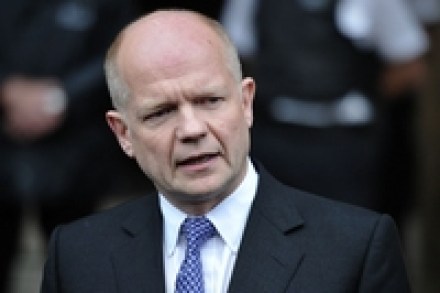
Hague pitches it right

From our UK edition

It would be wrong to pass comment on the loss of life on the Gaza Flotilla; the facts are not established. Israel is right to investigate convoys that it feels might be supplying Hamas with arms. But, as ever in the Middle East conflict, it must be determined whether Israel’s use of force was proportionate. Not that the answer to that question ever deters Hamas from terror or Israel from retaliation. Peace does not lie in abstract nouns. However, international law will determine the facts of this incident, and perhaps bring clarity to the divisive Gaza border issue.