David Blackburn

Governments’ wasteful ways

From our UK edition

It was inevitable that the government’s re-organisation of NHS management would incur a large upfront cost, but I didn't expect quite such a large figure. £1.7bn has been siphoned off to pay for the re-structuring of NHS commissioning, seven times more than the planned target for management cuts according to the BBC. This is a godsend for the opposition, obviously. Insulating the NHS budget from cuts may have been a political masterstroke in 2007, and ‘I will cut the deficit, not the NHS’ may have been a sharp election slogan. But it is idiotic to ringfence the NHS simply to re-arrange the bureaucratic furniture and destabilise the system. We've been here before. The previous government excelled at wasting money in order to be seen as being active.
Cable manoeuvring on the road to nowhere

From our UK edition

Vince Cable has floated a solution to university finance, but he’s also politicking and I wonder what David Willetts, the Higher Education Minister, makes of it. The coalition agreement does not mention a graduate tax. The agreement merely states that the government will wait for the Browne Report into university funding. When in opposition, the Liberal Democrats did not support Browne because he was likely to recommend increasing tuition fees. Cable has pre-empted Browne in partisan spirit. If he can convince the government to adopt a graduate tax, he will have abolished tuition fees, which would do him no end of good with Lib Dem voters. It's typical Cable: eye-catching, pithy and hopeless.

Europe rises from its slumber

From our UK edition

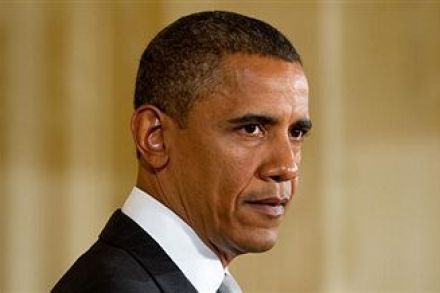
Emblazoned across the Times is the headline: ‘Europe warns Obama: this relationship isn’t working.’ The piece is teeming with quotations from diplomats and representatives of major European governments, voicing their concern that post-Cold War America no longer offers Europe a privileged relationship. The goodwill that Europe offered Obama has entirely evaporated. Few diplomatic spats are ever one-sided, and the Americans are deeply frustrated with the European Union.

McFadden talks sense

From our UK edition

Pat McFadden, the sullen-looking Shadow Business Secretary, has given an important speech to the Fabian Society. He said: ‘Fight the cuts is a tempting slogan in opposition, and there are indeed some that must be fought. But if that is all we are saying the conclusion will be drawn that we are wishing the problem away.' He is the first shadow minister to recognise that Labour’s current approach is counter-productive, and Ed Balls’ philosophy is suicidal. He notes: ‘In fact, that is the position the Tories and the Lib Dems would prefer us to adopt. They want Labour to retreat to its comfort zone and allow them to say that they alone are capable of facing up to Britain's problems.

Perverse though it sounds, prisons can be a haven for opportunity

From our UK edition

So much of the welfare debate is lost in jargon and the numbingly large and depressing numbers. John Bird, founder of The Big Issue, has just been on The Daily Politics and he condensed the specious waffle into plain but evocative sound bites. ‘You don’t have a broken society without a broken system. The usual suspects come in and advise Blair, Brown and now Cameron that what you need is money for the poor. The poor don’t need more money; the poor need more opportunity.’ Bird admitted that prison made him upwardly mobile. He left it being able to read, write and paint, and was given the confidence to pursue his entrepreneurial instinct.

PMQs Liveblog | 14 July 2010

From our UK edition

Stay tuned for live coverage from 12:00 12:00: Cameron pays tribute to the 7 soldiers killed in Afghanistan during the last week and promises an inquiry into yesterday's tragedy and assures the house that British efforts will not falter. 12:02: Labour MP Tom Blenkinsop criticises the rise in VAT saying it will affect small businesses. Cameron counters by saying he's cut red tape. 12:04: Harman opens by asking for Cameron to describe the efforts to contain violence in Belfast. He does, saying how the police response has been measured. Both agree that it is a matter for devolution. 12:06: Harman attacks the government's decision to end NHS targets, notably the cancer guarantee. Woah.

Labour still don’t get it

From our UK edition

As Pete asked at the weekend, will Labour ever start love-bombing the Lib Dems? Ed Miliband has mumbled that he wouldn’t oppose a possible Lib-Lab coalition, but that’s about it. According to the irreproachable Lord Mandelson, David Miliband and Ed Balls were opposed to a coalition and presumably remain so. Labour has greeted the government’s Liberal Democrats with jeers and contempt, particularly over the VAT rise, which passed last night without amendment. Now, John Denham, an arch-pluralist who has long dreamt of forming a ‘progressive coalition’, has told the Fabian Review that Nick Clegg would be the price of any Lib-Lab coalition.

Prison works, but not as well as it might

From our UK edition

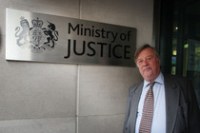
Ken Clarke has laid another argument against prison. There is no link, he alleges, between falling crime rates and spiralling prisoner numbers. Well, perhaps not, but it’s quite a coincidence. Clarke has been tasked with the impossible: assuring an easily frightened public that releasing prisoners will not lead to more muggings, robberies and intimidation. There are arguments on both sides. A recent Spectator editorial took the Michael Howard line that prison works and crime costs. The opposition does not contest either of those propositions, just if prison alone is the best way to reduce crime. The outgoing Chief Inspector of Prisons, Dame Anne Owers, argues in the Guardian for investment in remedial programmes.

Hard going for the government

From our UK edition

A tough morning for the government at the hands of Tyrie, Fallon and rest of the Treasury Select Committee. Sir Alan Budd apologised for his naivety, Robert Chote described the Budget as ‘regressive’ in the main and the banking levy has been criticised on the grounds that is de-stabilising banks’ capital bases, which will affect lending. The government would prefer silence on these issues but the damage was far from total. Budd was an interim figure and the spat that has developed around him is largely political – there is no question that Budd was ‘nobbled’. Robert Chote deserves his reputation but he is not infallible. And Treasury Chief Economic Advisor, Dave Ramsden, put paid to the criticism of the banking levy.

Would Britain buy Balls?

From our UK edition

Asks Iain Martin, and I suspect he’s back in Rentoul territory. It is, nonetheless, a question that merits more than a cursory no in reply. For all his egregiousness, you know where Balls stands: in the crude but distinctive colours of the old left. He is convinced that any approach to spending cuts other than his own will precipitate a double-dip recession. As Iain puts it: ‘Balls is also calculating that the second half of a double-dip recession is on the way and is staking out ground on which he can be the one to proclaim to the country: I told you so.’   In terms of Britain’s economic debate, I agree with Pete: it would be preferable if Balls were banished to obscurity.

Still spinning

From our UK edition

According to the Spectator’s literary editor, Peter Mandelson wrote the most boring book review ever published by the Spectator. I imagine he did. You don’t read the Mandelson memoir; you wade through it in leaking gum boots. The lack of illumination is nothing compared to the faceless prose. Mandelson cannot evoke the personality of Alan Clark’s or Chris Mullin's diaries. Form is crucial in that memoirs justify and diaries observe. Clark’s love of Mrs Thatcher and his self-importance match Mandelson’s love of Blair and his preening conceit that there was a ‘Third Man’ at the heart of New Labour's tenure in office - Mandelson spent most of it in exile.

Ducking the issue?

From our UK edition

As I wrote earlier, a large proportion of Andrew Lansley’s white paper had to be devoted to accountability. Much of it is, but little is explained. Patients are central. The creation of GP consortia is for their benefit and they will hold the consortia to account by excercising choice (4:21). Choice is the tyrannical panacea that does not exist. A patient can only improve a treatment if they are given it; and many GPs are closer to Doctor In the House rather than Dr.House. GPs are independent practitioners working within the NHS framework. For example, it is impossible for the patient to make recommendations about unavailable cancer drugs. In addition to the patient, the NHS Commissioning Board will regulate the consortia.

A question of accountability

From our UK edition

In theory, curbing bureaucracy in the NHS should have you reaching for the Champagne. But giving GPs control of £80bn is an enormous risk. GPs know their patients' needs, so Andrew Lansley’s thinking is that empowering GPs will improve patient care, and therefore patient outcomes. Many GPs will be chomping at the bit to get their hands on budgets; on the other hand, many will not – it takes a certain kind of mind to be thrilled by balance sheets. Also, those that are may fight their corner rather too vigorously, which would merely deepen imbalance in the health service. The success or failure of Lansley’s initiative depends on ensuring that GPs will be accountable for the public money they manage - the White Paper must address that question.

The Gove fight-back begins

From our UK edition

His apology earlier this week was a reminder of how Cabinet Ministers used to behave. Today’s cock-ups and crises have increased the pressure on the Education Secretary – two schools face cuts despite meeting the government’s criteria. Now Gove has penned a defensive article for the Sunday Express. He writes: ‘Reform is never easy, and certainly not when cash is tight... but school building will not stop under this government.’ Gove is, of course, right. Money is tight. But he must explain why reform is necessary in and of itself, and why his ideas should be adopted. There was an aloofness and arrogance about his performance on Newsnight on Monday, suggesting that Gove believes he has won the argument.

Miliband’s analysis simply confirms his own weakness

From our UK edition

John Rentoul, who knows a successful Labour leader when he sees one, is having palpitations about David Miliband’s latest hustings speech. Everyone seems to be in fact. I’ve taken a look, following the Berkeleian principle that if everyone thinks something is important it invariably is. It’s a good speech. At last, one of the Labour leadership contenders has attacked Gordon Brown. Under Gordon Brown, Miliband argues, Labour’s failings, spin and high-handedness intensified. An expression about Sherlock and excrement comes to mind, but the first stage in a party’s renewal is to admit defeat, acknowledge failure and offer contrition. David Miliband has begun that process, which can only serve him well.

Sir Humphrey always has the last word

From our UK edition

The Great Repeal Act seems to have gone the way of all flesh. Perhaps the task was deemed too cumbrous. Or perhaps the Civil Service replaced their original contrivances with a bill so convoluted that the Repeal Act itself would have to be repealed. As Alan Clark wrote: ‘Give a civil servant a good case and he’ll wreck it with clichés, bad punctuation, double negatives and convoluted apology’. I mention the civil service because the government plan to ‘cure Labour’s Health and Safety neurosis’. Lovely turns of phrase from David Cameron in interview with the Mail: concern for safety and welfare has invaded the private sphere and it will be undone.

Send for Chote

From our UK edition

And so it continues. The FT reports that Sir Alan Budd has denied that George Osborne cooked the OBR’s job loss forecasts. ‘It was genuinely a forecasting correction with no ministerial interference,’ he said, blandly. The correction was the result of the OBR’s use of a narrow definition of public sector workforce than is employed by other statisticians. That is not abnormal: statisticians are a law unto themselves. But, as the saying goes, it doesn’t look good. The OBR’s figures supported the government and the story is beginning to emit of a whiff of mendacity. Once more, George Osborne is in a mess of his own making. His political instincts veer from brilliance to catastrophe with an unpredictable regularity.

The ’22 bares its teeth

From our UK edition

Tim Montgomerie reports that the 1922 Committee is to launch its own inquiry into the Tories’ election campaign. This, as I understand it, is in addition to the party’s official inquiry, and therefore suggests that the backbenches want to assert their independence by criticising Steve Hilton and George Osborne’s strategy. After May’s ruptures between Cameron and the backbenches there is a chance that this story could snowball. There is a sense that some of the ’22 haven’t yet buried the hatchet. And the feeling’s mutual. Some Cameroons and modernisers are disdainful – ‘self-indulgent farts’ was how one put it. But the ’22 must assert itself and I welcome this review.