David Blackburn

Howard versus Clarke

From our UK edition

Michael Howard appeared on today's Daily Politics and laid into Ken Clarke's 'caricature' of a policy to reduce prison places. There is, Howard argues and John Denham supported him, a correlation between increasing the number of those incarcerated and a fall in crime. In other words, prison still works. Howard criticised Clarke's 'rather foolish' denial of that link. Howard echoes the Spectator's editorial line that early release endangers society, and that it costs less in real terms to keep criminals in prison. Howard's off-message critique is the most total I have yet seen, particularly on the statistical case against the government's position.
PMQs Liveblog | 21 July 2010

From our UK edition

Stay tuned for coverage of Clegg's first PMQs from 12:00. 12:02: He's off, the first Liberal to answer Prime Minister's Questions since the '20s. He lists the dead from Afghanistan. A tricky one on cuts in the capital schools budget from the MP for Gateshead. Clegg is clear: we should be under no illusion, Labour would have had to cut. 12:03: Tory MP David Borroughes asks if Gary McKinnon will spared extradiction? Clegg replies that Cameron and Obama have discussed the matter and hope to reach a satisfactory conclusion. 12:05: Jack Straw opens up for Labour, the noise is building. Straw asks: is the 2014 pullout unconditional? After a little badinage about Straw's longevity and the Liberals' period in the wilderness, Clegg says no, it is conditional.

The RAF is in danger of being destroyed on the ground

From our UK edition

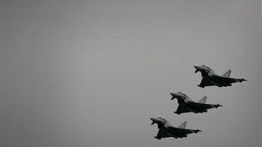
Liam Fox is anticipating the Strategic Defence Review, preparing the services for what will be extremely bad news. Britain will not engage in large scale operations in the immediate future. The Telegraph reports that officials intend to reduce the number of strike aircraft, warships and tanks. Future strategic emphasis will be on maximising firepower and range and minimising direct and associated costs. The service arms have mobilised their writers to prepare a defence. The Times have hosted a set-to between Air-Vice Marshall Tony Mason and Major General Julian Thompson. Mason’s argument is simple: warfare is determined by air superiority. He writes: ‘Since Dunkirk, British Armed Forces have usually fought beneath skies controlled by friendly aircraft.

All for show?

From our UK edition

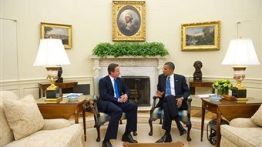
Gordon Brown will be seething, and with some justification: he never got photo-ops like these with Barack Obama. Shots of a cosy chat in the Oval Office are usually reserved for Benjamin Netanyahu, following the latest impasse between Israel and America. The Obama administration has gone to great lengths to repair the damage it did to Anglo-American relations at the start of its term. The President was all sparkle and bonhomie during the joint press conference, and he was careful to name-check ‘The Truly Special Relationship’ twice. Obama may be faking it but he looks comfortable with Cameron. He has always given the impression of being a cold fish, short on empathy, and I suspect he objects to leaders fawning at his throne.

The SNP was responsible, all the way

From our UK edition

A little odd, and certainly inconvenient, that al-Megrahi still lives and breathes. Then again, Scotland's a notoriously unhealthy place and a bit of desert air probably did him some good. Ensconced in Washington, David Cameron will have taken some flak for the Lockerbie bomber’s compassionate release, for which he has the perfect riposte: terrible business, but nothing to do with me. His second line of defence is constitutionally watertight: the decision was Holyrood’s alone. The Lockerbie Papers suggest that al-Megrahi’s inclusion in a Prisoner Transfer Agreement was a precondition of any deal between the UK and Libyan governments, as Saif al-Islam Gadaffi maintains.

Growing opposition to the alternative vote

From our UK edition

The indispensible Anthony Wells has news of the latest You Gov poll. Voting intentions are by the way at this stage of the parliament, but the Tory lead holds at 7 points on 42 percent. Of far more interest is the narrowing gap of those in favour of the alternative vote. As Anthony notes: ‘Up until now it has shown a pretty consistent lead for AV of around about 10 points, in last night’s figures referendum voting intention had narrowed to AV 39%, FPTP 38%.

Out by 2014

From our UK edition

It remains a hope, but Hamid Karzai wants his country to control its own security by 2014. Karzai echoes the MoD’s stance - revealed at the weekend courtesy of a leaked internal communiqué. Surely this is more than coincidence? 2014 would seem to be NATO’s preferred withdrawal date. At last, the politicians have dispelled some of the indecision which has marred operations recently. With politicians beginning to agree to stay until at least 2014 and having bolstered aid budgets, the military can now concentrate on ‘stabilising’ incendiary parts of the country. Whether it will receive the resources needed to protect reconstruction and secure lasting stability remains to be seen – and I’m not holding my breath.

Osborne keeps it simple

From our UK edition

George Osborne has talked of simplifying the tax system for years, and today he launched the OTS, The Office for Tax Simplification. The OTS will be chaired by Michael Jack, s Treasury minister in the Major government, and John Whiting of PWC and Chartered Institute of Taxation. The OTS looks suspiciously like a quango, but some public bodies are necessary and welcome. The tax system is unintelligible, and, needless to say, Gordon Brown complicated it further with morass of stealth taxes, tax credits and new loopholes opened more by chance than design. This has particularly affected small businesses and the OTS will identify salient businesses taxes and recommend their simplification. That can only assist hard-pressed small businesses.

A special relationship in the making?

From our UK edition

I’ve spent the morning contending with the WSJ’s Heath Robinson-esque subscription service so you don’t have to. Inside the paper, David Cameron explains what the Special Relationship means to him. 1). The Special Relationship is close and robust because British and American values are essentially the same, which explains why our national interests are often aligned: 'The U.S.-U.K. relationship is simple: It's strong because it delivers for both of us. The alliance is not sustained by our historical ties or blind loyalty. This is a partnership of choice that serves our national interests.

Green gold

From our UK edition

Most of Tim Yeo’s proselytising on climate change must be resisted. He calls for a dramatic reduction in carbon emissions in the short-term, which would paralyse Britain’s already geriatric economic competitiveness. He also endorses a policy that would push consumer energy prices to punitive levels in the hope that their behaviour is moderated. And he is adamant that David Cameron’s Husky photo-op was the last word in political positioning. But, his central point, one shared with John Redwood and Peter Lilley, is unanswerable: ‘Working towards a low carbon economy is not a “luxury”; it is essential to our future prosperity.

Gove kills two birds with one stone

From our UK edition

Michael Gove may be a pip-squeak but he has an imperious voice and that formidable quality of both sounding and being enormously clever. With a faint note of arrogance, he bossed a potentially difficult interview on the Today programme this morning. Tired of defending himself against Ed Balls’ dishonest maxim that what’s good for bureaucratic process is good for children, Gove changed tactics. He described his bill as a ‘permissive piece of legislation’ and linked it directly to the Blair-Adonis Academy reforms, which were frustrated by a regressive coalition wedded to the educational status quo.

The age of philanthropy

From our UK edition

Cameron’s Big Society Blitzkreig is underway, and he says that he hopes to ‘foster a new culture of voluntarism, of philanthropy and social action’. So far so good. As Fraser noted yesterday, there is a long and generous history of philanthropy in Britain; success will depend on the government transforming a culture of private charity into one of community charity. Collective action is hard to instil, not least when money is tight. Some projects and schemes will be favoured over others and many people will be disappointed. Cameron hoped to lessen financial shortfalls by raiding dormant bank accounts. It’s a brilliant idea in theory, but the FT sounds a note of caution.

The return of the Big Society

From our UK edition

It’s back. David Cameron is re-launching the Big Society, the least captivating idea in British politics. There is nothing wrong with the central idea: the grand plan to decentralise power to local communities. Terminology was a problem. The Big Society sounded infantile and patronising. The detail was lost in a morass of wonkery. The overall vision was contradictory: ‘people power’ was the end, community organisers were the means. The authors of the Big Society erroneously assumed that people care about community. But community is a turn-off for many, and the Big Society sounded like one enormous management meeting from which there is no escape. From Westmoreland to Richmond-upon-Thames, voters hated it.

The chaos of military deadlines

From our UK edition

The leaked communiqué, obtained by the Independent on Sunday, stating that British troops will not be fighting in Afghanistan by 2014 has further confused the Afghan war at a time when clarity is necessary.  There are now two deadlines, or aspirations of a withdrawal at any rate. Liam Fox is polluting the airwaves with specious waffle about 2015 being a ‘conservative assessment’, but of course the troops will probably be home earlier, but then again they might not, but then again we don’t really know. Well, Dr Fox, if that’s the case it's best to say nothing. Amid this disorder, Andrew Mitchell has announced that aid to Afghanistan will be increased by 40 percent.

The Hollobone dimension

From our UK edition

As Paul Goodman notes, it is entirely possible that Philip Hollobone’s statements about the burka were taken out of context. As far as I can gather Hollobone has not yet dissociated himself, which is indicative of the contrary.   The French ban on the burkha has English tongues wagging, and Hollobone has looked to stimulate debate. Islamic groups, many of them extreme, will now decamp to Hollobone’s constituency office in Kettering and look to foment a media storm. But so what? This is a debate that must be had.  For example, it must be determined in law whether or not the burka is a religious item, and therefore inviolable under laws of freedom of religious expression. If not, then it would be interesting to hear Muslims, especially women, defend it.

Right-on Mandelson

From our UK edition

We’ve reached the Mandelson overload zone, but he makes one vital observation in an interview with Matthew Norman: ‘We drove them (the Tories) further and further to the Right, and Cameron is driving us ever more to the Left. You only win general elections from the centre and we’re sleepwalking into a trap. We need to wake up. There’s still a little time for a leader to emerge from the pack.’ The Labour leadership election was always going to be determined by the left wing of the party and the unions. The assumption was that David Miliband would campaign from the right, but even he favours a permanent 50 percent tax rate.

Convenient timing

From our UK edition

Guess who has popped-up as David Cameron departs for Washington? The Lockerbie bomber, Abdelbaset al-Megrahi, who is defying the gravest of medical prognoses. It’s all suspiciously convenient, given Britain and America’s recent terse relations. What’s more BP, the international bogeyman, is in the firing line – Hillary Clinton will investigate rumours that the company conspired with the British government to include al-Megrahi in a Prisoner Transfer Agreement, and that BP pressured the Scottish executive to release al-Megrahi last summer. She’s wasting her time: this well of fetid intrigue was capped last summer.

The BBC’s stay of execution

From our UK edition

Auntie has been warned, and in no uncertain terms. Jeremy Hunt, the innocuous-looking Culture Secretary, has used an interview with the Telegraph to threaten the BBC. He said: ‘There is a moment when elected politicians have an opportunity to influence the BBC and it happens every five years. It is when the licence fee is renewed. That will be happening next year. That will be the moment when I use my electoral mandate to say to the BBC now, going forward for the next five years, these are what we think your priorities need to be and there are huge numbers of things that need to be changed at the BBC. They need to demonstrate the very constrained financial situation we are now in.

Who still believes in Peter the Great?

From our UK edition

Asks Jeff Randall in a pugnacious column for the Telegraph. The memoirs, Randall argues, have finally exposed the conceit that Mandelson was a tactical genius. Randall says that Mandelson was a devious and divisive backroom spinner. Well, he ain't the Prince of Darkness for nothing. But Mandelson’s career and political persona were fashioned in a bygone era. Today, ambitious homosexuals climb the greasy pole out in the open – both in terms of their careers and their sexuality, (David Laws was an exception in the latter case). Mandelson’s modus operandi was determined by the conclusion that the 1980s were not an era for gays in politics, whether preening or discreet.