David Blackburn

Parliament is not sovereign

From our UK edition

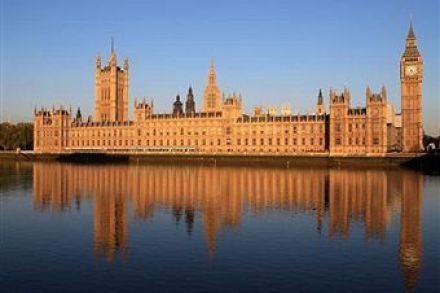
Enough is enough. The British Bill of Rights is set to return: a consequence of the government’s running battle with parliament over the European Convention on Human Rights. Recent days have been filled with clues and suggestions of imminent reform: Dominic Grieve, a former advocate of the ECHR, went so far as to assert that Britain may leave the convention. Cameron let slip the news that a Bill Of Rights commission is to be convened at PMQs; at the time he was answering a question about the Supreme Court’s controversial sex offenders’ register decision. There are no details as to what the commission will consider, but Theresa May aired the guiding philosophy during her statement on the sex offenders’ register.
PMQs live blog | 16 February 2011

From our UK edition

VERDICT: It was, comparatively, a quieter session than last week. Miliband was not as effective and missed the bus on the forestry u-turn. His attack on the government's growth agenda was more spirited (Miliband is better with statistics than jokes). Even so, he concentrated on youth unemployment, which has been a long-term problem in Britain. Therefore, it doesn't work as a critique of government policy. This is a very difficult time for the government and for Cameron personally; he will be relieved then to have emerged from PMQs largely unscathed. More worrying for Cameron, there was a hangover from last week's 5 hostile Tory backbench questions, particularly on the issue of Europe.

Unemployment rises

From our UK edition

It was the snow wot done it. The new unemployment figures have been published and the headline figures are that unemployment increased by 44,000 to 2.49 million between December 2010 and January 2011; the claimant count also went up by 2,400 to reach 1.46 million. It’s disappointing news, especially as figures from Germany are markedly different. Miliband may exploit the news at PMQs. But there are reasons to be positive. The government’s mouthpiece on these issues, Chris Grayling, who is less attack dog more beast of burden these days, argued that Q4’s negative growth figures will have had some effect on employment (and it’s likely to continue to do so into this month and the next, if the economy did indeed contract in the last quarter).

Pickles on the offensive

From our UK edition

The normally chummy Eric Pickles was in a black mood on the Today programme. Despite councils’ brazen politicking, Pickles has been deferential in recent months, a stance bemoaned by his allies in local government. But he cut loose this morning. Ostensibly, he was on the programme to defend his policy that councillors vote, in open session, on pay deals worth over £100,000. He believes this will strengthen local authorities by empowering ‘backbench councillors’, provided that they honour the privilege they have been awarded: council meetings are not renowned for being edifying. (There is clear case for extending the policy to the Civil Service, and no doubt many will call for remuneration in majority publicly owned banks to receive the same scrutiny.

What Andy did next…

From our UK edition

Westminster has bent its collective knee in cooing supplication to Larry, Downing Street's new cat. The slinky feline is already three times more famous than Mrs Bercow - no crude double-entendres please. Meanwhile, Politics Home has been sent a photograph of a van in Smith Square.

Across the literary pages | 15 February 2011

From our UK edition

Here is a selection of literary comment and debate from around the world. Writing in the Observer, Paul Theroux describes his life as a perpetual alien. It is the happy, often pompous delusion of the alien that he or she is a witness to an era of significant change. I understand this as a necessary conceit, a survival skill that helps to make the stranger watchful. I lived in England for 18 years, as a pure spectator, from the end of 1971 until the beginning of 1990. I was just an onlooker, gaping at public events that did not involve me. I was a taxpayer, but couldn't vote; a house owner, but still needed an entry visa; and for quite a while I had to carry an alien identity card. Having lived for six years in Africa and three in Singapore, I knew how to be an alien.

More trouble for the government over the military covenant

From our UK edition

The news that serving soldiers have been given notice by email has been met fury from ministers. Liam Fox has answered questions in the House about this story and why 100 RAF pilots discovered they were redundant in yesterday’s newspapers. Fox was both livid and contrite, decrying the ‘completely unacceptable’ practices and reiterating the MoD’s ‘unreserved apologies’. He announced that an internal inquiry has been called, which Patrick Mercer believes will expose negligence among those officers who manage personnel. Fox also conceded that the sacked pilots, many of whom were ‘hours from obtaining qualification’, cannot be retained in some form of volunteer reserve, such is the squeeze on the MoD.

Big society inaction

From our UK edition

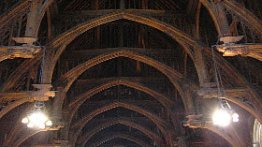
What a pleasure it was. Last night, I spent forty minutes in Westminster Great Hall – one of London’s few remaining Romanesque buildings, the largest single vaulted wooden ceiling in the world and the judicial setting for the trial of Charles I. Why was I there? Another failure of the big society, of course. I had booked to attend a debate between the think tanks, Res Publica and Progress. Phillip Blond and Francis Maude were talking up the merits of the Big Society or big society (it wasn’t clear which); whilst Tessa Jowell and Stephen Twigg were speaking for the Good Society. I wanted to hear the debate, intrigued to see if any of the speakers could define its terms. Trouble was that I wasn’t alone.

DD’s having a shindig

From our UK edition

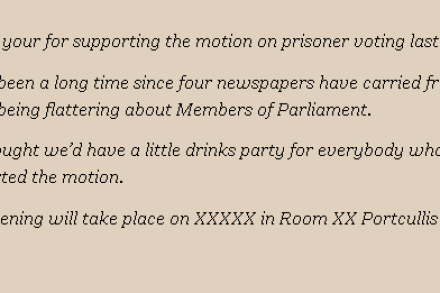
The FT’s Alex Barker has a sweet little scoop. David Davis is having a knees-up for all 234 of his comrades in the prisoner voting debate. Here’s the invitation: It's been a while since newspapers and the public commended parliament, so why not throw a ‘little party’. True, normal service will be resumed if Mark Reckless and friends fall into old habits; but last Thursday was a great moment for parliament, they've a right to some latitude. Of course, as Paul Goodman has conceded, it was a greater day still for Davis.

Is Cameron’s counter-offensive headed in the wrong direction?

From our UK edition

As James has noted, Downing Street has turned its energies to the big society. Op-eds are being written, airtime used and speeches made. This morning saw the centrepiece: a former Labour donor, Sir Ronald Cohen, has joined the campaign and Cameron devoted a speech to what he described as his "political mission". Cameron was fluent and passionate, determined in shirt-sleeve order. He was not exactly clear, but I don’t think that’s a problem. There is no concrete definition of what the big society is. As I argued yesterday, Cameron has changed tactics and is now using it as a descriptive term of the sort of voluntary and philanthropic instincts his government will support. Cameron needs a barrage of examples of these practices in action, something that he lacks currently.

China eclipses the Japanese economic miracle

From our UK edition

Official figures suggest that China has replaced Japan as the world’s second largest economy, after an estimated 10 percent growth rate left China with an economy worth close to $5.8trillion at the end of quarter four 2010. Japanese growth hovered around the 3 percent mark in 2010 with a total GDP value of $5.47 trillion. Analysts have told the BBC that it is ‘realistic’ that China will overhaul the US’ economy in about a decade, which, as Pete has demonstrated, does not look too outrageous a suggestion.  All of this puts me in mind of the European Union. The CIA World Factbook records that the EU leads the globe in GDP (purchasing power parity): with an estimated value of $14,890,000,000,000, against the US’ $14,720,000,000,000.

Developments in the Middle East are beginning to affect Europe

From our UK edition

After yesterday’s spontaneous clean-up operation on the streets of Cairo, protestors gathered at Freedom Square today to maintain the revolution’s momentum. There have been minor developments, with the army and its interim civilian administration dissolving President Mubarak’s gerrymandered parliament, preparing the way for an election in the future. The timetable for that election remains a mystery – something about which the international community, led by President Obama and assorted European leaders, is questioning without yet expressing concern.

Cameron downgrades the Big Society

From our UK edition

It’s written in print: the Big Society has become the “big society”. David Cameron has responded to criticism of his flagship agenda by downgrading it from a proper noun to a compound adjective. He makes no attempt to define "big society"; rather, Cameron suggests that the term is descriptive of the impulses he hopes to encourage. He writes in today's Observer: ‘Take a trip with me to Balsall Heath in Birmingham and I'll show you a place once depressingly known as a sink estate but now a genuinely desirable place to live. Why the transformation? Because even in a tough neighbourhood, the seeds of a stronger society were there and residents boldly decided they'd had enough and drove out the crime.

Never the same | 12 February 2011

From our UK edition

There is a saying that art in restaurants is like to food in museums. You know the feeling: the attendant monstrosity on the wall peers over your shoulder, wrecking your appetite. But times are changing. Independent galleries have faded under recent financial strain, and the upward pressure on shop rents continues. Denied their premises, dealers are using new spaces and have reached new markets in the process. This is what brings Thomas Ostenberg’s Equilibrium to the Mint Leaf Lounge, 12 Angel Court, London EC2 (until 27 February). Ostenberg is a former vice-president of Citibank who had a Damascene moment in the Rodin Museum and vowed to become a sculptor. Plenty of dissipated financiers have similar impulses; few share his talent. This exhibition is fantastic in an exact sense.

Clarke: Middle England hasn’t got a clue

From our UK edition

Ken Clarke’s political career has had the resilience of a cockroach, but even he now seems to be cracking. Tim Montgomerie has shot a vicious broadside at Clarke's dated politics in today’s Mail. And Clarke, for his part, has given an interview to the Telegraph, where he gives a convincing impression of a man completely out of touch. Clarke concedes (just) that the ECHR needs reform, but he defends its supreme jurisdiction: ‘Some people are very angry [about prisoner voting], but we should be able to resolve that. The jurisdiction of the [European] court remains the fraught issue. I don’t see how we can say that we don’t obey courts if we don’t want to.

A new dawn for Dubya?

From our UK edition

Who is the unsung hero of the Egyptian revolution? Why, the 43rd President of the United States of course. (And, presumably, Tony Blair as well.) Reuel Marc Gerecht leapt to praise Bush in the pages of The New York Times. ‘President George W. Bush’s decision to build democracy in Iraq seemed so lame to many people because it appeared, at best, to be another example of American idealism run amok — the forceful implantation of a complex Western idea into infertile authoritarian soil. But Mr.

The world reacts to the Egyptian Revolution

From our UK edition

https://www.youtube.com/watch?v=cqGLgjTc8UQ Mubarak's exit has had a predictably seismic effect on Arab Street. Protests are spreading in Algeria; Syria, Jordan and Saudi Arabia are braced for dissent. Follow it all on al-Jazeera. In the meantime, here's what the world's papers make of it. The New York Times' Anthony Shadid considers the way ahead. Haaretz's Benny Neuberger considers the balance between democracy and peace and rejects the idea that Arab democracies would be any less hostile to Israel. The Jerusalem Post's David Horowitz reports that Natan Sharansky, the hero of Soviet Jewry, believes the Middle East protest movement is a purer form of democratic change than that which emerged from the Soviet Union.

Mubarak stands down

From our UK edition

Finally, Mubarak has gone. Time will tell what undid last night’s defiance, but the armed forces have taken provisional control of the country, along with the head of the Supreme Court and the speaker of the Parliament. Omar Suleiman, Mubarak’s Vice President, has been frozen out for the moment. In this moment of the protests’ triumph, it’s worth recalling Daniel Korski’s point that: ‘It is not clear if Egypt’s protests can morph into a responsible movement for change.’  Both the security of the country and the region rest upon that question.

Clegg for freedom

From our UK edition

Restoring individual liberty has long been a Liberal Democrat aspiration. Nick Clegg has pursued the cause in government; with mixed results it must be said, particularly on control orders. But Clegg is unperturbed and today he is introducing the Freedom Bill. He previews its contents with a typically clear piece in today’s Telegraph. The measures are extensive. Pervasive CCTV is to be curbed; ContactPoint, the database containing the personal details of every child in England, is to be switched off. These liberal measures accompany those that have already been taken, such as scrapping the ID cards.

Spelman’s a-turning

From our UK edition

The BBC reports that the government has dropped some of its plans to privatise forestry. The general scheme will proceed, but the sale of 15 percent of publicly owned forests will be stalled while the government re-examines the criteria for sale. Obviously this is a set back, but far from a terminal one. The forestry consultation document contains some very sensible ideas. There is no reason for commercial forestry to remain in public ownership. The Forestry Commission loses money and its predominantly coniferous crop and wasting agricultural land wrecks the environment and damages wildlife habitats. Privatisation would not lead to the spoliation of the shires.