David Bergman

Will Bangladesh’s leader mention Tulip Siddiq in his meeting with the PM?

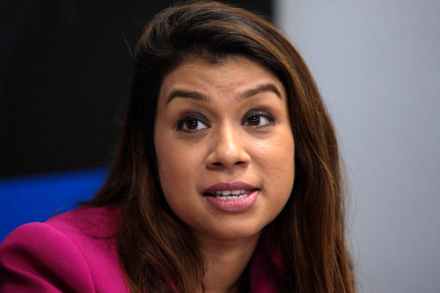
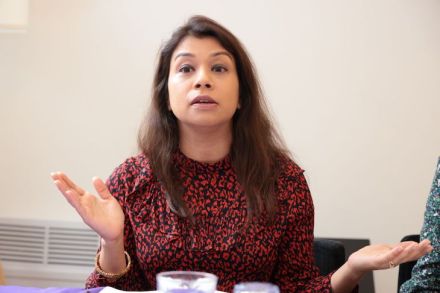
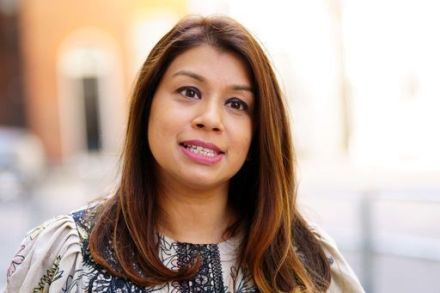
If Keir Starmer meets Bangladesh’s interim leader, Muhammad Yunus, as planned at Downing Street this week, their agenda will likely include the country’s transition to democratic elections, scheduled for April next year, as well as how the Labour government might assist in recovering stolen Bangladeshi assets. Siddiq wrote to Yunus inviting him for “lunch or afternoon tea” at the Houses of Parliament But the unspoken tension in the room will be Labour MP and former minister Tulip Siddiq – niece of deposed Bangladeshi prime minister Sheikh Hasina. Hasina fled the country on 5 August 2024 following a violent state crackdown on student-led protests, in which over 800 people have been confirmed killed by law enforcement authorities.
There is no easy path back for Tulip Siddiq

Tulip Siddiq and the Labour government would like to think that her resignation as a minister earlier this week will end the controversy surrounding her and will result in a quick return to the front bench. 'The door remains open you for going forward,' Keir Starmer, the Prime Minister, said of Siddiq in response to her resignation letter. It is unlikely to be as straightforward as that. First, there is the letter written to the Prime Minister by Sir Laurie Magnus, the independent advisor on ministerial standards. In it, he sets out the findings of his 'exercise to establish the facts' – note, not an investigation – connected to 'recent media allegations about Ms Siddiq'.

The terrible error that ended Sheikh Hasina’s rule over Bangladesh

A month ago, no one in Bangladesh could ever have imagined that the country’s authoritarian prime minister Sheikh Hasina could be forcibly removed from power and sent by military helicopter out of the country to India. Least of all Hasina herself, as her party, the Awami League, controlled the police, the judiciary, and all other state institutions. But that is exactly what happened today. Sheikh Hasina, the aunt of the Labour MP Tulip Siddiq, had been in power for a 15-year stretch. Though the 2008 elections which first made her prime minister were free and fair, all three subsequent elections in 2014, 2018 and earlier this year were beset with allegations that they were rigged.

Don’t blame police officers for the botched Carl Beech probe

There are few assessments of a police investigation more damning than the one written by retired judge Sir Richard Henriques, published last week, concerning how the Metropolitan Police investigated the allegations of a man called “Nick” over the course of 15 months. Yet the Independent Office for Police Conduct's report, published a few days later, was right to conclude that no disciplinary or criminal action should be taken against any individual police officers. At the end of 2014, “Nick” – whose real name was Carl Beech – had told detectives that as a boy in the 1970s and 1980s he was one of dozens of victims of a VIP sex ring comprising high profile establishment figures who raped young boys.

The Orwell prize was wrong to choose Labour MP Tulip Siddiq as a judge

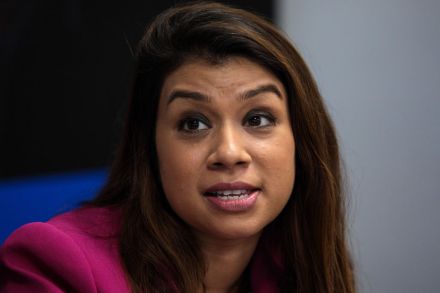
The winner of this year’s Orwell prize for political writing, announced last week, was a book that centres around the disappearance in Belfast of Jean McConville. McConville, a widowed mother of ten, was snatched from her home in December 1972 by a gang of armed men. She was never seen again. What irony then that the person who chaired the panel of judges was none other than Labour MP Tulip Siddiq. Over a number of years, Siddiq has assiduously refused to publicly denounce the responsibility of her very own family, currently ruling Bangladesh, for hundreds of secret detentions, enforced disappearances and extra-judicial killings, or indeed even to lobby her family members to help get these men released.

Bangladesh doesn’t want Shamima Begum. Here’s why it might have to take her

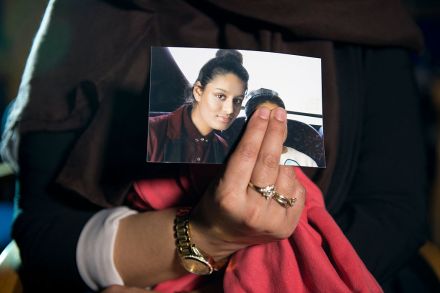
Whatever the arguments over the Government’s decision to revoke Isis bride Shamima Begum’s British citizenship, the teenager's future now depends on one thing: will the courts determine she is a dual national who is eligible for Bangladeshi citizenship? If so, Sajid Javid's decision is lawful, as this means that the loss of her British citizenship will not leave her stateless. But what does Bangladesh make of this row? The view from Dhaka has been clear: we don't want her. In a statement issued this week, the country's foreign ministry said: “The government of Bangladesh is deeply concerned that she has been erroneously identified as a holder of dual citizenship shared with Bangladesh alongside her birthplace, the United Kingdom.

Tulip Siddiq’s shameful silence on Bangladesh’s missing people

‘Just heartbreaking', wrote the Labour MP Tulip Siddiq this week as she shared a picture of the daughter of Nazanin Zaghari-Ratcliffe, the British-Iranian mum who is currently imprisoned in Iran on trumped-up charges of espionage. Tulip has, quite rightly, dedicated much time to trying to free Zaghari-Ratcliffe. It's a pity though that she doesn't go to the same lengths to lobby Bangladesh, another repressive country, over the hundreds of people that have been secretly detained there in recent years.