David Abulafia

David Abulafia

David Abulafia is emeritus professor of Mediterranean history at the University of Cambridge.

The danger of returning the Ghanaian ‘Crown Jewels’

From our UK edition

I put the case in last week’s Spectator that museums in this country have been gripped by a sort of infectious madness. Since I wrote that article the number of cases of museumitis has piled up further, and there are worrying signs that the infection is spreading into Europe. It has been announced that 32

How the National Maritime Museum is trying to decolonise Lord Nelson

From our UK edition

I spent Christmas in Turin, with its superb and often neglected museums that are a particular delight because they are uncontaminated by preaching about the evils of European colonialism. It is not that I have no moral perspective on how the creators of empire across four millennia have acted towards their subjects. But the use

Does it matter if Hannibal is played by a black man?

From our UK edition

It is becoming a familiar conundrum: whether to employ actors who match the ethnicity of the person they are portraying. Helen Mirren made the mistake of playing Golda Meir in a truly dreadful new film. The real mistake there was not the use of a non-Jewish actress, as some have complained, but the appalling quality

Was the Black Death racist?

From our UK edition

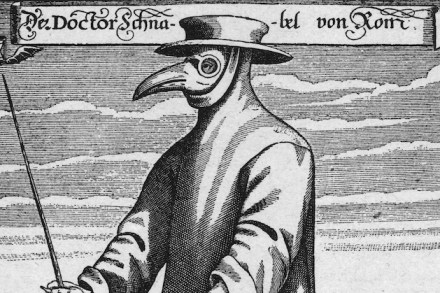
Even the Black Death of the mid-fourteenth century, we are now being told, practised racial discrimination as it raged through Europe wiping out maybe half of the existing population. The new idea is that black people were more likely to die from the plague than white ones. The ‘evidence’ presented by an American researcher and

Tracey Emin and the problem with museum trustees

From our UK edition

The Royal Academy has nominated Tracey Emin to be a trustee of the British Museum. There is quite a fanfare about the appointment – she is the first female artist to join the Board. Emin’s ability to shock and to push at the boundaries of what might be considered art, often invoking her own sex life,

Why are Cambridge University’s librarians judging ‘problematic’ books?

From our UK edition

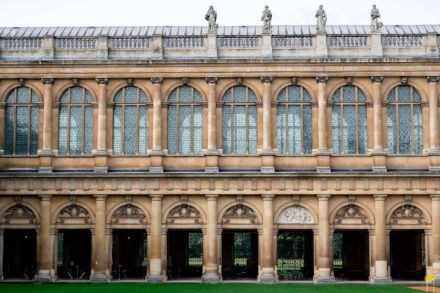
Librarians across Cambridge University are on the look out. Their target, among the ten million-odd volumes in the main library and in the independently-run libraries of the colleges, is ‘problematic’ books. ‘We would like to hear from colleagues across Cambridge about any books you have had flagged to you as problematic,’ a memo sent to colleges by

Remembering Dido – and the fate of Carthage

From our UK edition

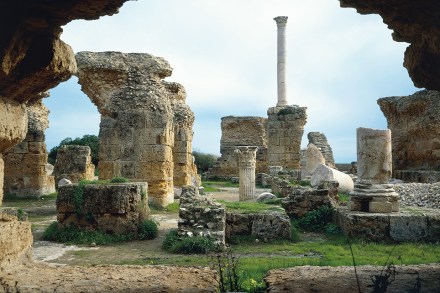
It is a curious fact that between the foundation of Tunis by the Arabs in the 7th century and the foundation of Tel Aviv in the early 20th century no major cities were created on the shores of the Mediterranean. Even those cities were not quite new: Tunis, as Katherine Pangonis points out, was partly

Our future life on Earth depends on the state of the ocean

From our UK edition

When we observe the ocean we rarely peek beneath its surface. As Helen Czerski shows in her lively and engrossing account of the physics of ocean spaces, we would not see much anyway. Sounds travel well in water, and blue whales talk to one another across thousands of miles; but light soon disappears, apart from

Why is Netflix pretending that Cleopatra was black?

From our UK edition

‘I remember my grandmother saying to me: I don’t care what they tell you in school, Cleopatra was black.’ So asserts a trailer for a new Netflix ‘docuseries’ looking at the lives of powerful women in history. Alas for the speaker, an American of African descent, her grandmother’s idea of historical truth was highly subjective.

Was Leonardo da Vinci’s mother a slave?

From our UK edition

There is great excitement in Italy, which has spilled over into the British press: Carlo Vecce, a professor from Naples, has discovered documents in the archives of Florence that appear to indicate that Caterina, the mother of Leonardo da Vinci, was a baptised slave who had been brought all the way to Tuscany from the

Captain Cook’s Aboriginal spears belong in Cambridge, not Australia

From our UK edition

On the eve of the First World War, Trinity College, Cambridge deposited four spears collected by Captain Cook during his first encounter with native Australians in the Museum of Archaeology and Anthropology of Cambridge University. There they could be seen and studied by any visitor to Cambridge, rather than being hidden away in a cabinet

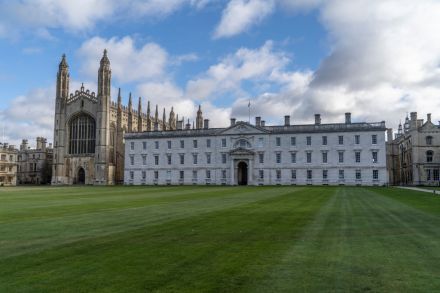
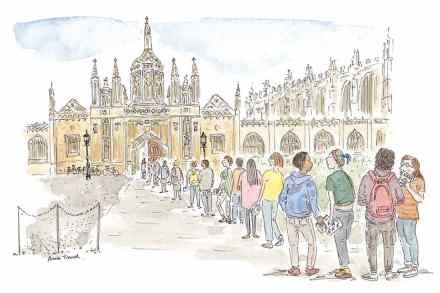
Cambridge’s King’s College Chapel is no place for solar panels

From our UK edition

If Cambridge colleges were entitled to register protected characteristics, there is no doubt what they would be in the case of King’s College. Announcing the election of Dr Gillian Tett (currently at the FT) as the next Provost, the current Provost of King’s, Mike Proctor, has described the college as ‘this vibrant and forward-looking institution’.

Why has president Xi got my book about the Mediterranean?

From our UK edition

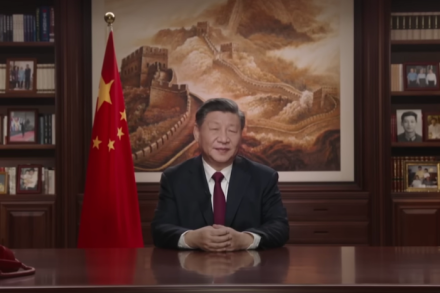
A few days ago, an email arrived from someone I know in China: my book The Great Sea had been spotted on the bookshelves of president Xi when he delivered his beginning of the year address to China and the world. China watchers were expending plenty of energy identifying the other books on his shelves,

Harry isn’t the first rebellious ‘spare’

From our UK edition

A historian should feel a strong sense of déjà vu on reading about Prince Harry’s rebellion against his family. Rebellious ‘spares’ are a constant feature of English history since at least 1066. Simon Sebag Montefiore’s characteristically vivid new book The World: A Family History offers plenty of gory examples from ancient Egypt, medieval China and

The BBC is failing impartiality with its history documentaries

From our UK edition

A good history book generates in the mind of its readers a series of visual images of people, places and events, blurry and perhaps not very accurate, but nevertheless the sort of thing that can be held in the memory. Television history challenges this because it provides ready-made versions of many of the visuals, and

Why the Rosetta Stone shouldn’t be returned to Egypt

From our UK edition

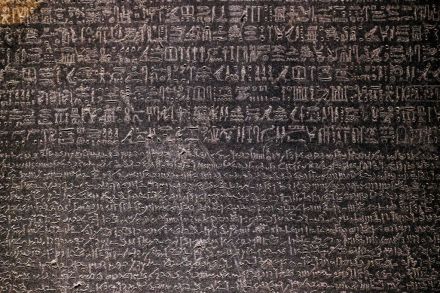
The Rosetta Stone is said to be the most visited object in the British Museum. By and large the most popular, most beautiful or most impressive objects are found at the top of the shopping list of those who want to send objects back to their place of origin. Yet here is a piece of

The truth about getting into Oxbridge

From our UK edition

Liz Truss suggests that all students who score straight A*s at A-level should be interviewed by Oxford or Cambridge. They, and their parents, might well wonder why they would not be summoned for an interview if they can achieve such impressive results. But it’s not that simple. Post-A-level candidates are much fewer in number than

Courage on the high seas

From our UK edition

The Shetland Islands and the Faroes may seem to be somewhere out there in distant waters, marginal and in the greater scheme of things not very important in the history of the world. But from a maritime perspective it is precisely the fact that they are suspended in mid-ocean, surrounded by water that teems with

Can Keir escape?

From our UK edition

43 min listen

This week Lara Prendergast and William Moore talk to Katy Balls and the journalist Paul Mason about the future of Labour (00:40). Followed by historian David Abulafia and the Sunday Times education editor Sian Griffiths on the announcement of Cambridge University’s plans to limit the number of their private school students (15:20). Finally, a debate

The culture wars have crept into Oxbridge admissions

From our UK edition

The characters in Sarah Vaughan’s thriller Anatomy of a Scandal include rich Oxford undergraduates from Eton whose main preoccupations are drinking and trashing rooms. They are what it is fashionable to call ‘privileged white males’; while the typical female Oxbridge student is ‘slim, tall, well dressed. Entitled… they knew they belonged there’. The truth, however,