Daniel McCarthy

Daniel McCarthy

Daniel McCarthy is a US columnist for The Spectator and is the editor of Modern Age: A Conservative Review.

This election was no loss for Trump

From our US edition

If conservatives interpreted Barry Goldwater’s defeat in 1964 the way Trump supporters are being told to interpret the 2022 midterms, there would be no conservative movement today. Of course, the 1964 election was an actual defeat, while this year’s elections were an advance for the new Republican right, which succeeded in its first task — gaining power in the GOP — and has strengthened its hand in Congress. The right has picked up a Senate seat with Ohio’s J.D. Vance, and Republicans look likely to control the House of Representatives come January. The GOP won the majority of votes cast in House races, nearly 52 percent overall. The official narrative of the election is meant to drive the right to suicide.

What price must the West pay for Crimea?

From our US edition

For centuries before Vladimir Putin arrived on the scene, Russian foreign policy has been shaped by the country’s need for warm-water ports. To be a great power in Europe and the Near East, Russia must have access to the Mediterranean. Commercial as well as military considerations dictate this. In the eighteenth century Russia conquered the khanate of Crimea and acquired a splendid location for a new Black Sea port — what is now the city of Sevastopol. The Crimean peninsula had been a gateway from Asia to the Mediterranean since the days of the ancient Greeks, who built some of their northernmost colonies there. Russia made Sevastopol the permanent home of its Black Sea Fleet.

crimea

Dobbs won’t save the Democrats

From our US edition

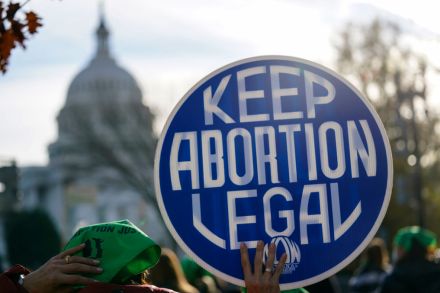
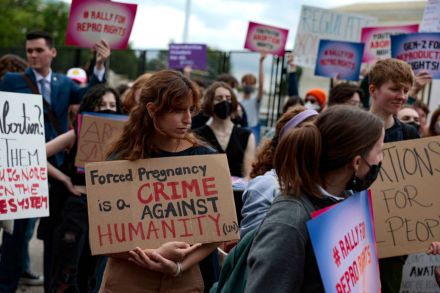
Democrats head into the midterms praying that abortion-rights supporters will reward them for failing. If the Democratic Party has stood for anything over the past half-century, it has stood for the right to end a pregnancy. All the party had to do was to defend the status quo established by Roe v. Wade and Planned Parenthood v. Casey. But it proved unable to do that, despite the two-term administrations of Bill Clinton and Barack Obama, despite controlling the Senate from 2007 to 2015 and again from 2019 until now, and despite the virtual monopoly Democrats enjoy on the sympathy of the news and entertainment media. With all these advantages, Democrats could not safeguard a right that their voters consider fundamental. Now Democrats expect voters to trust them to regain what they lost.

dobbs

DeSantis is a Republican establishment win-win

From our US edition

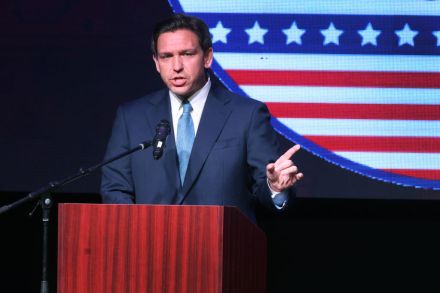
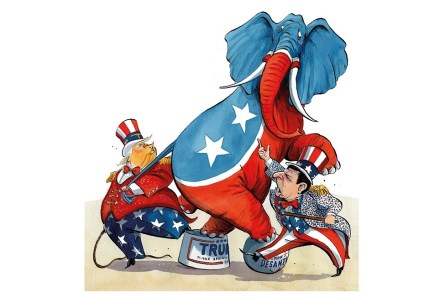
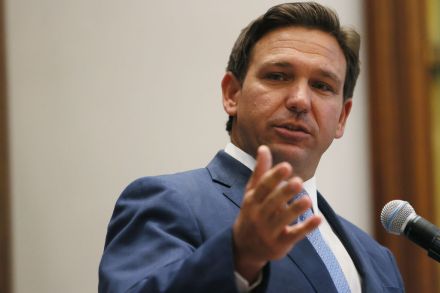
What’s left of the Bush-Cheney wing of the Republican Party doesn’t like Ron DeSantis. But it’s eager to see him run for president anyway. For if DeSantis challenges Trump for the 2024 GOP nomination, the old establishment stands to gain no matter who ultimately gets the nod. The Florida governor certainly seems to be ideologically closer to Trump-style populism than to the neoconservatism that prevailed among elite Republicans from the end of the Reagan era to the defeat of Mitt Romney in 2012. Why, then, would those who pine for the likes of Bush and Romney want to see a choice between Trump and DeSantis, both right-wing populists, two years from now?

DeSantis

Life after liberalism

From our US edition

Liberalism is dying, and the American right is ascendant. That’s the lesson of the last six or eight years of national politics. Barack Obama should have been the beginning of a generational renewal for the Democratic Party. Instead the Democrats have been prisoners of their past. They looked backward in 2016 and nominated Hillary Clinton. After she failed, they reached even further back to nominate Joe Biden, a man born during the Franklin D. Roosevelt administration. Biden is not simply old; he’s nostalgia personified. He’s a throwback to a time when Democrats were less radical, when the party of FDR and JFK, and even of Bill Clinton, could lay claim to being an everyman’s party.

The brave new world of artificial wombs

Sometime this century, or early in the next, women will no longer have to give birth. Already conception can take place within a test tube, and incubators have pushed back the earliest time when prematurely born infants can survive outside of the womb. We can edit genes and modify animal organs for successful implantation into human beings. We can grow meat from cell cultures, and we can clone vertebrates. For all the talk one hears about a dearth of innovation, the pace of biotechnological innovation has only accelerated since the end of the twentieth century. It will not soon stop. Artificial wombs are a feature of science fiction dating back to Huxley’s Brave New World and no doubt sometime earlier.

Martyrs win the culture wars

From our US edition

The culture war is suddenly going well for conservatives. Ron DeSantis stripped Disney of some of the woke corporation’s privileges in Florida. Elon Musk is taking over Twitter. Roe v. Wade appears doomed. And a backlash against Critical Race Theory in schools and transsexuals in women’s sports looks set to benefit Republicans mightily in November’s midterm elections. These are crucial battles. But they are not the war. The war is between race and sexuality on one side and traditional religion on the other. At any rate, those are the great causes with which the cultural left and right tend to identify. The progress of the war is seen in the retreat of Christianity and the advance of racial and sexual agendas on all fronts.

martyrs

Liberalism gave us this hard new right

From our US edition

The future of conservatism will look like Friedrich Nietzsche meets Beavis and Butt-Head if things continue the way they have been going. As bad as this might sound for the right, it portends much worse for the left. Liberal pieties will not stand a chance against that threat. And liberals have only themselves to blame for what the right is becoming. Conservatism draws its strength from four forces — Christianity; heartland patriotism; the philosophy of Edmund Burke, Adam Smith, and the Founding Fathers; and revulsion against the left. Each of these provides a popular or intellectual base, or both, for the right.

right

Why Putin won’t save NATO

From our US edition

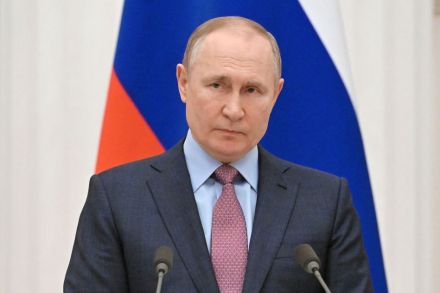
Vladimir Putin’s invasion of Ukraine is the best thing to happen to NATO since 1989. No amount of cajoling by American presidents could get the Germans to increase their defense spending to 2 percent of GDP, as the alliance asks. The Russian president found a way to persuade them. Putin has also persuaded Finns and Swedes that joining NATO is a good idea. Not for the first time, a war is having the opposite of the effect its instigator intended. Putin may yet get what he demanded from Ukraine and the West right before his invasion. NATO membership may be on the table for everyone else but not for Ukraine. Russia wants its possession of Crimea to be acknowledged by Kyiv, and that too is within Putin’s reach.

Putin

Putin’s endgame is preserving ‘his’ Russia

From our US edition

Vladimir Putin’s war in Ukraine does not appear to be going well, and the Russian economy is about to experience the full force of Western sanctions. American social media is already in a celebratory mood. But caution is in order — it’s never smart to underestimate your opponent. Putin was expecting sanctions, and he and his war planners could not have discounted Ukrainian resistance, even if they underestimated its intensity. Maybe they did expect the invasion to be a cakewalk and are taken aback by how difficult it’s proved to be in just these first few days. But as of now the invasion still seems to be on its timetable, and its military objectives are achievable. Russians are surrounding Kyiv.

How conservatives concede the culture

From our US edition

Conservatives suffer from a short attention span, and it largely explains their defeats in the culture war. They fight every battle as if it’s the only one they will ever have to fight. And so, win or lose, they are unprepared for what happens next. If they lose, they forget how all-important the last battle was, learning no lessons from defeat, nor about what’s vital and what isn’t. Twenty-five years ago, conservatives were adamantly opposed to putting women in combat or admitting them to institutions like the Virginia Military Institute and the Citadel. In recent years, conservative Republicans have celebrated the aspirations to office of female fighter pilots like Arizona’s Martha McSally and female graduates from Virginia Military Institute and the Citadel.

conservatives

The multinational that ate Virginia

From our US edition

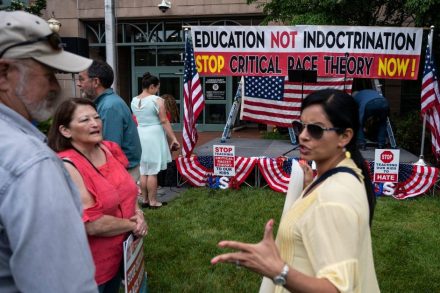
This time next year, Republicans expect to be back in control of Congress. They are already celebrating, as 2022 sees Glenn Youngkin newly sworn in as governor of Virginia. For a wide swath of GOP activists and consultants (and not a few voters, too), Youngkin is the face of a Republican Party that can win — with or without Donald Trump. Youngkin had Trump’s endorsement last November. Youngkin was as eager to promote this as his Democratic opponent was, but the endorsement helped rather than hurt him. Trump voters’ residual skepticism toward a nominee who had recently been head of the Carlyle Group — a private equity firm long synonymous with insiderdom and globalism — was overcome by the rise of Critical Race Theory as a pivotal campaign issue.

Youngkin

Will Donald Trump run again?

35 min listen

2022 has only just begun but a lot of minds in American politics are already looking towards the next presidential election in 2024. For the Republicans, the big question is will Donald Trump be their nominee and if he isn't who will fill that very large hole? Freddy Gray sits down with the editor of Modern Age, Daniel McCarthy.

January 6 was an alarm bell for America

If you’re tired of hypochondriac journalists’ takes on January 6, then try Thomas Jefferson’s. He delivered his judgment on events of that sort back in 1787. ‘I hold it that a little rebellion now and then is a good thing,’ he wrote to James Madison, ‘and as necessary in the political world as storms in the physical.’ Unlike the riot at the Capitol last year, the rebellion that Jefferson had in mind was a genuine armed insurrection. The Revolutionary War veteran Daniel Shays and his followers, furious over taxes and debts, forced state courts in Massachusetts to shut down in the late months of 1786. By early 1787, Shays commanded more than 3,000 men, and on January 25 he led a force to storm the federal armoury at Springfield.

The next chapter in American foreign policy

From our US edition

The new year begins a new chapter in American foreign policy. For the first time since 2001, we are not at war in Afghanistan. More than that, we no longer have an architectonic strategy for our role in world affairs. We had one during the Cold War: to win it. And we had one afterward, too: a decade before 9/11, our policy elite had already committed to the idea that we must police the world for the good of the liberal international order. The lead-up to the first Gulf War was the opening paragraph of that chapter, the ignominious retreat from Afghanistan its last line. Our policy mandarins have not changed their minds, but the world has changed too much for their grand design to have any meaning in 2022.

foreign policy

Who won the Cold War, anyway?

From our US edition

Thirty years ago this December 26, the impossible happened. One of the bloodiest states of the twentieth century (a horrific and highly competitive category) dissolved without violence. The Union of Soviet Socialist Republics had all but ended months earlier, when Russians took to the streets to defy the communist hardliners who had seized the government from an impotent Mikhail Gorbachev. That popular countercoup was itself largely bloodless: the soldiers called upon to enforce the hardliners’ rule refused to shoot their own countrymen. The Cold War is often said to have ended with the toppling of the Berlin Wall in 1989. Had things turned out differently in Moscow two years later, the struggle might well have resumed.

Cold War

Welcome to the age of entropy

From our US edition

Americans and other westerners have long been accustomed to thinking that history has a clear direction. Sometimes the direction is contested, as it was during the Cold War. The future could have been capitalist or communist, or perhaps a blend of both systems — ‘convergence’ was a trendy notion for a time — but one way or another the alternatives were clear. After the Cold War, there were no alternatives. Capitalism, democracy and liberalism were here to stay, and soon they would be everywhere else too. All the Islamic world needed if it was to join us at the end of history was a nudge: regime change would speedily bring about social and economic change.

liberalism

The vanishing presidency

Joe Biden is beginning to feel like an ex-president after only nine months in office. The last two Democrats to occupy the White House, Bill Clinton and Barack Obama, arrived with a spirit of renewal, not to mention tremendous legislative ambitions. Biden came in with a spirit of reversal: he was not Trump. His selling point was ‘competence’. Like Warren Harding a century before, he was meant to usher in a ‘return to normalcy’. After Covid and its economic consequences, after the riots that raged in the summer of 2020, normal sounded good enough. Yet that was more than Biden could deliver. What everyone had hoped would be the end of Covid has turned into an endless war on Covid instead: more masks, more shots, more closures.

The War on Terror is a war of religion

Compare the world 20 years after the 9/11 attacks to the world two decades after Pearl Harbour. World War Two was a vivid presence in popular culture and national memory in 1961, but America in the first year of John F. Kennedy’s administration was in no sense living in the shadow of Japan’s attack. That war had ended 15 years ago; Japan was now our ally in the Cold War with the Soviet Union. Twenty years after 9/11, the US has only just ended its war in Afghanistan, and the result of that conflict, which lasted five times longer than the one with Imperial Japan (and Hitler’s Germany), was the immediate return to power of the regime we set out to depose at the start. After Afghanistan, the US is still fighting a War on Terror against al-Qaeda and similar groups.