Daniel McCarthy

Daniel McCarthy

Daniel McCarthy is a US columnist for The Spectator and is the editor of Modern Age: A Conservative Review.

Is the fate of democracy truly at stake?

From our US edition

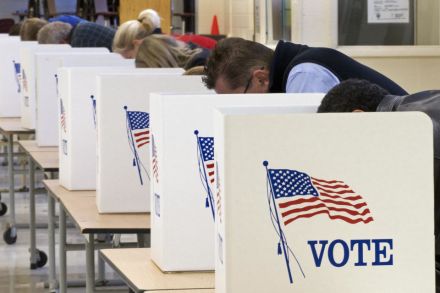
In a few months, the stolen election narratives will start in earnest. There was one in 2020, of course, but there had been another in 2016, a liberal myth about Russian interference stealing victory from Hillary Clinton. Disgruntled Democrats similarly said the Republican president before Trump was “selected, not elected” — put in office by the Supreme Court, not voters. Claiming that Barack Obama wasn’t a natural-born citizen of the United States, as “birther” Republicans did in 2008 and 2012, was another variation on the stolen-election theme. Even when elections run smoothly, ideologues easily find cause for complaint. Discontents can even apply to foreign elections.

democracy

Soviet America’s revolutionary wars

From our US edition

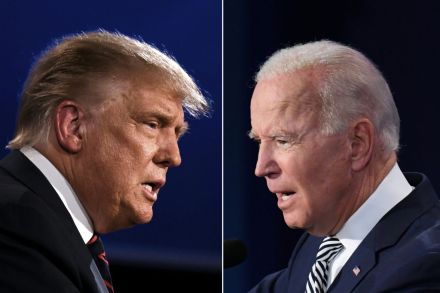
Niall Ferguson is far from the first intellectual to compare the United States today to the Soviet Union of old. But Ferguson’s Free Press essay “We’re All Soviets Now” stirred up more discussion, and outrage, than earlier forays by others on the same theme. (Ferguson himself credits the Princeton professor Harold James with originating the phrase “Late Soviet America.”) Joe Biden already seemed like America’s analogue to the superannuated Soviet premiers of the 1980s even before his disastrous June 27 debate with Donald Trump — who is himself older in 2024 than Brezhnev, Andropov or Chernenko were when they died.

Soviet

What is war good for in the twenty-first century?

From our US edition

What exactly is war good for in the twenty-first century? The US should have asked itself this before embarking on decades of aimless occupation in Iraq and Afghanistan. Israel and Russia — very different countries, morally and otherwise — should be asking themselves today. The wars in Ukraine and Gaza both began with changes in an uncomfortable but previously stable status quo. Sometimes Westerners who try to imagine a peace deal for Ukraine invoke Finland’s strategic neutrality during the Cold War. But Ukraine was Finlandized for nearly twenty years after the fall of the Soviet Union, precariously balanced between Russia and the West but fully committed to neither. No one was entirely happy with that — yet there was peace from 1991 until 2014.

war
Applebaum

Anne Applebaum’s solutions to the ‘threat’ of autocracy

From our US edition

Liberal democracy is endangered more by its friends than by its enemies. Neither Moscow nor Beijing lured the United States into strategic humiliations in Iraq and Afghanistan. Nor was the rise of China to the rank of a great power brought about by Westerners sympathetic to Beijing’s communist system. If liberal parties and movements in the United States and Europe seem to be losing ground to populists, this is not thanks to Facebook ads purchased by Vladimir Putin in support of Donald Trump or Brexit. Liberals themselves sabotaged liberal democracy by prioritizing liberalism over democratic legitimacy for three decades after the Cold War — on fundamental issues ranging from trade and foreign policy to immigration and national values. Anne Applebaum’s latest book, Autocracy, Inc.

Biden’s base rebels over Gaza

From our US edition

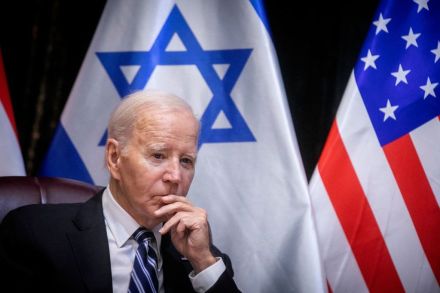
Joe Biden’s reelection campaign is a multifront war. Unfortunately for him, the youngest soldiers in his coalition would rather fight Israel than Donald Trump. Biden was elected in the first place as the anti-Trump. In 2020 Democrats were desperate, and the ex-vice president was the most prestigious figure they had to field. He didn’t have to be inspiring or energetic — Trump would provide all the inspiration and energy Biden voters needed. What inspires the voting-age activists on America’s campuses today, though, isn’t aversion to Trump, and it certainly isn’t love for Joe Biden: it’s outrage at Israel. Four years ago, George Floyd became a symbol of injustice that spurred progressives to take to the streets and take back the country at the ballot box.

Biden

Israel and the making of nations

From our US edition

A little more than five years ago the Israeli intellectual Yoram Hazony published The Virtue of Nationalism. Its final chapter was particularly poignant. After World War Two and the Holocaust, Hazony explained, two opposing views arose as to how such evils could be prevented from happening again. One side pointed toward the creation of the European Union and held that nationalism must be repudiated and condemned. The other endorsed the creation of Israel as a nation-state for the Jewish people, with a nationalism of its own. Israel is a test case for the survival of nationalism everywhere. That may sound like an exaggeration — surely nationalism has demonstrated ample staying power.

Israel

Lessons from costly wars past

From our US edition

Money is often a substitute for strategy in US foreign policy. We spent $2 trillion in Afghanistan, only to lose the country the minute our troops began to pull out. How much will it realistically cost, then, to beat Russia in Ukraine? Will the next $100 or $200 billion do the trick? This is not a question that supporters of war-spending ask themselves. As in Afghanistan, spending is a way to defer thinking about actually winning — or facing the serious possibility of losing. Our aid buys delay, not results. Ironically, while the specter of World War Two is invoked every time there’s a conflict, our experience then teaches the same lesson as recent attempts to purchase victory.

wars

Donald Trump and the clash of realities

From our US edition

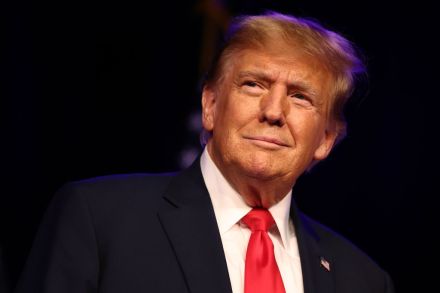
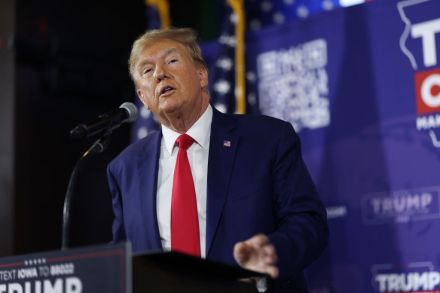
As Donald Trump marches to the Republican nomination a third time, Americans are divided into two radically opposed camps. On one side are Trump supporters who believe Democrats stole the 2020 election. On the other are Trump detractors — Democrats and homeless NeverTrumpers — who say that denying the legitimacy of the 2020 election amounts to a desire to overthrow democracy itself. The country is not on the brink of a civil war, and deep partisan divisions are nothing new. But reality itself is contested today in a way that goes beyond anything in earlier US history. The split over the 2020 election is one intensely political manifestation of a wider rift.

trump

The populism of Machiavelli and Jefferson

From our US edition

A few years ago a Marine turned novelist, G. Michael Hopf, captured a classic truth in a pithy formula. Inspired by cyclical theories of history — in particular the generational “turnings” of William Strauss and Neil Howe — Hopf wrote in his novel Those Who Remain, “Hard times create strong men, strong men create good times, good times create weak men, and weak men create hard times.” One need not put much stock in Strauss and Howe to appreciate the maxim. It could just as well be derived from Sallust or other classical sources. Or from Machiavelli: in his Discourses on the First Decade of Titus Livy, the Florentine philosopher considers where best to build a city.

Machiavelli

The 2024 regime referendum

From our US edition

The 2024 election will be a referendum on Joe Biden, but it’s also a referendum on a regime. This is how both sides see it. Liberal democracy itself is at stake according to progressives. For Trump supporters, the question at issue is legitimacy of the Deep State. These are different names for the same thing: a leadership caste and its ideology of government. In practice, liberal democracy means a democracy in which liberals never lose power.

regime

Israel’s imperial problem is ours, too

From our US edition

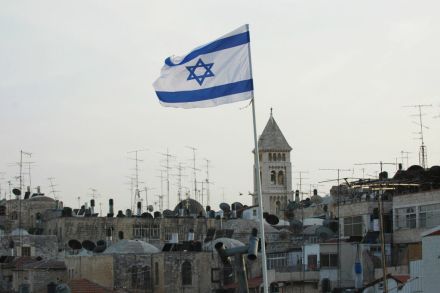
Israel will win its war against Hamas. But can it win the kind of war the United States lost in Afghanistan? Israel is facing today a dilemma that the West will face tomorrow. For more than sixty years, it has been easy for Western liberals to believe that imperialism is an unnecessary evil. When the US conquers and militarily occupies a foreign country, liberals don’t call it imperialism. It’s merely “regime change,” “nation-building” and “promoting democracy.” Such Newspeak has been powerless to alter the outcome of America’s wars in Iraq and Afghanistan, wars which after successful regime decapitations followed by decades of occupation and trillions of dollars spent on rebuilding failed to establish anything resembling secure liberal democracies in either land.

Israel

Who is the new House Speaker?

29 min listen

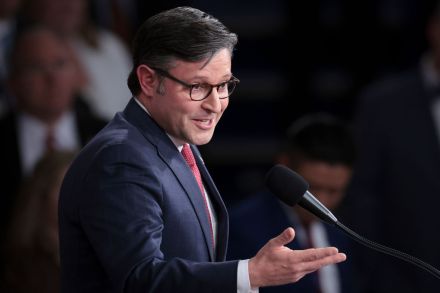
Amber Athey and Daniel McCarthy editor of Modern Age Journal and columnist at The Spectator join the Americano podcast to breakdown the long House speaker battle which has finally culminated in Trumpist Mike Johnson getting selected.

The future looks Republican

From our US edition

In presidential elections there’s no such thing as a Pyrrhic victory. Winning is everything — and neither party would ever openly admit there could be advantages to losing. Yet the outcome of the 2020 election wasn’t entirely unlucky for the Republican Party or even Donald Trump himself. And as both parties look to next year’s contest, far-sighted strategists can see a bigger picture beyond Trump and Biden. Whoever won in 2020 was going to face the ugly but necessary task of withdrawing US forces from Afghanistan, where twenty years of nation-building had failed to establish a free state that could resist the Taliban. Trump might have executed the withdrawal more successfully than Biden. But if he had, would the media have covered him more favorably? Of course not.

republican

NATO’s post-Cold War strategy has been a disaster

From our US edition

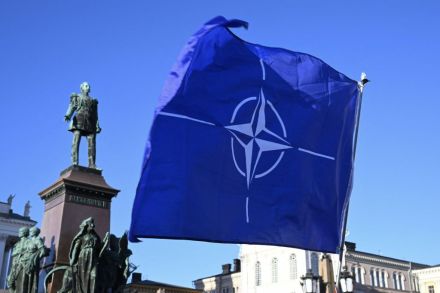
NATO is fighting for its life — and dying. The alliance has only grown larger as a result of Russia’s invasion of Ukraine. Now Finland is a member — and Sweden is on its way to becoming one. Ukraine and Georgia would like to join, too. All this is a sign of failure, however, not success. Whichever way one looks at the picture, NATO’s post-Cold War strategy has been a disaster. Either NATO did not expand far enough, fast enough — to the point of including Ukraine and thereby preventing the Russian invasion — or NATO’s continual expansion gave Russians reason to fear that they were being boxed in.

NATO

The rise of the popcons

From our US edition

The Republican Party has to come to grips with populism. Donald Trump’s commanding lead in the race for the 2024 presidential nomination makes that clear, as does the fact that the next-most popular candidate, Ron DeSantis, also has a populist streak. In fact, the GOP’s base has subscribed to one flavor of populism or another since at least as far back as the start of the Cold War. In the 1950s, Senator Joseph McCarthy’s red-hunting had a pronounced class dimension — elite officials in “striped pants” were a frequent target. By the end of the 1960s, Richard Nixon was appealing to the “silent majority” against a radical campus counterculture. The Moral Majority and other religious right groups of the 1980s and 1990s exhibited a form of Christian populism.

populism

The once and future president?

From our US edition

Donald Trump is having a better year than Joe Biden, notwithstanding an indictment or two. Both men hold commanding leads in the race for their parties’ presidential nominations. But the comparison works to Trump’s benefit: he isn’t quite an incumbent, while President Biden most definitely is. Not since George H.W. Bush in 1992 has an incumbent president faced a challenge within his own party as serious as the one Biden faces from Robert F. Kennedy Jr. After weeks of unceasingly hostile press coverage, RFK Jr. still holds onto 15 percent of the Democratic primary vote. Meanwhile, polling averages show Biden barely beating Trump in a prospective rematch next year.

president trump

How the Ukraine war remade our world

From our US edition

War has a stronger appetite than any of the countries that wage it. Aggressors, defenders, small states and superpowers are all on the menu. Take the war in Ukraine, for example. The war really started in 2014 when Russia annexed Crimea and fomented secession in the Donbas. America slapped Moscow back with sanctions. This was virtue-signaling. Sanctions might sting Vladimir Putin and his cronies, but how could they change Russia’s interest in Crimea? The peninsula is Russia’s gateway to the Mediterranean. Sanctions can’t alter geography. Ukraine had a friend in Vice President Joe Biden, and it had his son Hunter on a Ukrainian oil company’s payroll. Then disaster struck — the Bidens were gone and Donald Trump became president.

ukraine

Will DeSantis lose if he runs to the right of Trump?

From our US edition

"Negative partisanship” is a notorious feature of American politics. In presidential elections especially, voters don’t vote for the party and candidate they like; they vote against the party and candidate they fear. This is one reason third-party politics is a waste of time. If voters want to prevent the worst outcome, they will always choose the most viable alternative over the best alternative. For Joe Biden in 2020, it was enough that he wasn’t Donald Trump. For Trump in 2016, it was enough that he wasn’t Hillary Clinton. Next year, we’ll find out whether the voting public now views Biden as more like Clinton or still considers him better than Trump.

conservative desantis

Why Ron DeSantis should wait for 2028

From our US edition

Maybe Niccolò Machiavelli was not the first political consultant, but he remains one of the best. Ron DeSantis might solicit his advice before deciding whether a 2024 campaign for the White House is wise. DeSantis could start with the penultimate chapter of The Prince, “What Fortune can do in human affairs, and how it can be resisted,” which is famous for its imagery. Machiavelli first likens fortune to a raging river, whose flood cannot be met head on but whose fury can be dissipated by dams and dykes built in advance. Later he says Fortune is a woman who yields to a young man who comes on strong, even roughly. The lesson for a forty-four-year-old DeSantis is obvious: seize the moment. She’s yours for the taking — if you’re bold.

How to win the war that everyone is losing

From our US edition

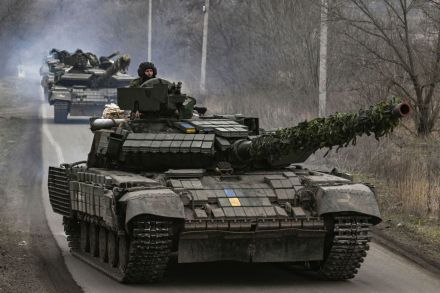
Russia is losing the war in Ukraine. So is Ukraine. And so are we. Imagine the good guys win tomorrow. What exactly will we have won? Ukraine was the poorest country in Europe even before the war. Afterward it will remain as dependent on American dollars as it is now — and on American arms. Russia will not have disappeared, after all. The last war-torn and impoverished country that required open-ended American support was Afghanistan. Yet all the weapons and funds we lavished on Hamid Karzai and Ashraf Ghani failed to keep the Taliban at bay after we left. The money also didn’t help with Afghanistan’s corruption problem. Will it help with Ukraine’s? In 2021, Transparency International ranked Ukraine second only to Russia as the most corrupt country in Europe.

war