Daniel McCarthy

Daniel McCarthy

Daniel McCarthy is a US columnist for The Spectator and is the editor of Modern Age: A Conservative Review.

The Democratic war machine

From our US edition

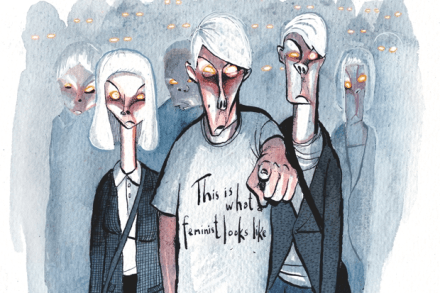
To understand what’s wrong with the American left and the Democratic party – two different but entwined things, to be sure – look to Vladimir Ilyich Lenin. Look also to the work of the historian Sean McMeekin, including his latest book, To Overthrow the World: The Rise and Fall and Rise of Communism. Earlier this spring I emceed an event in McMeekin’s honor, as he received the award for “Conservative Book of the Year” from the Intercollegiate Studies Institute. It gave me the opportunity to chat with him about Lenin’s doctrine of “revolutionary defeatism” and much else, including the fairy tale the West tells itself about how communism ended.

Democratic

The grandeur of Trump’s tariffs

From our US edition

The first thing revealed by the high and wide-ranging new tariffs President Trump announced on “Liberation Day” is just how limited other recent American presidents have been in their thinking. Their ambition was to get elected and re-elected, then retire comfortably into a tranquil post-presidency. They would finish their days lending their names to charities and writing their memoirs (or rather, commissioning ghostwriters to fulfill their publishing contracts).   The idea of destroying and remaking the global economic order never crossed their minds. But Trump is thinking bigger. He doesn’t want to go to his grave as just another has-been ex-president.

tariffs grandeur

Landlord Trump, the tenants’ best bet

From our US edition

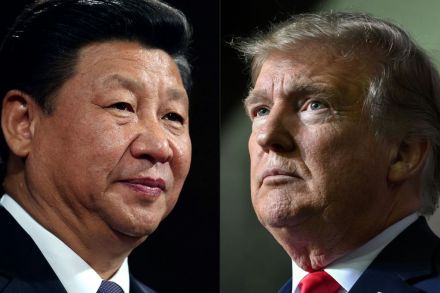
Donald Trump is the world’s largest landlord — not in his own capacity, perhaps, but in his role as leader of the most powerful nation on earth. He’s the CEO of America, and his development corporation owns the Western hemisphere. It also owns property in Europe, where the tenants are troublesome and are always behind on their rent. There are just a few other landlords on the planet, notably Vladimir Putin, who isn’t a rival, and Xi Jinping, who is. This might sound like a perspective on world politics for someone who rose to prominence in the cutthroat environs of New York real estate. Yet the truth is that government is always about who’s the landlord and who’s the tenant.

landlord

How Trump is revolutionizing Washington

From our US edition

Weeks into his second term, it’s clear President Trump intends to be the most transformative force our politics has seen in a century. He seems equally determined to change the course of the world — and perhaps its map, too. Trump’s enemies can blame themselves for making this possible. They showed him that impeachment is nothing to fear: securing conviction in the Senate is nigh impossible and whatever damage impeachment might do to a president’s reputation has already been inflicted on Trump. Two impeachments and a welter of post-presidential criminal prosecutions and even convictions failed to stain Trump in voters’ eyes. On the contrary, they left him more popular than ever and discredited the institutions his opponents employed as weapons of their “lawfare.

Trump

Shooing away the ghosts of Clinton and Blair

From our US edition

Donald Trump didn’t just win an election last year, he performed an exorcism. He cast out spirits that have directed Western politics for a generation, not least the ghosts of Bill Clinton and Tony Blair. Those particular left-liberal leaders haven’t been in power for many years, of course. But the style of politics they pioneered on both sides of the Atlantic didn’t end with their terms as president or prime minister. The world before Trump was still very much the world that Clinton and Blair had made. For decades Republicans and Conservatives found themselves having to accept the terms of what might be called the Clinton Blair settlement.

Trump

The Democrats need a new rulebook

From our US edition

Donald Trump’s triumphal return to the White House is the end of more than just the Joe Biden era. Since Bill Clinton’s presidency, Democrats had adhered to a formula they thought unbeatable: They would be socially progressive, economically centrist and staunchly internationalist. Republicans, they thought, had staked their future on demographics that were in decline — whites and the most conservative Christians. Democrats were the party of twenty-first-century America, an ethnically diverse and more secular, or at least religiously liberal, land. What went wrong? When Trump won in 2016, Democrats dismissed it as a fluke.

Democrats

Panicking over the planet and population is pointless

From our US edition

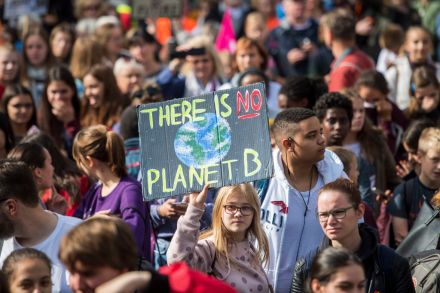
One sign of moral panic is that when the facts change, the fears remain the same. In the 1970s, the Washington Post, TIME and Newsweek stoked fears of “a new ice age.” As soon as scientists updated their models to show a trend in the other direction, “global warming” became as threatening as global cooling. And when winters stubbornly kept happening and the direst predictions of new-age prophets like Al Gore failed to come to pass, the whole thing was rebranded as “climate change.” Whatever the label, and whatever the underlying phenomenon was thought to be, the moral implication remained the same — human beings were ruining the earth and must curtail their comforts to save the planet. Bad weather used to be God’s punishment for human sinfulness.

panic

How a Latino wave carried Trump to victory

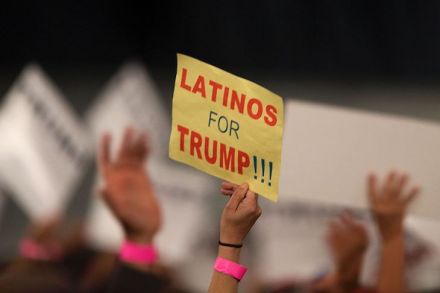
Donald Trump’s victory this time may not be the surprise that his 2016 win was, but for his critics it’s even more of a shock. Trump has been impeached, arrested, convicted, shot at, and relentlessly demonised as a 'fascist' over the last four years. None of that was enough to stop him. Just the opposite: Trump is more popular than ever, and appears to have won a national majority of the vote for the first time. Just how this happened is a question that will be analysed for weeks and months, or years, to come. But one intriguing possibility suggested by exit poll data is that multiculturalism committed suicide. Trump appears to have won a much larger percentage of the Latino population, especially men, than Democrats had ever thought possible.

A ripple, not a wave, will decide the US election

What can the 2020 and 2016 elections, the previous votes in which Donald Trump was the Republican nominee, tell us about today's race for the White House? There are three layers to a presidential election, only two of which really matter. The overall ‘popular’ vote only counts for bragging rights. Trump has never won it. The popular vote in individual states, however, is the critical second layer of the election. Trump won the 2016 election because he eked out slender popular pluralities in Pennsylvania, Michigan, Wisconsin, and Arizona – four states that are battlegrounds this year as well – and in Florida, which since 2000 had been the biggest prize on the map where the winner couldn’t be taken for granted.

Can Trump ‘Get Out the Vote’?

35 min listen

Freddy keeps up Americano tradition by speaking to Daniel McCarthy ahead of the election. On the podcast they discuss how Trump’s get-out-the-vote project is working and the impact low-propensity voters could have on the result, whether this election will be plagued by inefficiencies in the American electoral system and if J.D. Vance is actually the heir apparent to the MAGA title.

Vibes don’t matter. Donald Trump is still the underdog

Hillary Clinton has a simple but bitter lesson to teach Donald Trump’s supporters in 2024: the best way to lose an election is to assume you’ve already won it a week before it happens.  ​The MAGA movement ­– aiming to Make America Great Again, namely by Making Trump President Again – has never been more confident. Opinion polls have Trump faring much better against Kamala Harris than he ever did against Clinton in 2016 or Joe Biden in 2020. Indeed, the polling averages actually place Trump ahead, which wasn’t the case at this point in either of his earlier elections.  And since the polls underestimated his share of vote the last two times, maybe they’re underestimating him again – in which case Trump will not only win re-election, he’ll win handily.

The classroom panopticon

From our US edition

Is it ironic to give a prize for encouraging “open discussion and debate in the classroom” and “creating an environment where all perspectives can be heard” in the name of William F. Buckley Jr.? Although best known today as the founder of National Review and longtime host of Firing Line, Buckley first came to prominence in 1951 with the publication of his book God and Man at Yale, subtitled: The Superstitions of “Academic Freedom.ˮ Buckley’s secular and secularized Protestant critics might well have considered the firmly Catholic young man, twenty-five years old at the time the book appeared, an apologist for something they regarded as superstition. But Buckley did not mean the term as a compliment when he applied it to academic freedom.

classroom

The pro-life problem

From our US edition

The pro-life movement has reason to be grateful to Donald Trump, even as it has reason to feel exasperated as well. For forty-nine years, overturning Roe v. Wade was its highest immediate policy priority. Thanks to Trump’s Supreme Court appointments, pro-lifers achieved their aim. But even in 2016, Trump often distanced himself from the pro-life cause — and now he insists that abortion will remain a question for states to decide, a legalistic argument which doesn’t fit with the principle that human life and the rights that come with personhood begin at conception. His campaign — even Trump himself — issued statements touting his support for “reproductive rights,” usually a euphemism for legal and readily available abortion.

pro-life

Is the fate of democracy truly at stake?

From our US edition

In a few months, the stolen election narratives will start in earnest. There was one in 2020, of course, but there had been another in 2016, a liberal myth about Russian interference stealing victory from Hillary Clinton. Disgruntled Democrats similarly said the Republican president before Trump was “selected, not elected” — put in office by the Supreme Court, not voters. Claiming that Barack Obama wasn’t a natural-born citizen of the United States, as “birther” Republicans did in 2008 and 2012, was another variation on the stolen-election theme. Even when elections run smoothly, ideologues easily find cause for complaint. Discontents can even apply to foreign elections.

democracy

Soviet America’s revolutionary wars

From our US edition

Niall Ferguson is far from the first intellectual to compare the United States today to the Soviet Union of old. But Ferguson’s Free Press essay “We’re All Soviets Now” stirred up more discussion, and outrage, than earlier forays by others on the same theme. (Ferguson himself credits the Princeton professor Harold James with originating the phrase “Late Soviet America.”) Joe Biden already seemed like America’s analogue to the superannuated Soviet premiers of the 1980s even before his disastrous June 27 debate with Donald Trump — who is himself older in 2024 than Brezhnev, Andropov or Chernenko were when they died.

Soviet

What is war good for in the twenty-first century?

From our US edition

What exactly is war good for in the twenty-first century? The US should have asked itself this before embarking on decades of aimless occupation in Iraq and Afghanistan. Israel and Russia — very different countries, morally and otherwise — should be asking themselves today. The wars in Ukraine and Gaza both began with changes in an uncomfortable but previously stable status quo. Sometimes Westerners who try to imagine a peace deal for Ukraine invoke Finland’s strategic neutrality during the Cold War. But Ukraine was Finlandized for nearly twenty years after the fall of the Soviet Union, precariously balanced between Russia and the West but fully committed to neither. No one was entirely happy with that — yet there was peace from 1991 until 2014.

war
Applebaum

Anne Applebaum’s solutions to the ‘threat’ of autocracy

From our US edition

Liberal democracy is endangered more by its friends than by its enemies. Neither Moscow nor Beijing lured the United States into strategic humiliations in Iraq and Afghanistan. Nor was the rise of China to the rank of a great power brought about by Westerners sympathetic to Beijing’s communist system. If liberal parties and movements in the United States and Europe seem to be losing ground to populists, this is not thanks to Facebook ads purchased by Vladimir Putin in support of Donald Trump or Brexit. Liberals themselves sabotaged liberal democracy by prioritizing liberalism over democratic legitimacy for three decades after the Cold War — on fundamental issues ranging from trade and foreign policy to immigration and national values. Anne Applebaum’s latest book, Autocracy, Inc.

Biden’s base rebels over Gaza

From our US edition

Joe Biden’s reelection campaign is a multifront war. Unfortunately for him, the youngest soldiers in his coalition would rather fight Israel than Donald Trump. Biden was elected in the first place as the anti-Trump. In 2020 Democrats were desperate, and the ex-vice president was the most prestigious figure they had to field. He didn’t have to be inspiring or energetic — Trump would provide all the inspiration and energy Biden voters needed. What inspires the voting-age activists on America’s campuses today, though, isn’t aversion to Trump, and it certainly isn’t love for Joe Biden: it’s outrage at Israel. Four years ago, George Floyd became a symbol of injustice that spurred progressives to take to the streets and take back the country at the ballot box.

Biden

Israel and the making of nations

From our US edition

A little more than five years ago the Israeli intellectual Yoram Hazony published The Virtue of Nationalism. Its final chapter was particularly poignant. After World War Two and the Holocaust, Hazony explained, two opposing views arose as to how such evils could be prevented from happening again. One side pointed toward the creation of the European Union and held that nationalism must be repudiated and condemned. The other endorsed the creation of Israel as a nation-state for the Jewish people, with a nationalism of its own. Israel is a test case for the survival of nationalism everywhere. That may sound like an exaggeration — surely nationalism has demonstrated ample staying power.

Israel

Lessons from costly wars past

From our US edition

Money is often a substitute for strategy in US foreign policy. We spent $2 trillion in Afghanistan, only to lose the country the minute our troops began to pull out. How much will it realistically cost, then, to beat Russia in Ukraine? Will the next $100 or $200 billion do the trick? This is not a question that supporters of war-spending ask themselves. As in Afghanistan, spending is a way to defer thinking about actually winning — or facing the serious possibility of losing. Our aid buys delay, not results. Ironically, while the specter of World War Two is invoked every time there’s a conflict, our experience then teaches the same lesson as recent attempts to purchase victory.

wars