Daniel Korski

The new Cold War?

From our UK edition

In his recent cover story for The Spectator, the Financial Times' Gideon Rachman talked about how, in the United States, China was beginning to take on the appearance of a new Cold War-style foe. Many Americans accuse China of stealing US jobs, of keeping the its currency undervalued, of exporting deflation by selling its products abroad at unfair prices, and of failing to meet its commitments to the World Trade Organisation. Two months ago, a poll from WSJ/CNBC showed that the majority of Tea Party activists oppose free trade – seeing China as the sole beneficiary of a free trade policy. But it is not only the Tea Party that is goading for a US-Chinese clash.
The London-Jakarta link should be strengthened

From our UK edition

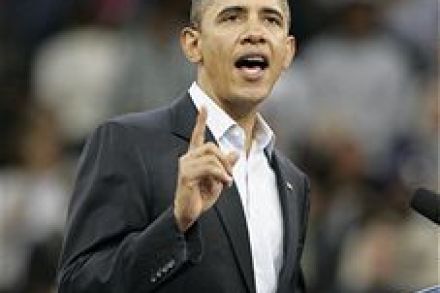
President Obama's return to Indonesia this week was remarkable, in part, for the limited attention it has garnered outside his childhood nation. You can't walk through an airport bookshop without being inundated by bestsellers about China's rise. India has always occupied a special part in British hearts. But Indonesia is different. There are few in the British foreign policy establishment who really know the place. Some British military officers know a few Indonesian counterparts through their time at Sandhurst and the Defence Academy. The human rights lobby grew familiar with Indonesia over years of protests against the Sukarno/Suharto dictatorships and the country's mistreatment of East Timor. But, on the whole, little is still known about Indonesia.

The new Iraq is beginning to look a lot like the old

From our UK edition

Nouri Maliki was last night appointed Iraqi prime minister after the country broke the world record for the slowest process of government formation. Eight months passed between the election and the formation, beating even previous Belgian records of procrastination. Hours after his appointment, however, members of al-Iraqiya, the main Sunni-backed alliance led by former Prime Minister Ayad Allawi, walked out of the Parliament. Their concern: Maliki's failure to do as he had promised and reinstate four Sunni leaders who had been banned for alleged ties to Saddam Hussein's Baath party.

G-20 in Seoul: Beyond “Camerkelism”

From our UK edition

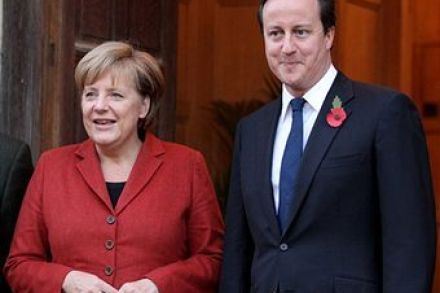
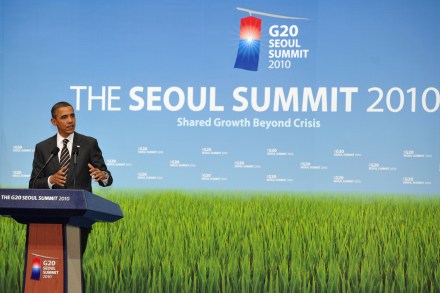
David Cameron is now in Seoul for the first G-20 summit hosted by a non–G-7 member state. It will be the Prime Minister’s second G-20. But things have changed dramatically since he came to power and had to jet to Toronto for his multilateral baptism. Then the Prime Minister’s arguments for austerity measures were theoretical - and a minority position. Now, they are real and have become the majority view. “Camerkelism”, the idea that short-term fiscal consolidation will induce sufficient private-sector activity to more than fully offset the fiscal drag seems to be in the ascendant. Yet the forced smiles at the traditional G-20 class photo will belie a number of continuing problems. The biggest issue will be about the Chinese exchange rate.

Stop dreaming of Leo McGarry

From our UK edition

The West Wing has an amazing hold over Fleet Street. The TV series has not only taught a generation of British reporters about US politics but even influenced the way that they see the workings of Westminster. Every time centre-right writers think David Cameron is seen as having made a mistake - mistreated his back-benchers, hired a personal photographer or made a foreign policy gaffe - they trot out the same refrain: No 10 needs a powerful Leo McGarry-type chief of staff who can bring the various parts of the operation together from Steve Hilton's work to Andy Coulson' operation. An enforcer, a puller-togetherer. I have three arguments against a British Leo McGarry.

Time for Sir Humphrey to retire

From our UK edition

The British government is 99.9999999 percent staffed by apolitical Civil Servants with the statistically irrelevant remainder being political appointees. The Sir Humphreys, rather than being pushed around, are very much in charge. Too much in charge. Ministers get only two Special Advisers - or SpAds - each who are placed away from the Minister's office and in the beginning of the Government's term often had to fight to even join meetings with their bosses. Some are knowledgeable experts other researchers with little experience beyond a few years in an MPs office. In what looks like a partisan broadcast from Cabinet Secretary Gus O'Donnell, Rachel Sylvester in The Times (£) says "Civil servants can help think through and implement policy in an ordered way.

Could Burma’s sham election bring real change?

From our UK edition

For the first time since 1990, Burma went to the polls. Though the final results have not been released, most regard the election as a sham meant to cement military rule, with complex election rules put in place to exclude opposition candidates as well as interference from the junta in the campaign and a ban on foreign reporting.   Senior General Than Shwe and his camouflage-clad cohorts are likely to get away with the electoral theft. Nearly all of Burma’s neighbours -– Thailand, India and China included -– are willing to ignore the regime’s failings to obtain commercial benefits.  As The Telegraph has reported, Chinese investment in Burma stands at over £5 billion; China is particularly interested in Burmese oil and gas.

The world is now in China’s hand

From our UK edition

The world is undergoing a permanent shift of power from West to East, with China being the biggest beneficiary and middling states (like Britain) likely to be the biggest losers. The government may, in the words of William Hague, reject any kind of strategic shrinkage. But if China's economy continues to grow at even half the rate it has developed until now, Britain will end up looking small no matter what policy it pursues. What is the best way to deal with a country like China, which on current projections, will have a larger economy than the United States by 2050? How best to position Britain if the US and China abandon peaceful co-existence, and, as the FT's globe-trotter Gideon Rahman predicts in his new book Zero-Sum World, begin to fight?

What happened to Germany’s European identity?

From our UK edition

What has happened to Germany? Policy-makers and analysts have been pondering the question for the last few years. No longer happy to be the pro-European par excellence, Germany has become more assertive, more self-centred - in others words more normal. German scholar Ulrike Guerot has called the new Germany "post-Romantic", ie more interest-based and less willing to let its history determine its future. Dominic Moisi says Germany has become "a second France." Part of the reason is the change among the country's political elite. The post-war generation has left the scene and the new leaders - on the Left and Right - have little time for Helmut Kohl's cheque-book diplomacy.

Is Euro-pragmatism here to stay?

From our UK edition

I'm off to Brussels, capital of the superstate, home of the EUSSR, or whatever you might want to call it. It has made me re-engage with European issues for the first time in six months. If Europe is not dead as a political issue in Britain then it is at least firmly stored in a coalition freezer, which can only be unlocked in the case of a thumping electoral for the Conservatives. But if the Tories scrape in at the next election or come up short of an outright majority,  David Cameron is likely to want the Coalition to continue. That would mean another decade of euro-pragmatism. A decade is a very long time in politics.

Junior Games

From our UK edition

Government allows some top-tier politicians to shine, while others lose the sheen they once had in opposition. So it has been with this Government. It has mostly been Lib Dems who have gleamed. Much can be said of Nick Clegg, Vince Cable, and Chris Huhne, but nobody will ever question the party’s ability to govern, or dismiss its front-line politicians as back-bench critics. In fact, if the Coalition lasts until 2015, the Lib Dems will have more Cabinet-level experience than the majority of the Shadow Cabinet, most of whom entered Cabinet under Gordon Brown in 2007. That will be quite a turnaround.

In defence of UK-French defence cooperation

From our UK edition

The Entente Cordial Redux has generated a lot of commentary, most of it ill-informed, some of it ridiculous. Tory MP Bernard Jenkin, in particular, has singled himself out to be a perpetuator of stereotypes with his reference to the duplicitous nature of the French. But many historians, like the otherwise brilliant Orlando Figes, have not fared much better, talking about the Crimea War as if it had any relevance at all for modern warfare. It’s good fun to tease the French. That is what boozy lunches ought to be about. But it should not pass for serious commentary by MPs. Since the 1990s the French have worked very closely with UK forces, even when disagreements at the political level have been profound.

In international politics, the pursuit of stability is not enough

From our UK edition

One of the biggest challenges facing the post-Iraq generation of foreign policy decision-makers, like William Hague and Hillary Clinton, is to balance the pursuit of overseas stability with promotion of the dynamic and sometimes de-stabilising forces that build countries' long-term stability and make economic and political progress possible. This may sound like an academic question but it is a very real change- and not just because the SDSR has made the task of building overseas stability a key government objective.   Take Iraq. After having lost an admirably violence-free and largely fair election, it looks likely that Iraqi Prime Minister Nouri al-Maliki will cling to power and the voter-winner, Ayad Allawi, will be denied a role in government.

Obama’s Hurt Locker

From our UK edition

The backlash that Barack Obama is now experiencing seemed almost impossible when the neophyte senator swept into the White House. It was, in fact, predicted by some. In 2007 when Barack Obama was but an ambitious Illinois senator, American defence expert Kori Shake penned an essay called the Coming Crisis of High Expectations. It was about how the EU and the US would inevitably slide apart - but its message was broader. Beware of exorbitant expectations, she seemed to be saying. Reality hurts. How much it hurts will become clear today. It looks like a House of Representatives-sized hurt but not a Senate-shaped one. Harry Reid clung on to his Nevada Senate seat, and California will be Democrat-run.

Beware Yeminitis 

From our UK edition

Yesterday saw an outbreak of Yeminitis, with Westminster focused on Osama Bin Laden’s ancestral home after the foiled bomb plot. To CoffeeHouse readers, this will come as no surprise. Last year, the Spectator prophesised that Yemen would be the “sleeper issue” of 2010. And so it has proved. But what have successive British governments been doing since the threat began to grow? UK policy towards Yemen is an exemplary case of cross-government cooperation. Rarely do the FCO, DFID and the MoD collaborate as closely as they do over Yemen. Alan Duncan, now a Minister for International Development, has taken a personal interest in the country, flying to Sana'a earlier in the year and drawing on his network in the Gulf to engage Yemen’s leadership.

PS don’t forget the PPS

From our UK edition

In this exchange from the “Yes, Minister” TV series Sir Humphrey welcomes the newly-appointed James Hacker to his department. 'James Hacker: Who else is in this department? Sir Humphrey Appleby: Well briefly, Sir, I am the Permanent Under Secretary of State, known as the Permanent Secretary. Woolley here is your Principal Private Secretary, I too have a Principal Private Secretary and he is the Principal Private Secretary to the Permanent Secretary. Directly responsible to me are ten Deputy Secretaries, 87 Under Secretaries and 219 Assistant Secretaries.

If you were William Hague’s speechwriter what would you want him to say?

From our UK edition

“The Foreign and Commonwealth Office requests the honour of your company at a major address by the Secretary of State for Foreign and Commonwealth Affairs, The Rt Hon William Hague MP,'Britain's Foreign Policy in a networked world'.” Thus reads the invitation from the Foreign Office. If emails could be gold-embossed, this one probably would be. The speech on Thursday is the Foreign Secretary’s first major speech in London. Colleagues like Liam Fox and Andrew Mitchell have already kept their speech-writers busy, but until now the Foreign Secretary has only done the odd interview, and one address (in Sarajevo).

A mandarin for the moment

From our UK edition

Most people probably greeted Liam Fox sacking of Sir Bill Jeffrey, alongside that of the Chief of Defence Staff in that Sunday Times interview with one word - who? The department’s Permanent Under-Secretary –- or PUS -- is a pretty unassuming figure especially sat next to the be-medalled soldiers he works with. Few people outside of Whitehall knew who he was before his defenestration; few will remember his name even today. But there is more at work here than one man's professional demeanor. Britons, despite being reared on the power of officials by TV shows like "Yes Minister", do not know and do not care about anonymous power-brokers such as Sir Bill. Only when a scandal grows out of all proportion do they become known.

No more Turkish delight?

From our UK edition

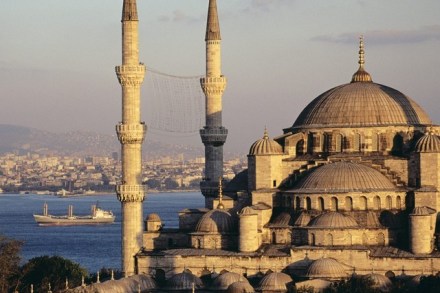
I’m sitting at the Ciragan Palace’s glass-filled halls on the banks of the Bosporus. I have joined the UN Security Council’s annual retreat, organised by the Turkish government, to give my view on what the UN did right and wrong in the Balkans from the break-up of Yugoslavia. The retreat is meant to continue the Council’s discussion on the overlap between peacekeeping, peacemaking and peace-building. No immediate action will follow the retreat, but the discussion may lead into a more concrete phase during Turkey’s presidency in September.

Britain’s foreign aid should empower women

From our UK edition

Here is a question. Which politician said the following: “We’ve seen too that when women are empowered economically they are more likely to have a voice in the community and to be advocates for other women.” Or “Britain will be placing women at the heart of the whole of our agenda for international development”. Clare Short? No. Hillary Clinton? Nope. Harriet Harman? Wrong. It is former Army officer and International Development Secretary Andrew Mitchell speaking yesterday to the think-tank Carnegie Endowment in Washington DC.   To some, his comments will illustrate how the Conservative Party has moved to far away from its roots.