Daniel Korski

Some perspective on the Helmand Wikileaks

From our UK edition

Today's Wikileaks will make uncomfortable reading for all parts of the British defence establishment – ministers, both old and new, and the senior military leadership. As a senior military officer told me, "this isn't going to be good." The diplomatic cables reveal that US officials and President Hamid Karzai at some point thought that British forces had bitten of more in Helmand than they could chew. The US NATO commander, General Dan McNeill, is quoted as saying three years ago that British forces have made a mess of Helmand. This is backed up by a comment, more than a year later, suggesting that President Karzai also agreed that British forces were "not up to the task of securing Helmand" without US assistance. Cue headlines of British military failure.
Uncharitable action

From our UK edition

After CoffeeHouse raised a virtual eyebrow and a few questions about the behaviour of War on Want and the Jubilee Debt Campaign, Tory MP Matthew Hancock has written to the Charity Commission asking for an investigation into their status: "Quite apart from the issue over whether a charity should support an organisation that seeks to disrupt the operations of UK companies, I also believe that the charities’ support of UK Uncut clearly appears to breach Charity Commission guidance on political activity." Let us see what Dame Suzie Leather, the Chairman of Charity Commission, thinks.

The Guardian’s Wiki-spin

From our UK edition

In today's Wikileaks revelations, it is Mervyn King's turn to be pushed through the mill. Did he act politically when pushing for a deficit reduction plan? Was he critical of David Cameron and George Osborne or just pointing out the obvious: that the Tory leaders had not held power before and - shock horror - were keen to get elected? The Guardian's reading of the cables suggests that the government's Batman and Robin (to keep with US diplomatic style) were unprepared for the task ahead. But re-read the key passages and it is clear that Cameron and Osborne were no different from any other opposition leaders - reliant on a small staff, and unprepared for the special pleading they would face as they entered government and tried to cut the deficit.

Poverty NGO or Labour stooge?

From our UK edition

While I worked at DfiD, officials were very keen to disabuse me of my suspicion that some NGOs are in fact not focused on a politically-neutral campaign to end worldwide poverty but are instead extensions of the Labour movement. They may be staffed by Labour supporters, run by ex-Labour advisers or just be used to working with a Labour government; but they were not corporately aligned in any way. Or so I was told. And I was happy to believe it. But what is this? War on Want and the Jubilee Debt Campaign - two supposedly internationally-focused NGOs - are said to have joined forces with the protest organisation UK Uncut to fight the Coalition Government's deficit reduction.

Brit-free EU diplomacy takes shape

From our UK edition

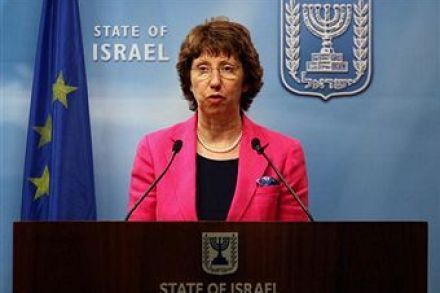
After months of behind-the-scenes work, the shape of the European External Action Service - the EU’s diplomatic corps - is now coming into view. The Bruxelles2 blog has obtained a version of its structure with some of the key names penciled in. You can find it here.      The top three jobs in the EU’s diplomatic headquarters will go to a Frenchman, a Pole and a German. The only senior UK official, besides Catherine Ashton (and her personal aides) is long-serving diplomat and geo-strategist Robert Cooper. But his name, rather mysteriously, is followed by a question mark. Of the EU “ambassadors” that have been appointed until now, there is one one Brit, ex-Ambassador Ros Marsden, who is now the EU envoy in Sudan.

Julian Assange: the new face of anti-Americanism

From our UK edition

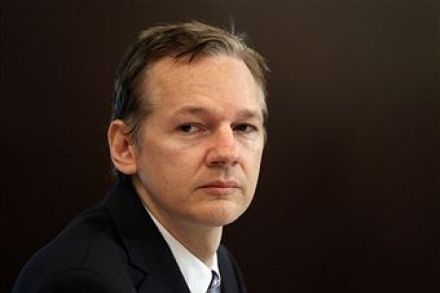
Like everyone else, I have poured over the latest cache of Wikileaks - the publication of which I find irresponsible and destructive. There are several pieces of information now in the public domain that will cause the US diplomatic embarrassment or worse may even help the regimes in Tehran, Pyongyang and Moscow. Just ask yourself a few questions. Will the West be safer if the Saudi leader cannot trust that a conversation he has with a US envoy will remain secret? Will that help or hinder Iran's nuclear prpgramme? Will US-German links be improved by the knowledge that US diplomats are sceptical of Angela Merkel's policies? Will that aid G20 coordination or hamper it?

Are they the children of the revolution?

From our UK edition

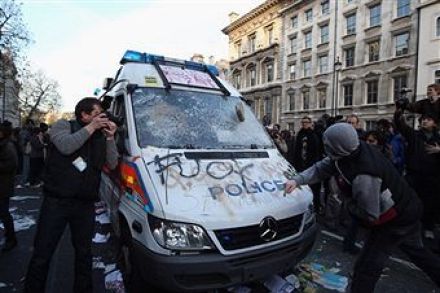
The student protests are an important short-term development, which will undoubtedly worry the coalition. But are they also, as the Met Commissioner noted, a harbinger of something else: namely, a return to a late 1960s, Continental-style protest, which will encourage other groups - from Tube drivers to Tamils - to use sit-ins, strikes and ultimately street-based violence as a political tool. The NUS rejects that their tactics are associated with violence, knowing it will turn the majority of English people against them. Blame is heaped on small groups of agitators. Anthony Barnett argues that unlike in the 1960s, "the relationship to violence is also much better, as shown by the spontaneous revulsion of the demonstrators against throwing the fire extinguisher at Millbank.

A degree of truth

From our UK edition

Tuition fees work. By the standards that any progressive is supposed to hold dear - higher overall participation rates in universities and higher participation rates among low income groups – experience from other countries shows that fees work. As the think tank Centreforum showed four years ago in an in-depth study, fees have long been the norm in Australia, New Zealand and the United States and these countries have seen “their universities’ reputations grow and their higher education participation rates rise across the social spectrum.” Meanwhile, the UK has been sliding backwards. In 2000, the UK had the third-highest graduation rate among OECD countries, with 37 percent of young people getting a degree. The average was 28 percent.

A more German Europe?

From our UK edition

Timothy Garton Ash asked an important question in the Guardian recenty - is Europe becoming more German? Or, to put it more accurately, does the EU have to become more German to survive? "If the eurozone falls apart, it will be because Germany did not do enough to save it. If the eurozone is saved, it will be thanks to Germany. This is the greatest challenge to German statecraft since the country was peacefully united 20 years ago." "Yet here is another horn of Germany's dilemma. For half a century, German politicians have repeated, like a mantra, Thomas Mann's call for "a European Germany, not a German Europe".

Iberian blues

From our UK edition

I’m finishing a two-day trip to Spain and am about to board a plane, just as the bond markets turn their attention to the Iberian Peninsula. As James wrote yesterday, the gap between Spanish 10-year government bonds and those of Germany has widened to as much as 2.59 percentage points - the biggest gap since the introduction of the euro. For its part, the Portuguese government said it was under no pressure from the European Central Bank or other Eurozone member-states to accept financial aid to ease its debt and deficit problems. That sounds like the noise before the defeat. Portugal was brought to a halt yesterday by a strike in protest at the government’s spending cuts and tax rises, which aims to reduce the budget deficit from 9.

Britain should have a Freedom Minister

From our UK edition

Has liberal democracy lifted people out of poverty? To a casual observer, the answer is unequivocally yes. One part of the world - the industrialised democratic northern half - is both richer, and healthier than the (historically undemocratic) South or East. Coincidence?   The West's success may be a function of north Europe's temperate climate, cultural mores shaped on the windswept British isles and European plains, the competition spurred by centuries of warfare, the invention of modern banking, the head-start provided by inventors, colonial conquests and possibly even the ideas and ecclesiastical hierarchy of the Judeo-Christian faith. But many other regions had similar in-puts. Perhaps the West was just blessed by better leaders, thinkers and entrepreneurs.

Balkan promises still to keep

From our UK edition

One of the many areas that the Conservative Party took a very different line from Labour was on the Western Balkans. William Hague travelled to the region, frequently asked questions in Parliament and had the war-torn region written into the Coalition Agreement as a government priority. Seven months into the government's mandate, how has Britain's Balkan policy changed? How has Britain been able to affect things for the better? The answer is a tad disappointing. There are no more British soldiers or diplomats in the region than there were before the election. Reconstruction funds are slated to decrease.

The end of the Wall Street world

From our UK edition

Over the last decade, Wall Street has become an important foreign policy actor in its own right, almost as important as the lobbyists on K-Street and the White House on Pensylvania Avenue. The ebb and flow of capital has been a decisive international force in determining the fate of nations - most recently illustrated in the cases of Greece and Ireland. As an aide to President Clinton once said: in a second life he would like to come back as the bond market. But Wall Street has influenced foreign policy in a deeper way too: by changing the way that successive US administrations see the world. Not by focusing on the bottom-line. International relations cannot be reduced to cost/benefit analyses.

The mad hermit strikes

From our UK edition

North Korea has again put itself at the centre of international relations. As the US pushed for a start to six-party talks, Pyongyang lifted the veil on a hitherto secret uranium-enrichment facility and launched an artillery barrage on a South Korean island,  injuring four soldiers, and damaging several buildings. The South Korean military scrambled fighter jets and returned fire and the situations remains tense. Conflict with nuclear-armed North Korea has intensified in recent years. North Korea launched nuclear and missile tests last year and sank a South Korean warship in March this year, killing 46 sailors. But the first ground-to-ground assault across the DMZ represents a new escalation in the decades-long, but usually non-violent conflict.

Stop blaming Israel alone

From our UK edition

Reading the British press - or even listening to some ministers - you would be forgiven for thinking that the only obstacle preventing Middle East peace is Israeli obstinacy and Benjamin Netanyahu's unwillingness to force his political allies - like Shas - to the negotiating table. But, as always, things are a bit more complicated than the newspaper headlines would suggest. From Israel's position, the region is looking increasingly hostile. Talk of a war in Lebanon with Hezbollah persists. In Syria, President Assad looks less interested in a rapprochement than he has done for years.

Miliband should re-examine Cameron’s playbook for the real lessons

From our UK edition

Ed Miliband has come roaring back from his paternity leave, keen to silence the growing chorus of criticism that he is not in control of his party and has let the Coalition determine the agenda.     To do so, he has come out in favour of a permanent top rate of income tax at 50 percent, but is otherwise taking a leaf out of the Cameron playbook - by establishing a number of policy reviews. But he might want to take another look at Cameron's experience. Reviews are a great tactical ploy - they show a willingness to "think big", allow a leader to reach out to a range party factions, aid front bench spokesmen to understand their portfolios and, perhaps most importantly, punts any serious policy discussions into the future.

Neo-isolationism is NATO’s greatest enemy

From our UK edition

As NATO leaders gather for a key summit in Lisbon, expect the newspapers to be full of the usual “why bother” commentary. NATO, they will argue, was founded for a different age and is not relevant for dealing with today’s threats – from cyber-attacks to nuclear non-proliferation. It is even struggling to deal with older threats, such as the Taliban insurgency. Most Europeans do not seem to mind. They feel safer than at any time before and worry predominantly about post-material threats, not conventional attack, as a think tank report showed recently. As a result, Europeans are set to spend less on defence. Germany expert Hans Kundnani has an excellent piece on Berlin’s anti-militarism over on ECFR’s new blog.

Will there be peace in the Middle East in time for X-mas?

From our UK edition

Two years into her term, and after carefully avoiding any success-free issues, Hillary Clinton has finally launched herself into the Middle East peace process. According to Roger Cohen in the New York Times, "The heavy lifting is now in Clinton’s hands". As evidence of Clinton's new role, Cohen lists a video conference with the Palestinian prime minister, where the US secretary of state announced $150 million in US aid to the Palestinian Authority and said the Obama administration was “deeply disappointed” by recent Israeli behaviour. Mrs Clinton's foray into the Middle Eastern quagmire  is interesting.

A 2015 Afghan exit will be tricky

From our UK edition

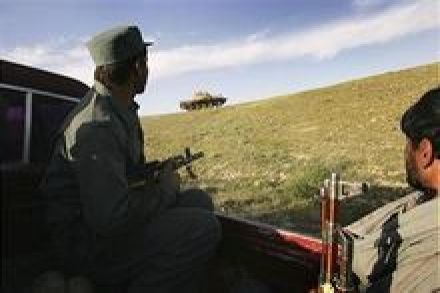
William Hague told the Foreign Affairs Select Committee that British combat troops will leave Afghanistan in 2015 - even if parts of the country remain violent. Speaking to a number of senior military officers and civilians who have recently returned from Kabul and Helmand, I have come away with the clear sense – whisper it – that the tactical tide is in fact turning against the Taliban insurgency but that a number of facts will complicate further progress. First, the next few months in Helmand may unfortunately be quite bloody.

How different will Sarkozy 2.0 be?

From our UK edition

After months of rumours, plummeting approval ratings, and battles with anti-reform protesters, French President Nicolas Sarkozy reshuffled his Cabinet yesterday. With a new government in place, the worst of the reforms behind him and the G-20 chairmanship in the offing, President Sarkozy is hoping to rebuild his profile before the next presidential election. But will it work? The popular François Fillon continues as Prime Minister despite a strained relationship with the Élysée. But Defense Minister Hervé Morin and Foreign Minister Bernard Kouchner have been replaced by Alain Juppé, a former prime minister and protege of former President Jacques Chirac, and Michèle Alliot-Marie, a former justice minister in the last cabinet.