Damian Thompson

Damian Thompson

Damian Thompson is an associate editor of The Spectator and presenter of The Spectator’s Holy Smoke podcast

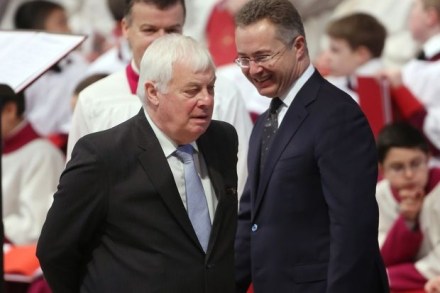
Chris Patten keeps failing upwards – now he’s advising the Pope. Poor Pope.

From our UK edition

There is a wearying inevitability to the announcement that Pope Francis’s reforms of the Vatican media will be overseen by Lord Patten of Barnes. Of course it was going to be him. It always is. The man defies the laws of political gravity. As Margaret Thatcher’s environment secretary he was responsible for the poll tax. He walked away from the disaster unscathed, explaining that it was nothing to do with him, guv, it was Thatch. As Tory chairman he presided over Major’s 1992 victory but lost his own seat. He was made governor of Hong Kong, where he stood up to China.

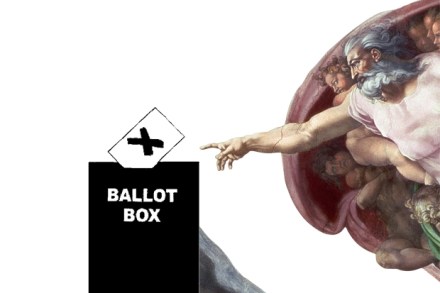
Religion is the new politics — but Britain’s secular politicians just don’t get it

From our UK edition

[audioplayer src="http://traffic.libsyn.com/spectator/TheViewFrom22_26_June_2014_v4.mp3" title="Damian Thompson vs. Cristina Odone on the role religion plays in politics" startat=44] Listen [/audioplayer]Aren’t Buddhist monks adorable?  They meditate for days without needing to go to the toilet. They talk to each other in ‘grasshopper’ haikus. Their pot bellies are full of wholesome vegetarian fare. Your package tour to Southeast Asia isn’t complete without a sprinkling of them begging politely in the markets. Hollywood stars hire them for beachfront weddings because they’re so cute. Apart from the ones who are terrorists.

I think I’ve found the new Alfred Brendel

From our UK edition

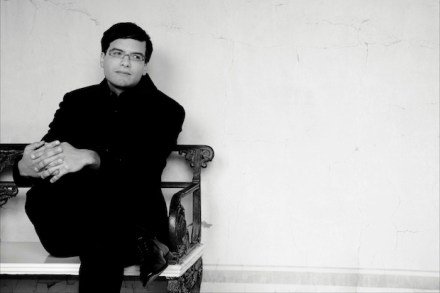
Can you tell how intelligent a musician is by listening to him play? Last year I discovered a recording of Schumann’s Piano Sonata No. 3 in F minor, a sprawling and spidery work that can fall apart even under the nimblest fingers. Not this time. Francesco Piemontesi, a young Swiss–Italian pianist, totally nails it. Believe me, it takes some nailing. In the opening Allegro brillante and the final Prestissimo possibile, Schumann stretches lyrical melodies across madcap scales and arpeggios that dart in every direction. The rhythms are insistently dotted: Schumann at his most obsessive-compulsive. There are lots of crunching gear changes and scampering pianissimo passages that turn to mush if the pianist seeks safety in the sustaining pedal.

I could be dead soon. What should I listen to?

From our UK edition

If I live as long as my father, I’ll be checking out on 9 December 2017. Since every man in my family drops dead of a heart attack at a ridiculously young age, it’s not inconceivable. I mean, obviously the chances of me dying on precisely that day are tiny, but it’s my ballpark figure. This faces me with big questions. Given that I’m probably croaking soon anyway, should I try smack? (I mean, try it properly: the only time I was handed a heroin pipe, by a professor, I was far too scared to inhale.) Do I need to worry about my miserably empty pension pot? Is there a God? And if there is, should I stop being so monstrously selfish? Big questions, as I say, but I still shunt them to the back of my mind.

In the mood for Parsifal, my Passiontide fare

From our UK edition

This week, I have been mostly listening to Parsifal. Not the St Matthew Passion, which is my usual Passiontide fare. And, boy, it’s been quite an experience. You have to be in the mood for the Bach, but for the Wagner you really have to be in the mood. Parsifal is nearly five hours long. I’m reluctant to say that not a lot happens, because it’s a story of overpowering philosophical transformation. But, alas, no two commentators agree on the nature of that transformation and, unlike the Ring Cycle,  it doesn’t offer many plot twists by way of distraction. The knights who guard the Holy Grail, the chalice of the Last Supper, have lost their second most precious possession, the lance that pierced Christ’s side.

Menuhin is the world’s toughest violin competition. Why is it packed with Asians, and no Brits?

From our UK edition

‘The truth is,’ says Gordon Back, lowering his voice, ‘that if the violin finalists from the BBC Young Musician of the Year were to enter the Menuhin Competition, they wouldn’t make it to the first round.’ Not through the first round, note, but to the first round: they wouldn’t be good enough to compete. Back is artistic director of the Menuhin, held every two years in a different country. In effect, it’s a search for the next Yehudi Menuhin, who recorded the Elgar concerto with the composer at the age of 15. Some critics think Menuhin never quite fulfilled that astonishing early promise — but I wouldn’t dare suggest that to Gordon Back.

Are hymns dying? 

From our UK edition

I love a good hymn, so long as I’m not expected to sing it. Lusty declarations of faith sound ridiculous coming out of my mouth and embarrass the hell out of me, so I pretend that I’ve forgotten to pick up a hymnbook on my way in. If someone shoots me an accusatory glance, then I move my lips like John Redwood singing the Welsh national anthem. (Talking of whom, has it dawned on the jolly self-important Dr Redwood, former Fellow of All Souls, director of Rothschild’s, cabinet minister, etc., that one day he’ll be remembered only for that delicious video clip?) The earliest Christian hymns were chanted — but when we talk about a ‘hymn’ in everyday speech we mean a harmonised sacred song in which every verse uses the same melody.

I know how to cure my music addiction

From our UK edition

About 30 years ago, not long before he died, my father bought an LP of Sir Clifford Curzon playing Schubert’s last piano sonata, in B flat D960. He was slightly defensive about the purchase. You see, he already had a record of Alfred Brendel playing the same piece. ‘It’s a bit of an extravagance,’ he said, ‘but I think in this case it’s worth it.’ Of course it was worth it! First, the B flat sonata touches the sublime in almost every bar. I was so lucky that, thanks to my father’s impeccable taste, it was one of the first pieces of classical music I got to know after we bought our first stereo in the early 1970s.

Music to listen to when you’ve broken up with a precious friend

From our UK edition

Beethoven’s Hammerklavier Sonata is thrilling and brain-twisting. Its nickname derives from the fact that it was published as a sonata ‘for the hammer-action keyboard’, which just means a piano. But the notion of hammering suits this work. It’s his longest sonata — a late one, No. 29 in B flat, Op. 106 — and a mighty piece of machinery. I’ve been listening to it for 40 years and I’m not even close to grasping its details. It’s far more of a mental puzzle than the sublime last trio of sonatas, Opp. 109–111, whose construction is less tortuous. The Hammerklavier has been in and out of my CD player a lot recently, for two reasons. I’ll explain later.

Alpha male

From our UK edition

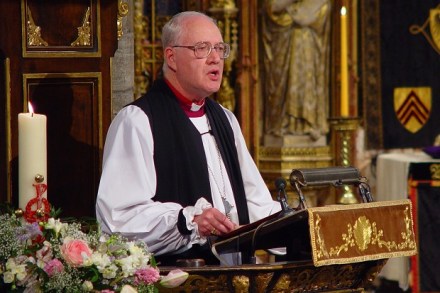
Just before stepping down as Archbishop of Canterbury, the late Robert Runcie told me — in a sotto voce conversation during the General Synod — that charismatic evangelical parishes such as Holy Trinity Brompton (‘HTB’) in South Kensington, with their American-style worship, near-fundamentalist teaching and smart social connections, posed more of a threat to the Church of England than divisions over women priests. I wonder how he would have reacted to the news that, 21 years later, an HTB man has been given his job. Justin Welby, only recently appointed Bishop of Durham, is being translated to Canterbury with a minimum of fuss.

Damian Thompson: I may be in danger of becoming an opera queen

From our UK edition

It’s taken 40 years, but I’ve finally developed a taste for the one type of classical music that I couldn’t stand. And last week I broke the news to the man responsible: Roger Hewland, owner of Gramex, the world’s finest second-hand classical CD and record shop, just behind Waterloo Station. ‘Roger, I’ve suddenly got into Italian opera,’ I said. He raised an eyebrow in mock concern. ‘Oh dear, now that is serious. It’s an incurable addiction and [rubbing his hands together — he’s a shopkeeper, after all] a most expensive one. May I ask what you were listening to when the symptoms first appeared?’ ‘Donizetti. Lucia di Lammermoor with Sutherland and Pavarotti.’ ‘All is lost!

Music at Mass is theological warfare by other means

From our UK edition

How many battles have been fought over sacred music throughout history? The noise you make when you worship is a big deal: those who control it can shape everything from clerical hierarchy to intimate spirituality. And there are patterns. Deep suspicion of music is the mark of the puritan. Fundamentalist Sunni Muslims teach that all music except for chanted Koranic passages is forbidden; instruments in particular encourage lust. Strict Calvinists take a similar line. Even the Catholic Church considered banning original compositions during services after the Council of Trent. Legend has it that polyphony was saved only by Palestrina’s Missa Papae Marcelli of 1567, which demonstrated that rich harmony could also highlight the words of the text.

A world-class orchestra in the heart of São Paulo’s Crackland

From our UK edition

São Paulo has a concert hall that London’s orchestras would kill for. It was originally a railway station, a mighty space bounded by Corinthian pilasters in the style of a French palace, built by Brazilian coffee barons. Now the tracks are buried beneath 800 seats on the main floor, plus another 700 on the balconies and mid-air boxes facing the stage. But it’s the ceiling that produces gasps, or, in the case of a children’s concert I attended, earsplitting squeals of wonder. You’d think Superman had arrived. You see, the ceiling is made up of 15 huge, lavishly decorated panels that match the walnut floor. And they move! Up and down, independently, like monster elevators. Which, given that they weigh 7.5 tons each, is disconcerting.

Why has nobody heard of the miraculous Czech composer Zelenka?

From our UK edition

When I was in my late twenties I discovered the joy of drinking alone. Well, perhaps ‘joy’ is putting it too strongly. I’d been thrown out of the flat I shared with one of my closest friends from university after a series of drunken rows about his social-climbing girlfriend. I was living in a converted gardener’s cottage in west London. It was painted pink, for some reason (‘a pink cottage — just right for you,’ harrumphed my ex-flatmate), and furnished so miserably that it didn’t seem worth the effort to throw out the empty wine bottles or bother with ashtrays. Now I could binge-drink and, just as important, binge-listen. The late Beethoven quartets, in virtuosic but slightly unhinged performances by the Lindsays, suited my mood.

The new God squad: what Archbishop Welby and Pope Francis have in common

From our UK edition

It’s a few weeks after the election of Pope Francis, and a notoriously leaky church source is talking about the revolution to come. The new leader of the faithful is a sharp operator who finds himself surrounded by ‘a medieval court system of hopeless characters, each jealously guarding their own silos of activity. There’s lots of crap people in key positions.’ Meanwhile, away from the court, bureaucrats churn out windy memos. They may not know it yet, but the process of ‘clearing out the weeds’ will start soon — possibly as early as this August. That might seem over-ambitious, but we’re not talking about the sleepy Vatican.

The syphilitic sound of Schumann’s violin concerto is part of its genius

From our UK edition

Robert Schumann met a wretched end. He died in a lunatic asylum where he thought the nurses were feeding him human faeces. Meanwhile he drove his fellow residents mad by sitting at the piano and bashing out nonsense-music until he had to be dragged away — a grotesque indignity for the creator of the most bewitching quicksilver fantasies in the history of the instrument. After Schumann’s death in 1856, the violinist Joseph Joachim hid away the strange concerto that the composer had written for him in 1853 because it showed evidence of softening of the brain. Clara, Robert’s widow, agreed. That became the conventional wisdom.

Four recordings of Beethoven’s Ninth on a £10 app

From our UK edition

Last weekend my iPad sucked me deeper into Beethoven’s Ninth Symphony than I thought possible. Deutsche Grammophon and Touch Press have released an app devoted to the work that rendered me slack-jawed with wonder, like a Victorian on his first visit to a cinema. The app gives you four complete performances of the Ninth: by Ferenc Fricsay with the Berlin Philharmonic (1958); Herbert von Karajan with the same orchestra (1962); Leonard Bernstein with the Vienna Philharmonic (1978); and Sir John Eliot Gardiner with his preposterously named Orchestre Révolutionnaire et Romantique (1992). Icons for the performances are next to each other, and the gentlest touch will transport you to and fro. The technology is a marvel.

Are today’s composers up to the challenge of writing sublime music?

From our UK edition

When we describe music as ‘sublime’, what do we mean? For the Romans, sublimis signified greatness beyond measure. In the 18th century, Englishmen looked to The Spectator for clarification. Joseph Addison, in his Essay No. 339 of 1712, suggests that the sublime often achieves greatness without stirring up ‘pathetick’ human passions. The example he gives is Milton’s description, in Paradise Lost, of the Messiah looking down on his new Creation, ‘when every Part of Nature seem’d to rejoice in its Existence; when the Morning-Stars sang together, and all the Sons of God shouted for joy’. Whether a composition is sublime is essentially a matter of opinion.

Beethoven at dinner parties: how to bluff it

From our UK edition

I’ve just been reunited with a man whose pungent and patronising views on great composers have haunted me for more than 30 years. His name is Gervase Hughes, and I’ve discovered from Wikipedia that he was an upmarket travel agent who died in 1984. I had no idea, because I knew him only through his book Fifty Famous Composers, published as a Pan paperback in 1972, which mentions his short career as an opera conductor but not his main source of income, which was apparently ‘offering European tours in Rolls-Royce cars’. I lent Fifty Famous Composers (an expanded edition of The Pan Book of Great Composers, 1964) to a friend when I was at university, explaining that it was the wittiest and wisest introduction to the classical canon ever written. He promptly lost it.

Rediscovering Spotify

From our UK edition

All my life I’ve wanted to be able to write confidently about orchestral performances and I think I may have cracked it. So forgive me while I show off for a paragraph. In the last movement of Bruckner’s Seventh, Mariss Jansons and the Bavarian Radio Symphony Orchestra capture the jauntiness of the opening theme; there’s a twist of Haydn amid the grandeur. But it takes a long time for the brass and woodwind to settle down, and when Bruckner gathers his forces for a climax the conductor leans heavily on the gas pedal, as if he’s nearly missed a turning. No such problems with Karajan and the Berlin Philharmonic, where from the first bar the sheen of the violins tells you that every twist of the score has been mapped out, not to say ironed out, well in advance.