Damian Thompson

Damian Thompson

Damian Thompson is an associate editor of The Spectator and presenter of The Spectator’s Holy Smoke podcast

Benedict’s back

One of the finest speeches Benedict XVI ever delivered was about sacred music. It is a small masterpiece, in which Benedict recalls his first encounter with Mozart in the liturgy. ‘When the first notes of the Coronation Mass sounded, Heaven virtually opened and the presence of the Lord was experienced very profoundly,’ he said. Benedict robustly defended the performance of the work of great composers at Mass, which he insisted was necessary for the fulfilment of the Second Vatican Council’s wish that ‘the patrimony of sacred music [is] preserved and developed with great care’. Then he asked: what is music? He identified three places from which it flowed.

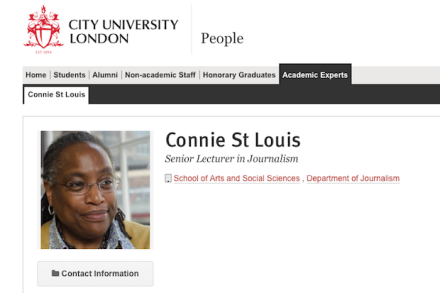
Connie St Louis, the woman who brought down Sir Tim Hunt, faces questions over her CV. Where’s the media coverage?

Connie St Louis, director of City University's Science Journalism MA, is the woman who brought Sir Tim Hunt's career crashing down in flames by tweeting out allegedly sexist remarks that the Nobel Prize winner made at a conference in Seoul. There's been one hell of a row about what he actually said, but now fresh questions have arisen – and they involve Ms St Louis, not Sir Tim. Investigative reporter Guy Adams, writing in yesterday's Mail, has taken a long, hard look at her CV – and is puzzled by claims he found on City's website that ‘she presents and produces a range of programmes for BBC Radio 4 and BBC World Service . . .

Forward thinking

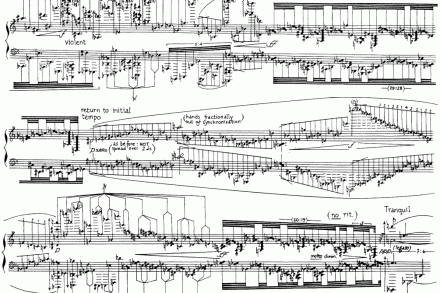
The award of a knighthood to the composer James MacMillan will have ruined last weekend for lots of unsavoury people: the Guardian arts desk, which decided he’d lost his mojo as soon as he turned his back on the left; Kirsty Wark, whose squawking is mimicked in MacMillan’s Scotch Bestiary; the SNP, which he detests; and, most of all, the Nats’ religious front organisation, the Scottish Catholic Bishops’ Conference. OK, enough point-scoring. MacMillan has been honoured because he turns out glorious music. He’s also rare among living composers in having worked out an answer to the question raised when John Cage pushed sound to the point where nothing short of the soloist defecating on stage could shock audiences: ‘Where do we go from here?

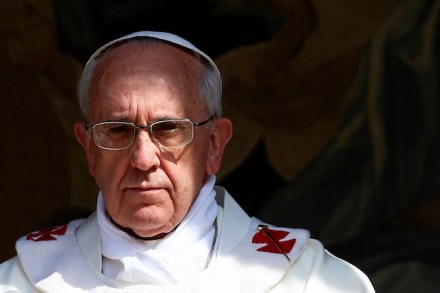
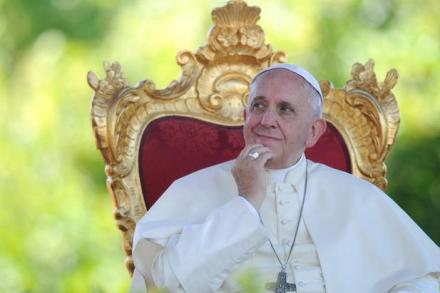
The Pope and climate change: Francis is slapping his conservative critics in the face

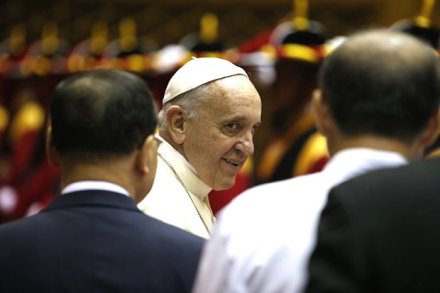
Pope Francis's encyclical on the environment comes down firmly on the side of the global warming consensus/lobby (delete according to taste) and is a slap in the face to climate sceptics of every hue. Thwack! It's very much this Pope's style. Laudato si' says several important things about climate change. Here's the Catholic Herald's summary, based on the infamous leak: According to a translation by the Wall Street Journal, the Pope says there is a 'very consistent scientific consensus' that we are in the presence of 'an alarming warming of the climatic system'. He writes that there is an 'urgent and compelling' need for policies that reduce carbon emissions, such as 'replacing fossil fuels and developing sources of renewable energy'.

Crisis of faith

It’s often said that Britain’s church congregations are shrinking, but that doesn’t come close to expressing the scale of the disaster now facing Christianity in this country. Every ten years the census spells out the situation in detail: between 2001 and 2011 the number of Christians born in Britain fell by 5.3 million — about 10,000 a week. If that rate of decline continues, the mission of St Augustine to the English, together with that of the Irish saints to the Scots, will come to an end in 2067. That is the year in which the Christians who have inherited the faith of their British ancestors will become statistically invisible. Parish churches everywhere will have been adapted for secular use, demolished or abandoned.

Roll of shame: MPs who back homeopathy fan David Tredinnick for chair of Commons Health Committee

David Tredinnick is an Old Etonian Tory MP whom I met when he was a mature student at Oxford. He seemed a nice enough chap but we were all astonished when he was elected to Parliament. He struck us as a bear of very little brain. How unfair to bears that turned out to be. Tredinnick, who – incredibly – sits on the Commons Health Select Committee, believes that astrology works and, according to the Telegraph, that a full moon can cause internal bleeding. And, it goes without saying, he supports the cult of homeopathy, which puts lives at risk with its idiot doctrines. To quote the world-renowned scientist Lord Winston, 'Let me say firmly: I think his views are lunatic'. Now Tredinnick has been nominated as the chair of the Health Committee.

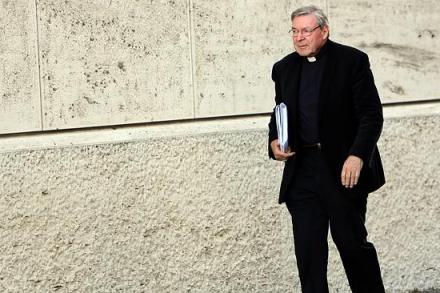
The hounding of Cardinal Pell: things Australia’s liberal media don’t want you to know

The attempt to implicate Cardinal George Pell in the Ballarat child abuse scandal is a virtuoso display of score-settling by Australia's left-leaning journalists, who have hated Pell for many years. This morning, however, The Australian broke ranks by publishing a column by Gerard Henderson that helps set the record straight. I'm simply going to quote extracts from it because you can be damn sure that they aren't going to penetrate the liberal Aussie media's firewall. On Pell's record in tackling child abuse: On all the available evidence, Pell was among the first Catholic bishops in the world to address the issue of child sexual abuse by clergy.

The white-knuckle terror of being driven by a dopehead

'Hidden menace of the drivers high on drugs,' says the headline in today's Daily Mail, revealing that – according to police – six out of 10 motorists are failing a new roadside test that can detect use of cannabis or cocaine. If so, that's worrying. But not as worrying as actually being driven by someone who's stoned. Trust me on this. Several times I've found myself in California bowling along the freeway at night, trying not to think about the spliff the driver smoked before turning the ignition key. A single puff induces terror in passengers, since all dope seems to be skunk these days and the Californian strain is wickedly strong. (Again, trust me on this.) It makes the journey 'more fun', it was explained to me.

Gay marriage will split the Catholic Church

Ireland, for so long the most overtly Catholic state in Western Europe, has voted for gay marriage by a stupendous margin – 62 per cent. Never before has a country legalised the practice by popular vote. It would be naive to ask: how could this happen? Hatred of the Church is one of the central features of modern Ireland, thanks not only to the paedophile scandals but also to the joyless quasi-Jansenist character of the Irish Church, which was handed complete control of education in the Free State after partition in 1922. (Many of its priests were outstandingly holy and charitable, but you'll get your head bitten off if you suggest that in today's anti-clerical republic.) Anyway, I don't want to focus on Ireland.

Charles’s ‘spider letters’: The Guardian falls for the pseudoscience of graphology

The Prince of Wales's 'spider letters' are out today – his letters to government ministers written or annotated in his distinctive spidery hand (see above) have been released under the Freedom of Information Act. Hat tip to James Snell on Twitter for alerting me to this utter garbage from the Guardian's liveblog: What can we tell about Charles’ personality from the small amount of handwritten annotations in the black spider memos? Actually, quite a lot, according to the chairman of the British Institute of Graphologists. Charles’ fluid strokes, joined-up words and slight slant to the left reveal interesting things about his personality and how he will approach his kingship.

Porn and video games: more hysteria about ‘rewiring brains’

Here we go again. What effect do you think watching porn and video games have on young men? Yup, they rewire the brain. It's such a clumsy metaphor – the brain isn't 'wired' in any meaningful sense – that you'd think psychologists and neuroscientists would run a mile from it. Unless, of course they're Baroness Greenfield, who is a fellow of Lincoln College, Oxford. She was director of the Royal Institution until her post was abolished in 2010, 'amid claims that there was almost no other way to get rid of her' (thank you, Wikipedia).

Why Ukip will descend into sectarian chaos

Yes, yes, I know it's supposed to be 'unfair' that Ukip ended up with only one MP while securing 13 per cent of the popular vote. But that's first-past-the-post for you. You have to win a seat to get into Parliament. The British electorate was offered the chance to to ditch FPTP back in 2011 and said, nope, we'll keep the unfair system. As for Ukip coming second and third in all those Labour seats, it's impressive but I suspect not terribly significant. White northern working-class voters were protesting against the fact that none of the major parties gave a toss about the destruction of their communities by the merciless progress of modernisation.

Has the Guardian just called it for Cameron?

The Guardian/Observer website is running with this story headed 'Britain set to face weeks of political paralysis after election poll'. That's a safe prediction. But what's intriguing is that the article – by Daniel Boffey, Toby Helm and Ashley Cowburn – is entirely devoted to the prospect of an extremely shaky Conservative-Lib Dem coalition, harassed or indeed blocked by Vince Cable and right-wing Tories. There's no discussion of a Miliband-led government. Interesting. The Labour-supporting Guardian and Observer give the impression that they're very tentatively calling it for Dave (despite insisting that's it's 'too close to call').

Former Communist spy: KGB created Catholic liberation theology

The respected Catholic News Agency has published an interview with Ion Mihai Pacepa, a former general in Romania's secret police who was one of the Eastern Bloc's highest-ranking defectors in the 1970s. In it, he says that Soviet Union – and the KGB in particular – created liberation theology, the quasi-Marxist movement that flourished in Latin America from the 1960s to the 1990s and is still a powerful influence on the Catholic Left. The interview provides fresh evidence of the infiltration of liberation theology by Russia – a subject Catholic liberals would much rather not discuss, just as they don't want to know about the heavy Soviet investment in CND. But first, some caveats.

Why you should listen to the great pianist who gave in to the Nazis

Alfred Cortot (1877-1962) was in my opinion the greatest pianist in recorded history. If I had to give one reason – and there are many – it would be the spontaneity of his playing. Above all you hear it in Chopin. His twists of rubato and infinitely subtle shading of phrases sound as if they've just occurred to him. There's no better demonstration of that art than the first few minutes of his 1935 Chopin Second Piano Concerto with an uncredited orchestra (probably the LSO) and John Barbirolli. Not only is Cortot on top form, but the orchestra plays a delicious but naughty trick – at one point the violins decorate the melody with a little leap that isn't in the score. Once heard, never forgotten. Today brings great news for everyone who loves that recording.

The rudeness of John Eliot Gardiner

Sir John Eliot Gardiner is talented almost beyond measure. His Monteverdi Choir, English Baroque Soloists and stupidly named Orchestre Révolutionnaire et Romantique have notched up one triumph after another over the decades: benchmark recordings of the Monteverdi Vespers and Bach B minor Mass, the finest period-instrument Beethoven symphony cycle and a cantata pilgrimage of live performances of all the Bach sacred cantatas. His recordings of Mozart operas are dazzling. At 72, Gardiner is at his artistic peak. His live re-recordings of the Beethoven Fifth, Seventh and Missa Solemnis eclipse their predecessors and in its second account of the Bach motets the Monteverdi Choir sings with such eerie precision, infused with the spirit of dance, that its rivals must despair.

The passing of a magnificent contrarian

I see my Spectator colleagues have beaten me to it and republished a 1989 profile of Richard West, one of the finest foreign correspondents of the 20th century, who has died aged 84. Never mind. I'm determined to write about him. Annoyingly, I couldn't find a single picture of him on Google (I borrowed the one above from his Telegraph obit). That wouldn't have bothered him in the least. Dick, almost uniquely among Fleet Street legends, wasn't an egomaniac. He waded into war zones out of intense curiosity, not for byline glory. He once told me that he was about to be shot to pieces in Vietnam and it occurred to him that the only publication with whom he had a contract at the time was The Listener, a long-defunct and rather genteel BBC periodical.

The legend returns

Daniel Barenboim is back in town: the South Bank is mounting a ‘Barenboim Project 2015’ in which he’s playing the Schubert piano sonatas and conducting his magnificent Berlin Staatskapelle in Elgar’s Second Symphony and Beethoven’s First Piano Concerto, with Martha Argerich as soloist (if she doesn’t cancel yet again, in which case I assume Barenboim will do it himself). As usual, the arts luvvies are wetting themselves. I remember being at a newspaper morning conference when he was about to play the Beethoven piano concertos at the South Bank. The arts editor — who knew zilch about the respective merits of classical pianists — announced this as if it were the Second Coming. Everyone else made noises of awe and reverence.

I know I shouldn’t ask this, but is cocaine really that addictive?

Cocaine addiction is a dreadful thing. I've seen it so many times: bright, once-pretty people with washed-out grey faces who can't think about anything else. Children, partners, careers – they can all go hang so long as the restaurant has a loo where you can do a quick line between courses, or you can nip outside to suck on a crack pipe. This how frantic it can get: If anyone has stopped to watch me go to the cash machine and withdraw stacks of bills, several times because of the $200 transaction limit, then head out to an idling van with tinted windows, and return minutes later with bulging pockets, it wouldn't take much imagination to understand what had just transpired.

We don’t think of highly gifted people as mentally disabled. Perhaps we should

I'm intrigued by this recent study suggesting that intellectual gifts and learning disabilities, far from lying on opposite ends of a spectrum of intelligence, sometimes go hand in hand. Intrigued, but not surprised. Very bright people can be odd – we all know that. The eccentric genius is one of the clichés of history and fiction. But it's rooted in observation. One thinks of wild-haired Oxford dons at high table, singing music hall songs in iambic pentameter while spraying their neighbours in Brown Windsor soup. Or the story of a distinguished academic banned from dining in his own college after – so legend has it – reinforcing his argument about the intellectual failings of women by exposing himself in front of horrified guests.