Damian Thompson

Damian Thompson

Damian Thompson is an associate editor of The Spectator and presenter of The Spectator’s Holy Smoke podcast

Mission impossible?

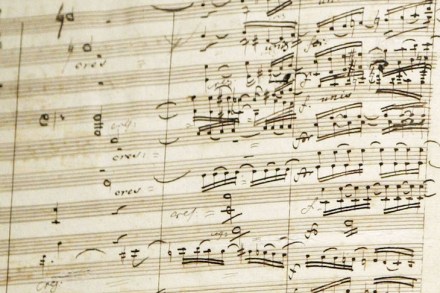
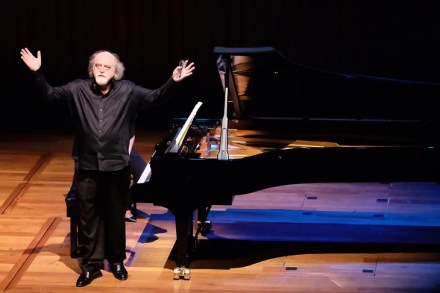
Just before Peter Donohoe played the last of Alexander Scriabin’s ten piano sonatas at the Guildhall’s Milton Court on Sunday, the autograph score of the piece was beamed on to the wall behind him. It was just a glimpse —- but enough to show us that Scriabin had the most beautiful musical calligraphy of any composer since Bach. On the face of it, that’s surprising. You would expect the Cantor of St Thomas’s to inscribe neatly — and indeed baroque musicians often play Bach straight from his own manuscripts, preening as they do so. But Scriabin is often regarded as a messy composer, in thrall to the mystical fads of pre-revolutionary Russia. So you might envisage a scrawl covered in ink blots and frenzied crossings-out.

Pope is planning to retire, say allies – but only once he’s appointed enough liberal cardinals

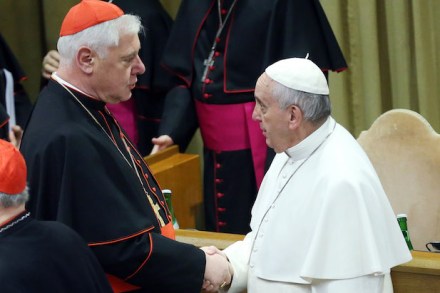
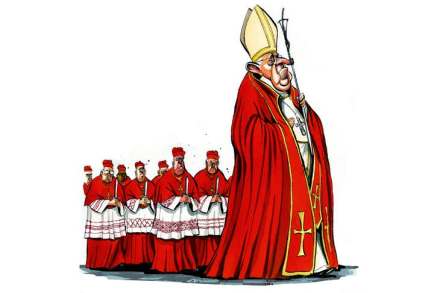
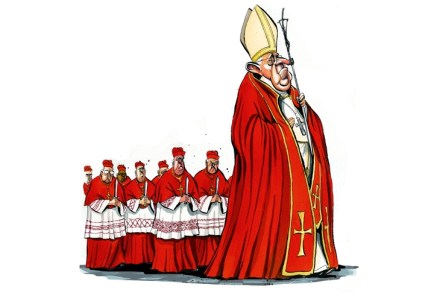
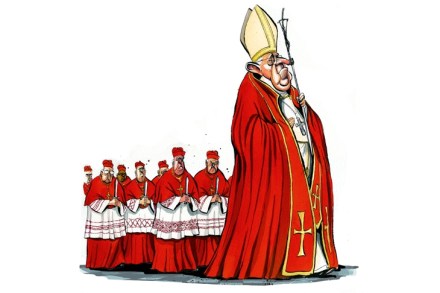
Allies of Pope Francis are saying that he's planning to follow the example of Benedict XVI and retire. But he'll only do so once he's appointed enough liberal cardinals to make sure that the next conclave doesn't elected a conservative who will interpret Catholic doctrine more strictly than he does. This, at least, is what allies of the Pope have been telling colleagues – claiming that they've heard it from the pontiff himself. (Francis himself is a notorious chatterbox and so are some of the cardinals close to him.) The Pope, now 80, apparently wants to hold three more consistories at which he will bestow the red hat on bishops who share his vision of reform (whatever that may be: the details are still sketchy, four years in).

Egypt’s Palm Sunday massacre is an attack on Christianity

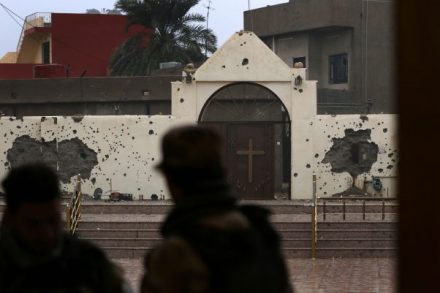
At 9.30 this morning, during Mass at St George's Church in Tanto, north of Cairo, Coptic Christians were celebrating the joyful entry of Jesus into Jerusalem on Palm Sunday. And then, in the twinkling of an eye, He was welcoming at least 25 of them into His kingdom, as a bomb went off inside the church. That, at least, is what hundreds of millions of Christians believe; as Holy Week begins. They will be praying for the slaughtered men, women and children of St Mark's – and also for the victims of a suicide bombing outside St Mark's Cathedral, Alexandria, soon afterwards. As I write, the death toll from the second attack is reported to have risen to 18.

Are you scared to talk about your faith at work?

Religious believers feel nervous about expressing their faith at work – either by wearing symbols or talking about religion. They're worried they'll be mocked by secular bullies. And employers aren't aware of the situation. Or don't care. That's the implication of a new ComRes report, which I'm discussing on this week's Holy Smoke with my new co-presenter Cristina Odone. As you'll hear, we don't agree. She thinks religion is becoming the love that dare not speak its name in the workplace. I think we're in danger of being dragged into a PC grievance culture. There are also some very sharp observations from Henry Dimbleby, co-founder of the Leon restaurant chain. Anyway, here's our argumentative podcast. Don't miss it – and subscribe on iTunes!

Persecuted Iraqi Christians ‘supported Trump 100 per cent’ because they felt betrayed by Obama

There's an extraordinary moment in this week's Holy Smoke podcast when the aid official supervising the resettlement of 12,000 Iraqi Christians says that the latter supported Donald Trump '100 per cent' in the US elections because they felt betrayed by the Obama administration. Stephen Rasche, legal counsel and head of resettlement programmes for the Chaldean Catholics of northern Iraq, confirms that this community – now on the verge of extinction, and due to run out of medicine in 45 days – has received no help from US aid agencies or the United Nations. We recorded the episode on Friday, the day after Rasche had addressed MPs and peers in Parliament. One hopes they listened carefully, having themselves just been the targets of an Islamist attack.

All’s well that ends well | 23 March 2017

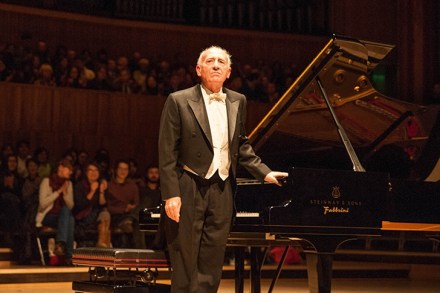
There’s a moment in the finale of Beethoven’s Appassionata sonata when the frenzied piano writing turns unexpectedly jolly. The late Antony Hopkins described it as a bit of an anticlimax, ‘a little too near to the traditional Gypsy Dance that appears so often in the less probable 19th-century opera’. I’m not sure whether I agree — but one thing I can tell you is that this is the perfect moment to tap the Uber icon on your phone if you want to be whisked away during the first burst of applause, before the pianist has had the chance to play an encore. That’s the effect Maurizio Pollini’s playing has on me.

The plot against the Pope | 12 March 2017

On the first Saturday in February, the people of Rome awoke to find the city covered in peculiar posters depicting a scowling Pope Francis. Underneath were written the words: Ah, Francis, you have intervened in Congregations, removed priests, decapitated the Order of Malta and the Franciscans of the Immaculate, ignored Cardinals… but where is your mercy? The reference to mercy was a jibe that any Catholic could understand. Francis had just concluded his ‘Year of Mercy’, during which the church was instructed to reach out to sinners in a spirit of radical forgiveness. But it was also a year in which the Argentinian pontiff continued his policy of squashing his critics with theatrical contempt.

Are Christian MPs being silenced by the ‘secular inquisition’?

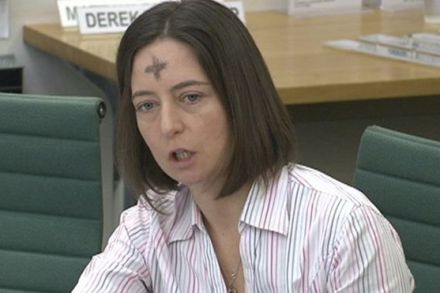
The BBC and the secular establishment don’t make life easy for Christian MPs. When Carol Monaghan, a Catholic Scottish Nationalist MP, turned up to a Parliamentary committee last week with an Ash Wednesday cross on her forehead, both her colleagues and the Beeb treated her as if she was wearing a Halloween costume. My colleague Stephen Daisley wrote about the incident for Coffee House, reflecting on the ‘secular inquisition’ that ostensibly Christian politicians must now face if they openly profess their faith. But do they even want to? Many Christian MPs are as reluctant as Tony Blair to ‘do God’ if the media are listening.

The plot against the Pope

On the first Saturday in February, the people of Rome awoke to find the city covered in peculiar posters depicting a scowling Pope Francis. Underneath were written the words: Ah, Francis, you have intervened in Congregations, removed priests, decapitated the Order of Malta and the Franciscans of the Immaculate, ignored Cardinals… but where is your mercy? The reference to mercy was a jibe that any Catholic could understand. Francis had just concluded his ‘Year of Mercy’, during which the church was instructed to reach out to sinners in a spirit of radical forgiveness. But it was also a year in which the Argentinian pontiff continued his policy of squashing his critics with theatrical contempt.

The Queen is a true Christian leader. But what about Prince Charles, who seems more interested in worshipping himself?

Every time I suggest on social media that the Queen is Britain's most inspiring Christian leader, there's a chorus of agreement – with Catholic voices among the loudest, interestingly. Churchgoers in this country have noticed that Her Majesty is quietly uncompromising about her beliefs; her Christmas message doesn't skate over the teaching that the infant Jesus is God incarnate: typically, it affirms it without qualification. But, as of this month, the Queen has been reigning for 65 years. Attention is inevitably focussing on the next Supreme Governor of the Church of England, presumably Prince Charles. And here the same people who recognise his mother as a Christian exemplar tend to roll their eyes.

Is Trump turning Islam into America’s ‘Great Satan’?

President Trump has a 'dark vision' of America under siege from radical Islam, says the New York Times – and that vision is now radically reshaping the policies of the United States. Hence the 'Muslim travel ban', as it's still being called, despite the protestations of the administration that it's nothing of the sort. Fear of Islam is now thoroughly entrenched in America: there's no doubt about that. It preoccupies Evangelical Christians and the much smaller constituency of white nationalists (some of whom used to admire jihadist Islam for its zero tolerance of Jews and gays before morphing into passionate if unconvincing Zionists).

Pope seizes power from the Knights of Malta, brutally ending 900 years of their sovereignty

The Knights of Malta – an ancient Catholic order that dates back to the crusades – have enjoyed the privileges of a sovereign state for 900 years. Last night the Order of Malta was effectively stripped of its sovereignty in what appears to be a brutal power-grab by the Vatican. Pope Francis has demanded and received the resignation of the Grand Master, Fra’ Matthew Festing, a devoutly orthodox Englishman of (even his critics agree) unimpeachable orthodoxy and personal morality. The Vatican has now taken charge of the order while the knights search for a grand master acceptable to Francis.

Holy Smoke podcast: Are evangelical Christians being sucked into the cult of Trump?

Some Christians on the fundamentalist fringe think President Trump is 'the new David' who will turn the United States into a godly kingdom. More mainstream evangelical leaders, meanwhile, hope he can reverse the tide of American secularism, not least with Supreme Court appointments. Both groups are likely to be disappointed – but as Tim Stanley of the Daily Telegraph and the Spectator's own Freddy Gray report on today's Holy Smoke podcast, the 45th President of the United States is surrounded by the sort of extravagant expectations associated with cult leaders. This is a recipe for trouble.

Safe and sound

This week the Southbank Centre began its ‘Belief and Beyond Belief’ festival — a series of concerts and talks claiming to explore the influence of religious inspiration on music. Last summer, after reading its miserably right-on publicity material, I wrote in this column that ‘Beyond Parody’ might be a better title. Jude Kelly, the Southbank’s artistic director, accused me of jumping to conclusions before the programme had been finalised. Well, now it has. In addition to concerts with no discernible connection to their composers’ faith, we’ll be treated to ‘How to be a Shaman’, ‘Mindfulness’, ‘What If God Was A Woman?’ and ‘Right to Die?’.

The trouble with Francis

On 2 January, the Vatican published a letter from Pope Francis to the world’s bishops in which he reminded them that they must show ‘zero tolerance’ towards child abuse. The next day, the American Week magazine published an article that told the story of ‘Don Mercedes’ — Fr Mauro Inzoli, an Italian priest with a passion for expensive cars and underage boys. In 2012, Pope Benedict stripped Inzoli of his priestly faculties, effectively defrocking him. In 2014, however, they were restored to him — by Pope Francis, who warned him to stay away from minors. Then, finally, the Italian civil authorities caught up with this serial groper of teenagers in the confessional.

How mass immigration is turning London back into a religious city

The bewildering influx of immigrants into London has had one effect that no one could have predicted 20 years ago: it's making our capital city religious again. We've noticed – but only up to a point. Islam is visible: the women in niqabs, the new mosques, the Halal butchers. But the transformation of Christianity in London is harder to spot. If you asked the average Londoner how many Sunday churchgoers in the city were black, I suspect he or she would be startled by the answer: about half of them. My guest on this week's Holy Smoke podcast is Ben Judah, whose knowledge of the demography of London was picked up by living in and among immigrant communities while researching his eye-opening book This is London.

Murdered Christians are 2016’s least fashionable minority

The murderers and persecutors of Christians have had a good year. With one exception – the killing of Fr Jacques Hamel in July as he celebrated Mass in a church in Normandy – the world has continued to look away as Islamists and other fanatics have slaughtered followers of Jesus Christ. I don't mean that we consciously look away – we simply don't know about most of these atrocities. There are no celebs out there 'raising awareness'; they're too busy weeping over Brexit and Trump. In one attack last June, 460 Christians died. Can you tell me where it happened? I couldn't have, until yesterday, when I did a Google search in preparation for today's Holy Smoke podcast.

The Pope’s bizarre rant about eating faeces makes me wonder if he should retire

Have you read what the Pope has just said about being sexually turned on by eating faeces? He wasn't talking about himself, let me quickly add: just human beings in general. They make him sound more like a desperately tasteless stand-up comedian than the Supreme Pontiff of the Catholic Church. I think the media have to be very clear, very transparent, and not fall into – no offence intended – the sickness of coprophilia, that is, always wanting to cover scandals, covering nasty things, even if they are true. And since people have a tendency towards the sickness of coprophagia, a lot of damage can be done. 'No offence intended.

Brahms’s benders

‘Brahms and Liszt’ is a lovely bit of rhyming slang, but it doesn’t have the ring of authenticity. Can you really imagine cockney barrow boys whistling tunes from the Tragic Overture and the Transcendental Études? Also, the Oxford English Dictionary reckons it only dates back to the 1930s. It always made me snigger, though, because it conjured up an implausible vision of pompous beardy Johannes and the social-climbing Abbé rolling around legless. Not so implausible, it turns out. The other day I was reading a review of a new life of Liszt by Oliver Hilmes that reveals ‘hair-raising episodes of drunkenness’ in his later years.

Why do church leaders suck up to Marxist regimes?

When Fidel Castro died, Pope Francis 'grieved'. That's right: he grieved for the man who – in addition to murdering and torturing his opponents – spent half a century persecuting the Catholic Church in Cuba. But perhaps we shouldn't be surprised: when Francis visited the island last year, he was gushingly appreciative of the regime's hospitality and pointedly ignored dissidents. Even the liberal Washington Post accused him of 'appeasing the Castros in repressive Cuba'. It all reminds me of the way, in my youth, churchmen soft-pedalled their criticism of Communist regimes because, whatever their 'flaws', they were supposedly on the side of the oppressed. Is that fair?