Damian Thompson

Damian Thompson

Damian Thompson is an associate editor of The Spectator

Podcast: Why do we insist on worshipping the NHS?

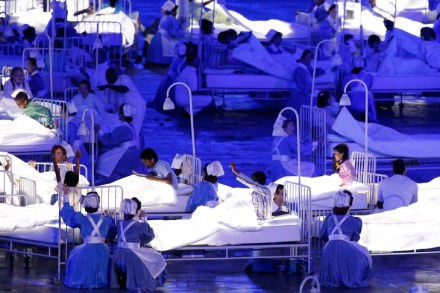
Nigel Lawson once wrote that 'the National Health Service is the closest thing the English have to a religion'. It's a justly celebrated line because it rings so true – though the second half of the sentence, even more uncomfortably true, is invariably left out: '... with those who practise in it regarding themselves as a priesthood'. This summer, adherents of our national quasi-religion are marking the 70th anniversary of its foundation by St Aneurin Bevan. The ceremonies – less preposterous but just as intense as Danny Boyle's tribute to the NHS in Britain's Olympic opening ceremony – have the unqualified blessing of our actual religions.

The disturbing case of Alfie Evans shames Britain

There was never going to be a happy ending to the story of Alfie Evans, the 23-month-old boy treated at Alder Hey hospital, Liverpool, for an undiagnosed neurological condition that destroyed his brain. But somehow the British establishment has contrived to make a tragic situation worse – to the point where large swathes of European and American public opinion are convinced that this terminally ill child and his parents have been the victims of a grotesque injustice. Whether that is the case will remain a matter of opinion: the medical and ethical questions raised by Alfie's plight are not easily resolved. Alder Hey's specialists were quite certain that there was no hope of saving him.

Could Dublin’s preachy liberals save Ireland’s abortion ban?

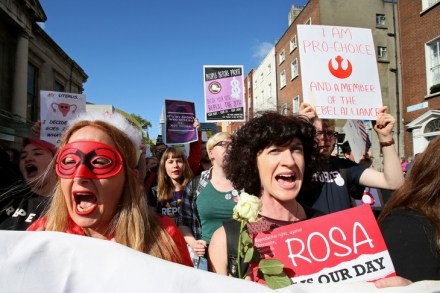
Could there be a Trump-style upset when the Irish vote next month on whether to repeal the country's ban on abortion? That's the question I discuss in the latest Holy Smoke podcast with my guest Tony Trowbridge, an Australian who became an Irish citizen when he was studying law at Trinity College, Dublin, in the 1970s. He's watched the country's transformation from something close to a Catholic theocracy into a society dominated by strident-but-smug media-savvy liberals. Irish political correctness is, if anything, even more preachy and joyless than the American variety. In that respect it's reminiscent of Irish Catholicism, which paradoxically used to have an almost Calvinist feel to it. No wonder the Church's moral authority evaporated so quickly when the abuse scandals surfaced.

Mozart’s diminuendo?

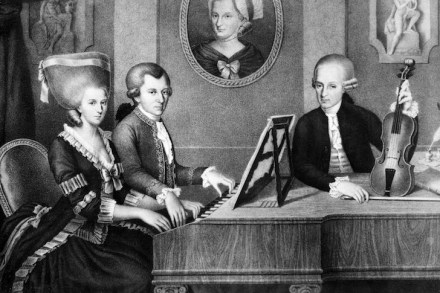
Glenn Gould used to say that Mozart died too late rather than too early. The remark was intended to get up the nose of Mozart-lovers and it succeeded. What a nerve, coming from a pianist whose own reputation peaked in his early 20s, with his first Goldbergs, and was especially tarnished by his Mozart piano sonatas, which he butchered in order to demonstrate their supposed faults. But still... Gould wasn’t the first person to wonder if there was a slight diminuendo in Mozart’s creativity in the couple of years before he died in 1791 at the age of 35. The last concerto, for clarinet, has a wistful, naive perfection that doesn’t fire up the neural pathways to the same extent as say, the C minor Piano Concerto of 1786.

The waffler and the thunderer: why Anglicans and Catholics will never unite

Last week The Spectator published a fascinating and mischievous piece by Ysenda Maxtone Graham entitled 'A tale of two Sarahs: the cuddly bishop vs the terrifying cardinal'. The first Sarah is Sarah Mullally, who is just about to take office as the first woman Bishop of London; she's a former nurse – indeed, the former Chief Nursing Officer and therefore Dame Sarah Mullally in her own right. But Hattie Jacques she ain't: she's friendly and 'inclusive' – i.e. fluent in churchspeak waffle after only two years as a suffragan bishop. The second is Cardinal Robert Sarah (pronounced Sar-AH), African-born Prefect of the Congregation for Divine Worship.

Holy Smoke: The strange death of liberal American Christianity

What rubbish we British talk about American Christianity. For example, we're still convinced that hardcore fundamentalist evangelicals can swing elections. But do Americans themselves really understand what's happening to religion in their own country? In the new Holy Smoke podcast, I'm joined by Professor Stephen Bullivant, Britain's leading expert on patterns of churchgoing, to discuss unsettling new statistics – unsettling, that is, if you rely on the liberal media for information about US Christianity. It's a freewheeling conversation, to put it mildly, that covers the growing gulf between so-called Trump-supporting 'cultural conservatives' and pious 'social conservatives. They're not the same thing at all.

The Vatican’s fake news: Pope Francis’s staff caught blurring out key words in photo of letter from Benedict

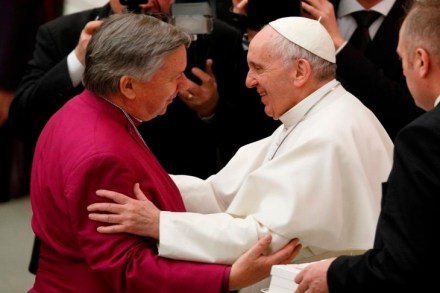
Fake news is dangerous because it uses 'distorted data' to manipulate the public, Pope Francis warned us in January. Well, he should know. Yesterday it emerged that his press office doctored a photograph of a letter from Benedict XVI in which the Pope Emeritus apparently praised some new books containing Francis's collected writings. Benedict wrote that the books reveal 'the interior continuity between the two pontificates, with all the differences in style and temperament'. But he added that he hadn't read them. The blogger Sandro Magister, an indefatigable critic of Francis, noticed the Vatican's sleight of hand and the Associated Press followed up the story.

Five years of Pope Francis: five things you need to know

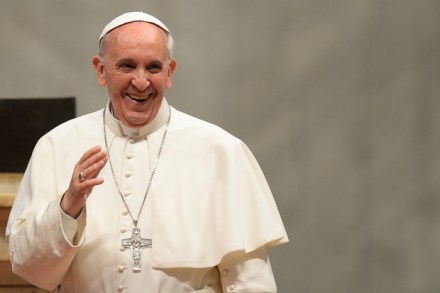
Five years ago, the name of the Pope was announced from the balcony of St Peter's and I was given less than an hour by the Daily Telegraph to write an article about a man I knew virtually nothing about. Cardinal Jorge Bergoglio, the Jesuit archbishop of Buenos Aires, had been fairly low down on the list of candidates acceptable to liberals – i.e. someone not in the mould of Benedict XVI. Sure enough, the new Pope Francis appeared wearing a plain white mozzetta or shoulder-cape; the BBC reported that he'd refused to put on the ermine-trimmed red velvet number sported by his predecessors, declaring that 'the carnival is over'. Actually, the carnival was just beginning: we were treated to one gesture after another of high-profile humility.

Meghan Marxist!

From our US edition

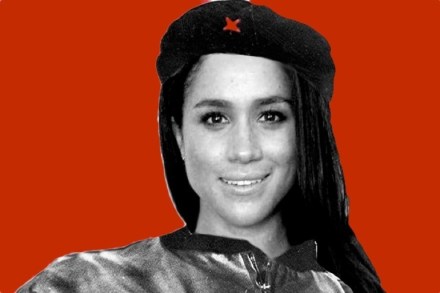
The wedding of Meghan Markle to Prince Harry has no precedent in the history of the Royal family. How will a relatively ordinary person, albeit a celebrity, cope with the rigid etiquette and stifling sense of entitlement of the culture into which they are marrying? I’m referring, of course, to Harry. From the moment he becomes Ms Markle’s husband, he will be expected to observe a code of behaviour designed to trip up the newcomer. I’m not kidding, alas. Since she was a small girl, Meghan has breathed the purified air of the liberal American ‘filter bubble’ – so called because it ruthlessly filters out people, ideas and even casual turns of phrase that are deemed ‘inappropriate’.

Sound judgment

I’m unlucky with Beethoven’s Appassionata Sonata. Twice in the past year I’ve bolted for the exit as soon the pianist crossed the finishing line. The first performance was phoned in to the Royal Festival Hall by a washed-out Maurizio Pollini. The second was musical chloroform, so dreary that it would be cruel to name the perpetrator. Cruel but fair, since I paid 30 quid for the ticket: Piers Lane. Fortunately he’d programmed it before the interval. By the time he’d moved on to Chopin I was back home listening to an Appassionata from another planet — simultaneously thoughtful and daring, the finale taken at such a perilous speed that it’s a miracle it didn’t come off the rails. The venue was Carnegie Hall, the year 1960.

Billy Graham’s legacy of Christian unity

As I write this, my Twitter timeline is filling up with tributes to Billy Graham, who has died at the age of 99. Donald Trump describes him as ‘the GREAT Billy Graham’. Well said, Mr President; for once, those Trumpian capital letters are perfectly judged.  What’s interesting is that so many of those tweets come from Catholics. Graham started out as your standard-issue Protestant revivalist, not just a Bible-basher but also a Catholic-basher. But when Pope John Paul II died in 2005, he described him as ‘unquestionably the most influential voice for morality and peace in the world during the last 100 years’. Today, Catholics and Evangelicals recognise that far more unites them than divides them.

Momentum isn’t hard left. It’s a theatrical cult

Hard left, my arse. Sorry to be vulgar, but surely that’s how Jim Royle, couch-potato patriarch of that glorious sitcom The Royle Family, would have reacted to reports that the ‘hard left’ Momentum movement is planning a ‘massacre of the moderates’ in the parliamentary Labour party. Don’t get me wrong. Having seized control of Labour’s National Executive Committee, Momentum is itching to purge the party’s benches of MPs who are insufficiently obsequious to Jeremy Corbyn. But calling this fragile political sect ‘hard’ left is silly. ‘Far’ left, perhaps — but let’s not confuse Momentum activists with the powerful Marxist bruisers of 40 years ago.

Is social media doing the Devil’s work?

Twitter brings out a mean streak in some people that can take the breath away. And I should know. I was re-reading my old tweets the other day and thinking: good God, if this was my actual conversation at a dinner party I’d have to get my coat - remember the bloke in The Fast Show? - right after the soup. In the new Holy Smoke podcast, I’m joined by Harry Mount, Lara Prendergast and Freddy Gray to discuss the warping of our personalities by social media. Also, the complete failure of religious leaders to address the moral dilemmas it throws at us every day: bishops, being hopeless at Twitter and Facebook themselves, ignore them, preferring to lecture us on the finer points of government welfare and immigration policies. It’s a no-holds-barred conversation.

Time is running out for the ‘Dictator Pope’ as a new scandal hits Rome

Cardinal Oscar Maradiaga of Honduras, one of the most influential figures in the Catholic Church, has been accused of receiving hundreds of thousands of dollars from a Catholic university in his ceremonial role as its chancellor – and of investing more than $1.2 million in London financial companies, some of which has now allegedly vanished. These claims form part of a set of spectacularly damaging but unproven allegations by the widely read Italian media outlet L'Espresso. You can read the report here; it also speculates about a 'close and unseemly relationship' between a bishop close to Maradiaga and a mysterious man apparently posing as a priest.

Why more and more priests can’t stand Pope Francis

We’re closing 2017 by republishing our twelve most-read articles of the year. Here’s No. 9: Damian Thompson on Pope Francis: On 2 January, the Vatican published a letter from Pope Francis to the world’s bishops in which he reminded them that they must show ‘zero tolerance’ towards child abuse. The next day, the American Week magazine published an article that told the story of ‘Don Mercedes’ — Fr Mauro Inzoli, an Italian priest with a passion for expensive cars and underage boys. In 2012, Pope Benedict stripped Inzoli of his priestly faculties, effectively defrocking him. In 2014, however, they were restored to him — by Pope Francis, who warned him to stay away from minors.

How the music of Bach can teach us how to die

Imagine if we had access to over a hundred Shakespeare plays in which the Bard was at or near the top of his game – but we didn't bother to watch them and couldn't even remember their names. Bach has as good a claim as any composer to be the Shakespeare of music, yet a vast proportion of his work is little known even by music-lovers. He left us more than 200 sacred cantatas (many more are missing), most of which are miraculously inspired. So, why their neglect? Is it their supposedly dour and frightening Lutheran theology? The latest Holy Smoke podcast suggests that, if we take the plunge, the music and texts of the cantatas help us address the central questions of existence – even if we're not Christians.

Fighting talk | 23 November 2017

There’s a scene in Alfred Hitchcock’s Marnie in which Tippi Hedren is emptying a safe while a cleaning lady silently drags her mop towards her. Can Hedren, playing the disturbed Marnie, slip down the stairs before the woman turns her head? I felt a twinge of the same panic last week interviewing the composer Nico Muhly, whose opera Marnie — based more closely on Winston Graham’s novel than on Hitchcock’s film — was given its world première by English National Opera last Saturday. Would I make it out of the room without asking the Wrong Question? Muhly, who made his name as the cherubic, prodigiously gifted but prickly protégé of Philip Glass, is scary to interview. This is well known in New York.

Cult classic

In Dan Brown’s new thriller, Origin, we are introduced to the Catholic church’s sinister far-right rival — a paranoid worldwide cult dedicated to undermining the reforms of Pope Francis. This toxic outfit has its own pope, who runs it from his ‘Vatican’ at El Palmar de Troya, on the Andalusian plain; hence its name, the Palmarian Catholic church. Brown describes a ‘soaring Gothic cathedral’ dominated by ‘eight towering spires, each with a triple-tiered bell tower’. Inside, members are required to attend interminable masses and pray to hundreds of freshly created saints, including St Adolf Hitler. Origin is a clumsily fashioned thriller, even by Brown’s standards, and you might imagine that he invented the Palmarian church.

Make mine a double

If two concert pianists are performing a work written for two grand pianos, there are two ways you can position the instruments. They can sit side by side, an arrangement known as ‘twin beds’. Or they can be slotted together so the performers face each other. That’s called a ‘69’. When Martha Argerich and Stephen Kovacevich play together, they opt for twin beds. Appropriately, you might think, since they’re divorced — but really it’s because Kovacevich insists on sitting so low that Argerich can’t see his head if she’s opposite him. With everyone else she prefers a 69, as do most pianists: it’s easier to make eye contact.

The Protestant passions of Queen Victoria: her biographer A.N. Wilson reveals all

Our guest on today's Holy Smoke podcast is A.N. Wilson, author of a hugely admired biography of Queen Victoria and – as you'll hear – the most mischievous intellectual in the land. Cristina Odone and I started out by asking about Victoria's vigorous (and possibly whisky-fuelled) persecution of Anglo-Catholics in the Church of England: the Queen lobbied hard for the legislation that sent several of them to jail for popish "ritualism". But that was the just the beginning of Wilson's hilarious whistlestop tour of the passions and prejudices of Queen Victoria.