Damian Thompson

Damian Thompson

Damian Thompson is an associate editor of The Spectator and presenter of The Spectator’s Holy Smoke podcast

The Pope’s cardinal errors

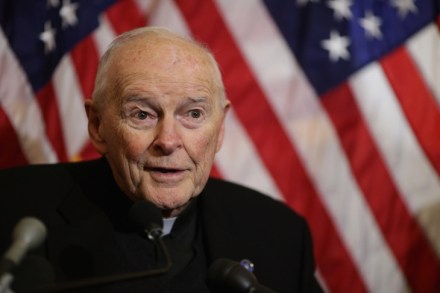
The Catholic Church is confronting a series of interconnected scandals so shameful that its very survival is threatened. Pope Francis himself is accused of covering up the activities of one of the nastiest sexual predators ever to wear a cardinal’s hat: his close ally Theodore McCarrick, the retired Archbishop of Washington, DC. Popes John Paul II and Benedict XVI are also implicated; they did nothing, or almost nothing, while Mc-Carrick was seducing every seminarian he could get his hands on. (‘Hide the pretty ones!’ they used to say when he visited seminaries.) Yet powerful cardinals kept quiet and are now suspected of lying their heads off after Mc--Carrick’s crimes were recently made public. McCarrick is the world’s only ex-cardinal.

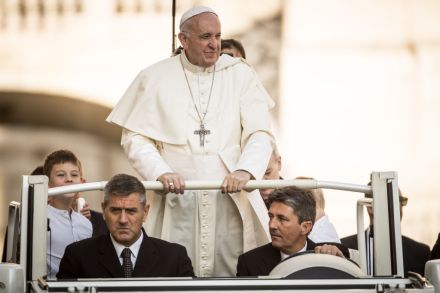
If Pope Francis resigns it could tear the Catholic Church apart

From our UK edition

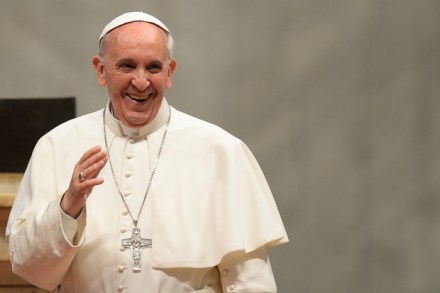
The allegation by a former senior Vatican diplomat that Pope Francis vigorously covered up sex abuse is looking more credible by the day. Archbishop Carlo Maria Viganò, former apostolic nuncio to the United States, says he told Francis in 2013 that Cardinal Theodore McCarrick, retired Archbishop of Washington, was a serial abuser of seminarians. The Pope ignored him, he claims – and lifted sanctions placed by Benedict XVI on McCarrick. Moreover, he fully rehabilitated the old man, who became one of his most trusted advisers. Viganò has called on Francis to resign.

How the media are covering up for Pope Francis

It’s depressing to see the media – both Catholic and secular – shielding Pope Francis from the explosive allegation made by his own former nuncio to the United States, that he knowingly covered up for and revived the career of serial gay predator Cardinal Theodore McCarrick. Archbishop Carlo Maria Viganò, in testimony published on Saturday, says he personally told Francis in 2013 that McCarrick, retired Archbishop of Washington, had ‘corrupted generations of seminarians and priests’. The Pope shrugged this off, says Viganò, and went on to lift canonical sanctions placed on McCarrick by Benedict XVI.

pope francis

If Pope Francis resigns it could tear the Catholic Church apart | 28 August 2018

The allegation by a former senior Vatican diplomat that Pope Francis vigorously covered up sex abuse is looking more credible by the day. Archbishop Carlo Maria Viganò, former apostolic nuncio to the United States, says he told Francis in 2013 that Cardinal Theodore McCarrick, retired Archbishop of Washington, was a serial abuser of seminarians. The Pope ignored him, he claims – and lifted sanctions placed by Benedict XVI on McCarrick. Moreover, he fully rehabilitated the old man, who became one of his most trusted advisers. Viganò has called on Francis to resign.

Pope Francis ‘covered up for sex abuser McCarrick’ and must resign, says senior archbishop

Pope Francis stands accused this morning of covering up the crimes of ex-Cardinal Theodore McCarrick of Washington, one of the most senior and sinister sex abusers in the history of the Catholic Church. The allegation comes from the Vatican's former apostolic nuncio to the United States, Archbishop Carlo Maria Viganò, 77, who has called on the Pope to resign. In a devastating 11-page written testament, Viganò says Francis lifted severe sanctions imposed on McCarrick for sexual wrongdoing by Pope Benedict XVI, the existence of which has not been made public until now.

US Catholic bishops could be forced out of office by a horrific dossier on sex abuse

A Pennsylvania grand jury report released last night has revealed that the Catholic Church in six dioceses systematically and sneakily covered up sexual abuse by priests on a horrifying scale. The American Church has now been plunged into the worst crisis in its history. The 884-report comes less than a month after the revelation that ex-Cardinal Theodore McCarrick, former Archbishop of Washington DC, was a compulsive predator. His serial molestation of seminarians was an open secret, and cannot possibly have come as a surprise to some of his friends in the US hierarchy. The grand jury report – which examined only a tiny fraction of America’s nearly 200 dioceses – has set off an explosion of rage from US Catholics on social media, including many priests.

An atheist goes on a Christian pilgrimage. What’s the point?

From our UK edition

The young writer Guy Stagg threw in his job a few years ago to undertake a pilgrimage to Jerusalem via Rome - choosing a hazardous medieval route across the Alps. It nearly killed him: at one stage, trying to cross a broken bridge in Switzerland, he ended up partially submerged in the water, held up only by his rucksack. His new book The Crossway grippingly describes his solitary journey. He was a pilgrim, not just a traveller, he insists - despite still being an atheist at the end of it. On this week’s Holy Smoke podcast, Guy explains why that makes sense to him. And I also take the opportunity to ask Harry Mount, editor of The Oldie, why he’s irresistibly drawn to church buildings while remaining an unbeliever - albeit an agnostic rather than an atheist.

d/Deaf and dumb

All my life I’ve wanted to compose music, and now I’ve done it. I’ve written a sonata for solo flute that boasts two highly original features; it’s five hours long and must be performed by a badger. Though it took me only five minutes to write, my opus one is guaranteed to get through to the second round of the next competition for new composers sponsored by Sheffield University and the Centre for New Music. That’s because they operate a ‘two ticks’ policy, as the Scottish pianist Philip Sharp — possibly the only classical musician in Britain who calls himself a classical liberal — revealed in his blog earlier this year.

I don’t want to keep pushing the Francis-Trump analogy. But the Pope makes it tough to resist the temptation

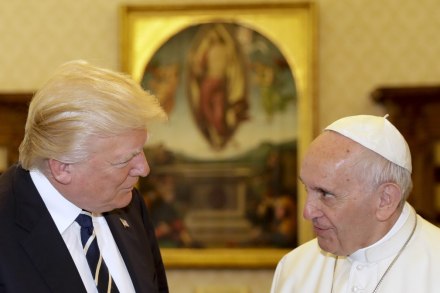
A solution ‘must be found’ in order to halt the Trump administration’s policy of separating migrant children from their families, according to an American cardinal. That’s hardly news, you may say: the US conference of bishops is united in outrage at this cruel practice. But the cardinal I’m quoting is Raymond Leo Burke, former Archbishop of St Louis, a theological and political conservative who is the closest thing the president has to an ally in the American hierarchy. Cardinal Burke therefore finds himself in an unfamiliar place: on the same side of the fence as the man who sacked him from a top-ranking post in the Vatican, Pope Francis.

Podcast: Pope Francis, homosexuality and the spectre of schism

From our UK edition

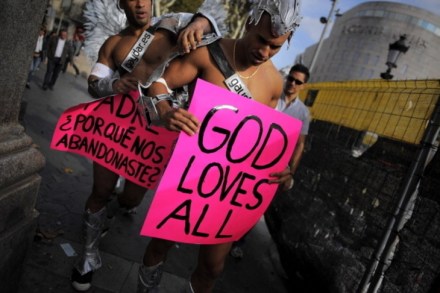
Only one pope in the history of the Catholic Church could have uttered the following words: ‘Juan Carlos, that you are gay does not matter. God made you like this and loves you like this and I don’t care. The pope loves you like this. You have to be happy with who you are.’ Speaking to a gay Chilean victim of clerical sex abuse last month, Pope Francis – yes, you guessed it – appeared to press the 'delete' button on the Church's teaching that homosexuality is 'intrinsically disordered'. As I say in this week's Spectator, the Vatican hasn't denied Juan Carlos Cruz's account of the conversation. So, even if Francis didn't use precisely those words, he's happy for them to be out there. Homosexuality was the subject that reduced the Anglican Communion to rubble.

Papal surrender

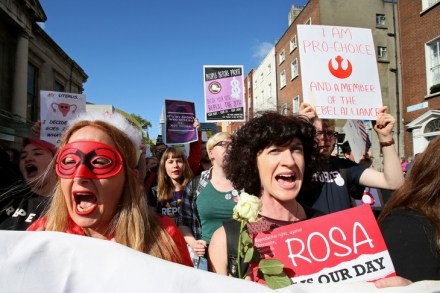
Just before Ireland voted overwhelmingly to end the country’s constitutional ban on abortion, Catholics in the fishing village of Clogherhead could be seen storming out of Sunday mass halfway through the service. Why? Their parish priest had come on too strong. He had not only ordered them how to vote but also supplied grisly details of an abortion procedure. Presumably some of them voted to repeal the eighth amendment. The ‘Yes’ campaign couldn’t have won its two-thirds majority without the support of practising Catholics. Very few of these, we can assume, were militantly pro-choice. Instead, they were reassured by promises that any future law would be limited in its impact — and determined to ignore a Catholic hierarchy contaminated by child abuse.

Podcast: Why do we insist on worshipping the NHS?

From our UK edition

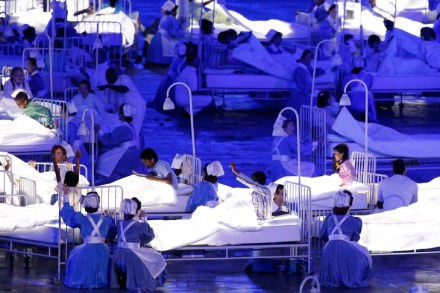
Nigel Lawson once wrote that 'the National Health Service is the closest thing the English have to a religion'. It's a justly celebrated line because it rings so true – though the second half of the sentence, even more uncomfortably true, is invariably left out: '... with those who practise in it regarding themselves as a priesthood'. This summer, adherents of our national quasi-religion are marking the 70th anniversary of its foundation by St Aneurin Bevan. The ceremonies – less preposterous but just as intense as Danny Boyle's tribute to the NHS in Britain's Olympic opening ceremony – have the unqualified blessing of our actual religions.

The disturbing case of Alfie Evans shames Britain

There was never going to be a happy ending to the story of Alfie Evans, the 23-month-old boy treated at Alder Hey hospital, Liverpool, for an undiagnosed neurological condition that destroyed his brain. But somehow the British establishment has contrived to make a tragic situation worse – to the point where large swathes of European and American public opinion are convinced that this terminally ill child and his parents have been the victims of a grotesque injustice. Whether that is the case will remain a matter of opinion: the medical and ethical questions raised by Alfie's plight are not easily resolved. Alder Hey's specialists were quite certain that there was no hope of saving him.

Could Dublin’s preachy liberals save Ireland’s abortion ban?

From our UK edition

Could there be a Trump-style upset when the Irish vote next month on whether to repeal the country's ban on abortion? That's the question I discuss in the latest Holy Smoke podcast with my guest Tony Trowbridge, an Australian who became an Irish citizen when he was studying law at Trinity College, Dublin, in the 1970s. He's watched the country's transformation from something close to a Catholic theocracy into a society dominated by strident-but-smug media-savvy liberals. Irish political correctness is, if anything, even more preachy and joyless than the American variety. In that respect it's reminiscent of Irish Catholicism, which paradoxically used to have an almost Calvinist feel to it. No wonder the Church's moral authority evaporated so quickly when the abuse scandals surfaced.

Mozart’s diminuendo?

From our UK edition

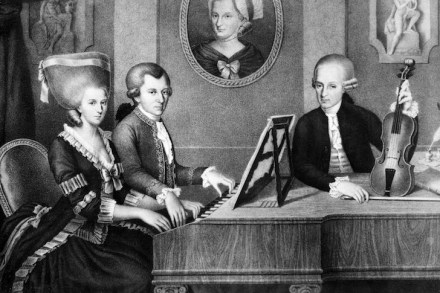
Glenn Gould used to say that Mozart died too late rather than too early. The remark was intended to get up the nose of Mozart-lovers and it succeeded. What a nerve, coming from a pianist whose own reputation peaked in his early 20s, with his first Goldbergs, and was especially tarnished by his Mozart piano sonatas, which he butchered in order to demonstrate their supposed faults. But still... Gould wasn’t the first person to wonder if there was a slight diminuendo in Mozart’s creativity in the couple of years before he died in 1791 at the age of 35. The last concerto, for clarinet, has a wistful, naive perfection that doesn’t fire up the neural pathways to the same extent as say, the C minor Piano Concerto of 1786.

The waffler and the thunderer: why Anglicans and Catholics will never unite

From our UK edition

Last week The Spectator published a fascinating and mischievous piece by Ysenda Maxtone Graham entitled 'A tale of two Sarahs: the cuddly bishop vs the terrifying cardinal'. The first Sarah is Sarah Mullally, who is just about to take office as the first woman Bishop of London; she's a former nurse – indeed, the former Chief Nursing Officer and therefore Dame Sarah Mullally in her own right. But Hattie Jacques she ain't: she's friendly and 'inclusive' – i.e. fluent in churchspeak waffle after only two years as a suffragan bishop. The second is Cardinal Robert Sarah (pronounced Sar-AH), African-born Prefect of the Congregation for Divine Worship.

Holy Smoke: The strange death of liberal American Christianity

From our UK edition

What rubbish we British talk about American Christianity. For example, we're still convinced that hardcore fundamentalist evangelicals can swing elections. But do Americans themselves really understand what's happening to religion in their own country? In the new Holy Smoke podcast, I'm joined by Professor Stephen Bullivant, Britain's leading expert on patterns of churchgoing, to discuss unsettling new statistics – unsettling, that is, if you rely on the liberal media for information about US Christianity. It's a freewheeling conversation, to put it mildly, that covers the growing gulf between so-called Trump-supporting 'cultural conservatives' and pious 'social conservatives. They're not the same thing at all.

The Vatican’s fake news: Pope Francis’s staff caught blurring out key words in photo of letter from Benedict

From our UK edition

Fake news is dangerous because it uses 'distorted data' to manipulate the public, Pope Francis warned us in January. Well, he should know. Yesterday it emerged that his press office doctored a photograph of a letter from Benedict XVI in which the Pope Emeritus apparently praised some new books containing Francis's collected writings. Benedict wrote that the books reveal 'the interior continuity between the two pontificates, with all the differences in style and temperament'. But he added that he hadn't read them. The blogger Sandro Magister, an indefatigable critic of Francis, noticed the Vatican's sleight of hand and the Associated Press followed up the story.

Five years of Pope Francis: five things you need to know

From our UK edition

Five years ago, the name of the Pope was announced from the balcony of St Peter's and I was given less than an hour by the Daily Telegraph to write an article about a man I knew virtually nothing about. Cardinal Jorge Bergoglio, the Jesuit archbishop of Buenos Aires, had been fairly low down on the list of candidates acceptable to liberals – i.e. someone not in the mould of Benedict XVI. Sure enough, the new Pope Francis appeared wearing a plain white mozzetta or shoulder-cape; the BBC reported that he'd refused to put on the ermine-trimmed red velvet number sported by his predecessors, declaring that 'the carnival is over'. Actually, the carnival was just beginning: we were treated to one gesture after another of high-profile humility.

Meghan Marxist!

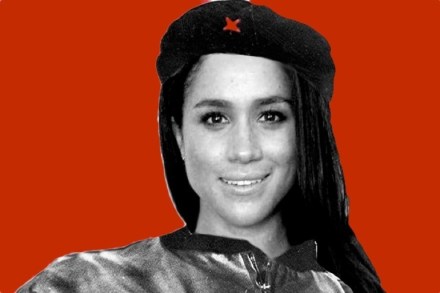
The wedding of Meghan Markle to Prince Harry has no precedent in the history of the Royal family. How will a relatively ordinary person, albeit a celebrity, cope with the rigid etiquette and stifling sense of entitlement of the culture into which they are marrying? I’m referring, of course, to Harry. From the moment he becomes Ms Markle’s husband, he will be expected to observe a code of behaviour designed to trip up the newcomer. I’m not kidding, alas. Since she was a small girl, Meghan has breathed the purified air of the liberal American ‘filter bubble’ – so called because it ruthlessly filters out people, ideas and even casual turns of phrase that are deemed ‘inappropriate’.