Damian Thompson

Damian Thompson

Damian Thompson is an associate editor of The Spectator

All about that bass

From our UK edition

Are Beethoven’s 'Diabelli' Variations really ‘the greatest of all piano works’, as Alfred Brendel claims? It’s hardly what you would call received wisdom. Even Stephen Kovacevich, who has given us two visionary recordings of the Diabellis, thinks some of the 33 variations are ‘boring’. I don’t agree, but I can understand why Brendel’s judgment seems odd. When the minor composer-cum-publisher Anton Diabelli sent his jaunty ‘waltz’ — really more of a country dance — to dozens of composers, he was hoping they’d each write one variation.

Sober reality

From our UK edition

Have you noticed how nearly everyone in the media has won an award? Is there even such a thing as a documentary maker who isn’t ‘award-winning’? Most journalists my age have picked up some sort of bauble. I sulked about this for years until a colleague reminded me that I did have an award: Private Eye’s ‘drunkest person at the Spectator party 1991’. I’d forgotten, perhaps because there was no awards ceremony. Shame. I like to think of myself clutching the prize — perhaps a tasteful statuette of someone doing a technicolour yawn — while insisting modestly that it should really have gone to the vicar who fell backwards into the rose bushes. Likewise, I was cross that I had never merited a single article about me in a national newspaper.

Why are bishops so boring?

From our UK edition

In the new Holy Smoke podcast episode, I finally get something off my chest. For 30 years I've been bored senseless by the public pronouncements of bishops – Anglicans and Catholics. Why do they feel the need to speak in such dreary jargon? Why do interesting clergy never make it to bishop? I'm joined by Harry Mount, editor of The Oldie, who shares my views. But I'm the one who names names, including that of a certain Cardinal Archbishop of Westminster, so our conversation could get me into trouble. Listen to it in case you never hear from me again...

Cardinal sins

From our UK edition

The publication of In the Closet of the Vatican by the French gay polemicist Frédéric Martel has been meticulously timed to coincide with Pope Francis’s ‘global summit’ of bishops to discuss the sexual abuse of minors. The book appeared in eight languages on Thursday morning, just as the gathering began. It is being hyped as a ‘bombshell’ that will ‘blow apart’ the summit. We shall see. Certainly many Catholic priests are more interested in Martel’s exposé than in Francis’s initiative. The author spent four years researching the subject of high-ranking gays in the Catholic church. Forty-one cardinals spoke to him.

Damian Thompson: my sister on fighting cancer with faith

From our UK edition

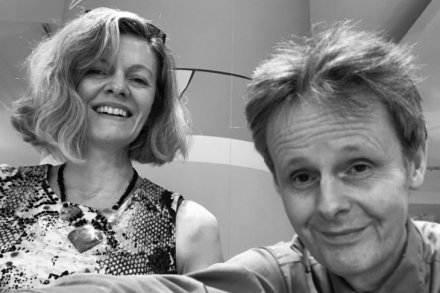
The photo above is of my sister Carmel and me having tea a few days after our mother’s funeral. She looks cheerful, doesn’t she? That’s because she was: although we both missed our mother intensely, and always will, we had done most of our grieving before she died, as we watched her tortured by Parkinson’s disease and severe dementia. Carmel looks well, too. And she thought she was. Ovarian cancer plays that trick on women. The first symptoms tend to be annoying rather than alarming. A few weeks after this photograph was taken, I was reassuring her that Irritable Bowel Syndrome is a common response to bereavement – which it is. But that’s not what was wrong with her.

The steady ship

From our UK edition

Every Monday and Thursday afternoon when I was growing up, a drum roll would sound throughout suburban Britain. ‘Damian? Blue Peter!’ my mother would call out, in a voice that made it clear that my presence was required in front of the television. Blue Peter — 60 years old this week — was top of the very short list of programmes of which my parents approved. We lived in Woodmansterne Road, Carshalton Beeches, Surrey. You can’t beat that for a Blue Peter-ish address. Our house was mock Tudor; my father worked for the Prudential. My younger sister and I, pupils at modest private day schools, slotted perfectly into the middle-middle-class demographic at which the show seemed to be aimed, though its reach was far wider.

Pope Francis was wrong to shower praise on Cardinal Wuerl

From our UK edition

Pope Francis has accepted the resignation of the Archbishop of Washington, Cardinal Donald Wuerl, who is under intense pressure to explain what he knew about his disgraced predecessor, the sex abuser and ex-cardinal Theodore McCarrick. Wuerl had asked to resign. He knew his position was untenable: not only is there widespread scepticism about his claim that he didn’t know McCarrick routinely assaulted seminarians, but he’s also under fire for alleged mishandling of abuse cases when he was Bishop of Pittsburgh. His departure hasn’t come as a surprise: he is past retirement age anyway.

Why are bishops so rude?

From our UK edition

This is a slightly misleading headline for today’s Holy Smoke podcast, because Fr Alexander Lucie-Smith, Lara Prendergast and I didn’t spend a lot of time duscussing episcopal rudeness. The episode is actually about snobbery in church circles. Fr Alexander muses on clergy who name-drop like dowagers while Lara picks her way through the minefield of wedding invitations. But rude bishops do crop up, because it's something I’ve wanted to get off my chest for years. That’s a bit rich, I know, given some of the articles I’ve written. But I reckon most journalists would rather deal with a slimeball from the Palace of Westminster than an over-promoted middle manager in a mitre (or cardinal’s red hat).

Striking the right note

From our UK edition

I was at a funeral the other day at which the music was so inspiring that I struggled to feel sad. That’s fair enough, you may think — but the person in the coffin was my own mother. This is a difficult point to explain in cold print, but there are reasons why I wasn’t grief-stricken at the death of the person who meant most to me in the world. My mother Pamela loved my sister and me with a passion; she radiated holiness, but in an unobtrusively English way. She was also a very private person, sometimes driven to distraction by her attention-seeking son. She never sought — and never received — any official recognition of her decades of service to the Catholic Church.

The Pope’s cardinal errors

The Catholic Church is confronting a series of interconnected scandals so shameful that its very survival is threatened. Pope Francis himself is accused of covering up the activities of one of the nastiest sexual predators ever to wear a cardinal’s hat: his close ally Theodore McCarrick, the retired Archbishop of Washington, DC. Popes John Paul II and Benedict XVI are also implicated; they did nothing, or almost nothing, while Mc-Carrick was seducing every seminarian he could get his hands on. (‘Hide the pretty ones!’ they used to say when he visited seminaries.) Yet powerful cardinals kept quiet and are now suspected of lying their heads off after Mc--Carrick’s crimes were recently made public. McCarrick is the world’s only ex-cardinal.

If Pope Francis resigns it could tear the Catholic Church apart

From our UK edition

The allegation by a former senior Vatican diplomat that Pope Francis vigorously covered up sex abuse is looking more credible by the day. Archbishop Carlo Maria Viganò, former apostolic nuncio to the United States, says he told Francis in 2013 that Cardinal Theodore McCarrick, retired Archbishop of Washington, was a serial abuser of seminarians. The Pope ignored him, he claims – and lifted sanctions placed by Benedict XVI on McCarrick. Moreover, he fully rehabilitated the old man, who became one of his most trusted advisers. Viganò has called on Francis to resign.

How the media are covering up for Pope Francis

It’s depressing to see the media – both Catholic and secular – shielding Pope Francis from the explosive allegation made by his own former nuncio to the United States, that he knowingly covered up for and revived the career of serial gay predator Cardinal Theodore McCarrick. Archbishop Carlo Maria Viganò, in testimony published on Saturday, says he personally told Francis in 2013 that McCarrick, retired Archbishop of Washington, had ‘corrupted generations of seminarians and priests’. The Pope shrugged this off, says Viganò, and went on to lift canonical sanctions placed on McCarrick by Benedict XVI.

pope francis

If Pope Francis resigns it could tear the Catholic Church apart | 28 August 2018

The allegation by a former senior Vatican diplomat that Pope Francis vigorously covered up sex abuse is looking more credible by the day. Archbishop Carlo Maria Viganò, former apostolic nuncio to the United States, says he told Francis in 2013 that Cardinal Theodore McCarrick, retired Archbishop of Washington, was a serial abuser of seminarians. The Pope ignored him, he claims – and lifted sanctions placed by Benedict XVI on McCarrick. Moreover, he fully rehabilitated the old man, who became one of his most trusted advisers. Viganò has called on Francis to resign.

Pope Francis ‘covered up for sex abuser McCarrick’ and must resign, says senior archbishop

Pope Francis stands accused this morning of covering up the crimes of ex-Cardinal Theodore McCarrick of Washington, one of the most senior and sinister sex abusers in the history of the Catholic Church. The allegation comes from the Vatican's former apostolic nuncio to the United States, Archbishop Carlo Maria Viganò, 77, who has called on the Pope to resign. In a devastating 11-page written testament, Viganò says Francis lifted severe sanctions imposed on McCarrick for sexual wrongdoing by Pope Benedict XVI, the existence of which has not been made public until now.

US Catholic bishops could be forced out of office by a horrific dossier on sex abuse

A Pennsylvania grand jury report released last night has revealed that the Catholic Church in six dioceses systematically and sneakily covered up sexual abuse by priests on a horrifying scale. The American Church has now been plunged into the worst crisis in its history. The 884-report comes less than a month after the revelation that ex-Cardinal Theodore McCarrick, former Archbishop of Washington DC, was a compulsive predator. His serial molestation of seminarians was an open secret, and cannot possibly have come as a surprise to some of his friends in the US hierarchy. The grand jury report – which examined only a tiny fraction of America’s nearly 200 dioceses – has set off an explosion of rage from US Catholics on social media, including many priests.

An atheist goes on a Christian pilgrimage. What’s the point?

From our UK edition

The young writer Guy Stagg threw in his job a few years ago to undertake a pilgrimage to Jerusalem via Rome - choosing a hazardous medieval route across the Alps. It nearly killed him: at one stage, trying to cross a broken bridge in Switzerland, he ended up partially submerged in the water, held up only by his rucksack. His new book The Crossway grippingly describes his solitary journey. He was a pilgrim, not just a traveller, he insists - despite still being an atheist at the end of it. On this week’s Holy Smoke podcast, Guy explains why that makes sense to him. And I also take the opportunity to ask Harry Mount, editor of The Oldie, why he’s irresistibly drawn to church buildings while remaining an unbeliever - albeit an agnostic rather than an atheist.

d/Deaf and dumb

All my life I’ve wanted to compose music, and now I’ve done it. I’ve written a sonata for solo flute that boasts two highly original features; it’s five hours long and must be performed by a badger. Though it took me only five minutes to write, my opus one is guaranteed to get through to the second round of the next competition for new composers sponsored by Sheffield University and the Centre for New Music. That’s because they operate a ‘two ticks’ policy, as the Scottish pianist Philip Sharp — possibly the only classical musician in Britain who calls himself a classical liberal — revealed in his blog earlier this year.

I don’t want to keep pushing the Francis-Trump analogy. But the Pope makes it tough to resist the temptation

A solution ‘must be found’ in order to halt the Trump administration’s policy of separating migrant children from their families, according to an American cardinal. That’s hardly news, you may say: the US conference of bishops is united in outrage at this cruel practice. But the cardinal I’m quoting is Raymond Leo Burke, former Archbishop of St Louis, a theological and political conservative who is the closest thing the president has to an ally in the American hierarchy. Cardinal Burke therefore finds himself in an unfamiliar place: on the same side of the fence as the man who sacked him from a top-ranking post in the Vatican, Pope Francis.

Podcast: Pope Francis, homosexuality and the spectre of schism

From our UK edition

Only one pope in the history of the Catholic Church could have uttered the following words: ‘Juan Carlos, that you are gay does not matter. God made you like this and loves you like this and I don’t care. The pope loves you like this. You have to be happy with who you are.’ Speaking to a gay Chilean victim of clerical sex abuse last month, Pope Francis – yes, you guessed it – appeared to press the 'delete' button on the Church's teaching that homosexuality is 'intrinsically disordered'. As I say in this week's Spectator, the Vatican hasn't denied Juan Carlos Cruz's account of the conversation. So, even if Francis didn't use precisely those words, he's happy for them to be out there. Homosexuality was the subject that reduced the Anglican Communion to rubble.

Papal surrender

Just before Ireland voted overwhelmingly to end the country’s constitutional ban on abortion, Catholics in the fishing village of Clogherhead could be seen storming out of Sunday mass halfway through the service. Why? Their parish priest had come on too strong. He had not only ordered them how to vote but also supplied grisly details of an abortion procedure. Presumably some of them voted to repeal the eighth amendment. The ‘Yes’ campaign couldn’t have won its two-thirds majority without the support of practising Catholics. Very few of these, we can assume, were militantly pro-choice. Instead, they were reassured by promises that any future law would be limited in its impact — and determined to ignore a Catholic hierarchy contaminated by child abuse.