Damian Thompson

Damian Thompson

Damian Thompson is an associate editor of The Spectator and presenter of The Spectator’s Holy Smoke podcast

Katy Balls, Olenka Hamilton, Damian Thompson

24 min listen

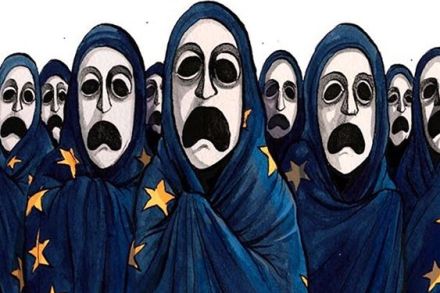
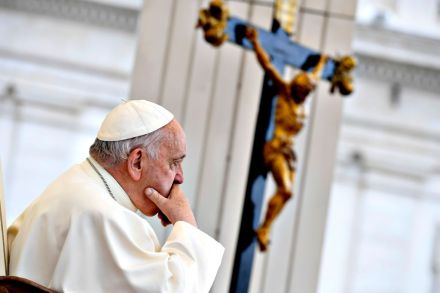
This week: (01:08) Katy Balls on the tricky relationship between Labour and the Unions, (07:11) Olenka Hamilton on why Poland is having a row with Brussels over migrants and asylum seekers and (15:29) Damian Thompson asks whether the Vatican is turning its back on tradition and beautiful art.

Barbie’s world: the normalisation of cosmetic surgery

39 min listen

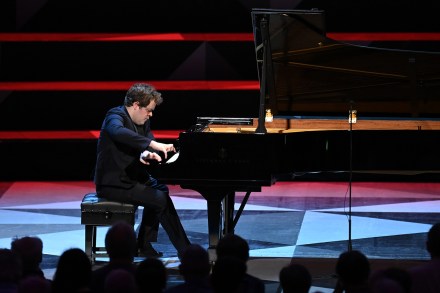
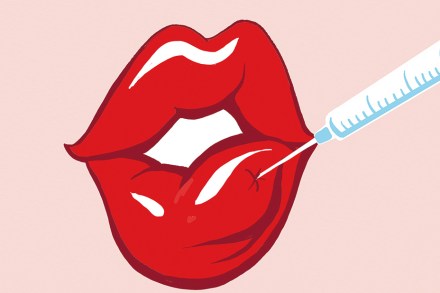
This week: Ahead of the release of the Barbie movie, Louise Perry writes in her cover piece about how social media is fuelling the cosmetic surgery industry. She argues that life in plastic is not, in fact, fantastic. She joins the podcast alongside the Times’s Sarah Ditum, author of the upcoming book: Toxic: Women, Fame and the Noughties, to discuss the normalisation of plastic surgery. (01:11) Also this week: In anticipation of the BBC Proms Philip Hensher writes in The Spectator that classical music has gone from being a supreme cultural statement, to just another curious musical genre.

Has the Vatican abandoned beauty?

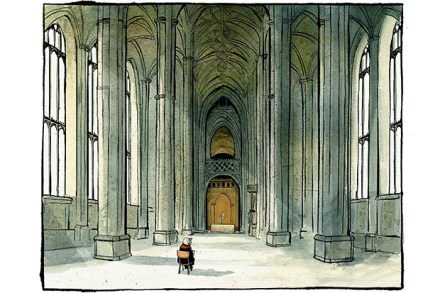
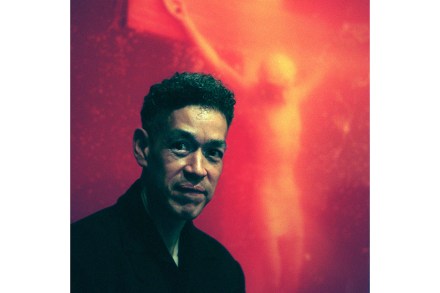
The Cathedral Church of the Holy and Undivided Trinity in the Cambridge-shire market town of Ely is one of the supreme achievements of European Gothic architecture. Its octagonal tower lifts the eye to a sumptuously restored wooden lantern from which Christ looks down in majesty. Who on Earth thinks faith can be awakened by seeing a crucifix floating in urine? On the last Friday in June, his gaze fell on a congregation worshipping him at Evensong. Two hours later, as the Times reported, the cathedral was filled with ‘a very different crowd: 800 people [wearing headphones] attending a 1990s-themed silent disco. They wore diamanté strappy heels and leather trousers, carried glow sticks, drank chardonnay, yelled the words to Robbie Williams hits and twerked in the nave to Beyoncé.

Escaping the atheist hell of North Korea

15 min listen

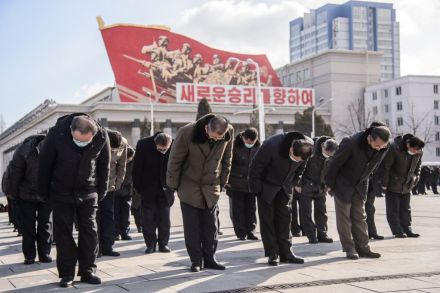
For 75 years, the most anti-Christian regime in modern history has thrown its citizens into prison camps if they are suspected of the slightest dissent. Ten per cent of people live in modern slavery; perhaps 200,000 are behind bars. I'm talking about North Korea, of course – a regime even more abhorrent than Stalinist Russia, but which attracts suspiciously little attention from Western governments and churches unless they feel threatened by its nuclear arsenal.  My guest in this episode of Holy Smoke is Timothy Cho, a Christian human rights activist who escaped from North Korea. Even as a child, he was sentenced to forced labour for the crime of watching a James Bond film.

Inside the world’s most vicious liturgy wars

23 min listen

In the ancient Syro-Malabar Church of south India, clergy who try to change the liturgy do so at their peril. At St Mary’s Cathedral Basilica in Ernakulam last December, a long-standing dispute over whether the priest should face the people led to scenes in which protestors attacked clergy in the middle of the service, sending the sacred vessels crashing to the ground. As a result, the cathedral was closed – and remains so, six months later. This liturgy war is a hideous embarrassment for the Vatican, because the Syro-Malabar Church is the second largest Eastern Church in Communion with Rome. Traditionally dated back to St Thomas the Apostle's mission to India, it has four millions members worldwide.

The search for the next pope is turning ugly

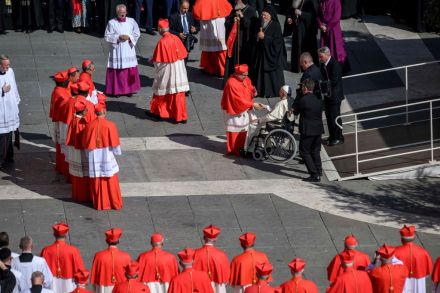
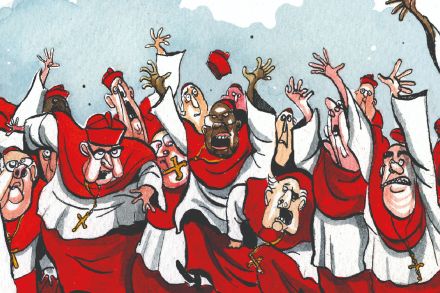
The Portuguese poet José Tolentino Mendonça is a handsome man in his fifties with a shaved head and meticulously trimmed beard. In one photograph he’s wearing an ultramarine blue polo shirt; in another, a lovely beige cashmere sweater that matches his tan. His poems depict emotional pain in cryptic language. In ‘The Last Day of Summer,’ unable to ‘choose attention or choose forgetfulness’, he recalls ‘your impatient and inconceivable eyes/ here with me now/ as I dance alone/ in the empty city’. But then Mendonça has no choice but to dance alone. He is a cardinal of the Catholic Church – and just possibly the next pope. Pope Francis has been in office for ten years and he’s spending more and more time in hospital.

The greatest female composer you’ve never heard of

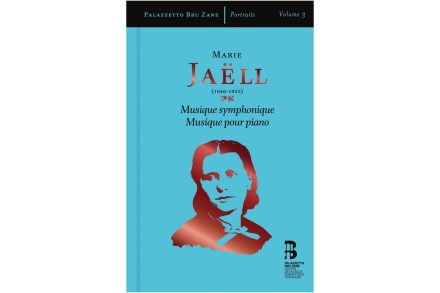
One of the most intriguing piano concertos of the late 19th century is unknown to the public – and no wonder: so far as I can work out, it has only been recorded once, on a speciality label devoted to neglected French repertoire. As I write this, there are only 11 copies available from Amazon and I recommend that you grab one quickly, because the Second Piano Concerto of Marie Jaëll (1846-1925) demands repeated listening. If you want proof women of the era could move beyond well-carpentered clichés, listen to Marie Jaëll The concerto’s harmonic language is superficially conventional: sweeping tunes decorated by arm-swinging arpeggios.

Succession: five nightmares for the next pope

14 min listen

A charming octogenarian who plays ruthless games with the people who think they're going to succeed him: I reckon Logan Roy would have recognised a kindred spirit in Pope Francis, despite their diametrically opposed politics. Like many of you, I'm heartbroken that Succession has come to an end – but if you're missing the back-stabbing melodrama then you could always start following the real-life struggle to shape the Catholic Church after Francis. Plenty of cardinals would like to swap their red cassocks for a white one. But, as I suggest in this episode of Holy Smoke, whoever eventually takes the job will have to confront at least five nightmare situations, most of them created by the camera-friendly but privately ferocious current occupant of the See of Peter.

The Vatican and the Mafia – why Italy can’t seem to shake off organised crime

35 min listen

The Sicilian Mafia is one of the most murderously amoral organisations on the planet – yet babyishly sentimental when it comes to Italian peasant Catholicism. And, like other branches of Italian organised crime, questions exist over whether they have allies in the Vatican, some of whose senior officials are as keen on money-laundering as the Mafia, only not so good at covering their traces.  The relationship between the hitmen and the hierarchy casts an exotic shadow over a new series of thrillers by Alexander Lucie-Smith, the first of which, The Chemist of Catania, has just been published. To quote A.N. Wilson, Lucie-Smith's plots are fast and his characters unforgettable. 'Menace, suspense, lust, love and fear all enliven his narrative.

The coronation music was – mostly – a triumph

Sir Hubert Parry was upgraded from knight bachelor to baronet by King Edward VII in 1902, and my goodness he earned it. His anthem for Edward’s coronation, I was Glad when they Said Unto Me, begins with a thrilling brass fanfare – or it has done since George V’s coronation in 1911: Parry’s original introit wasn’t sufficiently attention-grabbing, so he beefed it up. But the most spine-tingling moment has been there from the beginning. ‘I was…’ sings the choir on the tonic chord of B flat major – and then the word ‘glad’ bursts out where we aren’t expecting it, in G major.

How Protestant is the Coronation?

30 min listen

The Coronation in Westminster Abbey is the only occasion at which our monarch declares himself or herself to be a Protestant, thus ensuring that no Catholic can sit on the throne of the United Kingdom. Yet, paradoxically, the Coronation is the only English Royal ceremony which is replete with Catholic symbolism – the King will even wear robes whose origins lie in the vestments of the Catholic clergy. My guest in this episode of Holy Smoke – the historian Dr Francis Young of Oxford University – explains how this strange anomaly came about and why, for example, profoundly Protestant monarchs (and they included our late Queen) felt it necessary to take part in a distinctly un-Protestant ceremony. How Protestant is King Charles III?

Emperor Bokassa might have been a cannibal but his coronation music is worth a listen

If being asked to write music for the coronation of a king is an honour, then doing it for an emperor is even more so, you might think. That was certainly the view of Jean-François Le Sueur (1760-1837), an opera composer who was made director of music at Notre-Dame by Napoleon. At the self-coronation of the ‘Emperor of the French’ in 1804, two choirs and orchestras performed pieces by Le Sueur, who dined out on it for the rest of his life. Fortunately for him, the French authorities, perhaps keen to forget the vulgar spectacle, never got round to clarifying who wrote what.

The Starmtroopers: Labour’s new recruits

43 min listen

This week: In her cover piece for the magazine, The Spectator’s political editor Katy Balls writes that as Labour prepares for government, Keir Starmer is rooting out the far left sections of his party and replacing them with moderates. She is joined by John McTernan, former political secretary to Tony Blair, to discuss the return of the Blairites (01:06). Also this week: The Spectator’s Russia correspondent Owen Matthews writes about Putin's three most prominent political prisoners. He joins the podcast alongside The Spectator’s assistant online editor Lisa Haseldine to consider the cost of speaking up against the regime (17:50).

Inside America’s Satanist movement

The largest gathering of Satanists in history is taking place in Boston this weekend. It’s not open to the public. Or, to be more precise, no longer open to the public. That’s because all the tickets have been sold. They’ve downgraded the supernatural in favour of aggressive secularism, with an emphasis on trans issues The second annual SatanCon is being organised by The Satanic Temple or ‘TST’, the world’s biggest Satanic sect, at the Marriott Hotel in Copley Square. That’s the same Marriott chain founded by a devout Mormon family who, back in the 1960s, only agreed to serve alcohol to guests after securing permission from the president of the Church of Latter Day Saints.

Why didn’t Beethoven go to Mass?

38 min listen

Ludwig van Beethoven had a profound faith in God. He was born and raised a Catholic and on his deathbed he asked to receive the Last Rites. He told the priest, 'I thank you, ghostly sir – you have brought me comfort.' One of his closest friends, Archduke Rudolf of Austria, was made a cardinal (before being ordained priest and bishop, something inconceivable today). To mark Rudolf's enthronement as Archbishop of Olomouc in 1819, Beethoven wrote a great Mass, and took such trouble over the setting of the Latin words that he delivered the work three years late. Yet, so far as we know, not once did the adult Beethoven actually attend a church service. Why?

The battle over female Catholic priests has just begun

16 min listen

This week we heard the unfamiliar sound of one of the Catholic Church's most influential cardinals turning the handle of a door that has remained firmly shut for 2,000 years. It's marked 'Catholic women priests', a development – such is the pace of chaotic change under this pontificate – that is now a real long-term possibility. Pope Francis says he's against this innovation, but he relentlessly promotes bishops who favour it. Until now, they've been discreet about their views. Now, to use a fashionable cliché, they're saying the quiet bit out loud. As I point out in this episode of Holy Smoke, Catholic conservatives are confident that women will not – indeed, cannot – be ordained to the Catholic priesthood.

How to lose friends and ghost people

In Elizabeth Day’s new book about the fragility of friendships, annoyingly but memorably entitled Friendaholic, there’s a gripping chapter on ‘ghosting’, the process of turning a friend into an ex-friend without explaining why. It culminates in the act of cutting them dead in public. I’ve always found it a haunting experience when someone does it to me, and I hope my ex-friends feel the same way when I do it to them. It can be a difficult trick to pull off, especially at a big party. I worry that the person hasn’t noticed that he or she is dead to me, and so after my initial snub I move awkwardlyaround the room, glaring at them from multiple directions. By the end of the evening they’re sighing with relief that they’ve been dropped by a loony.

Is Abu Dhabi’s multi-faith ‘Abrahamic Family House’ a beacon of hope or a creepy PR exercise?

19 min listen

The Abrahamic Family House is the name for three giant concrete cubes – a church, a mosque and a synagogue – that have just officially opened their doors in Abu Dhabi. The project is the fruit of a controversial agreement signed there in 2019 by Pope Francis and the Grand Imam of Al-Azhar, Ahmad Al-Tayyeb, that disturbed many Christians with its statement that the existence of separate religions is God's will. But it's a spectacular coup for the government of the United Arab Emirates and will no doubt reassure expats that there's freedom of religion in the UAE. In fact, I wonder how many of them are even aware that 'apostasy' – for example, a Muslim converting to Christianity – remains a capital offence in the Emirates.  But is this sort of carping justified?

Why does everyone hate Max Reger?

The German composer Max Reger, born 150 years ago next week, is mostly remembered today for countless elephantine fugues and one piece of lavatory humour. When he was savaged by the Munich critic Rudolf Louis, he wrote back to him: ‘Sir, I am sitting in the smallest room of my house. I have your review before me. In a moment it will be behind me.’ The quip was probably borrowed from Voltaire, but since no one can find it in his writings the credit has gone to Reger. Max Reger was probably the most technically accomplished writer of large-scale fugues since Bach But let’s not dwell on the image of the morbidly obese composer taking his revenge. What’s interesting is that Reger was hated by so many critics.

The war over the Latin Mass escalates as the Vatican slides into chaos

31 min listen

Cardinal Arthur Roche, the Pope's famously ambitious liturgy chief, has stepped up his campaign against the Traditional Latin Mass, which he's been trying to suppress ever since he was Bishop of Leeds 15 years ago. This week he persuaded Francis to back his ruling that the ancient Mass can only be celebrated in parish churches with his permission – thus taking the decision out of the hands of the world's bishops, many of whom are furious at being undermined in this way.  Traditionalists are in despair; they aren't optimistic, to put it mildly, that 'Uncle Arthur' will grant permission and they fear there is worse to come. In this week's Holy Smoke I talk to moral theologian and parish priest Fr Alexander Lucie-Smith about the mounting chaos in the Vatican.