Damian Reilly

Damian Reilly

Tim Dillon is seriously funny

From our US edition

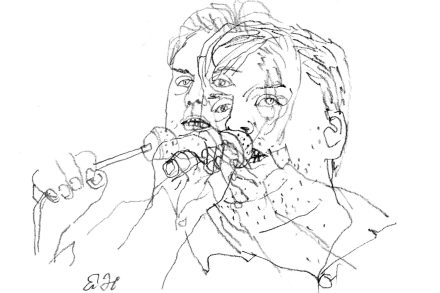
‘I look at my father and it’s like he’s been lobotomized, but maybe he’s figured something out,’ 36-year-old comedian Tim Dillon tells me. ‘I may find out it’s the only way to survive.’ Dillon is increasingly recognized as the heir apparent to countercultural comedy greats such as Bill Hicks and George Carlin. It wasn’t so long ago he was selling subprime mortgages and photocopiers, and working as a New York tour bus guide. A recovering addict (11 years clean), his life changed in 2019 when podcast king Joe Rogan spotted his defense of canceled comedian Louis CK on Facebook and invited him to be a guest on The Joe Rogan Experience, a podcast whose global audience is measured in the hundreds of millions.

Dillon

Elon Musk is too funny for Saturday Night Live

From our US edition

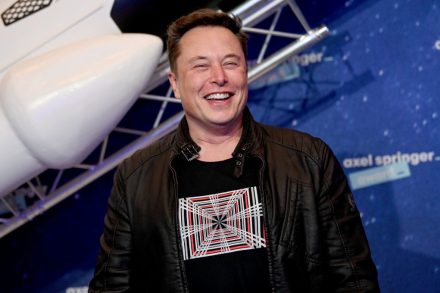
My secret hope is that Elon Musk uses his Saturday Night Live platform this weekend to launch a comedic assault on political correctness so brutal it is seared forever onto the collective retina of the biggest audience the show has had in decades. Provided he used SNL to tear with equal vigor into each faction of the intersectional oppression spectrum — ethnic minorities, LGBTQIAA+ folk, fat activists, the blue-haired and non-binary, flat-earthers and feminists — and managed while doing so to be undeniably funny, I believe Musk could get away with it. He could also create a cultural moment the value of which as a non-fungible token would be more than perhaps even he could afford.

elon musk

Biden’s Rodeo: How were his first 100 days?

30 min listen

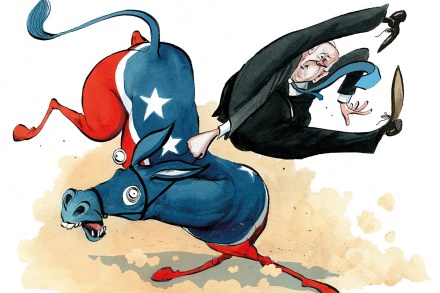
Joe Biden is approaching his first 100 days in office. How has he fared, and has he delivered on his promise to bring about a return to normalcy? (1:15) Plus, the proposed European Super League wasn’t super after all. The six English teams invited to join the league pulled out earlier this week, and the plans have now been shelved. But will it still happen eventually? (10:30) And finally, what’s it really like to live in a listed building? (19:30)With the Spectator's US editor Freddy Gray; our economics correspondent Kate Andrews; journalist Damian Reilly; veteran football reporter Julie Welch; Spectator contributor Hamish Scott; and Liz Fuller, a buildings at risk officer for Save Britain’s Heritage. Presented by Lara Prendergast.Produced by Max Jeffery and Sam Russell.

How the Super League sabotaged itself

‘So you’re telling me they’re wetting the bed because we’re suggesting the same teams should compete in a competition in which the same teams always compete?’ It’s not hard to see how the owners of the European Super League clubs, the Americans particularly, might be confused by the splenetic reaction of English football fans to their proposal to update the annual Champions League megabucks jamboree – a tournament that at the sharp end has for decades featured pretty much exclusively the same teams. Instead of being able to point that out, now the wantaway billionaires must grovel and debase themselves. Liverpool owner John Henry has even released a video not unlike those hostages are sometimes forced to make by terrorists.

Football’s Super League critics are being hypocritical

Is it possible meaningfully to oppose the decision by Europe’s biggest football clubs to form an unaccountable, anti-democratic Super League if you voted to Remain? The obvious answer is that it’s not. Not that that will stop anyone. The proposed Super League is an almost exact sporting distillation of the issues that defined the European Union referendum: the continent’s financial power house football clubs are threatening to carve up immensely lucrative markets while simultaneously shutting down external competition irreversibly.

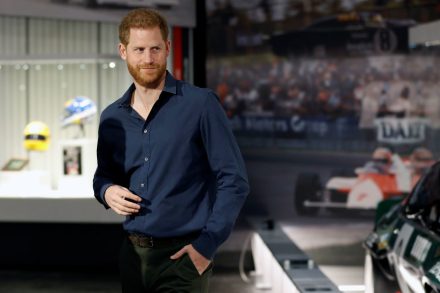
Prince Harry is here to help

From our US edition

Nothing duller for those of us not in therapy than listening to people who are in therapy talking about it, something they seem to like to do incessantly, at every opportunity. For this reason, my heart sank during the Oprah interview — which I’d been looking forward to tremendously — when early into his appearance, Prince Harry made an unsmiling reference to the ‘many years’ he had spent ‘doing the work — and doing my own learning’. Here we go, I thought. Sure enough, not long later he was telling the ludicrously softball interviewer of his family, his father, particularly: ‘they only know what they know. I’ve tried to educate them, through the process that I’ve been educated.’ Difficult to imagine how much the Windsors must have enjoyed that.

harry therapy

The plot against Philip Roth

From our US edition

Hard to avoid the suspicion the latest clamor for Philip Roth to be canceled isn’t just a marketing gimmick by the publishers of the great man’s latest biography. #MeToo repackaged as a means to shift product, in other words. For what could we possibly now have learned about the author, just three years after his death, that would cause a meaningful reappraisal of his position — with Saul Bellow and Don DeLillo — at the pinnacle of modern literature? That he was very sexy? Is that it? ‘God, I’m fond of adultery,' he is said to have said in Blake Bailey’s Philip Roth: The Biography, apparently while prowling London on the hunt for Chinese prostitutes. Pass the smelling salts.

philip roth

The problem with Facebook’s ‘Supreme Court’

He might now be one of the most powerful men in global media, but I find whenever I see a photograph of Nick Clegg, Orwell’s quote about everyone getting the face they deserve by 50 comes to mind. Now 54, the remnants of the boyish idealist are still just about there, but the eyes to me are ledgers of too much unhappy compromise – deadened, I always assume, by the principles he felt forced by David Cameron to sacrifice for personal advancement, and by the amazing decision to see out the remaining years of a career spent failing upwards as Mark Zuckerberg’s lavishly remunerated PR lickspittle. For a decade and more, Clegg positioned himself as the good guy of British politics – radiating sixth form actor star power at every opportunity.

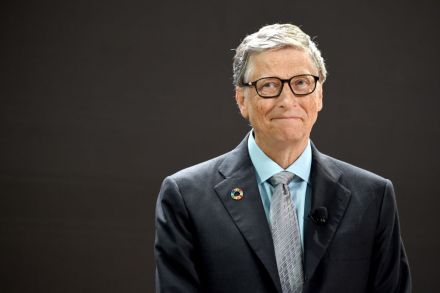
What’s Bill Gates’ beef with flatulent cows?

'Fart for freedom, fart for liberty – and fart proudly', was how Benjamin Franklin put it shortly after founding the United States. It’s an injunction the cows of the developed world appear to have taken seriously: a strategy for liberation, executed brilliantly you have to say, that seems finally to have brought them to the brink of emancipation. Last week, billionaire and long-time committed burger eater Bill Gates became the latest champion of the cows’ cause (namely: please stop eating us). He said the time had come for inhabitants of all wealthy nations to cease enjoying beef and instead to make do with a synthetic substitute. According to him, it’s the only way to prevent civilisation ending in a cow-fart fireball apocalypse. Or something like that.

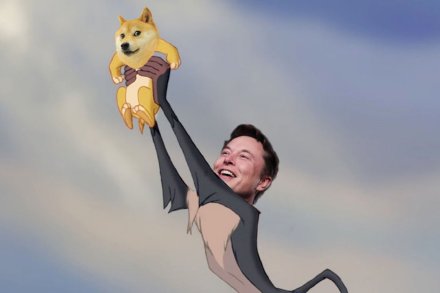
Will Dogecoin give Elon Musk the last laugh?

There’s something deeply pleasing for fans of cosmic jokes everywhere about the world’s richest man personally taking the time to sell you a pup. Or a pup-related crypto-currency, at least. In between lobbing rockets at the moon, singlehandedly revolutionising the car industry and raising a ten-month old child, Elon Musk has recently been using Twitter to talk up Dogecoin – a joke crypto started in 2013 by geeks for geeks in homage to an internet meme featuring a knowing-looking Shiba Inu dog. Still with me? Every few days, Musk posts a playful tweet referencing the coin to his 46 million followers. 'Dogecoin is the people’s crypto. No need to be a gigachad to own,' he tweeted last week (chad is nerd-speak for a potently attractive alpha male).

Harry and Meghan’s podcast of platitudes

Why is there not a single trans voice featured in Harry and Meghan’s first podcast? It’s a question that needs answering. The half-hour recording – the couple’s first since signing a $25 million deal with Spotify – sets out to explore the psychological impact of the Covid-19 pandemic on, as the Duchess herself puts it, ‘people from all walks of life’. Given this description, excluding the trans community from participating seems, at best, problematic – perhaps even sinister. Why leave trans people out in this most public of discourses? This editorial decision – a slap in the face for an already marginalised community – seems all the more surprising because of who has made it.

Our collective nervous breakdown

From our US edition

It’s being sold by some as a glorious revolution, but what Western culture is really experiencing is a garden variety nervous breakdown. It’s hard to pinpoint exactly when it began, but it’s certainly well progressed, wouldn’t you agree? The latest mania for gathering in furious mobs to denounce and expunge reminders of our past is what therapists call transference. We don’t hate our forebears anything like as much or as vigorously as we hate ourselves. How could we? They gave us everything we have. Instead, we are shamed by them. Born into what, statistically, is the easiest time in human history to be alive, what have we done or worked towards relative to the men and women cast in bronze or marble who came before?

nervous

Memes, marvelous memes

From our US edition

An unexpected pleasure of lockdown so far has been the increased frequency with which I have received funny video clips, sent by friends via Whatsapp. Almost uniformly they are in appalling taste. Some are related to the crisis, but not all. I find I cannot get enough of them. Enthusiastically, I watch and pass them on in the spirit they are sent: the gift of laughter during what is otherwise quite a dull time. The standout star of these videos — indeed, he features in several thanks to what Boris Johnson refers to as the 'wizardry of modern technology' — is a nude bodybuilder who nonchalantly displays a todger that, flaccid, is about the size of a wine bottle. It’s a magnificent, unforgettable sight.

wood memes

In defence of the BBC

I sometimes wonder if I’m the last person left in Britain who loves the BBC and thinks it represents brilliant value for money. Yes, there is much with which to be infuriated - like most Leavers, for example, I find watching Gary Lineker present Match of the Day about as enjoyable as I imagine Remainers would watching Nigel Farage do the same job. And yes, the Today programme segment earlier this week on the latest developments in telephone hold music was idiotic. But does the BBC really deserve, once again, to be threatened with licence fee reform? The argument against the BBC licence fee is that it is effectively a tax. It isn’t – you can opt-out – but even if it were it would be a good thing.

The nightmare after crypto

From our US edition

What’s worse to lose – your keys or your wallet? That’s the question more than 100,000 angry investors who used the QuadrigaCX exchange to purchase cryptocurrency now contemplate. The apparent sudden death in December of Canadian Gerald Cotten, the exchange’s 30-year-old founder, has without warning left them in a $250 million-shaped hole. Mr Cotten, who had Crohn’s disease, is said to have died while on honeymoon in India after his bowel became perforated during what is reported to have looked at first like a bad case of Delhi belly. With him, we are led to believe, went the only crypto key to the place in which QuadrigaCX investor money is stored – repositories known as offline ‘wallets’.

gerald cotten quadrigaCX

When did Donald Trump’s tweets become so boring?

From our US edition

It wasn’t so long ago Trump’s tweets were easily the planet’s most important media events. Comedy zingers, outrageous denunciations of the previously undenounceable, white knuckle threats of nuclear apocalypse sent in the small hours… how we hung on the leader of the free world’s every word. But now, suddenly, it feels like he’s phoning them in – tweeting by numbers. Where’s the brio? Where’s the zip? The heart seems gone. I can’t help but wonder if he needs more Executive Time. Sure, the insults and the catchphrases are still there, but they no longer carry the famous Trump bite. Take these tweets – two of his more lively – from the last seven days: https://twitter.

donald trump tweets

Why must we see Jeff Bezos’s penis?

From our US edition

If reports are true, Jeff Bezos’s penis is on the verge of going viral — waltzing off alone into the great unknown of cyberspace and there, under the glare of a billion eyeballs, having its power as an agent of chaos and shame amplified immeasurably. As you read this, you can be sure battalions of Bezos lawyers are working around the clock to keep the Bezos penis where it has hitherto always been: billeted, shrouded, presumably, in the comfortable privacy of mankind’s finest breathable linens. Good luck to them, for they will have their work cut out.

jeff bezos’s penis

Masculinity isn’t toxic – corporate moralizing is

From our US edition

The first thing that astonishes about Gillette’s effort to alienate an entire customer base in a single two-minute slickly produced virtue signal is the arrogance. The unblinking temerity of a brand believing it’s somehow its duty not merely to make an appeal for commercial inclusion, but rather to instruct millions of people on how to lead their lives. If the ideological vacuum left by the decline of Christianity in the West really is being filled with a rush of competing forces, then surely we can view Gillette’s ad as consumerism’s most blatant effort yet from the pulpit of modernity to claim the hearts and minds (and souls) of the lumpen masses.

toxic masculinity

The Twitter dominance of Piers Morgan

From our US edition

No one has mastered Twitter like Piers Morgan. Every day he singlehandedly generates great tsunamis of outrage and ecstatically surfs them onto the beach of global fame. In a time – and on a platform – where self-promotion is king, Morgan’s incredible talent for it stands out. Take this week. Morgan began by offering the opinion that Holly Willoughby, telegenic host of the popular British show I’m a Celebrity Get Me Out of Here, had ‘very sizzling’ legs. Cue predictable howls of indignation about the sexual objectification of a high-profile woman. ‘But Holly’s legs ARE sizzling, just stating a fact’, he tweeted playfully. That was Monday. https://twitter.

piers morgan

Breaking the bank | Who’s afraid of bitcoin?

Sam Reed, 29, is co-founder and chief technology officer of the Bitcoin Mercantile Exchange (BitMEX), the largest crypto trading platform, and the 26th-largest exchange of any type in the world. His story — of how he went from itinerant web developer to co-founder of what some have called the ‘Goldman Sachs of bitcoin’ — is both inspiring and a bit jealousy-inducing. Living, he says, a relatively quiet life in Hong Kong in 2014 after trying, and failing, to launch a series of internet start-ups (‘I was doing a ticketing start-up to compete with Ticketmaster, which is kind of a dumb thing to do’), he started giving workshops and presentations to aspiring web developers. One of these presentations changed his life.