Dale Bassett

Reforming schools: choice and autonomy

Last week Reform published its 2011 scorecard of the coalition government’s public service reform programme. Following on from articles on the health and welfare reforms, Dale Bassett, Research Director at Reform, explains why the coalition’s school reforms are not as radical as they appear.   The government is pursuing a dual agenda in education reform, altering structures (to increase decentralisation and autonomy) and centralising standards (to increase rigour and central accountability). Key government reforms include giving all schools the right to convert to academy status and allowing charities and groups of parents or teachers to establish new, independent, state-funded schools with the same freedoms as academies.

Time for a history lesson

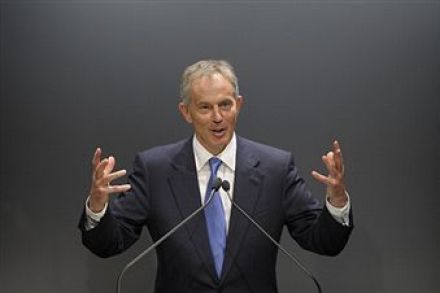
"Now, with the best teaching force and the best school leadership ever, we are poised to become world class if we have the courage and vision to reform and invest further and put the parent and pupil at the centre of the system. Our reforms must build on the freedoms that schools have increasingly received, but extend them radically. We must put parents in the driving seat for change in all-ability schools that retain the comprehensive principle of non-selection, but operate very differently from the traditional comprehensive. And to underpin this change, the local authority must move from being a provider of education to being its local commissioner and the champion of parent choice.

What you need to know ahead of the Spending Review

This is the second of our posts with Reform looking ahead to the Spending Review. The first, on health, can be found here. What is the budget? Education is the biggest area of government spending after welfare and health, totalling £89 billion in 2010-11. This budget increased by 64 percent in real terms between 1999-00 and 2010-11. Total, per-pupil school spending doubled in real terms over the same period. Where does the money go? Expenditure on schools was £46 billion last year. The vast bulk of school spending goes on people: the average school spends 78 percent of its budget on staff.

The case for elected police commissioners

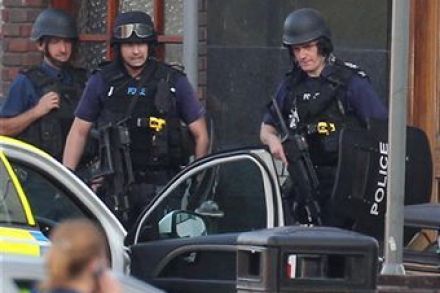
This afternoon I had the privilege to speak in a panel discussion at the National Policing Conference in Manchester, held jointly by ACPO (Association of Chief Police Officers) and the APA (Association of Police Authorities).  The subject was the future of policing - a particularly important one given the potential 25 per cent cut in budgets the service is expecting.   To the credit of the Police, they're already pioneering examples of the kind of changes that can save a lot of money while seeing services improve. Surrey, for example, has greatly increased the proportion of civilian staff in its force, acknowledging that they can do many jobs better and cheaper than uniformed officers.

Fresh thinking can free government from quango control

In a speech to Reform this afternoon, David Cameron argued that the growth of the so-called quango state represents “a serious accountability problem with our political system”. Quangos – the non-Whitehall but taxpayer-funded bodies responsible for much day-to-day government – are unaccountable, expensive and do not deliver what they promise. Last year, their funding increased at a faster rate than the rest of government, and they now cost at least £35 billion a year to run. Of course the state of the public finances makes it imperative that the expense of quangos is tackled. But this is about more than just money. It is about how we should be governed.