Cristina Odone

Cristina Odone is founder of The Parenting Circle.

Kemi is right about absent fathers

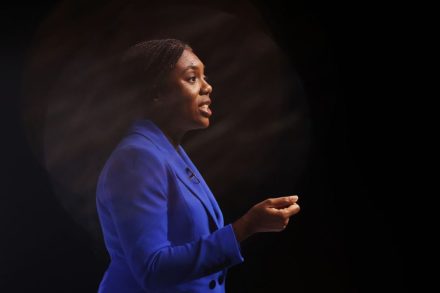
Kemi Badenoch MP keeps being compared to Margaret Thatcher. But the truth is she has taken on the persona of a different, though equally familiar, character this week: the boy who calls out the Emperor with no clothes. In this case the Tory leadership contender is saying the inconvenient truth that absent fathers are compromising their children’s future. Speaking to the Sunday Times, Badenoch argued that: ‘I think we ran into trouble decades ago when we were very critical of single parenthood. It sounded as if we were always talking about single mums. Where are the dads? Why are the dads not there? Why are they not looking after their families?… If you look at the prison population, the vast majority of the male prison population did not grow up with their fathers.

What’s the problem with zero-hour contracts?

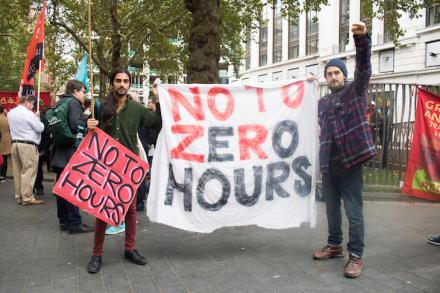
Deputy Prime Minister Angela Rayner is set to unveil her workers’ rights bill this week – and 'exploitative' zero-hour contracts are in the firing line. But has Labour actually stopped to ask workers what they think? They might be surprised by what they hear: a survey of over 1,000 young people has found that an overwhelming majority (75 per cent) of those in precarious work were satisfied with their working conditions while only 24 per cent were not. It sounds counter-intuitive; happy with no job security, low status work, shifts cancelled at short notice? Satisfied with lower wages and significantly higher turnover rates? And yet young people do seem keen on these roles: more than 558,000 young people in the country are on zero-hour contracts.

Labour’s childcare confusion has gone on for too long

For parents with young children, it’s been a game of grandmother’s footsteps. First they heard from the new Labour government that they will open 300 new state nurseries in England to cater for the 30 hours of free childcare that families with children aged nine months and upwards are eligible for. Now they hear Naomi Eberstadt, high priestess of New Labour’s early years programme Sure Start, proclaim the home, not the nursery, as the best place for a child under one.   The 'yes but no but yes' approach of policy makers risks further confusing working parents. The 30 hours of free childcare was the previous Conservative government’s response to the UK's crisis-level economic inactivity.

Labour’s toothbrush classes for school kids? No thanks

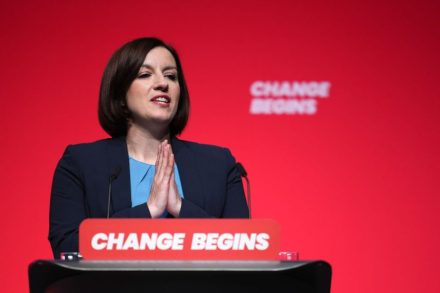
Labour’s latest proposal for teachers to supervise pupils’ toothbrushing reveals a worrying view of parenting as playing a light-touch, rather than hands-on, role in a child’s upbringing. Only a week ago, the thoroughly sensible and appealing shadow education secretary Bridget Phillipson MP delivered a speech that emphasised the need ‘for a two-way street’ in education: teachers and parents should collaborate to improve children’s outcomes and school attendance, which has reached crisis point. Yet within a day Sir Keir Starmer had come up with a proposal for teachers to oversee three to five year olds as they brush their teeth. Sir Keir as the tooth fairy is a comical image but one that should also raise the alarm.

How the Tories failed stay-at-home mums

We know that Westminster politicians do not always listen to ordinary voters. But there are few issues on which our representatives are more impervious to entreaties from their electorate than childcare. Too many politicians look on children as the impish impediment to both parents being in paid employment, the obstacles to Mum and Dad paying into Treasury coffers through taxes and national insurance contributions. Parents look on children as their life’s work. There is a particular cohort for whom this clash of priorities has been uniquely painful: parents who stay home to raise their own children.

The quiet truth about two-parent families

Imagine a key that opened the door to a place where children did better at school, were less likely to become dependent on drink or drugs, less likely to run into trouble with the police, and ended up in a better job. Now, imagine that key being jealously guarded by a group of well-heeled families. They hold on to it tightly, this elite, but never admit to doing so. At any mention of the key in public, they roll their eyes and shrug their shoulders: it’s nothing special, they pretend.  Given the obvious unfairness, we would be within our rights to call out such outrageous behaviour, accusing these individuals of a heartless monopoly over what should be a common good. Except we don’t. Because the key to improving children’s lives is marriage, an institution few dare defend.

Steven Spielberg and the truth about divorce

Steven Spielberg has suggested that The Fabelmans, his latest film, is a $40 million therapy project. The Fabelmans focuses on divorce and in doing so holds a mirror to the director’s own parents’ split. In its unblinking depiction of what has for so many become a rite of passage – almost one in two marriages end in divorce — the film makes for uncomfortable viewing. Spielberg refuses to indulge those parents who depict marital breakdown as just another milestone in a child’s life. He portrays it as a tragedy that casts a long shadow. ‘Everything in his career is marked by his parents’ divorce,’ one critic concluded. This is true of many of us who have experienced divorce. I was 13 when my parents divorced.

Johnny Depp and the truth about male domestic abuse victims

James looks nothing like Johnny Depp. For one thing, he is a lot taller than the 5 foot 8 star; and unlike Depp, he doesn't sport 37 tattoos. But James identifies with much the Pirate of the Caribbean star is telling the court in Virginia (and the millions following proceedings through social media).   The first time James was attacked by his wife, he convinced himself it was a one-off. They had had a row over the quality of a meal they’d shared at the local restaurant. Suddenly his wife rushed at him, battering him with her fists. He was shocked, but thought she must have drunk too much. He caught her hands in his and spoke soothingly until she stopped trying to hit out. Life resumed as normal.

How lockdown sparked a wave of anxiety among Britain’s children

I knew what 'anxiety' meant when I was in primary school. But it was not a word I had cause to use regularly, as I moved from my pastel coloured class-room to my David Cassidy-filled suburban bedroom. Today, however, 'anxiety' is our children’s word of the year, according to the Oxford University Press. We can’t be surprised. The past two years represent a small proportion of my lifespan – but for a six year old, they are a third of their existence. Daily reports of a mysterious illness, hearing about people dying around them – some of them friends or family -- and being banned from venturing outside their home: Covid milestones filled the sombre calendar of 2019/2020.

Scotland’s inspiring success story with at-risk children

I never thought the Scots were more emotionally intelligent than the English. A year spent researching children at risk for the Centre for Social Justice (CSJ) proved to me that they are. As documented in the CSJ’s latest report, Safely Reducing the Number of Children Going into Care, the Scots are far more advanced, in terms of their understanding of why we do what we do, than their English neighbours. Holyrood has embraced neuroscience, enthusiastically building a social infrastructure that will support those suffering from poor mental health and trauma. Westminster, by contrast, continues to languish in the dark ages when the public would pay a penny to gawp at the tragic inmates of Bedlam.

The parent gap: what’s happened to mums and dads in Britain?

During a recent webinar with MPs, I learned that parents in Bradford were up in arms because their children had not received their free spectacles. On a visit to the optometrist, organised by the school, the children had been diagnosed with failing eyesight. Why had the school failed to follow up in providing these near-sighted children with the spectacles they were entitled to? I was not sympathetic. When my daughter was nine, I spotted that she was near-sighted because she kept squinting as she struggled to read the road signs in our new neighbourhood. Her (state) primary school had nothing to do with our visit to the optometrist, or with Izzy’s (free) spectacles. I felt that was my responsibility. It seems this is a minority view.

A class of their own

I never meant to conduct a social experiment. I never intended to undermine anyone’s confidence in their judgement. And I certainly never meant to arouse so much hostility. Yet by choosing to home-school my six-year-old this is precisely what I seemed to be doing. Like many other desperate parents, I hadn’t got our first choice of primary state school (this year, just 68 per cent of parents in our Local Education Authority, Kensington and Chelsea, did). In fact, the only place for Izzy was at a primary across the river, which would take over an hour of travelling to get to. So I decided to teach Izzy at home. To be more precise, I decided that my mother, then 72, would teach her.

‘Don’t Google this’, the doctor told me when I got my daughter’s test results

'Don’t Google this', the doctor ordered. The command – with its authoritarian tone; implied threat (if I did, I’d find out something sinister); distrust in my ability to sift and understand information; suspicion of uncontrollable emotion – would have raised my hackles in any circumstances. As it was, I'd already been shocked by the GP’s telephone speculations and could not reply. The casual, unthinking cruelty of medical professionals is something I’d encountered before, in caring for my elderly parents. The media regularly uncover evidence of nurses chatting while their patients plead for help and hospital administrators pushing out the ‘bed-blocking’ elderly and infirm.