Cressida Connolly

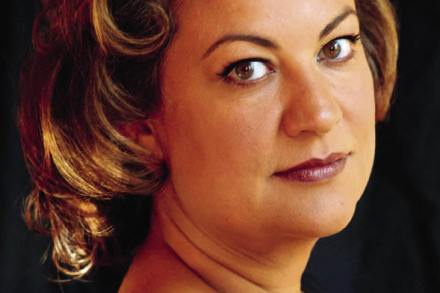
Cressida Connolly is the author of Bad Relations.

These I have loved . . .

From our UK edition

Like many bookworms, once or twice a year I am struck down with reading doldrums. Then the stash of paperbacks on my bedside table seems less a collection of future delights than a useless repository of dust. Nothing pleases. This disgruntlement generally passes of its own accord, but sometimes it takes the recommendation of a friend or a trusted reviewer to restore the pleasure of reading. Susan Hill’s lovely anthology is just the thing to rejuvenate the appetite of a jaded bibliophile. It is a tonic in paper form. Books and Company was a delightful little magazine, founded, edited and published by Susan Hill, which ran quarterly from 1997 until 2001.
BOOKENDS: Xmas with the exes

From our UK edition

‘I only see radiators these days’, announces one of the characters in this novel — ‘You know, people who give out heat and warmth.’ A radiator is a pretty good description of India Knight’s Comfort and Joy (Fig Tree/ Penguin, £14.99), too: a book so kindly and funny and affectionate that you could probably warm your hands on it. ‘I only see radiators these days’, announces one of the characters in this novel — ‘You know, people who give out heat and warmth.’ A radiator is a pretty good description of India Knight’s Comfort and Joy (Fig Tree/ Penguin, £14.99), too: a book so kindly and funny and affectionate that you could probably warm your hands on it.

Bookends: radiate some seasonal goodwill to the ex

From our UK edition

Here is the latest Book End column from this week's issue of the Spectator: ‘I only see radiators these days’, announces one of the characters in this novel — ‘You know, people who give out heat and warmth.’ A radiator is a pretty good description of India Knight’s Comfort and Joy, too: a book so kindly and funny and affectionate that you could probably warm your hands on it. Miraculously, this is a feel-good story that manages not to be saccharine. Our heroine, Clara, may be nice, but she’s also barbed, tough and clever: a thoroughly modern woman.

Cross Country Guide

From our UK edition

This is a book which, along with a packet of extra strong mints, deserves a place in the glove compartment of every car. This is a book which, along with a packet of extra strong mints, deserves a place in the glove compartment of every car. Any motoring trip into the British countryside, any hillside picnic or stroll will be made the more interesting with The Shell Country Alphabet to hand. In these pages you can find out about singing sand, church architecture and fossils. You may learn that heart burial was common in the Middle Ages, that marine luminescence causes ‘herrings to glow on a plate in a dark larder’ (the book was written in the 1960s, when dark larders were still ubiquitous), that a blackthorn winter is a cold snap in late March.

Mother issues

From our UK edition

The Norwegian, Per Petterson, was not well known until his 2003 novel, Out Stealing Horses, became a surprise international bestseller. It deserved the many prizes it garnered: it is a wonderful book, unsettling and minutely observed. Readers may recall that the closing scene of that novel has the young narrator walking with his mother: ‘We went on like that, arm in arm like a real couple . . . it was like dancing.’ An earlier book, To Siberia, is an imagined account of Petterson’s mother’s young life as a girl in wartime, moving from Danish Jutland to Norway. By contrast, I Curse the River of Time is about the end of a mother’s life. Discovering that she has cancer, the woman returns from Norway to a summer house in Denmark to reflect on her ebbing life.

Out for blood

From our UK edition

Unless you have spent the last couple of years packed in soil on a boat bound for Whitby, you will have noticed that vampires are back in fashion. It’s an international craze, with Japanese and Swedish films (notably the marvellously quirky Let the Right One In, now being remade in Hollywood) contributing fresh interpretations. The queen of the vampire scene was, until lately, the darkly baroque Anne Rice, author of Interview With a Vampire. Now her crown has gone to Stephenie Meyer, whose Twilight series, about teen vampires, have sold more than 100 million copies throughout the globe, as well as being made into hugely popular films.

A girl’s best friend

From our UK edition

If you wanted to write about Marilyn Monroe, how would you go about it? The pile of biographies, memoirs and novels about poor, sad Marilyn is already teetering. How could you make something new of her life? Clever Andrew O’Hagan has come up with an answer: by writing as her pet dog. How the hound came to be in her possession is a terrific story in itself. Maf, a Maltese terrier, was given to Marilyn by Frank Sinatra (the dog’s name was her sly reference to Sinatra’s alleged mafia connections). Sinatra got the dog from Natalie Wood’s mother, who regularly travelled to Britain to scoop up puppies, in much the way that contemporary Hollywood stars now trawl the globe for orphaned children.

Daily grind

From our UK edition

This vast novel, well-plotted and gripping throughout, is the first that Sebastian Faulks has set in our time. It is a state of the nation book, and what a state we seem to be in: if Faulks is less kind to the contemporary than he has been to the past, we cannot blame him, for he is only reporting what he sees. We follow a large cast of characters around their daily lives in London, in the week before Christmas 2007. There is a venal hedge-fund manager and his neglected son, a skunk-smoking, reality TV-obsessed teenager; a mean-spirited book reviewer; an Islamic youth who gets recruited into a suicide-bombing cell; a well-educated but slightly ineffectual lawyer; an underground train driver; and a Polish footballer, newly signed to a top London club.

It’s not all good manners

From our UK edition

Lynn Barber’s interviews are one of the main reasons to subscribe to the Observer: on any Sunday when a piece of hers appears, it’s always the first thing to turn to, even — or make that especially — when she’s profiling someone unsympathetic. Not for nothing has she earned the nickname the Demon Barber. On John Prescott, for example: ‘You wouldn’t want to invite Prezza to dinner, not because he might eat peas off his knife, but because he’d bore the other guests to death.’ What makes Barber such an unfailingly enjoyable read is that she makes her own judgments about people, which means she often likes monsters or disdains saints. Her style is brisk to the point of breathless and so informal (a typical sentence is ‘Crikey.

Moving swiftly on

From our UK edition

Chaplin’s Girl, by Miranda Seymour Love Child, by Allegra Huston Virginia Cherrill was an exceptionally pretty young woman when she turned up in Los Angeles in the late 1920s, looking for fun and adventure. Here Charlie Chap- lin spotted her, in the front row at a boxing match, and invited her to star in his forthcoming movie, City Lights. Still considered among his greatest films, it gave Cherrill the chance to captivate audiences with her portrayal of the blind flower girl. It wasn’t long before she met the young Cary Grant, who followed her to England, begging her to marry him. ‘Endearing, gorgeous and elegant, the Grants made a magnificent couple’, writes Miranda Seymour. Grant was her second husband, but not her last.

A thoroughly good egg

From our UK edition

A friend who belongs to an old-fashioned London club tells me that all anecdotes related within its walls are met with one of only three accepted responses: Great Fun, Rather Fun and Shame. Stanley I Presume is rather fun. It would have been great fun if the author was less discreet and less loyal and less scrupulous, because his life story — the first 40 years of which makes up the present volume — has been crammed with incident. Stanley Johnson has worked as a spy, a pioneering environmentalist and a Member of the European Parliament. As a youth he rode from London to Afghanistan on a motorcycle, hitch-hiked across South America and won a prestigious poetry prize.

Tales of the unexpected | 5 November 2008

From our UK edition

The Atmospheric Railway: New and Selected Stories, by Shena Mackay In Waterstones bookshops there are little signs dotted among the fiction shelves, to prompt readers towards new purchases. The signs suggest that if you liked, say, Evelyn Waugh you’d also enjoy Nancy Mitford; or if Ruth Rendell is a favourite you might like to try Barbara Vine. Where the books of Shena Mackay are concerned, however, there could be no such proposition, because her work is quite unlike anyone else’s. Mackay has a slavish and devoted following: Julie Burchill has called her the world’s greatest living writer. So a new book from Shena Mackay is cause for celebration.

Two were barking

From our UK edition

Julia Blackburn has written about Goya, about the island of St Helena, about the naturalist Charles Waterton, about a talking pig; and she has turned her attention to other strange and various things besides, but she has never written a dull sentence. It is clear from the first few lines of this book that The Three of Us is going to be fascinating. Dark, too. This is a family memoir, from Blackburn’s early childhood with both her parents, progressing through their divorce to a series of ever more difficult triangles featuring herself, her mother and a series of male lodgers. There was nothing conventional about Blackburn’s parents. Her father, the poet Thomas Blackburn, was: ‘an alcoholic who for many years was addicted to a powerful barbiturate. . .

Growing old disgracefully

From our UK edition

It is a mark of how various are Jane Gardam’s interests that this collection of short stories does not read as a collection at all, but more as a very agreeable hotch-potch. Only place unites them, for several take place in leafy London suburbs, Hampstead, perhaps, or Wimbledon. The stories are unalike in subject, length and form: there are ghost stories, tales of quiet revenge; what might, in heavier hands, be called social commentary. Inevitably, some are better than others. Flights of fancy, jokes and telling moments spill across the pages. If there is a common thread, it might be described as growing old disgracefully.

To know him is to love him, usually

From our UK edition

The eight short stories which form this collection began life in a multicultural magazine called Metro Eirann, which was set up in 2000 by two Nigerian journalists living in Dublin. Roddy Doyle heard of the magazine, liked the idea, and offered his services. As he says, in his introduction: There’s a love story, a horror story, a sequel, sort of, to The Commitments. Almost all of them have one thing in common. Someone born in Ireland meets someone who has come to live here . . . Today, one in ten people living in Ireland wasn’t born here. The story — someone new meets someone old — has become an unavoidable one. No one could say this is a bad premise for a book.

Double trouble and strife

From our UK edition

Is there anyone, hearing a story about bigamy, who does not feel a tiny jolt of admiration, even envy, for the wrongdoer? How many of us can say that, if we could suffer no ill consequences, we wouldn’t rather like to have a second household, with different plants in the garden, different curtains, a different — perhaps more exotic or sympathetic — spouse? Like walking a circus tightrope, bigamy requires daring, agility and a certain amount of dash: the onlooker cannot help but gasp at the feat. This is one of the reasons why stories about it hold such fascination. Another is that secret lives are always exciting, whether it’s espionage, transvestism or multiple wives.

Sins of the father

From our UK edition

Memoirs about bad or dotty fathers — from J. R. Ackerley’s (and the brilliant companion piece by his secret half-sister, Diana Petre) to Lorna Sage’s to Blake Morrison’s — exert a special fascination. A small subdivision of the form are those accounts featuring not only a father who is mad, bad or dangerous to know, but a big house. Of these, the Mitfords’ father is probably the most exasperating and lovable. Last year’s Title Deeds by Lisa Campbell, whose father was Thane of Cawdor, was a notable addition. Miranda Seymour’s is the latest gem. George FitzRoy Seymour was a pedant, a bully and a snob. He wrote unsolicited letters to duchesses, and boasted about being descended from Charles II.

A visit to sit-com country

From our UK edition

Mark Haddon’s previous book, The Curious Incident of the Dog in the Night-time, was a bestseller and that golden egg of publishing, a ‘crossover’ book: one which, like Harry Potter, was read by both children and adults. It told the story of a boy with Asperger’s syndrome (a mild form of autism), employing the flat, affectless language that such a child might use. The plot, such as it was, involved the boy in nothing more dramatic than catching a train from Swindon to London; nevertheless, it was as gripping as any picaresque novel. It was an audacious and utterly original book. After the giddy joy of opening his bank statements, what was Mark Haddon to do next?

Wives and wallpaper

From our UK edition

Listing page content here Anyone baffled by the conundrum of what to read on the beach this summer need look no further than A Much Married Man. This thoroughly good-natured comedy of manners is perfectly pitched so as to provide something for everyone: witty social observation, convincing glimpses into the worlds of high finance and fashion and plenty of lavish weddings. There is some sex, but not enough to offend the more squeamish reader. Like Trollope, Coleridge understands that money is as fascinating as love. The story concerns a banker, Anthony Anscombe, son and soon-to-be squire of a pleasingly ample Oxfordshire estate, which includes the ravishing Elizabethan Winchford Priory.

Scarcely on speaking terms any more

From our UK edition

The ancient Athenians were mad about it, but the Spartans thought it a waste of time. It flowered in the coffee houses and clubs of 18th-century London, but fell out of favour when the Romantics made it fashionable to prefer solitary communion with nature. Swift thought women improved it and Hume agreed: ‘Women are the Sovereigns of the Empire of Conversation,’ he wrote. Virginia Woolf considered that including talk about sex greatly enlivened the conversations at her Thursday soirées: The word bugger was never far from our lips. We discussed copulation with the same excitement and openness that we had discussed the nature of good … it was, I think, a great advance in civilisation.