Cressida Connolly

Cressida Connolly is the author of Bad Relations.

Contrarian to the last

From our UK edition

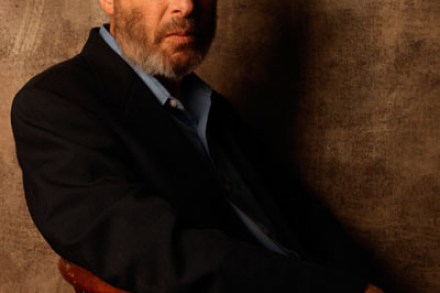
We all love Oscar Wilde for saying, with his final breath, ‘I am dying beyond my means’. We love it because it’s funny, but also because it shows that he was dying in character. It matters very much to us that the people we are close to should retain the essence of their natures, until the end. The foibles of the dying are life-rafts thrown to their friends and family: proof that their uniqueness and the force of their personalities are stronger than death itself. Christopher Hitchens died as he had lived, holding court, boasting, arguing on the side of logic and reason, dismissive of religion and superstition alike; with great intellectual curiosity, wit and panache. This little book was meant to be a longer one, but death came sooner than he had bargained for.
Are You My Mother, by Alison Bechdel

From our UK edition

Alison Bechdel’s first book, Fun Home, enjoyed great acclaim: a memoir presented in comic-strip form, it described her father’s suicide and hidden homosexuality, her childhood visits to the family funeral home and Bechdel’s dawning realisation of her own lesbianism. The comic book does not immediately suggest itself as the ideal format for material of such intimacy and intermittent gruesomeness, but it worked. The dark humour of Charles Addams subverted the misery-memoir: Fun Home was hilarious, fascinating and very clever. Are You My Mother? is made from less gothic material. Where its predecessor brilliantly and unexpectedly wove Proust into the narrative, the current volume quotes a lot from Virginia Woolf and Freud.

More table talk

From our UK edition

Lionel Shriver’s We Need to Talk About Kevin has a lot to answer for. In the months after its publication, it became the printed equivalent of holy communion: wheresoever two or three people gathered together to break bread, it was earnestly discussed. Shriver’s novel explored the possibility that a child could be born wicked; further, that it would be entirely possible for the mother of such a child actively to dislike her progeny. Whether the author set out to satirise the current western obsession with child-rearing, or simply to tell rather a chilling tale of American family life, Shriver produced a very readable and polished story. Now we need to talk about books, plays and films influenced by We Need to Talk About Kevin.

A friendly poet

From our UK edition

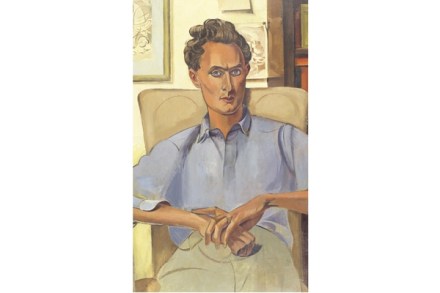
In real life, Stephen Spender was gentle and very tall, with wide-open pale blue eyes and a persistent air of slight hesitancy, as if he expected to be violently contradicted at any moment. He had one of the nicest voices I’ve ever heard, a voice which might have been made for poetry: impossible to imagine it raised in anger. In conversation Spender would bow his head, blink slowly and say ‘yes’ a lot, even if he wasn’t in accord with what was being said; this gave his interlocutor the agreeable (and strangely rare) sensation of being truly listened to. He spoke with openness and sincerity; he could also be conspiratorial and prone to giggles, although he wasn’t really a funny man. He was a generous host. He had a boyish smile. You couldn’t not like him.

It concentrates the mind wonderfully

From our UK edition

It’s odd, but we mostly go about as if death were optional, something we could get out of, like games at school. Philip Gould, in When I Die, admits that he never gave it much thought. Then he got oesophageal cancer. He had a horrible operation, got a bit better. Then the cancer came back. He had chemotherapy, more surgery, a lot of pain. And it came back again: ‘I knew then that the game was up.’ Having worked as Tony Blair’s strategist, Gould at first imagined his illness as another kind of campaign. But once his death became certain, he underwent a remarkable change: The unvarnished certainty that you are going to die within a certain period of time is an immensely powerful thing.

A bit of slap and tickle

From our UK edition

Hard on the heels of the ecstatically received London revival of Michael Frayn’s Noises Off (currently playing at the Novello Theatre) comes this hilarious novel. It’s not easy to pull off farce on the printed page when so many of the laughs of the genre generally depend upon physical comedy. In Noises Off, for example, one character hops about the stage like a demented kangaroo, his shoelaces tied together. But just as a filthy joke is made funnier when told by an apparently po-faced academic, so a really silly plot is enlivened when composed by a highly clever author. Frayn is that man. In the hands of someone less accomplished, the events in Skios would be too improbable, its characterisation too thin, its reliance on that old trope, mistaken identity, just too plain daft.

Here be monsters | 17 March 2012

From our UK edition

The lovely title of this book comes from the philosopher David Hume. The question he posed was this: if a man grew up familiar with every shade of blue but one, would he be able to recognise the hue in a chart of blues, or would it register only as a blank? In other words, can the intellect supply information, or may we know things only through the senses? Dwelling too long on this sort of problem famously sends people mad. Hume himself suffered a breakdown, after which he sensibly made it his business to get out more. In this novel, two of the three people central to the story have experienced, or are experiencing, psychiatric problems, while another important but peripheral character spends the duration locked in a loony bin.

Bookends: Trouble and strife

From our UK edition

It isn’t true that Joanna Trollope (pictured above) only produces novels about the kind of people who have an Aga in their kitchen: what she writes about are families. Her books have a knack of chiming with current social concerns, of examining how the family is adapting to changing social mores. She is deservedly a very popular writer, but she isn’t a frivolous one. The Soldier’s Wife (Doubleday, £18.99) is a cracking read and has clearly been thoroughly researched. All the little details which animate a novel ring true. It centres on the homecoming of a Major who has been on a six-month tour of duty in Afghanistan, the effect of this supposedly joyous reunion on his wife and children — and himself.

Finding Mr Wright

From our UK edition

The film When Harry Met Sally may be infamous for the scene in which the heroine mimics orgasm in a crowded café, but the real point of the story is a question: can a man and a woman ever be true friends, or must sex always get in the way? Jack Holmes and His Friend poses the equivalent question about a straight man and a gay one. If it’s made into a movie, the working title will surely be When Harry Met Gary. Homosexual writers seem to be much better than straight ones at combining high literary style with vastly enjoyable descriptions of really filthy sex. Edmund White is a master of both. This novel is like one from the French 18th century, where passages of intricate social comedy alternate with carnal episodes of Baroque detail.

A waist of shame

From our UK edition

Britain has the worst obesity rates in Europe, with one in four adults now clinically obese. A friend who works in orthopaedic surgery tells me that at least 80 per cent of knee replacements are, effectively, self-induced: caused by patients being overweight. Same with hips. Another friend, a consultant, had a complaint lodged against him for describing a 17-year-old girl who weighed almost 20 stone as morbidly obese, on the grounds that it hurt her feelings. Type 2 Diabetes and heart disease are burgeoning. What can be done? According to Calories and Corsets, dieting is not the answer. ‘If you wish to grow thinner diminish your dinner’, announced Punch in 1869. The rhyme was a jokey response to the diet craze then sweeping the land, devised by William Banting.

Cressida Connolly’s books of the year

From our UK edition

Nicola Shulman’s study of Sir Thomas Wyatt and his times, Graven With Diamonds, is both sparkling and scholarly. Nothing I’ve ever read about the court of Henry VIII has made it so vivid. For the first time one could really grasp Anne Boleyn’s wit and intelligence, both of which she must have needed, to keep the king off for seven years — seven years! — until they could marry. The book is marvellous about Wyatt’s poetry: indeed, about the point of poetry in general. A gem. I loved the young German writer Judith Hermann’s short story collection, Alice. The stories are beautifully written, very precise in their detail, yet enigmatic. Finally, a novel, New Finnish Grammar by Diego Marani.

Why Be Happy When You Could Be Normal? by Jeanette Winterson

From our UK edition

In the 26 years since the publication of her highly acclaimed first novel, Oranges are Not the Only Fruit, Jeanette Winterson has proved herself a writer of startling invention, originality and style. Her combination of the magical and the earthy, the rapturous and the matter-of-fact, is unique. It is a strange and felicitous gift, as if the best of Gabriel Garcia Marquez was combined with the best of Alan Bennett. At her finest, (in which category I’d put The Passion, Sexing the Cherry and Lighthousekeeping) there is no one to match her. The title of this memoir comes from the mouth of Mrs Winterson of Accrington, Lancs, the author’s adoptive mother. This is what she replied when her young daughter told her that she was in love with another girl, and happy.

Bookends: Squelch of the bladder-wrack

From our UK edition

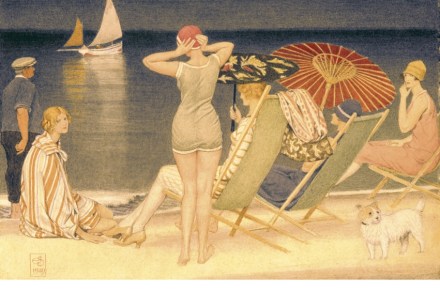
What’s not to like about Candida Lycett Green’s Seaside Resorts (Oldie Publications, £14.99)? Lovely colour photographs of over 100 of England’s prettiest seaside towns, accompanied by spry, architecturally informed little essays that give the reader the gist of each place: if there’s a better book to give for Christmas published this autumn, I’d like to see it. Lycett Green has written about front gardens and cottages, books full of interesting facts about history and buildings, conveyed in a pleasantly informal, even chatty, style. She also writes a column on unspoiled market towns and villages, which has already spawned one book, Unwrecked England. The present volume is along the same lines.

Refreshingly outspoken

From our UK edition

She was less bitchy than extremely shrewd and sharp-eyed, and didn’t hesitate to say about people exactly what she felt — though she did, I think, sometimes choose frightful people to munch up. . . She was less bitchy than extremely shrewd and sharp-eyed, and didn’t hesitate to say about people exactly what she felt — though she did, I think, sometimes choose frightful people to munch up. . . This is what Diana Athill has to say about interviews written by Lynn Barber, and it’s a pretty apt description of her own writing. As is well known, Athill was an esteemed publishing editor throughout her working life (John Updike, V.S.

The death of laughter

From our UK edition

If you were stranded on a desert island, Ruth Leon would be the perfect companion. She is plucky, resourceful, funny, bright and indomitable: you can see just why the late theatre critic Sheridan Morley fell in love with her. And indeed he did find himself alone with her, on the mental-health equivalent of a desert island, when an otherwise fairly mild stroke seemed to ossify his pre-existing depression. For four years he spent as many hours a day as he could asleep. When he was awake he was either weeping or complaining. I lost count of how many times the word ‘whining’ appears in this book. By her own admission, Leon does not carry ‘the Mother Teresa gene’.

The worst crime was to be a bore

From our UK edition

Gully Wells is a spirited and amusing writer, the daughter of the American journalist Dee Wells and the stepdaughter of the famous philosopher Freddie Ayer. While an undergraduate at Oxford she had an affair with Martin Amis and travelled to Italy with him, a trip fictionalised in his recent novel, The Pregnant Widow (conveniently out in paperback at just the same moment as this memoir appears, for ease of cross-referencing). Wells worked for the publisher George Weidenfeld before marrying and moving to New York, where today she’s the features editor of a travel magazine. Christopher Hitchens and Anna Wintour are among her pals. Her parents divorced when Gully was tiny.

Wheels of fortune

From our UK edition

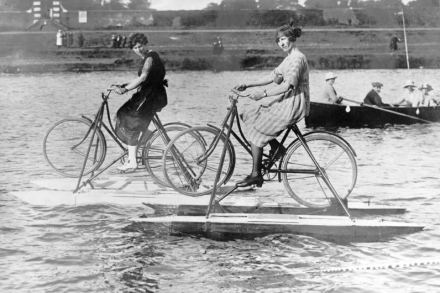
There are among us a churlish few who consider the term ‘sports personality’ to be an oxymoron. There are among us a churlish few who consider the term ‘sports personality’ to be an oxymoron. John Foot’s sparkling study of Italian cycling is a welcome corrective, alive with terrific characters: Toti, a heroic one-legged cyclist who was killed in the trenches; Coppi, a barrel-chested adulterer who became the nation’s darling; a blind coach who could divine victory or defeat in the feel of a cyclist’s muscles; and, more recently, a champion who died of a cocaine overdose in a seaside hotel. Many of the greats follow a satisfying rags-to-riches trajectory, starting off as impoverished delivery boys from peasant families.

A world of talking trees

From our UK edition

Patrick Cockburn is a foreign correspondent who has reported from war zones in Beirut, Iraq and Afghanistan. While he is covering the fall of the Taliban from Kabul in 2002, his talented, bright and amusing elder son Henry is a first-year art student at Brighton. Who is in more danger? The sad answer is Henry. The trees and the wind tell him to remove his clothes and swim in freezing water: fished out of the sea at Newhaven in February, he is taken to hospital and subsequently diagnosed with schizophrenia. This book is an account of the next seven years of Henry’s life, both from his father’s perspective and his own.

The real deal

From our UK edition

‘“We weren’t phoney,” Stephen said. “Our whole point was to live an authentic life, to challenge the bourgeois conventions of our parents’ generation. We wanted to make it real.”’ Such is the lifelong aspiration of Stephen Newman, the baby boomer hero of Linda Grant’s new novel. ‘“We weren’t phoney,” Stephen said. “Our whole point was to live an authentic life, to challenge the bourgeois conventions of our parents’ generation. We wanted to make it real.”’ Such is the lifelong aspiration of Stephen Newman, the baby boomer hero of Linda Grant’s new novel. As ambitions go, it’s fairly modest.

Pig in the middle

From our UK edition

Writing an autobiographical account of middle age is a brave undertaking, necessitating a great deal of self-scrutiny at a time of life when most of us would sooner look the other way and hope for the best. Jane Shilling took up riding relatively late (she even joined a hunt, as described in her book The Fox in the Cupboard), so she has physical daring. The Stranger in the Mirror shows that she also has emotional and intellectual courage. Unsurprisingly, the news is not good. God and gardening are the traditional refuges of the menopausal, but neither seems to hold much interest for Shilling. Romantic entanglements seem unlikely and her teenaged son is advancing towards independence: solitude looms. Career prospects diminish. Looks aren’t what they used to be. Regrets prosper.