Cressida Connolly

Cressida Connolly is the author of Bad Relations.

This thriller is as good as anything by Hilary Mantel

From our UK edition

A few years ago, after a lifetime of wearing white shirts through which the straps of my white bra were plainly visible, I discovered a remarkable fact: if you wear a pink or even a crimson bra underneath a pale shirt, it doesn’t show. For several weeks I passed on this gem of truth to all my women friends. Was my enthusiasm met with relish, gratitude? It was not. They all said the same thing in response: ‘Oh, didn’t you know? I’ve always known that.’ I expected it would be the same in the case of Andrew Taylor. While reading The Silent Boy I was so overexcited by its brilliance that I asked numbers of friends if they’d ever come across Taylor’s work. Surely I was alone in the world in not having heard of this paragon?
The cruellest present you could give a hated old in-law

From our UK edition

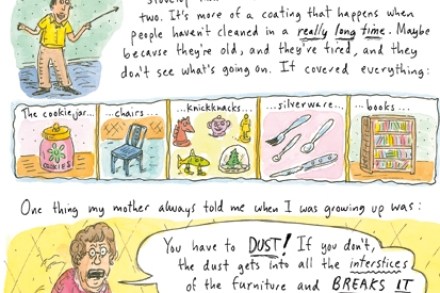
It takes a special sort of talent to be able to make drawings of your own 97-year-old mother on her deathbed funny. The person with that gift is Roz Chast. Subscribers to the New Yorker will already be familiar with her marvellous cartoons, which often feature elderly and over-neurotic parents shouting dire imprecations to their rather dazed and mild-looking adult offspring. Their warnings tend to concern such mortal perils as crossing the road, running to answer the telephone or touching the handrail on public transport (the germs!). The subjects are from Brooklyn, but the appeal is universal: visiting a friend in Athens the other day, I saw a Chast cartoon stuck to the fridge door. Can’t We Talk About Something More Pleasant? is a graphic memoir of Chast’s own parents.

My desert island poet

From our UK edition

If I had to be marooned on a desert island with a stranger, that stranger would be John Burnside. Not that he’s a literary Ray Mears: I rather doubt that catching fish with his bare hands or lighting a fire without matches are among his skills. Nor would he be an easy companion, since by his own account he is a brooder and an insomniac and a craver of solitude. He is the erstwhile resident of a mental institution. He also has complicated feelings about women. But he’d be my perfect companion, still. For one thing, the isle would be full of sounds and sweet airs that give delight, because Burnside is the finest poet writing in Britain today.

No one would want to live in Jane Gardam’s stories – but they’re an amazing place to visit

From our UK edition

In the world of Jane Gardam’s stories the past is always present, solid and often unwanted and always too big, like a heavy antique sideboard crammed into a modern retirement flat. Her characters are easily imagined surrounded by such furniture, among them ex-pats returning after careers in Hong Kong or India, their houses full of the sad paraphernalia of former empire: elephant’s foot umbrella stands or old watercolours of Bengal. Many are seeing out their days in some poverty and solitude, occasionally visited but seldom comforted by their resentful grown-up children. There is no saccharine here. Relations between offspring and parents are marked by mutual disdain and almost wilful misunderstanding, lit up from time to time by flares of bewildering love.

Mid-life crisis, 13th-century style

From our UK edition

The word delicate is seldom a compliment.  I once threw a saucepan of hot soup out of a fifth storey London window because a boyfriend said it had a delicate flavour, by which he meant none at all. This novel, though, is delicate in an entirely good way: it is fine, intricately wrought, understated. It imagines the life of the 13th-century Chinese scholar-artist Wang Meng, whose misfortune it was to live in interesting times, during the closing years of the Mongol invaders’ Yuan dynasty. Much of the time Wang spends staring at mountains and rivers and discussing the finer distinctions of Tao and Buddhist philosophy. He believes that ‘the good and gentle side of life was stronger and more permanent than the bad’.

Samuel Beckett walks into a nail bar

From our UK edition

It isn’t very often that a writer’s work is so striking that you can remember exactly where and when you were when you first read it. I was in a parked car in a hilly suburb of Cardiff last summer when I first became aware of George Saunders, from reading a speech he’d addressed to his American students printed in that day’s edition of the International Herald Tribune. Within the first two or three lines it was evident that this was someone quite out of the ordinary, someone of unusual intelligence, curiosity and compassion. This speech — an exhortation to be kind — is wonderful. And so are these short stories, which have lately won the first Folio prize. That said, they will not be to all tastes.

Sometimes one story is worth buying a whole book for. This is one of those times

From our UK edition

Any new book by Lorrie Moore is a cause for rejoicing, but her first collection of short stories for 16 years demands bunting, revelry and tap-dancing. She is one of a handful or two of writers (I’d nominate Anne Tyler, William Trevor, Martin Amis, Kazuo Ishiguro among the rest) whose work is always worth buying. With lesser authors a tepid review might discourage purchase, but Lorrie Moore can fall foul of critics yet still be immensely entertaining. So it is with Bark. The book begins with an absolutely marvellous long story, ‘Debarking’, in which almost every paragraph contains a fresh delight, something so funny and so true that the reader must exclaim aloud.

‘Where are the happy fictional spinsters?’

From our UK edition

This book arose from an argument. Lifelong bookworm Samantha Ellis and her best friend had gone to Brontë country and were tramping about on the Yorkshire moors when they began bickering: would it be better to be Cathy Earnshaw, or Jane Eyre? Ellis had always been fervently in the Cathy camp, re-reading Wuthering Heights every year (often in the bath) and swooning. But now, in her thirties, came an epiphany. She’d chosen the wrong heroine. This was understandable, given the ‘high drama’ of her family background, in the small community of north London Jews exiled from Baghdad. As she puts it: An Iraqi Jewish endearment, fudwa, means ‘I would die for you’. In a five-minute phone call about yoghurt my grandma can offer to die for me ten or fifteen times.

‘God has given me a new Turkish colleague called Mustapha Kunt…’

From our UK edition

Under normal circumstances, Simon Garfield’s chatty and informative excursion into the history of letter-writing would be a book to recommend. In recent years this author has produced eloquent and witty accounts of his fascination for maps and for typefaces: To the Letter makes a nice companion piece. Part of the book is a gentle lamentation about the end of letters; a death hastened, Garfield believes, by the digital age.

Breakfast with Lucian, by Geordie Greig – review

From our UK edition

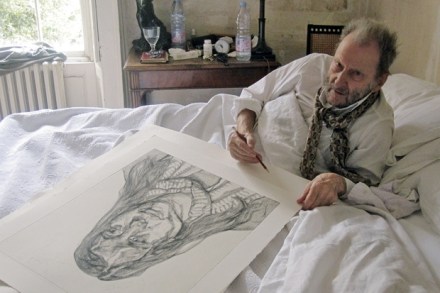
According to the medical historian Professor Sonu Shamdasani, Sigmund Freud was not the best, nor actually the most interesting, psychoanalyst in early 20th-century Vienna.  Rather, Freud’s genius lay in creating a loyalty cult around himself, collecting a group of acolytes who would ensure his reputation.  This is worth bearing in mind when considering the life of his grandson, the painter Lucian Freud, who died in 2011. Lucian was famous for his secrecy. ‘Devious and secretive. I have been described as that,’ he tells Geordie Greig, not without a certain pride. He demanded a strict omertà of his intimates.

Expo 58, by Jonathan Coe – review

From our UK edition

In 1958 a vast international trade fair was held just outside Brussels. As well as being a showcase for industry, Expo 58 gave each country the chance to present something of their own national character. What the Brits came up with was a far cry from the gorgeous opulence and spectacle of last year’s Olympic opening ceremony: instead, the United Kingdom chose to represent itself by building a full-scale model of a pub.   Watneys brewery even invented a new beer for the pub and called it by the same name, The Britannia. This is the setting of Jonathan Coe’s new novel. In other hands it would be only mildly ridiculous: in his, it is delightfully funny and utterly absurd. Our hero, Thomas, works in a junior capacity for the Central Office of Information in London.

Wreaking, by James Scudamore – review

From our UK edition

An abandoned lunatic asylum, a nasty pornographer in a wheelchair, a bizarre glass-ceilinged viewing dome beneath a scummy lake, a vast henchman, a mother who hears angels telling her she must harm her child: these are some of the places and people to be found in James Scudamore’s new novel. Dickensian excess is the name of the game here. It is as if Mr Murdstone and Steerforth and Magwich (and even the foggy salt-flats which herald his startling arrival in fiction) appeared in the same story as Fagin, together with a couple of lost boys, ripe for criminal exploitation. Scudamore’s relish for names, too, is Dickensian.

All the Birds, Singing, by Evie Wyld – review

From our UK edition

Half in jest, Evie Wyld has described her highly garlanded first book After the Fire, a Still Small Voice as ‘a romantic thriller about men not talking’. The same description more or less fits this second novel, although here a reticent woman takes the place of three generations of silent men. All the better: we expect men (in fiction at least) to be strong silent types, while women protagonists tend to err towards chattiness and disclosure. In this as in other regards Wyld is a writer who reconfigures the conventions of storytelling with a sure-footedness and ambition which belie her age. Even her name is good, suggesting an untamed paradise and man’s exclusion from it, which is one of her themes, too.

How to Read a Graveyard, by Peter Stanford – review

From our UK edition

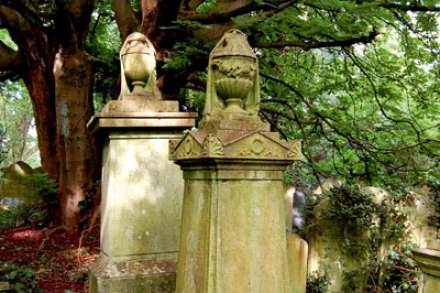
Peter Stanford likes cemeteries. Daily walks with his dog around a London graveyard acclimatised him, while the deaths of his parents set him wondering about customs of mourning and places of burial. Over a couple of years he visited a number of sites, including the war graves of northern France, the catacombs of Rome and a contemporary woodland burial park in Buckinghamshire. He makes no claim to a comprehensive survey, but it seems perverse not to visit Highgate cemetery, yet succumb to the tourist trap of the Père-Lachaise in Paris. To extrapolate about graveyards from a visit to Père-Lachaise would be like going to Harrods in order to find out about provinical high streets. But disagreeing with the author is part of the fun of this absorbing book.

How Many Camels are there in Holland? by Phyillida Law – review

From our UK edition

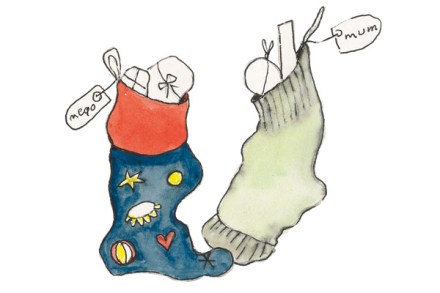
Phyllida Law has a delightfully natural style, a gift for anecdote and the knack of seeing the funny side of pretty much everything.  She’s a good actor: she’s obviously a fine cook, too, if the recipes in How Many Camels Are There in Holland? Dementia, Ma and Me (Fourth Estate, £12.99) are anything to go by. Also included are a series of her lovely watercolour sketches, of Tuscan villas, Christmas stockings, her mother asleep. Is there nothing the woman can’t do? Someone so accomplished could write a book about their weekly trip to the supermarket and make it highly amusing. A volume about her mother’s decline into dementia is hardly a more promising proposition, yet this is a funny, brave and heartening volume.

Growing up the hard way | 14 February 2013

From our UK edition

Like the gingerbread house, these three novels seem at first to be a delightful and innocent place, entirely suitable for the three not-quite orphaned young girls who are Holden’s heroines. But, just as in a fairytale, safety is never assured. The very grown-ups who should be offering protection — a governess, a head teacher, even their own mother — may become suddenly unstable and capricious. What looks bright and cheery and full of hope may turn out to be perilous, even sinister. Home is not a constant. Written with an engaging immediacy, these are stories about children but, with their dark secrets, their frightening reversals, their alarming glimpses of sex and death, they are certainly not for children.

Love stories

From our UK edition

Unfortunately for the reading public, most of Bernadine Bishop’s working life has been spent as a psychotherapist. Having published a couple of early novels, she put aside her pen, first to become a teacher, and then a shrink: it was only after cancer forced her retirement in 2010 that she turned again to writing. I sincerely hope she is in remission now, not only for the sake of her own health and happiness, but so that she can write as many more books as possible. Unexpected Lessons in Love is a wonderful novel, one of those rare books which leaves the reader with a deeper understanding of the human heart. It actually offers what its title proposes.

Growing old disgracefully | 17 January 2013

From our UK edition

Virginia Ironside’s novel, No! I Don’t Need Reading Glasses (Quercus £14.99) about a 65-year-old granny who belongs to a local residents’ association and does a fair bit of knitting may not sound like the most alluring reading. Then there’s the title — facetious and forgettable at the same time. It would be less embarrassing to ask for something saucy at the chemist than to enquire after this at your local bookshop. Don’t be put off, though, because Ironside knows what she’s doing. Her heroine Marie Sharp may be an OAP, but as her name suggests, there’s nothing muted about her.

The thin end of the wedge

From our UK edition

Aunts, generally of an antic or highly unconventional kind, are a literary staple. Anyone wanting to find the best of them would do well to turn to Rupert Christiansen’s excellent companion study of the breed, The Complete Book of Aunts. Literary uncles are rarer, but no less enjoyable to meet. Nancy Mitford’s Uncle Matthew is one of the great comic creations, while Laura Shaine Cunningham’s Sleeping Arrangements is moving and funny by turns. A memoir of the two very peculiar bachelor uncles who brought her up after the early death of her mother, it is one of those yardstick books: you couldn’t really like anyone who didn’t like it. Now Selina Guinness has written a memoir, The Crocodile by the Door, which introduces a memorable new uncle.

Urbs in rure

From our UK edition

When people express nostalgia for the glory days of British television, it doesn’t take long for them to propose the 1966 BBC play Cathy Come Home as among the pinnacles of broadcasting. Not only a fine piece of drama, it also brought the plight of the homeless to the viewing public. And Jeremy Sandford, who wrote Cathy Come Home, didn’t stop there. Finding himself the owner of a large house in Shropshire, he invited various homeless people to take up residence. It would be nice to relate that these indigents responded with gratitude, courtesy and warmth. Nice, but not true. Terrible arguments broke out, hostile takeover bids were launched, areas of the house and grounds barricaded against its genial proprietor.