Craig Raine

T.S. Eliot’s preoccupations in wartime Britain

From our UK edition

In her essay ‘A House of One’s Own’, about Vanessa Bell, Janet Malcolm says memorably that Bloomsbury is a fiction, and that compared with letters and first-hand material, biography is like canned vegetables compared with fresh fruit. We read the letters of writers because they are informal, unguarded, unbuttoned, intimate and candid, revealing not only

Poems are the Duracell batteries of language, says Simon Armitage

From our UK edition

Ezra Pound in ABC of Reading: ‘Dichten = condensare.’ Meaning poetry is intensification, ‘the most concentrated form of verbal expression’. Simon Armitage saying the same thing, memorably, genially, metaphorically, democratically: ‘How much power and force could be stored in — and retransmitted by — such compact shapes. Poems as the Duracell batteries of language.’ Both

Ladies’ man: Tom Stoppard’s love life revealed

From our UK edition

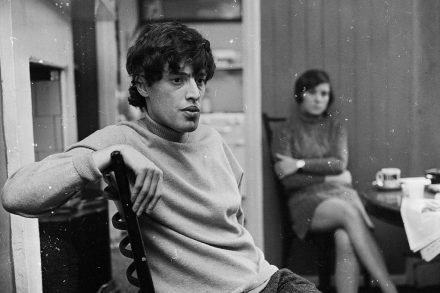
Gilbert in Oscar Wilde’s dialogue ‘The Critic as Artist’: ‘Every great man nowadays has his disciples, and it is always Judas who writes the biography.’ Not here. Hermione Lee’s immensely long Tom Stoppard: A Life is expert, engrossing, entertaining and sympathetic to its subject. At its heart is a writer steely in his determination to

As Lucian Freud’s fame increases his indiscretions multiply

From our UK edition

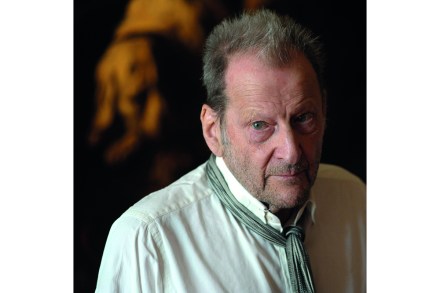
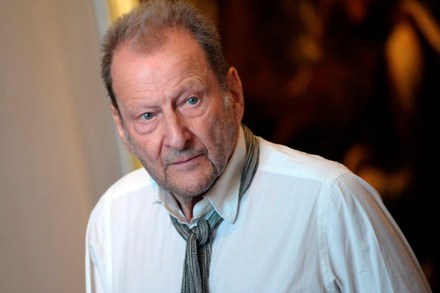
Staying with Peregrine Eliot (later 10th Earl of St Germans) at Port Eliot in Cornwall, Lucian Freud remembered that the Eliots ‘ate off solid silver plate, even shepherd’s pie’. In 1968, Freud was having an affair with Perry’s wife Jacquetta. According to her, it was an addiction: ‘Completely hooked, a dreadful drug…’ After two turbulent

What made Lucian Freud so irresistible to women?

From our UK edition

Amedeo Modigliani thought Nina Hamnett, muse, painter, memoirist, had ‘the best tits in Europe’. She fell 40 feet from a window and was impaled on the basement railings. Not suicide. She was peeing out of the window, the shared lodging-house lavatory being too distant. On her deathbed, her breathing was like a harmonica. The collector

Keeping it real | 4 July 2019

From our UK edition

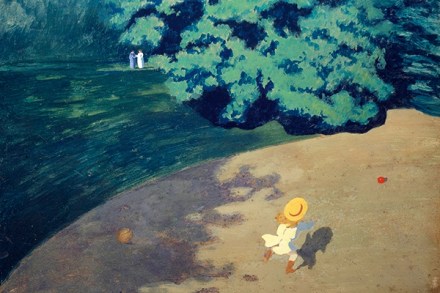
Félix Vallotton (1865–1925) was a member of the Nabis (the Prophets), a problematically loose agglomeration of painters, inspired by Gauguin and Émile Bernard, the school of Pont-Aven. Broadly speaking, this entailed an alleged allegiance to spirituality and anti-naturalistic flat colour. The Nabis — a secret group moniker —were heterogeneous, a broad church that seldom sang

‘Search me, squire’

From our UK edition

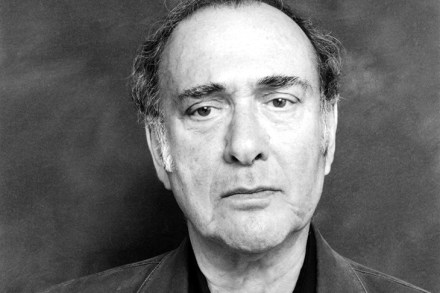
I think everyone was a little nervous of Harold. Including Harold, sometimes. He was affable, warm, generous, impulsive — and unpredictable. Like his plays, where the hyper-banal surfaces — the synthetic memories and false nostalgia of Old Times, the aural drivel of Rose in The Room, the bogus familial warmth of The Homecoming — are

A recitation of wrongs

From our UK edition

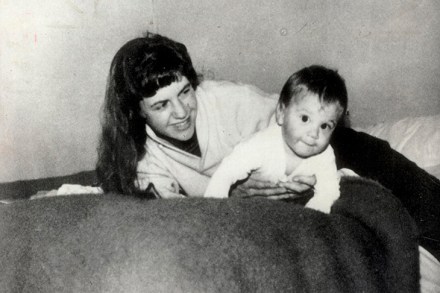
In 1923, a Frenchman, Emile Coué, persuaded millions of Americans to finger a piece of string with exactly 20 knots. It was an exercise in auto-suggestion. At each knot of this secular rosary, the user intoned: ‘Every day, in every way, I am getting better and better.’ Sylvia Plath’s letters — until they implode on

Searching high and low

From our UK edition

In the Moderna Museet in Stockholm there is a sculpture by Katharina Fritsch, which references Chekhov’s famous story ‘Lady with a Dog’. It was part of a Jeff Koons mini-show. At the time (2014), I thought it was by Koons. The postcard disabused me. It shows a woman in unapologetic Barbara Cartland pink, with a

Keeping up with the Joneses

From our UK edition

To bleak, boarded-up Margate — and a salt-and-vinegar wind that leaves my face looking like Andy Warhol’s botched 1958 nose-peel — to see Journeys with ‘The Waste Land’ at Turner Contemporary. The exhibition has been organised by a group of local residents, who selected the exhibits, designed the layout, and wrote the exhibition texts. In

Sappho in America

From our UK edition

We are gripped by gossip. Curiosity is a tenacious emotion. In her essay on Push Comes to Shove, the autobiography of the choreographer Twyla Tharp, Joan Acocella acknowledges this in an untroubled way. If you want to know what Baryshnikov was like in bed, she advises, look at p. 208 in a bookshop: ‘Tharp gives

Worthy, but wordy

From our UK edition

Milan Kundera’s novel Immortality wryly depicts Goethe preparing for immortality — neatly laying out his life in Dichtung und Warheit and arranging for Johann Eckermann to record his conversation. He is, says Kundera, designing a handsome smoking jacket, posing for posterity. He wants to look his best. Then along comes the young Bettina von Arnim,

Boxing clever

From our UK edition

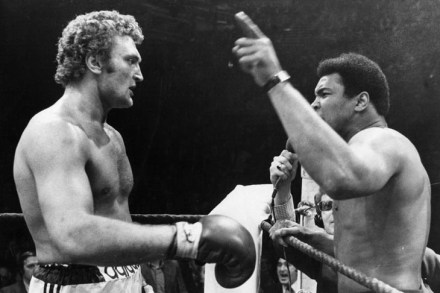
Thirty years ago, Russell Davies wrote a weekly sporting column in the New Statesman. It proved unsustainable and was soon discontinued, but not before Davies had described a boxer ‘genuflecting through the ropes’ — an image I have coveted ever since. Boxing is ‘a standing challenge to [a writer’s] powers of description’, according to Carlo

The nature of genius

From our UK edition

On 21 December 1945, Ezra Pound was confined to St Elizabeths hospital in Washington DC. He had broadcast for Rome Radio from 29 January 1942 to July 1943. To avoid his almost certain conviction for treason (and the death penalty visited on William Joyce, Lord Haw-Haw), the superintendent Winfred Overholser testified that Pound was insane

Spectator Books of the Year: Craig Raine on poems from the world of work

From our UK edition

Philip Hancock’s pamphlet of poems Just Help Yourself (Smiths Knoll, £5): charming, authentic, trim reports from the world of work — City and Guilds, pilfering, how to carry a ladder, sex in a van (‘From the dust-sheet, wood slivers/ and flecks of paint stick to her arse’). One poem is called ‘Knowing One’s Place’; these

Rich and fruity

From our UK edition

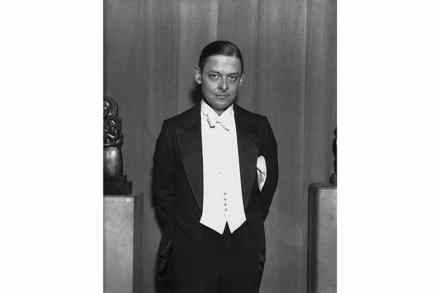
F.R. Leavis once denounced the Twickenham edition of Pope’s Dunciad for producing a meagre trickle of text through a desert of apparatus, the trickle sometimes disappearing altogether. In this volume of T. S. Eliot’s letters, from 1932–1933, the footnotes, the infantry and the grunts, are the stars — shooting stars, flares with flair, illuminating apparently

Poet as predator

From our UK edition

In Testaments Betrayed, Milan Kundera says: ‘Biographers know nothing about the intimate sex lives of their own wives, but they think they know all about Stendhal’s or Faulkner’s.’ In The Silent Woman: Sylvia Plath and Ted Hughes, Janet Malcolm says: ‘The transgressive nature of biography is rarely acknowledged, but it is the only explanation for

The raw material of fiction

From our UK edition

Saul Bellow died in 2005. He won the Nobel Prize for Literature in 1976. The first installment of Zachary Leader’s exemplary, scrupulous, dispassionate, detailed, well-read, enthralling biography runs to over 800 pages and takes us only as far as 1964. The length is important. It allows Leader to adjudicate calmly, weigh the evidence — sometimes