Craig Raine

The raw material of fiction

From our UK edition

Saul Bellow died in 2005. He won the Nobel Prize for Literature in 1976. The first installment of Zachary Leader’s exemplary, scrupulous, dispassionate, detailed, well-read, enthralling biography runs to over 800 pages and takes us only as far as 1964. The length is important. It allows Leader to adjudicate calmly, weigh the evidence — sometimes remaining undecided — and quote Bellow freely, so that the biographical narrative is enlivened by Bellow’s prodigally gifted prose, little injections of bliss.
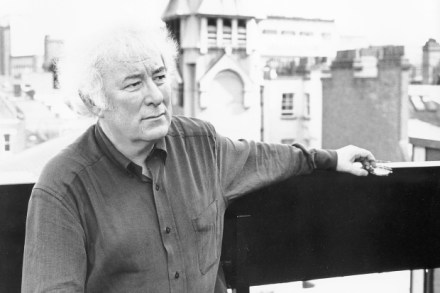
Seamus Heaney: no shuffling or cutting — just turning over aces

From our UK edition

The impersonator — Rory Bremner, Steve Coogan — speaks, in different voices, to a single primitive pleasure centre in his audience. Counterintuitively, we like the imposition of imposture. We connive at deceit, at replication, for the release of neurotransmitters, the flood of endorphins — the brandies of the brain. I once heard Peter Ustinov on a chat show replicate the sound of an electric bell being pressed. Pleasure on a different, even more vertiginous level. The audience was convulsed. Unless a poet can produce this ungainsayable instant delight in the reader, this drench of dopamine, the poetry is automatically of the second order.

Was he anti-Semitic?

From our UK edition

Letters give us the life as lived — day-to-day, shapeless, haphazard, contingent, imperfect, authentic. Letters give us the life as lived — day-to-day, shapeless, haphazard, contingent, imperfect, authentic. That is their value. Life-writing, biography, is plotted, shaped by an argument and is summary, selective and often tendentious. There is a lovely moment in these letters when the shivering Eliot, trapped on the top of a French mountain, a long mule ride from civilisation, is writing to Richard Aldington on a defective typewriter. It sticks and repeats. ‘I’m writing there fore the r therefore more briefly than I intended and shall do when I get to Nice again and hie h ire hire a typewriter merde.’ Half of each letter is missing.