Craig Raine

Rescuing the Nativity from cliché

From our UK edition

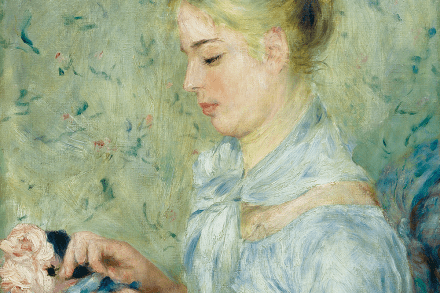
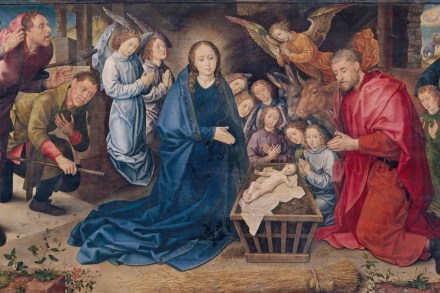
The Nativity. In ‘Over 2,000 Illustrations and a Complete Concordance’, Elizabeth Bishop ends her travelogue-poem – St Peter’s, Mexico, Dingle, Marrakesh – by opening the Bible. ‘(The gilt rubs off the edges/ of the pages and pollinates the fingertips.)’ She gives us the famous stable, ‘lulled within, a family with pets’. Domesticated, nothing out of
The wit of Tom Stoppard

From our UK edition

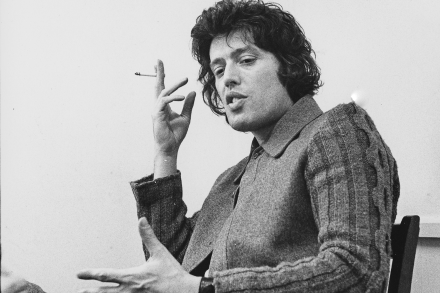
The playwright Peter Nichols created a character based on Tom Stoppard. Miles Whittier. On a car journey across London, I once asked Peter why he was so irked by Stoppard. Thelma, his wife, answered for him: ‘He uses all the oxygen.’ But Stoppard was miles wittier. Asked by a punter, after the New York first

Modest, interesting – no masterpieces: Millet at the National Gallery reviewed

From our UK edition

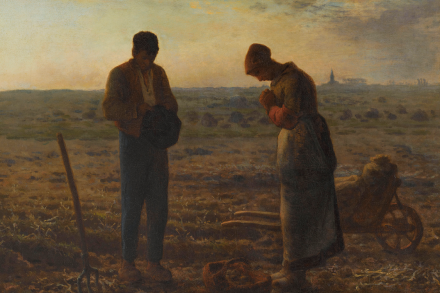
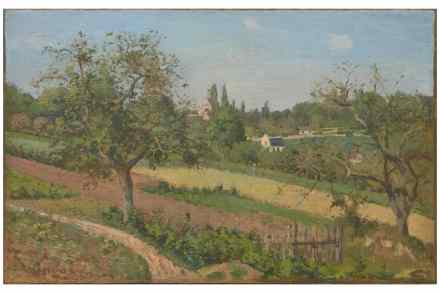
Jean-François Millet (1814-75). One Room. 14 items. Eight paintings. Six drawings and sketches. Modest, interesting. No masterpieces. The show appeals to the contemporary English preference for the unassuming, the humble, the unpretentious. Take ‘The Wood Sawyers’ (oil on canvas, 1850-2). Two figures are sawing a tree trunk with a long two-man bucking saw. Two thick

What we get wrong about modernism

From our UK edition

In The Art of the Novel, Milan Kundera writes, witheringly: ‘we must reckon with the modernism of fixed rules, the modernism of the university – establishment modernism, so to speak.’ He is addressing the novels of Hermann Broch, which, he argues, don’t fit the standardised mould. ‘This establishment modernism, for instance, insists on the destruction

Why disaffected actors often make excellent playwrights

From our UK edition

Actors are easily bored on long runs. Phoebe Waller-Bridge once revealed that she staged distractions in the wings to amuse her colleagues. On the last night of Hay Fever, egged on by another actor, she bent over ‘and showed [her] arsehole’ to the on-stage actors. Nabokov’s plays are seldom performed. But he was alive to

Kingsley goes to the toilet

From our UK edition

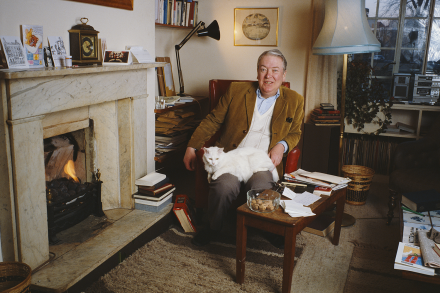
In 1978, I gave a poetry reading at Hull University. Philip Larkin was glumly, politely, in attendance. I was duly appreciative, knowing what it must have cost him. He was deaf as well as disaffected. Perhaps the deafness helped. The next day, we had a lunchtime drink at the University bar. We talked about Kingsley’s

The art of sexual innuendo

From our UK edition

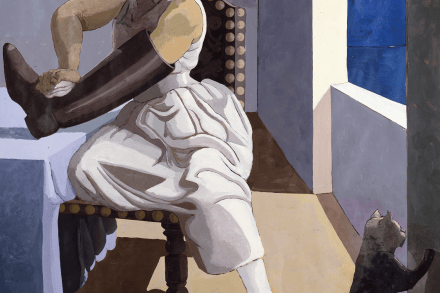
Paula Rego’s 2021 retrospective at Tate Britain demonstrated that, among art critics, ambiguity is still highly prized as a measure of merit. Martin Gayford: ‘No one, including its creator, can be aware of everything that’s going on.’ Laura Cumming at least gave examples. Of ‘The Cadet and his Sister’ (1988), she commented: ‘Bondage – physical,

The greatest paintings are always full of important unimportant things

From our UK edition

Goya to Impressionism: Masterpieces from the Oskar Reinhart Collection, at the Courtauld, consists of a selection of 25 absorbing paintings chosen from 207. I was disappointed but not surprised that one of the greatest paintings in the world, Pieter Bruegel the Elder’s ‘Die Anbetung der Könige im Schnee’ (The Adoration of the Kings in the

The problem of back-story in drama

From our UK edition

Olga in Three Sisters, the opening speech: ‘Father died just a year ago, on this very day – the fifth of May, your name-day, Irina.’ Jeeves says somewhere in P.G. Wodehouse that people with monogrammed slippers are afraid of forgetting their names. Irina, the absent-minded sister, probably needed reminding it was her birthday. A useful

What makes a good title?

From our UK edition

Liszt’s compositions tend to have descriptive titles – ‘Wild Chase’; ‘Dreams of Love’ – whereas Chopin avoided titles. Thomas Wentworth Higginson wished titles on Emily Dickinson’s poems, opposed by his fellow editor Mabel Loomis Todd. They didn’t stick. Maybe this is why Dickinson is acclaimed but unread. ‘I heard a Fly buzz’ is easier to

Christmas I: Katy Balls, Craig Brown, Kate Weinberg, Craig Raine, Lisa Haseldine and Melissa Kite

From our UK edition

37 min listen

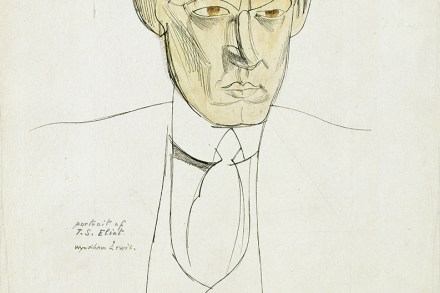
On this week’s Christmas Out Loud – part one: Katy Balls runs through the Westminster wishlists for 2025 (1:26); Craig Brown reads his satirist’s notebook (7:06); Kate Weinberg explains the healing power of a father’s bedtime reading (13:47); Craig Raine reviews a new four volume edition of the prose of T.S. Eliot (19:10); Lisa Haseldine provides

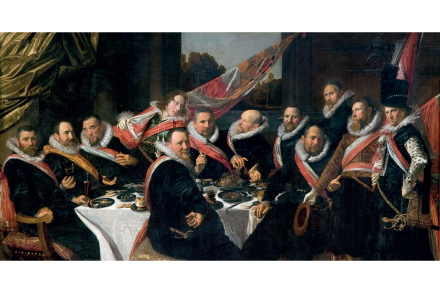
Why is Frans Hals still not considered the equal of Rembrandt?

From our UK edition

Who was Frans Hals? We know very little about him. He was baptised in either 1582 or 1583 in Antwerp. He died in 1666 at the age of 83 or 84. Approximately 220 works survive. One discredited narrative claimed Hals was a drunk – an inference probably based on his subject matter. There are several

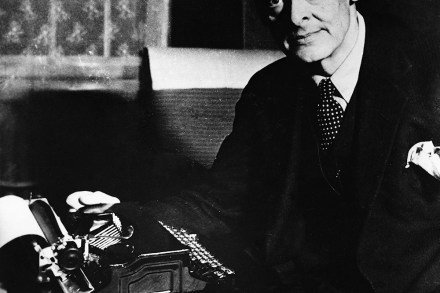
Eliot’s ‘wretched old’ typewriter looms large in an analysis of The Waste Land

From our UK edition

In 2018, the ferocious American poet-critic William Logan took time off from routinely, invigoratingly eviscerating contemporary poets to write Dickinson’s Nerves, Frost’s Woods: Poetry in the Shadow of the Past – a study of classic poems in their historical contexts. It was an informative, interesting exercise, prefaced by this significant reservation: ‘Knowledge of the circumstance

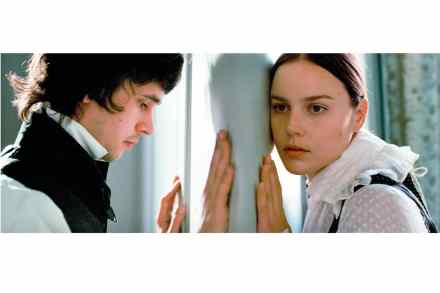
The nightmare of making films about poets

From our UK edition

Television and film are popular mediums. Poetry has never been popular. This is Sam Weller’s father in Pickwick Papers, when he discovers his son writing a valentine, alarmed it might be poetry: Poetry’s unnat’tral; no man ever talked poetry ’cept a beadle on boxin’ day, or Warren’s blackin’, or Rowland’s oil, or some o’ them

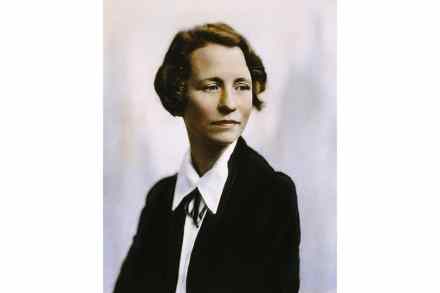
The sad fate of Edna St Vincent Millay – America’s once celebrated poet

From our UK edition

In June 1957, Robert Lowell attended a poetry reading by E.E. Cummings. Sitting dutifully and deferentially alongside him were Allen Tate, W.S. Merwin and his wife Dido and the classical scholar William Alfred, ‘while Cummings read outrageous and sentimental poems, good and bad of both kinds’. They were not alone: ‘About eight thousand people listened.’

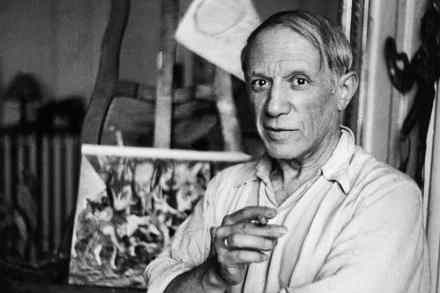
Pablo Picasso in love and war

From our UK edition

The decade 1933-43 was one of busy erotic multi-tasking by the deft and diminutive Pablo Picasso. It took him the best part of ten years to effect a separation from the reluctant Olga Khokhlova, his ex-ballerina wife, retired injured from the Diaghilev Ballets Russes. Legal proceedings were triggered by her discovery of Picasso’s affair with